Renaming the U.S. Institute of Peace: What It Reveals About America's Changing Foreign Policy

Sarah Johnson
December 4, 2025
Brief
In-depth analysis of the U.S. Institute of Peace's renaming after Trump, revealing its impact on U.S. diplomatic strategy, institutional legacy, and future global peacebuilding efforts.
Why the Renaming of the U.S. Institute of Peace Marks a Pivotal Moment in American Foreign Policy
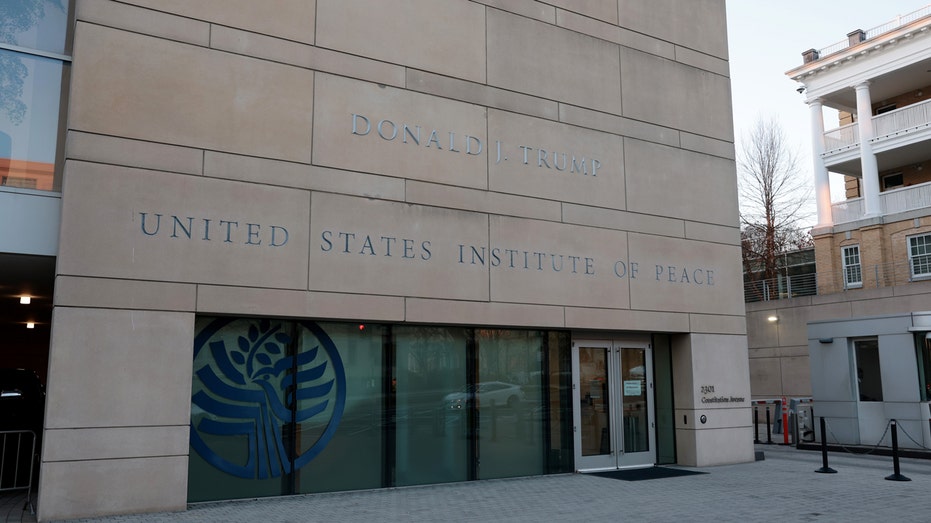
The formal rebranding of the U.S. Institute of Peace (USIP) as the "Donald J. Trump Institute of Peace" is far more than a symbolic gesture; it represents a profound shift in how the current administration approaches conflict resolution, diplomacy, and the legacy of America’s role on the global stage. This move, coupled with efforts to dismantle and absorb the agency into a government efficiency bureaucracy, signals a redefinition of peace-building priorities—one that intertwines political branding, power projection, and institutional overhaul.
The Bigger Picture: Historical Context of USIP and American Peace Efforts
Established by Congress in 1984 during the Cold War, the U.S. Institute of Peace was designed as a nonpartisan, independent agency dedicated to conflict prevention, mediation, and peacebuilding globally. It emerged amid a recognition that military power alone could not solve entrenched conflicts and that nuanced diplomatic and grassroots efforts are vital to sustainable peace.
Over nearly four decades, USIP has supported initiatives ranging from training negotiators, conducting research, offering expertise in post-conflict development, to facilitating dialogue in some of the world's most volatile regions. While often underappreciated in public discourse, USIP’s work echoed a broader bipartisan consensus that peace requires more than military might.
Against this backdrop, the Trump administration’s critique that the agency was “a bloated, useless entity” dismisses decades of nuanced diplomacy and peace science research. In fact, this reframing aligns with a trend in political rhetoric that favors strongman leadership and transactional diplomacy over multilateral, institution-driven peace processes.
What This Really Means: The Politics and Implications of Rebranding and Dismantling
The rebranding effort is unprecedented in that it places a sitting president directly in the legacy of an institution traditionally insulated from partisan politics. By attaching Trump’s name to the USIP, the administration shifts the narrative of peace from collective, bipartisan efforts to one anchored in the personality and policies of a particular leader.
This personalization is intertwined with dismantling the Institute and transferring many of its functions to the newly created Department of Government Efficiency (DOGE), a move that courts centralized control but risks undercutting the specialized, diplomatic expertise USIP cultivated. It raises questions about how the U.S. will engage in delicate peace processes moving forward.
Moreover, invoking Trump’s claim of ending "eight wars in less than a year" reflects a reframing of “peace through strength” — emphasizing military de-escalation achieved through unilateral political decisions and top-down leadership, rather than through multilateral dialogue and institution-building.
This shift could have significant repercussions for how the U.S. approaches conflicts in Africa, the Middle East, and Asia. While some lauded the recent peace-agreement ceremony between the Democratic Republic of Congo and Rwanda, critics worry that sidelining a dedicated peace institution risks reducing such achievements to sporadic political events rather than sustained diplomatic endeavors.
Expert Perspectives: Diverse Views on the Renaming and Dismantling
Dr. Emily Stanton, a professor of international relations, notes, "Renaming an agency like USIP after a sitting president undermines its neutrality and risks politicizing peace initiatives, potentially eroding trust with foreign partners who expect consistent U.S. engagement beyond political cycles."
Michael O'Hanlon, a defense analyst, acknowledges that "strong leadership can compel rapid conflict de-escalation, but institutional frameworks remain necessary to maintain peace and address root causes."
Meanwhile, former USIP director Sarah Mendelson warns, "Dismantling this specialized agency risks losing decades of accumulated expertise in conflict prevention, replacing it with bureaucratic streamlining that may lack the nuanced understanding essential for successful peacebuilding."
Data & Evidence: The Role and Impact of USIP
USIP’s budget has averaged roughly $50 million annually—modest relative to the overall defense and foreign aid budgets—to support peacebuilding programs worldwide. Over its existence, the Institute has facilitated over 3,000 dialogues and trained thousands of mediators and leaders.
Research indicates that peacebuilding investments, while less visible than military spending, can prevent costly conflicts. According to the International Peace Institute, every $1 invested in conflict prevention can save up to $7 in military and reconstruction costs.
Thus, the administration’s framing of the Institute as financially wasteful overlooks evidence supporting the cost-effectiveness of peacebuilding as part of a comprehensive security strategy.
Looking Ahead: Future Implications for U.S. Foreign Policy and Global Stability
This institutional shift signals a broader pivot in how the U.S. administers its role as a global peacemaker. Reduced reliance on independent, expert-driven peacebuilding mechanisms in favor of centralized executive control may expedite decision-making but risks alienating international partners who value predictability and multilateral cooperation.
The move also invites scrutiny on how peace initiatives will be integrated with military and political objectives, potentially increasing the reliance on "peace through strength" doctrines that prioritize deterrence and coercive diplomacy.
For conflict-affected regions formerly supported by USIP, the transition may mean gaps in programming or inconsistent engagement, impacting fragile peace processes, including in Africa and the Middle East.
Future watchpoints include how the Department of Government Efficiency handles these complex roles, whether the renamed Institute will broaden or narrow its focus, and how this rebranding influences international perceptions of U.S. diplomacy.
The Bottom Line
The renaming and dismantling of the U.S. Institute of Peace constitute more than internal bureaucratic reshuffling—they reflect a transformative moment in U.S. foreign policy narrative and practice. By personalizing peace efforts under a presidential brand and dismantling longstanding institutional frameworks, the current administration is redefining America’s approach to conflict resolution—placing greater emphasis on strong leadership and efficiency over established peacebuilding expertise and bipartisan diplomacy.
This raises critical questions about the sustainability of peace efforts and the role America chooses to play on the global stage in an increasingly complex geopolitical landscape.
Topics
Editor's Comments
This institutional overhaul encapsulates a broader ideological shift in how America conceives its global role—from a nuanced, multilateral peacemaker to a figurehead-driven, efficiency-focused model of governance. The renaming sends a clear signal about the role personality and branding now play in diplomacy, raising fundamental questions about the durability of peace efforts under changing administrations. As this story unfolds, it will be crucial to watch whether the dismantling of long-standing agencies like USIP leads to more effective peacebuilding or undercuts the specialized expertise required for sustainable conflict resolution.
Like this article? Share it with your friends!
If you find this article interesting, feel free to share it with your friends!
Thank you for your support! Sharing is the greatest encouragement for us.