Beyond the Miracle on Ice: How Trump Is Weaponizing America’s Favorite Sports Myth

Sarah Johnson
December 12, 2025
Brief
Trump’s honoring of the 1980 ‘Miracle on Ice’ team is more than nostalgia. It’s a strategic bid to control patriotic memory, tying Cold War triumph to his brand of American greatness.
Trump, the ‘Miracle on Ice,’ and the Battle Over Who Owns American Patriotism
Donald Trump’s decision to honor the 1980 U.S. Olympic hockey team during the signing of the Congressional Gold Medal Act is not just a sports nostalgia story. It’s a deliberate move to plug into one of the most emotionally potent symbols of American resilience and Cold War triumph — and to reframe it within today’s hyper-polarized fight over who gets to define patriotism, heroism, and “American greatness.”
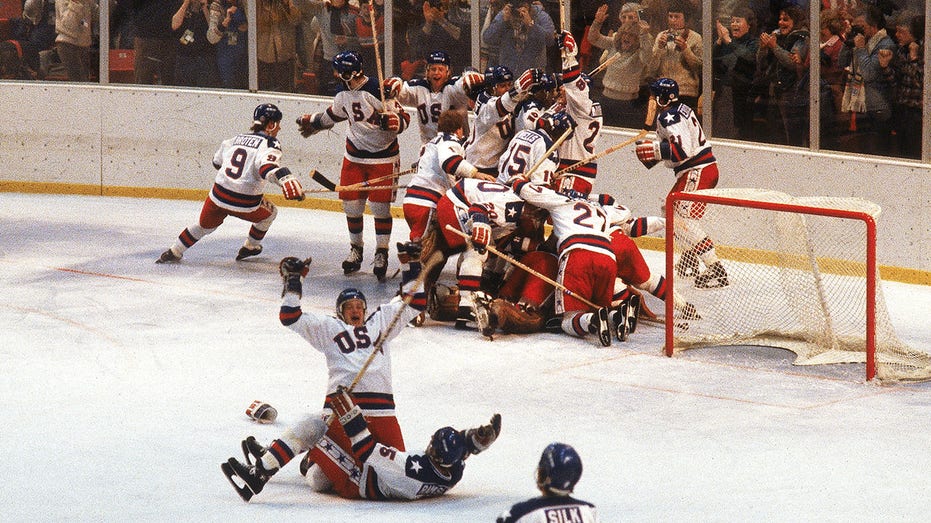
On the surface, this is a feel‑good ceremony: the underdog U.S. team, the stunned Soviet powerhouse, Al Michaels’ immortal “Do you believe in miracles?” call. But beneath the highlight reel lies a deeper struggle over memory, myth-making, and political branding at a time when national unity is far more fragile than in 1980.
The Cold War Backdrop: Why the 1980 Upset Still Resonates
The “Miracle on Ice” was never just a hockey game. It unfolded in February 1980, in the middle of a bleak chapter in U.S. history:
- Economic malaise: Stagflation and energy crises had eroded confidence in U.S. leadership.
- Geopolitical humiliation: The Iranian hostage crisis was in full swing; the Soviet Union had invaded Afghanistan in December 1979.
- Psychological defeatism: A sense of American decline permeated politics and culture.
Against that backdrop, a team of U.S. amateurs and college players beating a Soviet squad that was effectively a seasoned, state‑backed professional machine became a cultural event. It was read, instantly and almost universally, as a proxy victory in the Cold War. As historian Allen Guttmann has noted, international sports during the 20th century often functioned as “moral scoreboards” for competing political systems, and no game illustrates that more clearly than USA–USSR in Lake Placid.
The Soviets had dominated Olympic hockey, winning gold in five of the six previous Winter Games. Less than two weeks before Lake Placid, they had crushed the U.S. team 10–3 at Madison Square Garden. That context made the upset feel not just improbable, but almost impossible. It became a story about what Americans wanted to believe about themselves: that grit, belief, and teamwork could beat a regimented, authoritarian machine.
From Reagan to Trump: How the ‘Miracle’ Became Political Currency
The political class recognized the symbolism quickly. Ronald Reagan’s 1980 presidential campaign benefited indirectly from the emotional lift the game created, feeding into his message of national renewal. Over time, the “Miracle on Ice” was woven into a broader narrative of American comeback that Reaganism embodied: from defeat and doubt to confidence and victory.
Over the decades, this game has been repeatedly invoked at moments when leaders want to conjure unity and underdog resilience. Presidents across parties have referenced it or welcomed the team to the White House. The story has become a kind of bipartisan myth — but that doesn’t mean it’s politically neutral.
Trump’s use of the moment follows a clear pattern in his political branding:
- He consistently centers spectacle and symbolism (military flyovers, flag‑heavy rallies, staged moments of honor for veterans and first responders).
- He leans on nostalgia for a perceived golden age of American strength — roughly the late Cold War period through the 1980s.
- He frequently frames himself as the primary custodian of “real” American patriotism, contrasting his approach with what he depicts as an unpatriotic or self‑critical elite.
Honoring the “Miracle on Ice” team ticks all three boxes. It ties directly into a story of American victory over a foreign adversary, features real‑life sports heroes who are widely admired, and allows him to present himself as the president who properly recognizes “American greatness and patriotism,” as his spokesperson explicitly put it.
Patriotism, Populism, and the Politics of Memory
The critical question isn’t whether the team deserves recognition — few would argue otherwise. The question is how their story is being framed in 2025 and to what political ends.
We’re now in an era when even national symbols are contested terrain:
- Sports as culture war battlegrounds: From NFL players kneeling during the anthem to debates over transgender athletes, sports arenas have become political stages.
- Reframing history: Projects like the 1619 Project and counter‑narratives from conservative institutions have turned historical memory itself into a partisan battlefield.
- Hyper‑polarization: Polling by Pew Research Center shows a sharp partisan divide over concepts like “American exceptionalism” and belief that the U.S. is the greatest country in the world.
In that climate, the “Miracle on Ice” functions as a kind of safe patriotism — a story most Americans agree on, conveniently rooted in competition with an external, now‑defunct adversary. It’s a unifying myth that can be reused without touching today’s more uncomfortable conflicts over race, inequality, or militarism.
But by wrapping this ceremony in explicitly political language — “No one is more committed to honoring American greatness and patriotism than President Trump” — the White House turns the event into a subtle loyalty test. The message isn’t just “honor these athletes”; it’s “this president uniquely represents the kind of patriotism they embody.”
What’s Being Overlooked: The Players’ Own Complexity
Most coverage will focus on the basic narrative: the upset, the Cold War stakes, the Disney movie. What gets less attention is how the players themselves have navigated politics and public memory over time.
Several members of the 1980 team have appeared at political events in recent years, including a controversial appearance with Trump at a rally in 2020, where some players wore “Keep America Great” hats. Other teammates later stressed that the team was not monolithic politically and that appearing as a group didn’t constitute unanimous endorsement of any candidate.
This hints at a broader reality: the people inside our national myths are rarely as simple as the stories we tell about them. Some players have become business executives, some coaches, some broadcasters, some have withdrawn from public life. Their views span the political spectrum. Yet when they’re brought into a White House ceremony framed around “American greatness,” their individuality is flattened into symbol.
Historian and sports sociologist David Wiggins has argued that we often use sports heroes “as blank canvases onto which we project our ideological preferences.” This event is a textbook case: the team becomes an instrument for reinforcing one particular narrative of America — resilient, tough, triumphant over enemies — with less room for more nuanced reflections about what patriotism should mean now.
Expert Perspectives: Memory, Myth, and Power
Political theorists and historians offer useful lenses for understanding why this moment matters beyond the photo‑op.
Benedict Anderson, in his influential work on “imagined communities,” argued that nations are held together by shared stories as much as shared institutions. The “Miracle on Ice” is precisely that kind of story — a tale many Americans recall jointly, even if they experienced it through a television screen rather than in person.
Meanwhile, historian Joshua Shenk has written about “national mood” and how narratives of collective triumph or failure shape everything from voting behavior to policy priorities. Revisiting a story like 1980’s victory at a time of domestic division and international anxiety can function as a psychological reset, reminding people of a moment when the country felt unified and victorious.
But there’s a tension here. As political scientist Rogers Smith notes, national myths can be both empowering and exclusionary. They inspire, but they can also marginalize those who don’t see themselves in the story — or who experience the nation differently.
That’s particularly relevant when the symbolism is framed through a politician whose critics argue that his brand of patriotism is exclusionary. For some Americans, the image of Trump honoring Cold War sports heroes will feel affirming. For others, it will feel like a narrowing of who gets to be celebrated as fully American.
Data Points: Why This Story Still Has Reach
Even decades later, the “Miracle on Ice” has staying power that makes it attractive to political handlers:
- A 2015 ESPN poll ranked the 1980 U.S. victory over the USSR as the greatest sports moment of the 20th century among U.S. respondents.
- The 2004 film “Miracle” grossed over $64 million at the box office worldwide, a strong showing for a period sports drama.
- Survey data from the Reagan Presidential Library and other institutions suggest that the late 1970s and early 1980s remain a key nostalgia anchor for Americans over 50 — a demographic that leans heavily Republican and is central to Trump’s base.
In other words: this isn’t just a random anniversary. It’s a carefully chosen piece of cultural memory with proven emotional resonance for a core political audience.
Looking Ahead: The Future of ‘Safe’ Patriotism
This ceremony points to several emerging trends to watch:
- Increased politicization of sports nostalgia: Expect more campaigns and administrations to mine the archives for unifying sports moments — from Jesse Owens in 1936 to the 1999 U.S. women’s soccer team — and attach them to contemporary political projects.
- Selective history as branding: Political actors will likely double down on stories that emphasize external threats and victorious outcomes, while glossing over moments that raise uncomfortable questions about injustice or failure.
- Generational divide in symbols: For younger Americans, who didn’t live through the Cold War, the “Miracle on Ice” may not carry the same weight. Politicians may increasingly need new unifying moments — including from women’s sports, immigrant athletes, or Paralympians — if they want patriotism narratives to resonate across age groups.
There’s also a subtler implication: as the U.S. faces renewed geopolitical rivalry with Russia and strategic competition with China, recycling Cold War triumphs risks reinforcing a simplistic “us vs. them” worldview. That may play well domestically, but it can complicate diplomacy and feed into zero‑sum thinking at exactly the moment when transnational challenges — climate, pandemics, cyber threats — demand more nuanced international cooperation.
The Bottom Line
Honoring the 1980 U.S. Olympic hockey team at a Congressional Gold Medal Act signing is, on its face, a long‑overdue tribute to a legendary group of athletes. But it is also a carefully orchestrated act of political storytelling.
By tying himself to the “Miracle on Ice,” Trump isn’t just celebrating a game; he’s tapping into one of the most powerful myths in modern American life: that this country is at its best when written off, underestimated, and facing down a formidable foe. The risk is that in elevating that myth, we settle for a patriotism rooted mainly in past victories over past enemies — instead of asking what kind of collective courage, sacrifice, and imagination are required for the challenges of the present.
The ceremony in Washington will last an hour. The struggle over who gets to define the meaning of that miracle — and of American greatness more broadly — will last much longer.
Topics
Editor's Comments
What’s most striking about this story is not that Trump is honoring the Miracle on Ice team, but how automatic and uncontested that choice seems. We rarely ask why certain historical moments are elevated again and again, while others—equally revealing about the American character—remain marginal. For instance, where are the equivalent, high‑profile, presidential ceremonies for athletes who challenged power rather than symbolically defeating it—Muhammad Ali at the peak of his antiwar activism, or the 1968 Olympians who raised gloved fists in Mexico City? The repeated return to Cold War victory narratives subtly narrows our sense of legitimate patriotism to moments when Americans triumphed over external enemies and rallied around the flag. It avoids more uncomfortable stories where patriotism meant dissent, sacrifice without glory, or solidarity across deep internal divisions. As long as political leaders primarily mine the past for easy wins and clear villains, our national memory will remain skewed toward reassurance rather than reflection—and that has consequences for how prepared we are to face the messier, less cinematic challenges ahead.
Like this article? Share it with your friends!
If you find this article interesting, feel free to share it with your friends!
Thank you for your support! Sharing is the greatest encouragement for us.