Beyond the Hit: What Old Dominion’s QB Scare Reveals About College Football’s Concussion Crisis

Sarah Johnson
December 18, 2025
Brief
Old Dominion’s decision to keep QB Quinn Henicle in after a violent hit exposes how college football’s concussion system still favors winning over long-term brain health despite a decade of reform.
Old Dominion’s QB Hit Isn’t Just a One-Off Scare – It Exposes a System Still Failing on Concussions
Old Dominion’s decision to keep redshirt freshman quarterback Quinn Henicle in the Cure Bowl after a helmet-jarring hit is being treated as a single controversial moment. It’s not. It’s a window into how, despite a decade of reforms and public pressure, college football still structurally incentivizes risk-taking with players’ brains – and still leaves too much discretion in the hands of people with powerful reasons to say, “He’s fine.”
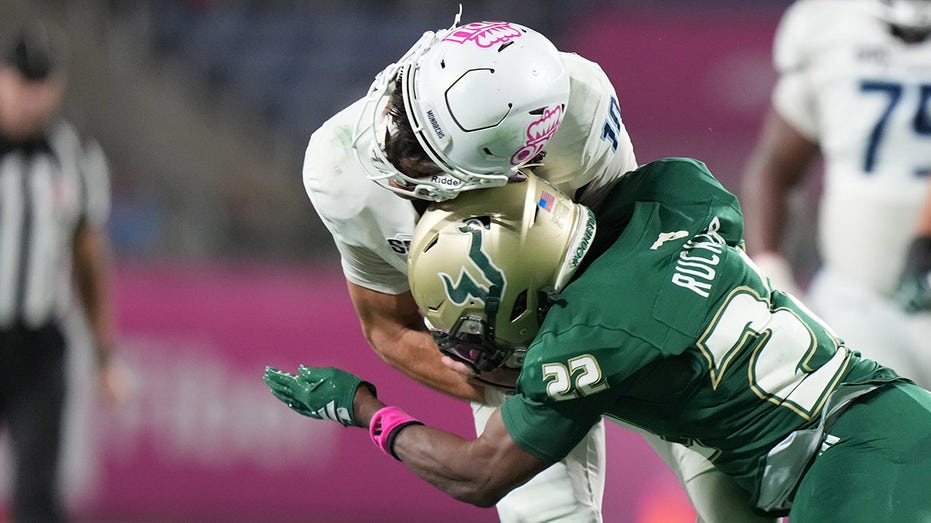
Henicle’s helmet flew off after a high-impact collision. He stayed motionless on the turf for several seconds, was evaluated, and returned to the game within two plays, later ripping off a 51-yard touchdown run. Fans saw toughness. Critics saw a potentially concussed teenager encouraged – and eager – to prove he could “get up and get back into the game.” Both are right, and that tension is exactly the problem.
The bigger picture: A decade of concussion reform, with loopholes built in
Over the past 15 years, football has gone through what might be called the concussion optics era. Rules and protocols have been rewritten, but the underlying culture and incentives remain stubbornly intact.
- 2010s: The CTE reckoning. Research led by Boston University’s CTE Center found chronic traumatic encephalopathy in 99% of studied brains of former NFL players and in a majority of former college players as well. This drove rule changes on targeting, kickoffs, and practice contact.
- 2011–2016: Concussion laws and policies. All 50 U.S. states adopted youth sports concussion laws requiring removal-from-play and medical clearance. The NCAA introduced concussion management plans, independent medical observers, and return-to-play protocols.
- 2016 onward: High-profile failures. Independent neurologists and media scrutiny sharpened after visible incidents like Michigan’s handling of QB Shane Morris (2014), Tua Tagovailoa’s multiple head injuries (college and NFL), and repeated cases where players seemed clearly wobbly yet quickly returned.
On paper, the system is better than it was. In practice, enforcement is inconsistent, and the protocols themselves are shaped by the same industry that profits from players staying on the field.
That’s the context for Old Dominion. The school’s coach, Ricky Rahne, said Henicle was evaluated for a concussion three times. That sounds reassuring – and might be accurate – but it doesn’t address the deeper questions: Who evaluated him? How long did those evaluations actually take? What pressures were present on the sideline in a nationally televised bowl game with a 10-win milestone on the line?
What this really means: Protocols vs. incentives
The central issue here isn’t whether Old Dominion technically followed a checklist. It’s whether the structure of college football makes it possible to prioritize long-term brain health over short-term competitive gain.
1. The player’s voice is compromised by design
Henicle’s quote – “I wasn’t going to allow them to take me out of the game” – has been celebrated as evidence of competitiveness. It’s actually a red flag.
Every concussion expert will tell you: athletes are inherently unreliable narrators of their own brain health in the heat of competition. They are conditioned to minimize pain, downplay symptoms, and equate removal with weakness or betrayal of the team. Their scholarship, status, and future opportunities feel tied to staying in the game.
When a 19- or 20-year-old says, “I feel fine,” after a helmet-jarring hit, a responsible system is supposed to discount that, not lean on it.
2. Sideline evaluations are constrained by time and context
The average validated sideline concussion assessment (such as SCAT5/SCAT6) takes around 10 minutes when done properly. That includes symptom checks, cognitive tests, and balance assessments. The idea that a thorough evaluation can be completed in the space of two offensive snaps is, at minimum, questionable.
In big games, the pressure to abbreviate testing is enormous. Coaches want answers quickly. Players want back in. Even independent medical staff are subject to subtle pressures: access, future contracts, and relationships depend on being seen as cooperative, not obstructive.
3. Targeting rules protect the sport’s image more than players’ brains
De’Shawn Rucker was ejected for targeting – a rule that serves two purposes: discouraging dangerous hits and signaling that the sport takes safety seriously. Ejections clean up the optics. But the player with the brain at stake is Henicle, not Rucker.
In other words: the system is harsher on the hitter than it is protective of the hit player. Once the penalty is enforced and the defender is removed, much of the public accountability box is checked. What happens with the injured player becomes an opaque “medical decision” shielded from scrutiny.
4. Misunderstanding concussion risk: you don’t need to be “knocked out”
The visible drama of Henicle lying still and his helmet flying off reinforces a dangerous misconception: that a concussion must look spectacular. Many concussions involve subtler signs – confusion, delayed reactions, dizziness, or visual issues that can emerge minutes or even hours later.
Modern research also highlights “subconcussive” impacts – repeated hits that don’t cause immediate symptoms but contribute cumulatively to long-term brain changes. A player who insists, “It was just football,” is articulating the culture that normalizes this exposure.
Expert perspectives: What independent voices would focus on
If you ask independent neurologists and sports medicine experts about situations like Henicle’s, a common set of concerns emerges.
Dr. Chris Nowinski, co-founder of the Concussion Legacy Foundation, has long argued that the current approach relies too heavily on sideline symptom checks and player self-reporting. He and others have pushed for a “when in doubt, sit them out” model that errs on the side of removing players after high-risk hits, especially when signs like loss of helmet, loss of movement, or disorientation are visible.
Sports ethicists point to a broader inequity: college football is a multi-billion-dollar business, yet the athletes absorbing the risk are unpaid in salary terms and have limited long-term medical protections. When a borderline decision arises – stay in or sit – the system consistently tolerates risk borne by those with the least power.
Data and evidence: What the numbers tell us
- Concussion prevalence: NCAA studies have found that football accounts for the highest number of reported concussions among college sports. One multi-year study reported concussion rates of roughly 5–6 per 10,000 athletic exposures in NCAA football, with underreporting widely acknowledged.
- Long-term effects: Research from Boston University has found CTE in a majority of studied brains of former college football players, not just pros – indicating that the college years alone can be enough to create lasting damage.
- Underreporting: Surveys of college athletes suggest that 30–50% of concussions may go unreported, largely due to fear of losing playing time, starting jobs, or scholarships.
This context matters when evaluating what happened with Henicle. Even if all protocols were followed, the system is built atop a foundation of underreporting and cultural pressure.
What’s being overlooked: The structural conflict of interest
Most coverage of incidents like this focuses on two questions: Did the team follow the protocol? And did the player say he felt okay? Those are the wrong questions.
The deeper, overlooked issue is that the same institution that benefits from a player staying in the game – the school and football program – also oversees the medical decision-making environment.
Yes, many schools use “independent” medical personnel. But independence is soft, not absolute. The medical staff’s employer, access, and working relationships are intertwined with the athletic department. For smaller programs, the physician or trainer might also treat other athletes at the school, rely on team referrals, or be part of a local practice that values the relationship with the university.
That’s a structural conflict of interest. It doesn’t mean bad faith. It means the incentives and power dynamics are misaligned with maximal caution.
Looking ahead: What needs to change
Incidents like Henicle’s hit won’t stop with more press releases about “multiple evaluations.” They will stop – or at least decrease – when decision-making frameworks change.
Several reforms are worth watching:
- Truly independent concussion spotters. Medical professionals with no financial or institutional ties to the school should have final authority to remove players after high-risk hits, with no ability for coaches to overrule.
- Automatic removal after certain visual thresholds. If a player’s helmet comes off on a high-speed hit, or if they remain motionless for more than a couple of seconds, automatic removal for the rest of the series – and possibly the game – should be the norm, not an exception.
- Transparent postgame reporting. Schools should be required to publicly disclose, in general terms, how many players were removed for suspected concussions, how many returned, and who made the decisions. Transparency creates accountability.
- Guaranteed long-term medical support. If players knew they had robust, long-term neurological care covered by the NCAA or their school, the moral burden of risk would be more evenly distributed. As it stands, the athlete often bears lifelong consequences for decisions made when they were 19 and desperate to stay in the game.
For Old Dominion specifically, the program may face increased scrutiny from media and health advocates if similar incidents occur again. The immediate controversy will fade, but the video of a young quarterback lying still after a violent hit will remain part of the digital record – and part of the broader debate about what we’re willing to risk for a bowl victory.
The bottom line
What happened to Quinn Henicle is not an isolated “toughness” moment; it is a case study in how college football still weighs glory against brain health – and too often tips the scale the wrong way.
Old Dominion may well have followed existing protocols. That’s not enough. The protocols themselves are shaped by a culture that valorizes playing through anything and by institutions that profit from keeping players on the field.
Until college football creates truly independent medical authority, enforces automatic removal after certain high-risk signs, and guarantees long-term care, moments like this will keep recurring. The only real question is how many athletes will pay the price years later – long after the final whistle, the trophy photos, and the highlight-reel touchdown runs.
Topics
Editor's Comments
The Henicle incident illustrates a disturbing pattern in how we talk about football injuries: narrative gravity almost always pulls toward heroism and away from risk. Broadcasters replay the hit, praise the player for returning, and frame the story as one of resilience and competitive fire. What gets lost is that this is a teenager whose future cognitive health may be shaped by thousands of such moments, most of which never make the highlight reel. Another under-explored angle is the economic asymmetry. Universities and conferences monetize bowl appearances, TV deals, and brand exposure, while the athletes absorbing neurological risk do so without guaranteed long-term medical coverage or salaries. When we view Old Dominion’s decision through that lens, the question shifts from “Was the hit that bad?” to “Who gains and who bears the cost when borderline decisions go in favor of keeping a star player on the field?” Until that imbalance is part of the mainstream conversation, we’ll keep treating each of these episodes as isolated controversies instead of symptoms of a systemic problem.
Like this article? Share it with your friends!
If you find this article interesting, feel free to share it with your friends!
Thank you for your support! Sharing is the greatest encouragement for us.