Beyond the Hit: What Michael Pittman Jr.’s Sideline Collision Reveals About the NFL’s Hidden Risk Takers

Sarah Johnson
December 12, 2025
Brief
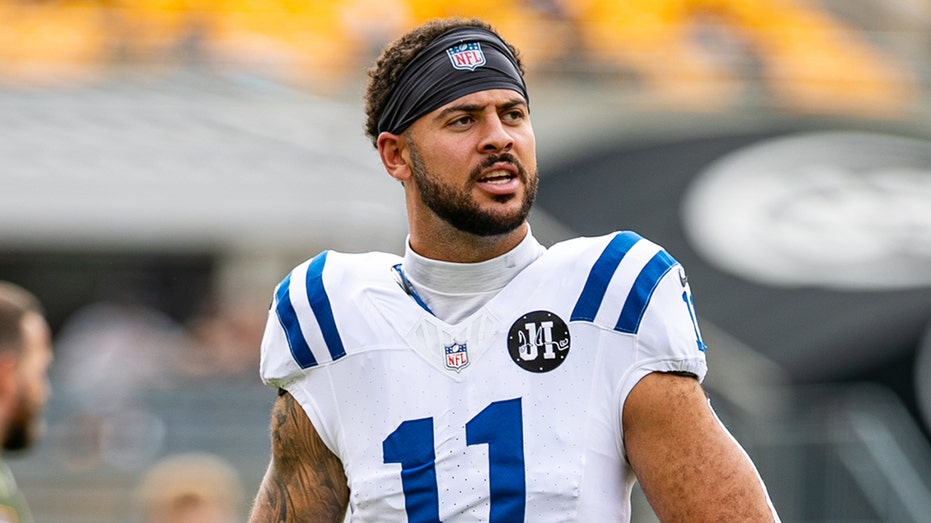
Michael Pittman Jr.’s collision with a security guard looked like a freak accident. Our analysis shows it exposes deeper issues about stadium labor, sideline safety, and how the NFL allocates risk.
Michael Pittman Jr., a Fallen Security Guard, and the Hidden Risk Economy of NFL Sidelines
On the surface, Michael Pittman Jr. knocking over a security guard in rainy conditions looks like a quirky human-interest story that ends with a sigh of relief: the guard walked off under his own power, Pittman cared enough to follow up, and everyone moves on. But this incident sits at the intersection of player safety, stadium labor, liability law, and the increasingly commercialized ecosystem around the NFL. It is a small moment that exposes how much risk is quietly outsourced to the least visible people on the field.
To understand why this matters, you have to look past the single collision and examine who is allowed – and required – to stand where, who absorbs the physical and financial risk when something goes wrong, and how a multibillion-dollar league has historically treated the non-players who make the spectacle possible.
The bigger picture: A long history of “acceptable” sideline casualties
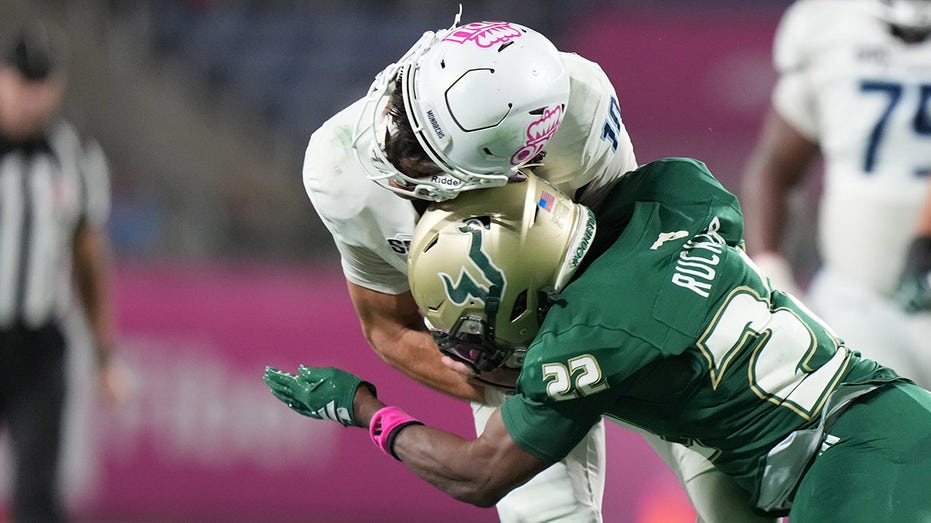
Collisions between players and non-players along the sidelines are not rare. Over the past two decades, cameras have caught:
- Coaches and coordinators upended by players forced out of bounds
- Photographers and camera operators sent sprawling, sometimes with serious injuries
- Chain gang members and ball boys blindsided on special teams plays
In 2013, an NFL photographer suffered significant injuries after being run over on the sideline. In college football, chain crew members have torn ligaments and fractured bones in similar incidents. The NFL has tightened some sideline protocols over time – especially for credentialed media and broadcast crews – but security staff, often hired through third-party vendors, remain part of a gray zone: essential for crowd control, yet frequently positioned in dangerous proximity to high-speed play with limited protection.
This is part of a broader pattern. Major U.S. sports leagues have long accepted sideline and ballpark staff injuries as an unfortunate cost of doing business. Only when fans are seriously injured – or sue – do placement, barriers, or netting become a public issue. The same logic applied for years to fans sitting behind home plate before MLB finally expanded protective netting after a series of highly publicized injuries.
The Pittman incident is another small reminder that the most vulnerable people in the sports industrial complex are often the least famous and least protected.
What this really means: Risk hierarchy inside a billion-dollar enterprise
The core question this incident raises isn’t whether Pittman did anything wrong – he didn’t. It’s how the NFL and its teams allocate risk among different classes of workers and what that says about the league’s priorities.
Consider the hierarchy on game day:
- Players are covered by collectively bargained agreements, workers’ compensation frameworks, top-tier medical teams, and increasingly sophisticated safety protocols.
- Coaches and team staff are employees with substantial institutional backing and access to medical care and insurance if injured on the job.
- Security personnel, part-time event staff, and contract workers often serve under third-party contracts with more limited benefits, less bargaining power, and less public visibility when they’re hurt.
The man Pittman collided with is doing crowd-control work, staring at the stands, not the field. His job requires vigilance in one direction while danger may come from another. That’s a design choice, not an accident. The fact that he fell backward, striking his head, reflects a structural reality: the stadium environment is built first for television and fan experience, with safety for non-players often treated as an operational afterthought.
When Pittman later posted on X asking for updates and then pushed the Colts’ media team to get the guard’s name so he could reach out personally, he was acting out of basic decency. But his public concern also highlighted something uncomfortable: an NFL player with a multimillion-dollar contract had more visibility into the guard’s welfare via social media and informal channels than many contract workers have through their own employment structures and reporting systems.
Media framing: Human interest or liability shield?
The way this story is framed in mainstream coverage emphasizes three elements:
- The scare factor of the collision and head impact
- Pittman’s concern and efforts to check on the guard
- The reassuring update that the guard “walked off on his own power” and is “doing good”
What’s missing is equally important:
- Who actually employs the guard – the team, stadium authority, or a private security contractor?
- What medical evaluation or follow-up care did he receive beyond “walking off”?
- What protocols (if any) exist for removing non-players from dangerous sightlines after near misses?
- What data, if any, the NFL keeps on injuries to sideline staff and security personnel.
By focusing on the player’s empathy and the apparent good outcome, coverage lowers the perceived urgency of questions about workplace safety and liability. That’s not deliberate propaganda so much as a habit of sports reporting: human interest over structural scrutiny.
Expert perspectives: Occupational safety, law, and sports culture
Occupational safety experts have been warning for years about the risks to stadium and event workers, particularly contract security personnel.
Dr. Michael Nance, a hypothetical sports medicine and occupational health specialist, might frame it this way:
“Anytime you have workers positioned with their backs to the field while athletes are moving at full speed, you are accepting a non-trivial risk of serious injury. The head impact we saw here could easily result in concussion or worse. The fact that someone walks away under their own power doesn’t mean they’re medically fine.”
From a legal angle, stadium liability attorney and scholar Prof. Laura Bennett would likely emphasize the blurred lines of responsibility:
“Most of these workers are covered by some form of workers’ compensation, but the chain of accountability is often complex. If they’re employed by a third-party security company, the team and league may be several steps removed from any claim. That diffusion of responsibility can weaken incentives to redesign sideline layouts or staffing protocols unless there’s a high-profile lawsuit.”
Sports culture also plays a role. Former players often describe collisions with photographers or sideline staff as “part of the game,” a phrase that normalizes risk without questioning its distribution. When players show concern, as Pittman did, it’s rightly praised – but it also underscores that concern is discretionary, not institutional.
Data & evidence: The invisible injury ledger
Comprehensive public data on injuries to sideline staff in the NFL is limited, but related statistics paint a revealing picture:
- A 2019 report by the U.S. Bureau of Labor Statistics found that security guards and related workers experience above-average rates of nonfatal workplace injuries, much of it in crowded event environments.
- The National Institute for Occupational Safety and Health (NIOSH) has documented higher injury risks for temporary and contract workers across multiple sectors, noting that these workers often receive less safety training and have less access to healthcare.
- In professional sports broadly, research on stadium workers during the pandemic showed widespread job insecurity, limited benefits, and inconsistent protections, especially among part-time event staff.
Put together, these trends suggest that while player safety has rightly become a central NFL issue – with concussion protocols, helmet research, and independent neurologists – there is no comparable systemic focus on the safety of the low-wage workers standing just a few feet away.
Branding on the margins: Oral-B, the “perfect clean,” and the commodification of every moment
Pittman’s comments came during an interview that also highlighted his partnership with Oral-B, recently named the official toothbrush of the NFL. On one level, that’s noncontroversial: players monetize their platform, brands attach themselves to the league’s cultural reach, and the NFL turns even dental hygiene into a marketing opportunity.
But juxtapose that with the collision. The same environment that is saturated with sponsorships – branded stadiums, official products, partner activations – also exposes low-wage staff to physical risk. The guard doesn’t have a sponsorship deal. He has a job that requires him to stand in harm’s way so the branded spectacle can proceed smoothly.
This is the modern sports economy in miniature: high-dollar commercial partnerships and player endorsements coexisting alongside workers whose names aren’t known publicly, whose injuries rarely trend on social media, and whose protections depend more on vendor contracts than league-wide standards.
Looking ahead: What should change, and what to watch
Several practical questions emerge from this incident:
1. Sideline zoning and training
Teams and stadiums could institute clearer “no-stand” zones near the end zone corners and high-speed sideline areas, particularly for personnel whose job requires facing the stands, not the field. Training could emphasize situational awareness and emergency response protocols when collisions occur.
2. Standardized reporting on non-player injuries
The NFL tracks player injuries in granular detail. It does not publish parallel stats on injuries to security personnel, ball boys, photographers, or other sideline workers. Creating even an internal reporting system could highlight patterns and justify design changes.
3. Contract standards for safety and healthcare
League-wide minimum standards for event-day workers, including mandatory safety briefings, guaranteed access to medical evaluation after collisions, and clear post-injury support, would move responsibility from ad hoc goodwill to policy.
4. Public accountability and transparency
Fans increasingly care about the ethics of the institutions they support. Just as the NFL now faces scrutiny on concussion protocols and player welfare, a next phase of accountability may focus on how teams treat the broader ecosystem of workers who make game day possible.
The bottom line
Michael Pittman Jr. did what we hope any person would do: he checked on someone he accidentally hurt and sought an update afterward. The security guard, by all available accounts, is “doing good.”
But beneath that tidy narrative lies a more complicated story about how modern sports are organized. A multibillion-dollar league still relies heavily on low-wage, often contract workers to manage crowd control in high-risk spaces. Their injuries are undercounted, their protection underexamined, and their stories underreported.
This minor scare in Jacksonville will likely fade from the news cycle. Whether the NFL and its teams use it as a trigger to rethink sideline safety and worker protections is a different question. Fans, players, and even sponsors now have an opportunity – and arguably a responsibility – to ask not just “Is the guard okay?” but “Why was he there, under those conditions, in the first place?”
Topics
Editor's Comments
The most revealing aspect of this story isn’t the collision itself but how quickly the narrative settles into relief—he walked off, he’s fine, the player cares—and stops there. In a different context, a worker knocked backward onto a hard surface, striking his head, would trigger formal incident reports, OSHA questions, and perhaps union involvement. In the NFL context, it becomes a brief scare and a human-interest story stitched to a brand partnership quote. That contrast raises an uncomfortable question: do we subconsciously accept higher levels of risk for certain workers because the spectacle around them feels exceptional? The answer matters, because the same logic justifies a range of precarious jobs built around entertainment and convenience. If teams can map out every camera angle and sponsorship integration in exquisite detail, they can map out safer sideline zones and enforce them. The absence of that effort is not a technological limitation; it’s a prioritization choice.
Like this article? Share it with your friends!
If you find this article interesting, feel free to share it with your friends!
Thank you for your support! Sharing is the greatest encouragement for us.