Beyond the 70% Raise: What the Sherrone Moore Scandal Reveals About Power and Oversight in College Football

Sarah Johnson
December 12, 2025
Brief
Behind Sherrone Moore’s firing and a staffer’s 70% raise lies a deeper story about power imbalances, opaque pay practices, and structural failures inside big-time college football programs.
Sherrone Moore, a 70% Raise, and the Unwritten Power Rules of Big-Time College Sports
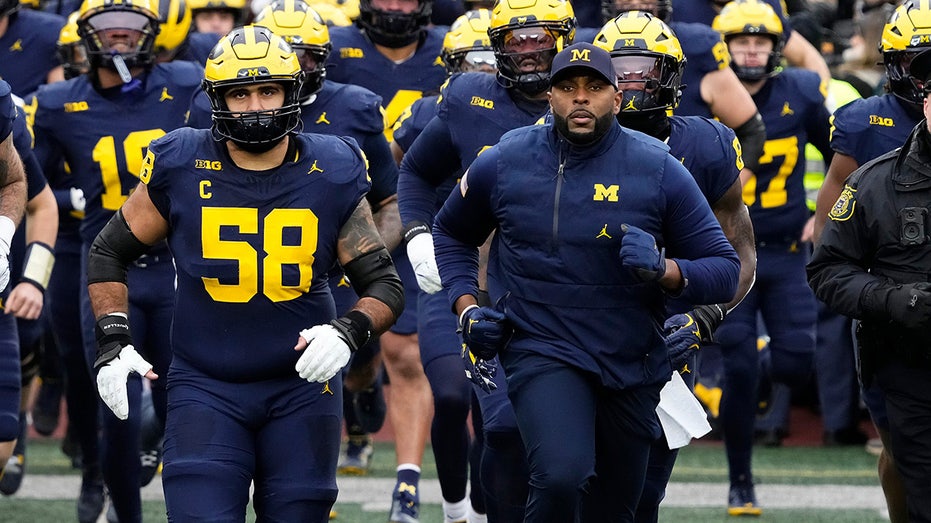
The Sherrone Moore scandal at the University of Michigan is not just a story about an alleged affair and a 70% raise. It’s a case study in how power, money, and institutional incentives collide inside major college athletic departments — and why universities repeatedly fail to regulate intimate relationships and conflicts of interest until they explode into public crises.
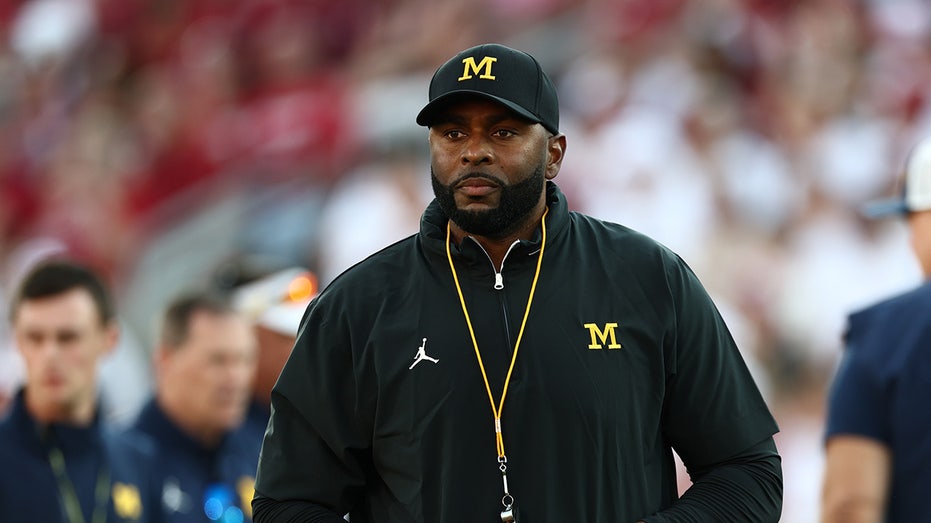
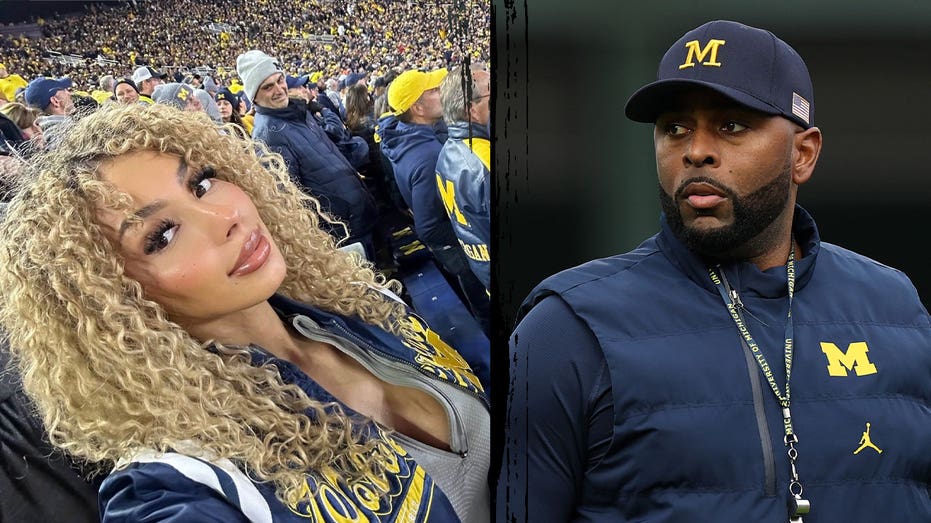
On the surface, the facts are straightforward: Michigan’s national-championship-winning head football coach is fired with cause after an investigation into an “inappropriate relationship” with a staffer. That staffer, listed as Executive Assistant to the Head Football Coach, sees her salary jump from roughly $58,000 to $99,000 in the 2025 fiscal year — a 70.62% increase according to university payroll records. Within an hour of his firing, Moore is detained by police after reportedly threatening harm to himself and others.
Dig deeper, and this becomes a revealing window into three much bigger issues: the long-running problem of power-imbalanced relationships in academia and athletics, the opaque compensation systems inside revenue sports, and the ethical blind spots that emerge when winning football games becomes a quasi-religion.
The Bigger Picture: Power, Sex, and College Sports
Universities have spent the past decade tightening rules on relationships between supervisors and subordinates, particularly in the wake of the #MeToo movement. Many now explicitly prohibit romantic or sexual relationships in direct reporting lines, or require immediate disclosure and recusal from employment decisions. Athletics has been a frequent flashpoint.
High-profile precedents include:
- Bobby Petrino (Arkansas, 2012): Fired after a motorcycle accident revealed an undisclosed relationship with a staffer he’d helped hire and compensate. The scandal exposed secret payments and falsified hiring processes.
- Urban Meyer-era Florida & Ohio State controversies: Not strictly about romantic relationships, but emblematic of how winning coaches often operate in quasi-autonomous fiefdoms, with limited oversight over staff dynamics and discipline.
- Multiple cases in academia broadly: From business schools to medical centers, faculty and administrators have been sanctioned or fired for undisclosed relationships with direct reports that compromised evaluation, pay, and promotion decisions.
Football amplifies those underlying risks. In a top-tier program like Michigan, the head coach is not just a manager; he’s effectively a CEO of a multimillion-dollar enterprise. The asymmetry of power between a head coach and an executive assistant is enormous: access, job security, hours, travel, and reputation all hinge on his favor. Even if a relationship is formally consensual, the power imbalance makes it ethically fraught and, under many policies, flatly prohibited.
That’s the context in which a 70% raise, given to someone allegedly in a relationship with the decision-maker, becomes more than just a salary anomaly — it becomes a potential sign of institutional failure.
What the 70% Raise Really Signals
On its own, a jump from roughly $58,000 to $99,000 doesn’t prove wrongdoing. In athletics, pay can move quickly due to:
- Title changes (e.g., expanding duties, managing more staff)
- Retention bumps when staff are at risk of leaving
- Market adjustments aligning with peers at other programs
But the timing and relationship context matter. Here’s what stands out:
- Scale of the increase: A 70.62% year-over-year raise is atypical in public university administration. Most staff see annual increases in the 2–5% range, even in well-funded departments. Double-digit bumps usually accompany promotions or major scope changes.
- Reporting line: As an Executive Assistant to the Head Football Coach, the staffer is directly tied to Moore’s office. If Moore had any role in recommending or approving the raise, it raises classic conflict-of-interest questions.
- Pattern of behavior: The raise is now being viewed through the lens of a confirmed policy-violating relationship. That retroactively reshapes how stakeholders interpret otherwise ambiguous financial decisions.
This is where institutional process becomes critical. In a well-governed system, compensation decisions involving potential conflicts are routed away from the conflicted supervisor and subjected to independent review. If that did not happen here, Michigan’s problem is no longer just “one coach’s misconduct,” but a structural weakness in how its athletics department reviews, approves, and audits pay.
The Structural Problem: Football as a Parallel Power Structure
At major football schools, the head coach often earns 5–10 times the salary of the university president and wields more influence with alumni and donors. This distorts oversight in several ways:
- Deference culture: Staff, administrators, and even some trustees are hesitant to challenge star coaches for fear of jeopardizing winning seasons and donor money.
- Opaque staffing: Football operations staffs have grown dramatically — analysts, assistants, executive support roles — often funded through athletic department or donor-backed budgets with limited granular scrutiny from central administration.
- Fast-moving HR decisions: Hiring, salary bumps, and role changes can happen quickly in the name of “competitiveness,” bypassing the slow, bureaucratic HR processes that govern the rest of campus.
In that environment, a coaching staff can operate almost like a semi-private company inside a public institution. That’s where scandals like this tend to incubate: inside zones of high autonomy and low transparency.
Mental Health, Public Downfall, and Institutional Responsibility
The post-firing episode — police called, threats of self-harm and harm to others, detention in county jail — opens a second, often under-discussed dimension: the mental health risks embedded in the high-pressure ecosystem of big-time coaching.
Coaching contracts in revenue sports often include “for cause” clauses that void buyouts if a coach violates policy, commits misconduct, or brings disrepute to the institution. That became standard after costly scandals at multiple universities. The stakes are financially immense: a firing with cause can erase tens of millions in guaranteed compensation.
When a coach goes from national championship orbit to unemployed and publicly disgraced overnight, the psychological whiplash is severe. None of this excuses misconduct, but it raises questions about whether institutions have robust protocols to manage the human fallout of these decisions — both for the coach and for the staffers caught in the crossfire.
What Experts See Beneath the Headlines
Organizational ethics scholars have long warned that universities underestimate the risk of intimate relationships within hierarchical structures.
Harvard Business School professor Max Bazerman, who studies conflicts of interest, has argued that, “When decision-makers are allowed to reward people with whom they have personal ties, the bias is not the exception; it’s the default. The surprise isn’t that scandals occur, but that institutions act surprised when they do.” While Bazerman is speaking generally, the logic maps cleanly onto a situation where a head coach is linked to the pay decisions of a staffer with whom he allegedly had an inappropriate relationship.
Meanwhile, sociologist Dr. Victoria Jackson, who researches college sports, has noted that, “In football, the coach is often treated as an asset to be protected rather than an employee to be supervised. That inversion of roles is where oversight tends to break down.”
From a human resources perspective, former NCAA compliance officials have also flagged that executive assistants in high-profile programs are often under-classified relative to their responsibilities — handling sensitive travel, scheduling, donor interaction, and sometimes confidential communications. That can create both legitimate justification for pay increases and opportunities for favoritism.
Data & Patterns: Is This Really an Outlier?
While specific comparative data for Michigan’s executive assistant roles in football aren’t publicly summarized, broader payroll trends at large public universities provide some benchmarks:
- Across Big Ten universities, administrative support staff in athletics typically earn in the $45,000–$80,000 range, with higher numbers in top programs and for roles closely tied to head coaches.
- Year-over-year raises above 20% are uncommon without a change in job grade or role; 50–70% increases usually signal promotion, reclassification, or special adjustments.
- In some documented scandals (e.g., the Petrino case), the romantic partner’s salary and hiring path were key evidence of misuse of authority.
What’s missing so far in Michigan’s case is a transparent explanation: Was there a formal title change? Expanded duties? Market realignment? Or did the raise flow through in a way that relied heavily on the coach’s discretion? The university’s silence so far on the compensation question leaves that gap wide open.
What This Means for Michigan and Beyond
For Michigan, the immediate questions are:
- Policy compliance: Did the relationship violate written policy on supervisor-subordinate relationships, disclosure, and conflicts of interest? The university has said “yes” in general terms by calling it a “clear violation,” but specifics will matter if litigation follows.
- Compensation review: Who approved the 70% raise, on what basis, and with what documentation? Was any internal alarm raised at the time?
- Risk management: Are there similar vulnerabilities elsewhere in the athletic department — other staffers whose pay or roles are tightly controlled by a single powerful figure?
Nationally, this case fits a worrying pattern: institutions often react forcefully after a scandal breaks, firing or disciplining individuals, but do not substantially rewire the underlying systems that allowed the misconduct to occur or go undetected.
Specifically, we should expect — and watch for — these kinds of reforms:
- Stricter relationship policies: More universities explicitly banning or tightly regulating romantic relationships within direct reporting lines in athletics, mirroring recent changes in medicine and business schools.
- Compensation audits: Regular, independent reviews of salary changes in high-risk units like football, with special scrutiny for unusually large raises or pay patterns linked to specific leaders.
- Governance changes: Stronger oversight from central administration and boards over athletic department HR decisions, rather than leaving them entirely to athletic directors and coaches.
Looking Ahead: What to Watch Next
Several developments will determine how far-reaching this story becomes:
- Legal and contractual fallout: If Moore’s firing with cause is litigated, his contract, internal emails, and HR documentation may come to light, revealing how the raise was justified and who knew what, when.
- Potential claims by the staffer: Depending on the nature of the relationship and workplace dynamics, there is potential for future complaints or litigation alleging harassment, coercion, or a hostile work environment. Alternatively, she may become a silent central figure whose professional reputation is reshaped by headlines she did not control.
- NCAA and conference scrutiny: While this is primarily an employment and ethics issue, not a competitive-advantage violation, conferences and the NCAA are increasingly attentive to reputational and governance risks in member institutions.
- Policy revisions at Michigan: Any new guidelines on staff relationships, pay oversight, or coach supervision will offer clues about what internal weaknesses the university has identified.
The Bottom Line
The Sherrone Moore saga is not just about a coach’s personal failings or the sensational detail of a 70% raise. It reveals how fragile the guardrails are when a single individual in a high-revenue sport wields outsized power over careers, money, and institutional prestige.
The real test for Michigan — and for college athletics more broadly — is whether this moment prompts structural change: transparent pay oversight, clearer relationship policies, and a willingness to treat even the most successful coaches as employees subject to robust supervision, not untouchable rainmakers.
Until that happens, we should expect more stories like this — different names, different schools, but the same underlying script of power, intimacy, and inadequate oversight playing out under the Friday night lights.
Topics
Editor's Comments
One of the most troubling aspects of this story is how predictably it follows patterns we’ve seen before — yet each time, universities act as if the situation is unprecedented. The combination of a powerful coach, a subordinate staffer, and opaque pay decisions is a known risk vector, especially in football where money and prestige are concentrated in one office. The question isn’t just whether Michigan applied its policies correctly in this individual case, but why those policies weren’t designed to prevent such a scenario from arising in the first place. For a public institution, it’s also notable that the crucial piece of information — the 70% raise — emerges from routine payroll disclosure, not proactive transparency. If watchdogs and journalists had to connect those dots, what else remains invisible inside athletic departments that don’t face the same public-records obligations? As long as universities treat athletics as an exception to normal governance standards, they will continue to be surprised by outcomes their own structures make almost inevitable.
Like this article? Share it with your friends!
If you find this article interesting, feel free to share it with your friends!
Thank you for your support! Sharing is the greatest encouragement for us.