Beyond the Viral Punch: What the Utah Tech Incident Reveals About College Basketball’s Hidden Pressures

Sarah Johnson
December 7, 2025
Brief
A viral punch after a Utah Tech player gets dunked on is more than bad sportsmanship. It exposes deeper pressures of masculinity, social media, NIL branding, and emotional strain in college basketball.
Viral Punch, Deeper Problem: What a Utah Tech Dust‑Up Reveals About Anger, Masculinity, and the Modern College Game
In isolation, a Utah Tech guard throwing a punch after getting dunked on looks like a simple story: bad sportsmanship, viral outrage, likely suspension. But the real significance lies beneath the clip. This moment is a small, highly visible symptom of larger pressures shaping college athletes today—pressures around masculinity, social media spectacle, NIL-era branding, and the normalization of confrontation as content.
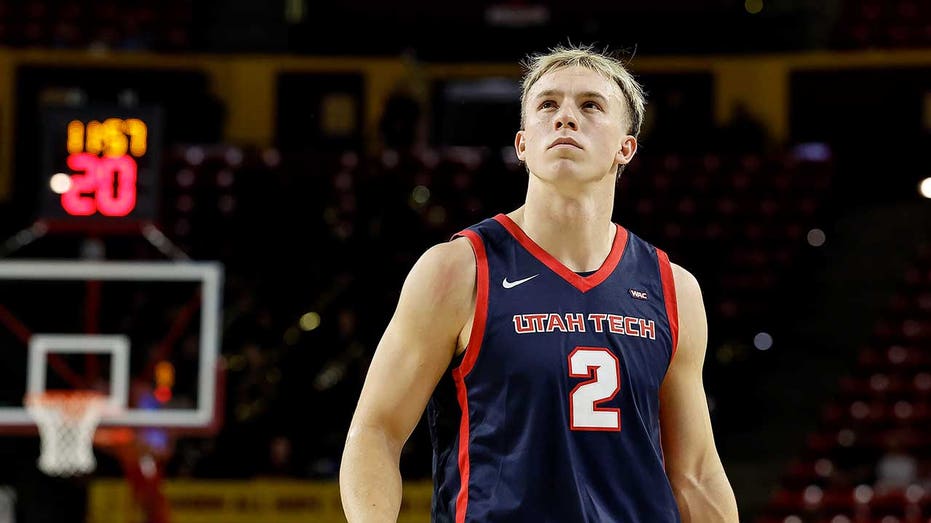
When Chance Trujillo swung at Santa Clara’s Allen Graves after being dunked on, it wasn’t just a lapse in self-control. It was a collision of old-school macho basketball culture with a new reality: every mistake, every humiliation, every emotional crack is now a permanent, shareable, monetizable video asset. Understanding that collision is the only way to make sense of what happened—and to see what’s coming next.
How We Got Here: From ‘No Layups’ to Viral Clips
Basketball has always carried an undercurrent of ego and intimidation. In the 1980s and 1990s, hard fouls on dunks were a ritual response. You didn’t let someone “embarrass” you at the rim. But there were two key differences: the game was more physical, and the audience was limited to whoever was in the arena or watching one of a few broadcasts.
In the early 2000s, the NBA and NCAA began tightening rules around flagrant fouls and fighting—shaped in part by notorious incidents like the 2004 “Malice at the Palace.” The official message: no tolerance for on-court violence. Yet at the same time, the culture around basketball highlights moved in the opposite direction.
- Dunks and crossovers became social currency: From AND1 Mixtapes to YouTube to TikTok, humiliating an opponent became its own genre of entertainment.
- “Getting dunked on” turned into a meme: Players, especially defenders, became punchlines online in ways previous generations never faced.
- Social media turned every play into a public referendum on toughness, swagger, and respect.
The result is a split reality for players: official rulebooks demand composure, but online culture rewards emotional reaction, confrontation, and highlight-driven drama. A player like Trujillo exists at that intersection—judged by referees for his actions and by millions of strangers for his image.
What the Punch Really Signals: Ego, Masculinity, and Public Humiliation
On the surface, the trigger was straightforward: Graves drove, dunked over Trujillo, and celebrated. Moments later, Trujillo swung, appearing to catch Graves in the jaw. But what’s driving this kind of reaction goes deeper than one play.
First, there’s the issue of masculinity in competitive sports. For decades, the implicit message to male athletes has been: don’t show weakness, don’t accept disrespect, don’t get embarrassed. Being dunked on—especially violently and in the final minutes of a loss—can feel like a public stripping of status.
Second, there’s the new permanence of humiliation. In a pre-digital era, a defender might hear about the dunk for a few days on campus. Today, that moment is clipped, reposted, captioned, and memed globally within minutes. The thought process—conscious or not—is no longer “I just got dunked on,” but “millions of people might watch me get dunked on.” That intensifies the emotional spike.
Sports psychologist Dr. Kensa Gunter has often pointed out that athletes are navigating “constant public performance, not just in games but in their digital lives.” Plays like this aren’t just physical contests; they’re reputational battles.
Third, there’s the shift toward individual branding in college sports. With NIL (Name, Image, Likeness) deals now part of the landscape, players are thinking more about how they’re perceived: tough or soft, alpha or victim. That doesn’t excuse a punch—but it does help explain why moments of perceived disrespect can now feel existential for young athletes.
Why This Isn’t Just ‘Heat of the Moment’
Some will argue this is just basketball emotion boiling over—technical fouls happen, scuffles occur, move on. But dismissing it as “just heat of the moment” ignores three important dimensions.
- Copycat Dynamics: Viral sports confrontations don’t just entertain fans; they teach younger players what “counts” as competitive fire. When clips of punches, standoffs, and taunts go viral, they subtly normalize escalation as part of the show.
- Hidden Mental Health Stress: College athletes report higher levels of anxiety and depression than the general student body, and they live in an environment of constant evaluation—from coaches, peers, scouts, and online strangers. Emotional regulation under those conditions is a learned skill, not a given.
- Institutional Incentives: Conferences and universities often react with disciplinary statements, but they rarely address the systemic issue: investing in emotional skills and conflict de-escalation with the same seriousness as strength training.
The fact that both players were initially given technicals—one for the punch, one likely for post-dunk conduct or reaction—reflects another persistent blind spot: we penalize outcomes harshly, but we often ignore the emotional environment that produces them.
What Experts See Beneath the Viral Clip
Experts who study sport, culture, and behavior see this incident as part of a broader pattern rather than a one-off.
Dr. Michael Anderson, a sports sociologist who researches masculinity in athletics, frames it this way:
“We’ve romanticized trash talk, humiliation, and dominance as part of basketball culture for decades. When you celebrate the ‘poster dunk’ as a ritual of embarrassment, you can’t be surprised when some players respond with aggression rather than acceptance.”
Meanwhile, sports psychologist Dr. Alexandra Martin points to a developmental gap:
“We pour resources into skill development and physical training but devote comparatively little to emotional regulation under stress. The problem isn’t that athletes feel anger—that’s human. The problem is we haven’t systematically trained them to handle that anger when the cameras are rolling and their identity feels under threat.”
From an officiating and governance perspective, former conference administrator Tom Wistrcill (who once led the WAC) has previously emphasized that conferences are increasingly concerned with brand protection: minimizing incidents that make the league look undisciplined. That makes it likely that the Western Athletic Conference will look beyond a simple technical foul, potentially adding game suspensions or mandated sportsmanship counseling.
The Data: Fights Down, Viral Outrage Up
Despite the visibility of incidents like this, available data suggests that physical altercations in college basketball have become less frequent and less severe over time, in large part due to stricter penalties and clear rules on leaving the bench area and engaging in fights.
However, the perception of violence and disrespect may be going in the opposite direction because:
- Every confrontation is now recorded from multiple angles and amplified on social platforms.
- Sports accounts and betting-related channels often boost the most controversial clips for engagement.
- Algorithms reward outrage, not context—so a punch gets traction, but nuanced follow-up rarely does.
In this case, the video was picked up quickly by a betting-focused NCAA hoops account and then spread across sports media, ensuring the punch would define the game’s narrative far more than the 90–80 final score.
Institutional Response: Discipline vs. Development
Utah Tech and the Western Athletic Conference now face a familiar but difficult choice: how to balance punishment, deterrence, and player development.
Likely short-term steps include:
- Reviewing game footage and official reports to determine whether the punch meets criteria for flagrant misconduct and suspension.
- Issuing public statements affirming a commitment to sportsmanship and player safety.
- Working with Utah Tech’s coaching staff on internal discipline, which may range from a game suspension to additional conditions.
But the more meaningful question is whether this becomes a teachable moment or just another disciplinary case. Some programs have begun requiring workshops on emotional regulation, conflict de-escalation, and social media pressure. Others bring in former players who’ve lost opportunities due to on-camera incidents to talk candidly with current athletes.
Without that deeper approach, the cycle repeats: punish, condemn, move on—until the next viral clip.
Overlooked Angle: The Role of Teammates and Opponents
One detail easy to miss in the outrage is that a Santa Clara player quickly held Graves back while officials stepped in. That matters. Increasingly, players themselves are the first line of de-escalation in these situations.
In many recent college and pro incidents, teammates have physically pulled one another away to prevent escalation, aware of the consequences: ejections, suspensions, and reputational damage. That emerging norm—players stopping other players—may be one of the most important cultural shifts in high-level basketball, and it deserves more attention than it gets.
Looking Ahead: What to Watch Beyond the Suspension
In the coming days and weeks, the obvious question will be: How many games will Trujillo miss, and what formal discipline will the WAC impose? But there are less obvious, more important questions:
- Does Utah Tech use this as a program-wide reset? Public apology, internal standards review, and mental skills training are signs of a program taking culture seriously, not just damage control.
- Does the WAC pair punishment with guidance? Conferences can require sportsmanship and emotional regulation programs as conditions of eligibility after serious incidents.
- How does the player himself respond? Acknowledging the mistake, explaining the emotional trigger without making excuses, and discussing what he’s doing to address it can change the narrative from “hothead” to “cautionary, but teachable story.”
- Do broadcasters and digital outlets change tone? There’s a difference between showing a clip to analyze a problem and repeatedly using it as engagement bait.
The Bottom Line
This incident is not just about a punch after a dunk. It sits at the intersection of hypermasculine sports culture, the relentless visibility of social media, and a college system that demands emotional perfection without consistently teaching emotional skills.
Unless institutions—universities, conferences, broadcasters, even fans—acknowledge that intersection, they will keep reacting to symptoms rather than causes. The next viral video is not a question of if, but when.
What happens in Utah Tech’s locker room and WAC boardrooms after this moment will say far more about the future of college basketball than the punch itself.
Topics
Editor's Comments
What’s striking about the Utah Tech incident is how quickly public discourse jumps to questions of character—labeling a player as dirty, soft, or out of control—while largely ignoring the structural environment he’s operating in. We ask 18–22-year-olds to perform under professional-level scrutiny, in an ecosystem that monetizes both their brilliance and their worst moments, then act surprised when some crack under pressure. That doesn’t absolve personal responsibility; the punch was unacceptable and rightly subject to sanction. But if institutions continue to respond only with punishment, they’re effectively outsourcing emotional education to social media and locker-room culture—two places not known for their nuance. The more contrarian view here is that conferences should treat incidents like this less as embarrassments and more as diagnostic tools. They expose precisely where support systems are thin: media literacy, emotional regulation, and honest conversations about masculinity. Until that gap is addressed, we’ll keep reacting to viral symptoms while leaving the underlying illness untouched.
Like this article? Share it with your friends!
If you find this article interesting, feel free to share it with your friends!
Thank you for your support! Sharing is the greatest encouragement for us.