Unveiling Wisconsin's Underwater Canoe Cache: Redefining North America's Ancient Maritime Prowess

Sarah Johnson
December 3, 2025
Brief
Discover how Wisconsin's underwater ancient canoes reshape North American prehistoric history, revealing millennia-old maritime innovation, environmental adaptation, and indigenous sophistication long overlooked in mainstream archaeology.
Opening Analysis
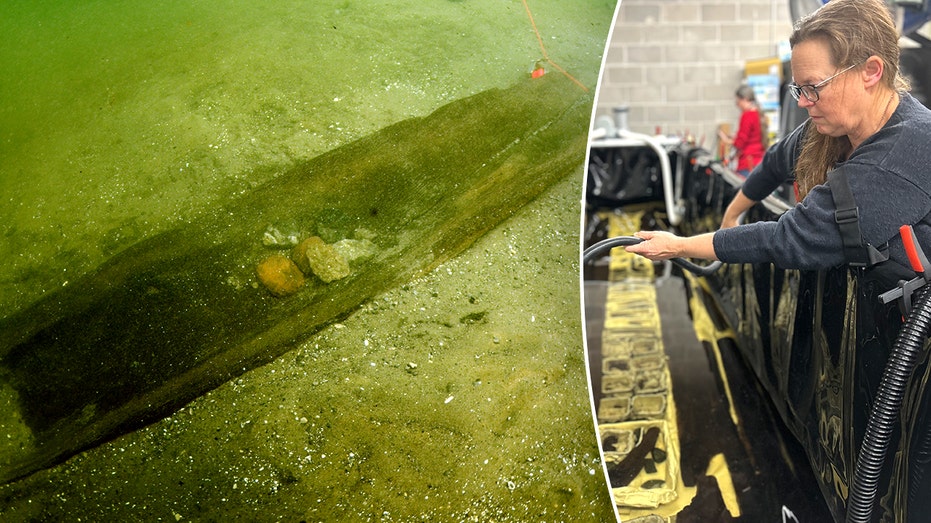
The recent discovery of an underwater "parking lot" of ancient canoes in Wisconsin's Lake Mendota is a groundbreaking milestone in North American archaeology. Beyond the intrigue of millennia-old vessels, this find profoundly reshapes our understanding of prehistoric lifeways, transportation, and regional environmental adaptation. It prompts us to reevaluate long-held assumptions about early indigenous innovation and their intimate relationship with the landscape, predating many of the monumental achievements we traditionally associate with ancient civilizations worldwide.
The Bigger Picture
Historically, the Midwest has been less celebrated for its archaeological artifacts compared to regions like the Southeast, which boasts well-studied mound complex sites. Most research in the Great Lakes region focused on shoreline settlements and burial sites, with canoes often considered perishable artifacts lost to time. The preservation of these vessels—some dating back over 5,000 years—challenges this bias, illustrating that waterways served as vital arteries for indigenous populations long before European contact. These canoes, crafted from oak, represent sophisticated knowledge of materials, tool use, and watercraft construction that evolved over millennia.
Moreover, their collective presence in Lake Mendota suggests a deliberate as well as pragmatic cultural strategy. As climate and landscape changed over thousands of years, indigenous peoples adapted by establishing these submerged caches that were preserved by constant lake conditions, creating a natural museum of human ingenuity.
What This Really Means
This discovery casts light on the socio-economic fabric of prehistoric Wisconsin. Canoes, especially dugouts of such antiquity, were likely more than mere transportation tools; they were integral to trade, social exchange, and resource management. Their construction from specific oak species indicates a deliberate selection process, perhaps driven by durability or availability—highlighting a proto-bioengineering prowess that predates modern scientific terminology.
Furthermore, the fact that some canoes predate the Egyptian pyramids and the invention of writing suggests a technological sophistication in North America comparable to ancient civilizations elsewhere. This challenges the Eurocentric narrative that often dismisses indigenous innovations as simplistic or primitive, emphasizing instead their complex relationship with the environment and their technical mastery.
Expert Perspectives
Annette Murphy, an anthropologist specializing in indigenous maritime technologies, emphasizes that "these canoes not only demonstrate technical mastery but also underline the importance of waterways as ecological and cultural corridors". She notes that the deliberate preservation of these vessels might reflect spiritual or ritualistic significance, adding a cultural depth often overlooked in material-focused archaeology.
Dr. Richard Bradley, an environmental historian, points out that "these findings argue for a broader understanding of early human-environment interactions, especially in regions where landscape changes—like terraforming—altered transportation routes and settlement patterns."
Data & Evidence
- Oldest canoe: approximately 5,200 years old, predating the Great Pyramid of Giza (~4,500 years old).
- Material: red and white oak—species with water-absorbent qualities, indicating advanced knowledge of material properties.
- Construction: Dugout style, common among early North American tribes, with evidence of intentional tree damage possibly for bioengineering or resource management.
- Number of canoes recovered: 2 retrieved, 14 remain submerged, indicating a substantial, intentional collection point.
- Dating techniques: Radiocarbon dating aligning with late archaic to early Woodland periods, a time of significant cultural evolution.
Looking Ahead
Future research will likely focus on developing non-intrusive methods to study the remaining submerged canoes, leveraging advanced underwater archaeology, sonar, and perhaps 3D mapping. Insights gained could inform regional prehistoric trade routes, social organization, and environmental adaptation strategies. Furthermore, this find may catalyze a reassessment of indigenous history across North America, elevating the region's narrative within the global historic timeline of technological achievement.
There is also potential for collaborative community-based projects, integrating indigenous oral histories with scientific data—further enriching our understanding and honoring cultural heritage.
The Bottom Line
This discovery of ancient, millennia-old canoes in Wisconsin redefines North American prehistoric narratives, revealing a sophisticated, environmentally integrated, and culturally significant maritime tradition. It highlights the importance of Lake Mendota as a preserved ancient landscape and calls for a reassessment of indigenous technological history, pushing the frontier of archaeology back thousands of years and emphasizing the region's global historical significance.
Topics
Editor's Comments
This discovery underscores the importance of regional archaeology in reshaping our understanding of prehistoric innovation. While mainstream narratives often focus on civilizations like Egypt or Mesopotamia, findings like Wisconsin’s submerged canoes reveal that North America was a hub of technological and cultural sophistication well before European contact. It also sparks critical questions about how environmental factors—like lake conditions—are underappreciated in the preservation and interpretation of ancient artifacts. These canoes, potentially integral to trade, spiritual life, and survival strategies, remind us that indigenous communities engineered solutions attuned to their landscapes—solutions that continue to deserve recognition and respect.
Like this article? Share it with your friends!
If you find this article interesting, feel free to share it with your friends!
Thank you for your support! Sharing is the greatest encouragement for us.