Unveiling the Elite: Insights from a 1,300-Year-Old Avar Warrior’s Tomb and Its Broader Societal Implications

Sarah Johnson
December 3, 2025
Brief
An in-depth analysis of the 1,300-year-old warrior's tomb in Hungary reveals new insights into Avar society, military innovation, and Eurasian trade networks, transforming our understanding of early medieval Europe.
Opening Analysis
The recent discovery of a high-status warrior's tomb dating back over 1,300 years in Hungary offers a rare glimpse into the social hierarchy and martial culture of the Middle Avar Period. This find is not only significant archaeologically but also offers a valuable window into the complex dynamics of nomadic and semi-settled societies in early medieval Europe. It challenges existing narratives about the Avars’ societal structure, warfare, and cultural exchanges with neighboring civilizations.
The Bigger Picture
The Avars, originating from Central Asia, arrived in the Carpathian Basin in the late 6th century and established a dominant empire until their decline in the 8th and 9th centuries. Their society was a tapestry woven from nomadic traditions, military prowess, and interactions with the Byzantine Empire, Franks, and later the emerging Slavic states. Historically, the Avars are often viewed through the lens of their conquests and diplomatic relations, but recent archaeological excavations, such as this tomb, deepen understanding of their social hierarchies and cultural practices.
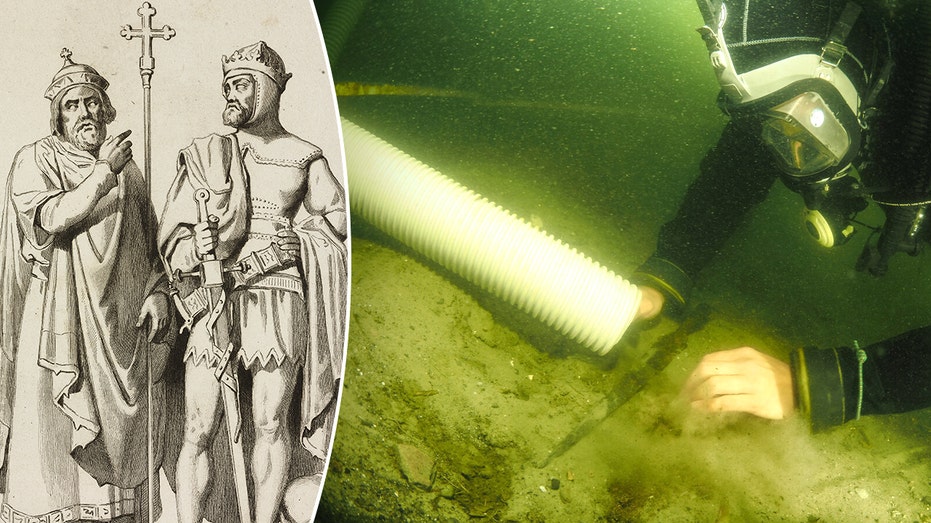
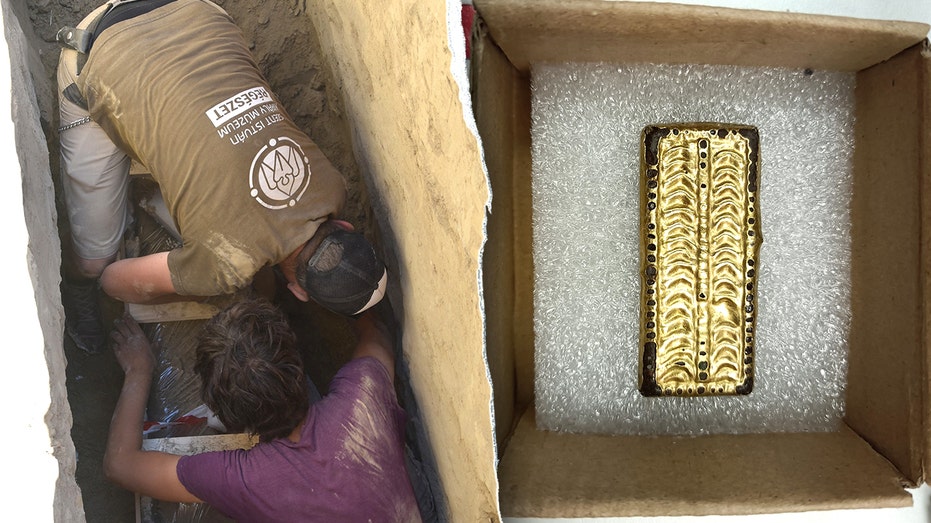
The middle Avar period, spanning roughly from 670 to 690 AD, was marked by consolidation of power, elite warfare, and the emergence of specialized weaponry, as evidenced by this saber. The archaeological context also indicates that burial practices included significant ritual elements, often involving grave disturbances and re-reopenings, which might reflect evolving religious or social ideologies.
What This Really Means
This discovery enhances our understanding of the social stratification within Avar society, highlighting a warrior class that was both elite and well-equipped. The presence of rare artifacts—such as gilded braid rings, silver belt ornaments, and a sophisticated saber—suggests an economy that supported specialized crafts and a hierarchical social structure where martial prowess conferred high status.
The fact that the tomb was disturbed yet preserved artifacts intact indicates ritual significance beyond mere burial. Such disturbances could have been religious, diplomatic, or opportunistic, but their timing—likely decades after burial—reflects evolving cultural attitudes towards ancestors, warfare, or spiritual beliefs.
Furthermore, the presence of the saber—an early example of a weapon type associated with mounted warriors—may signal a technological shift in weaponry, reflecting military innovations that would influence later medieval warfare in Eastern Europe. This aligns with broader patterns of technological diffusion and adaptations among nomadic and semi-nomadic societies across Eurasia, which had profound impacts on regional power dynamics.
Expert Perspectives
Dr. Anna Varga, an expert in early medieval Central European history, notes: "This find transforms our understanding of Avar martial culture; the rarity and condition of the saber suggest a high level of craftsmanship and an evolving warfare strategy that emphasized mobility and specialized weaponry."
Professor Michael Hart, a specialist in Eurasian nomadic societies, comments: "The artifact assemblage underscores the Avars’ role as cultural and military intermediaries—adapting Central Asian traditions to the European context, which influenced regional warfare and social organization."
Archaeometallurgist Dr. László Sándor emphasizes: "The sophisticated metallurgy involved in producing gilded braid rings and sabers indicates trade networks extending into Byzantium and possibly China, revealing the Avars’ integration into larger Eurasian economic systems."
Data & Evidence
- Approximately 80 similar sabers have been found from the Middle Avar Period, with this one being notably well-preserved, offering insights into early weapon technology.
- The burial site is less than seven feet deep, aligning with other elite graves indicating social stratification.
- Artifacts such as silver belt ornaments and gilded braid rings reflect advanced craftsmanship and wealth accumulation among high-status warriors.
- Satellite imagery of the cemetery reveals potential additional burial sites, suggesting a broader social hierarchy and territorial control.
- Trade and metallurgical analysis point towards a network connecting the Avars with Byzantium, the Silk Road route, and possibly East Asia.
Looking Ahead
This discovery opens multiple avenues for future research. More detailed metallurgical analysis could trace metal sources, revealing trade routes and economic relationships. Radiocarbon dating and isotopic studies can help refine the dating of the burial and animal husbandry practices. Moreover, expanding satellite surveys of the region might uncover additional graves, crafting a more comprehensive picture of the Avar societal landscape.
In terms of cultural implications, this find may challenge the perception of Avars solely as a warrior nomadic people, highlighting their nuanced social hierarchy and ceremonial practices. Further interdisciplinary studies combining archaeology, anthropology, and history will be pivotal in reconstructing the full narrative.
The Bottom Line
This remarkable archaeological find not only provides a rare glimpse into the elite warrior class of the Middle Avar Period but also emphasizes the complex socio-economic structures, technological innovations, and cultural exchanges in early medieval Europe. It underscores Hungary’s importance as a crossroads of Eurasian civilizations and invites a reevaluation of the Avars' legacy beyond simplistic conquest narratives, pointing instead to a society rich in craftsmanship, strategic adaptability, and cultural sophistication.
Topics
Editor's Comments
This discovery not only enriches our understanding of the Avars but also exemplifies how modern archaeological techniques—such as satellite imagery and metallurgical analysis—are revolutionizing our capacity to reconstruct past societies. It prompts shifting narratives from viewing the Avars solely as barbarian conquerors to recognizing their sophisticated social hierarchies and technological innovations. The presence of a rare saber, in particular, suggests a nuanced military identity that emphasized mobility and craft specialization, aligning with broader Eurasian trends. Further exploration of similar sites could challenge existing paradigms about cultural exchange and technological diffusion during this pivotal period. It’s an exciting reminder that history’s mysteries often lie just beneath the surface, waiting to rewrite our understanding of the past.
Like this article? Share it with your friends!
If you find this article interesting, feel free to share it with your friends!
Thank you for your support! Sharing is the greatest encouragement for us.