Bullets in the Bog: How New Finds at Culloden Are Quietly Rewriting British History

Sarah Johnson
December 12, 2025
Brief
New ballistic evidence from the Culloden battlefield reveals a disciplined Irish–French rearguard action and challenges romantic myths, reshaping how Britain understands its bloodiest domestic battle and its political legacy.
Culloden’s New Bullets, Old Wounds: How Battlefield Archaeology Is Quietly Rewriting British History
Archaeologists have pulled more than 100 lead projectiles from the boggy soil of Culloden, the site of Britain’s last pitched battle in 1746. On the surface, it’s a neat historical find. In reality, it’s something more consequential: physical evidence that challenges how we remember the end of the Jacobite cause, the role of foreign fighters in Britain’s civil wars, and the politics of national memory in Scotland and beyond.
The discovery – including a Jacobite-fired three‑pound cannonball and musket and pistol balls likely tied to French‑Irish troops covering a desperate retreat – speaks to one of the most overlooked episodes of the battle’s final minutes. This is not just about where bullets fell; it’s about who stood and who gets erased when history hardens into myth.
The neglected battlefield that shaped Britain
The Battle of Culloden on 16 April 1746 lasted less than an hour, but its consequences have echoed for nearly three centuries. The Jacobite army of Charles Edward Stuart (Bonnie Prince Charlie) faced government forces commanded by the Duke of Cumberland on a moor outside Inverness. The defeat ended serious attempts to restore the House of Stuart to the British throne and ushered in a ruthless campaign to pacify the Highlands.
In the decades that followed, British authorities dismantled the clan system, banned Highland dress, and imposed new legal and economic structures that accelerated the transformation of the Highlands from a militarized, clan-based society into a more commercial, landlord-driven economy. The battle became a hinge moment: from a Britain that could still experience large-scale internal rebellion to one increasingly focused on imperial expansion overseas.
Yet Culloden is also unusual among major European battlefields for how long it remained poorly understood in material terms. For much of the 19th and 20th centuries, the site was fragmented, altered by agriculture and forestry, and only partially protected. Romantic imagery and nationalist literature did more to shape public memory than systematic archaeological work.
That is one reason the new discoveries matter: they are part of a slow correction in which science, rather than sentiment, is beginning to redraw the map of what actually happened on that moor.
Why a handful of bullets changes the story
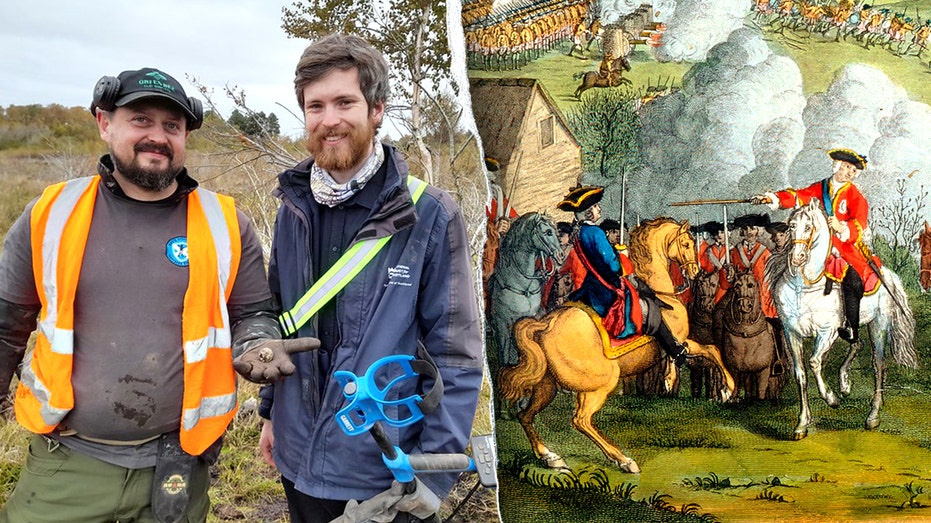
The National Trust for Scotland team and volunteers uncovered projectiles in an area long considered challenging to investigate. Boggy ground, 19th‑century tree planting, soil acidification, and later clearances had likely concealed or disturbed artefacts. The assumption for years was that not much remained there to find. The bullets prove otherwise.
Two elements of the discovery are especially significant:
- Evidence of an Irish–French rearguard action: The distribution and types of musket and pistol balls suggest a close‑quarters firefight between Jacobite‑aligned Irish troops in French service and advancing government dragoons. This aligns with fragmentary written accounts that a battalion of the Irish Brigade stood between retreating Jacobites and government cavalry.
- A rare Jacobite‑fired cannonball: Jacobite artillery has often been depicted as ineffective and quickly silenced. A cannonball clearly associated with their guns in this sector hints at more persistent or strategically placed fire than many narrative accounts imply.
This matters because it challenges two persistent simplifications of Culloden: that the Jacobite line simply collapsed in chaos, and that foreign units played a marginal role. The physical scatter of ammunition suggests a more ordered – and more sacrificial – final phase, in which a disciplined rearguard enabled thousands of others to escape.
The battle beneath the battlefield: memory, myth, and who gets remembered
Culloden operates in Scottish and British memory less as a military event and more as a symbol. For some it’s a story of a doomed romantic uprising; for others, a lesson in the futility of rebellion; for many in the Highlands, a trauma that preluded cultural repression and later the Highland Clearances.
In that symbolic landscape, certain actors loom large – Bonnie Prince Charlie, the Duke of Cumberland, heroic Highland clans – while others blur into the background. The Irish Brigade in French service, who fought and died on a foreign field for a dynastic cause, tend to be footnotes.
The new finds push against this selective memory. They force historians and the public to acknowledge that the Jacobite army was not purely a Highland force but part of a wider transnational Catholic and dynastic struggle that stretched from Paris to Rome. French subsidies, Irish officers, and continental military doctrine were integral to the uprising. The bullets are a physical reminder that Culloden was a European battle fought on British soil, not just a domestic clash between Scots and English.
This complicates modern nationalist narratives that draw straight lines from Culloden to contemporary Scottish grievances. It also complicates comfortable British narratives which portray the conflict as a simple confrontation between “rebels” and a legitimate modern state. The reality was messier: overlapping loyalties, foreign interventions, and a Britain still in the process of defining what “British” meant.
What battlefield archaeology brings that written history cannot
Battlefield archaeology has transformed our understanding of early modern warfare over the past three decades, from Little Bighorn in the United States to Waterloo in Belgium. At Culloden, the science is especially important because many of the written accounts come from victors – or from later romanticized retellings shaped by politics and nostalgia.
By mapping the locations, calibres, and deformation patterns of ammunition, archaeologists can reconstruct firing lines, ranges, and directions of movement. Clustered pistol balls, for example, often indicate cavalry engagements; certain sizes of musket balls point to specific units or national armies. When paired with topographical data, this creates a dynamic picture of how the battle actually unfolded minute by minute.
At Culloden, previous work has already challenged the traditional map of Jacobite charges and government counter‑fire. The new dataset adds detail to the final act – a phase where written sources are thin, contradictory, or silent. It suggests a structured rearguard engagement rather than an unstructured rout and may reshape how we understand casualty patterns and escape routes.
Importantly, this type of science also highlights how much we still do not know. The fact that an area long considered archaeologically “quiet” has produced such a rich haul implies that other misread parts of the battlefield may still hold surprises. Culloden, in other words, is not a closed case.
The politics of a “solemn site” in a restless present
The National Trust for Scotland’s description of Culloden as a “solemn site” is more than pious language. It speaks to an ongoing tension: how to balance rigorous archaeological investigation with respect for a place many consider hallowed ground.
That tension is sharpened by contemporary politics. In an era of renewed debate over Scottish independence, Britain’s imperial past, and the treatment of minority cultures, Culloden is repeatedly invoked as a symbol of oppression or resistance. Each new discovery becomes fodder for competing narratives: was this primarily a class conflict, a national one, a religious one, or a dynastic struggle?
Scientific finds rarely map neatly onto those narratives. The Irish Brigade’s stand, for example, does not fit easily into a binary story of Scots versus English. Nor does it support the idea that Jacobite forces were simply tactically inept; a disciplined rearguard action is the hallmark of professional soldiery.
As more material evidence accumulates, institutions will face pressure to update interpretive displays, educational materials, and digital reconstructions. That, in turn, can provoke backlash from those invested in older, more comforting myths. The bullets unearthed this autumn are therefore not only historical artefacts; they are catalysts in a live debate over how a nation tells its story.
Data points that reshape the battlefield
While full technical reports have yet to be published, several features of the find are already analytically important:
- Over 100 projectiles: This is a statistically meaningful sample for ballistic mapping, especially in a confined area. It allows for pattern analysis rather than anecdotal inference.
- Mixed ammunition types: The combination of muskets, pistols, and artillery shot indicates overlapping phases of engagement – artillery preparation or support, infantry firefights, and cavalry charges or pursuits.
- Preservation conditions: The fact that these artefacts survived despite soil acidity and prior disturbance suggests that deeper or less accessible layers elsewhere on the field may also preserve material culture, from uniform fittings to personal items.
- Spatial correlation with documentary hints: Where the finds line up with sparse textual references to an Irish Brigade stand, they strengthen those accounts and elevate them from anecdote to evidenced episode.
In a broader research context, Culloden’s emerging ballistic map can be compared with other mid‑18th‑century battlefields, offering insight into how British, French, and allied forces actually fought in the period that bridged the War of Austrian Succession and the Seven Years’ War.
Looking ahead: from annual digs to a long-term reckoning
The National Trust for Scotland aims to carry out at least one major excavation at Culloden each year, with a new sector scheduled for investigation in 2026. Given the latest findings, the stakes of that work are rising.
Three developments are worth watching:
- Digital reconstruction and public access: As ballistic and topographical data accumulate, expect more sophisticated 3D models and augmented reality experiences at the site and online. These will not just illustrate the battle; they will embed the new evidence into how visitors and students visualise it.
- Reassessment of casualty and escape patterns: If the Irish Brigade’s stand is confirmed as a major delaying action, historians may revise estimates of how many Jacobites escaped, where they fled, and how that shaped subsequent crackdowns and emigrations.
- Integration into European military history: Culloden could move from the margins of British national history into the mainstream of European military scholarship, recognised as a key node in France’s proxy warfare against Hanoverian Britain.
There is also an ethical frontier: as more material is uncovered, including potential human remains or personal artefacts, debates over conservation, display, and repatriation (particularly for foreign regiments) will intensify.
The bottom line
A cache of bullets in a Highland bog might seem like a modest discovery, but at Culloden it operates like a set of coordinates altering the map. The new evidence suggests a more disciplined, transnational, and tactically complex end to Britain’s bloodiest domestic battle than many narratives allow.
In doing so, it underscores a larger truth about contested histories: the ground beneath our feet often remembers what our written records forget—or choose not to emphasise. As archaeologists continue to probe the battlefield, they’re not just recovering lead and iron. They’re excavating the stories of those who stood, fired, and died in the final minutes of an old Britain, and forcing a modern one to reconsider how it tells their tale.
Topics
Editor's Comments
What’s striking about this discovery is less the individual artefacts than what they reveal about historical blind spots. The Irish Brigade’s apparent rearguard at Culloden encapsulates a broader pattern: groups that do not neatly fit modern political narratives tend to fade from public memory, even when their actions were tactically crucial. In a Scotland where Culloden is routinely invoked in debates over identity, land and constitutional futures, there’s a risk that archaeology becomes instrumentalised to support pre‑existing stories. Yet the bullets in this boggy corner complicate, rather than confirm, simple versions of events. They point to foreign intervention, professional soldiering and a level of order at the moment of defeat that jars with myths of glorious chaos or abject collapse. The challenge for curators, educators and politicians will be whether they are prepared to let these untidy facts reshape the story they tell, or whether the new evidence is quietly assimilated without confronting deeper assumptions about victimhood, agency and responsibility in 18th‑century Scotland.
Like this article? Share it with your friends!
If you find this article interesting, feel free to share it with your friends!
Thank you for your support! Sharing is the greatest encouragement for us.