US F/A‑18s Near Venezuela: A “Routine Flight” in a Very Non‑Routine Standoff

Sarah Johnson
December 12, 2025
Brief
The U.S. F/A-18 flight near Venezuela isn’t just a training run—it’s a visible move in a broader strategy of military pressure, drug-war enforcement, and great-power signaling in the Caribbean.
Why Two F/A-18s Near Venezuela Matter Far More Than a “Routine Flight”
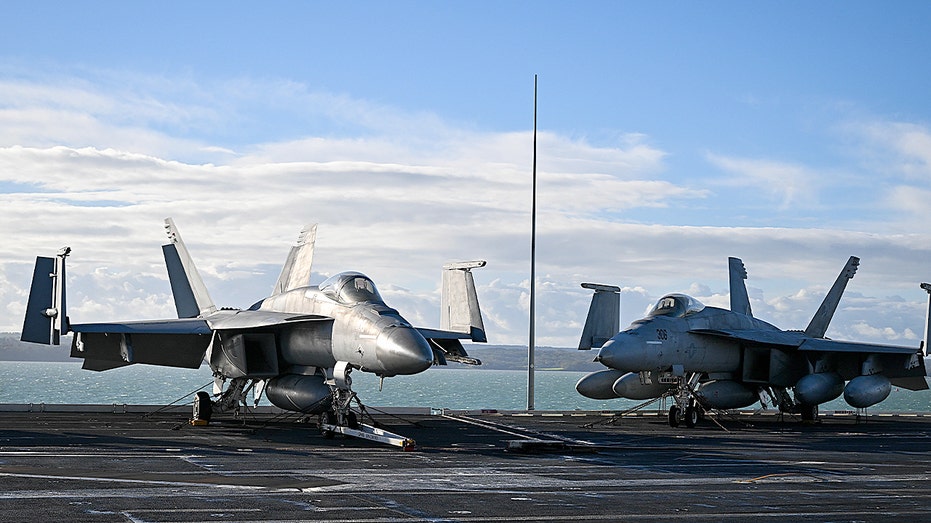
Two U.S. F/A‑18 fighter jets flew a short mission over the Gulf of Venezuela, staying in international airspace but approaching closer to Venezuela than any previously known U.S. military aircraft in recent years. On paper, it was described as a routine training flight to demonstrate operational reach. In reality, it slots into a much larger strategic picture: escalating pressure on Nicolás Maduro’s regime, a U.S. bid to shape the balance of power in the Caribbean, and a broader message to Russia, China, Iran, and regional actors watching how Washington manages a hostile government in its near abroad.
This is less about two jets and more about three overlapping battles: control of airspace, control of illicit flows (especially drugs), and control of political narratives inside and outside Venezuela.
How We Got Here: A Long Arc of U.S.–Venezuela Confrontation
To understand why a 30‑minute flight matters, it’s worth tracing the arc of U.S.–Venezuela tensions across two decades:
- Chávez-era rupture (1999–2013): Hugo Chávez systematically dismantled security cooperation with Washington, expelled U.S. military and DEA personnel, and cast Venezuela as the vanguard of an anti-U.S. “Bolivarian” project. Joint counter‑drug work collapsed.
- Sanctions and isolation (2014–present): As Venezuela’s oil‑dependent economy imploded and Maduro clamped down on opposition, the U.S. pivoted from uneasy coexistence to active pressure: oil sanctions, financial restrictions, and recognition of opposition leader Juan Guaidó as interim president in 2019.
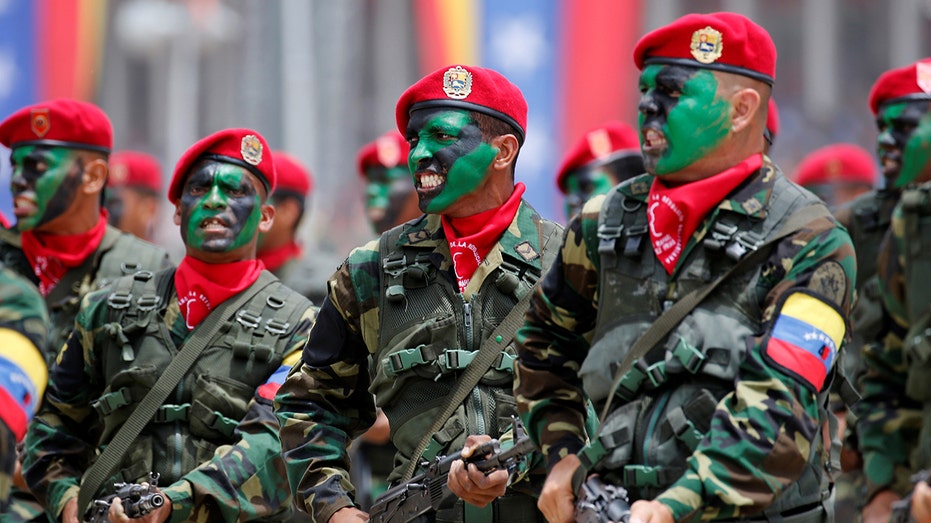
- External patrons move in: Russia supplied fighter jets and air-defense systems; China extended loans and technology; Iran provided fuel and technical assistance. Venezuela became a small but symbolically important foothold for U.S. rivals in the Western Hemisphere.
- Militarization of the drug fight: As Colombian and Mexican routes came under pressure, U.S. officials increasingly identified Venezuela as a major corridor for cocaine. In 2020, the U.S. indicted Maduro and other officials on narcoterrorism charges, alleging state-level involvement in trafficking.
The latest spike in activity—U.S. strikes on alleged drug-smuggling vessels, bomber flights along Venezuela’s coastline, and now close‑in fighter patrols—should be seen as the kinetic edge of a broader strategy: weaken the regime’s revenue streams, deter foreign military entrenchment, and reassure regional allies that the U.S. still dominates the Caribbean security environment.
Why Call It “Routine”? Strategic Messaging in the Gray Zone
Labeling the F/A‑18 sortie as a routine training flight is deliberate. Washington is trying to operate in the gray zone: exerting military pressure without crossing the threshold into overt conflict.
There are three audiences:
- Venezuela and its military: The message is: we can get close, often, and at will. By emphasizing that the jets stayed in international airspace, the U.S. denies Maduro a legal pretext to escalate while still showcasing reach and readiness.
- U.S. domestic opinion and Congress: Describing the flight as training reduces the political risk of being seen as edging toward war—especially when some senators are openly seeking to prohibit offensive action against Venezuela.
- Russia, China, and Iran: The sortie signals that despite global commitments, the U.S. can still surge capable combat aircraft into the Caribbean. It also tests the responsiveness of Venezuelan and possibly Russian-supplied radar and air-defense systems without formally provoking them.
In other words, the U.S. wants to be noticed, but not too noticed—enough to shape behavior, not enough to trigger a crisis.
Beyond the Headline: Airspace as a Political Battleground
Airspace is not just geography; it’s a form of political recognition. When the Trump administration effectively treated Venezuelan airspace as closed to civilian carriers, it did two things at once:
- De facto delegitimization: Advising airlines to avoid Venezuelan airspace signaled that the U.S. considered the regime unable or unwilling to guarantee aviation safety—whether due to military risk or institutional decay.
- Military freedom of maneuver: By pushing commercial traffic out, the U.S. reduced the risk of civilian planes being caught in a crisis, and freed up the skies for surveillance and military operations at lower political cost.
The F/A‑18 sortie underscores the implied deal: if Venezuelan skies are too risky for civilian aviation, they will increasingly become a domain for military signaling.
Is Venezuela Really a Military Threat? Capability vs. Paper Strength
The core military question is not whether Venezuela could win a fight with the U.S.—it can’t—but what kind of costs it could impose and what miscalculations might look like.
Retired Rear Adm. Mark Montgomery notes that Venezuela’s main assets—fighter jets, limited surface vessels, and Russian-made surface‑to‑air missiles—could likely be suppressed in the first days of a campaign. That assessment aligns with most open-source defense analyses: Venezuela’s Air Force suffers from maintenance problems, spare parts shortages, and training gaps, exacerbated by sanctions and fiscal crisis.
Former diplomat Isaias Medina’s assessment that capabilities “look better on paper than in reality” is crucial. Venezuela operates systems like the Russian S‑300, which on paper can threaten high‑altitude aircraft. But complex integrated air-defense networks require training, maintenance, and interoperable command structures—areas where the Venezuelan armed forces have been hollowed out by corruption, politicization, and the exodus of skilled personnel.
This gap between paper strength and practical readiness cuts both ways:
- For the U.S., it lowers the perceived risk of close‑in flights and surgical operations against drug-trafficking assets.
- For Venezuela, it increases the temptation to compensate with symbolic shows of resolve—aggressive intercepts, radar lock‑ons, or political escalation that could lead to miscalculation.
The Drug War Layer: Counter‑Trafficking as Strategic Cover
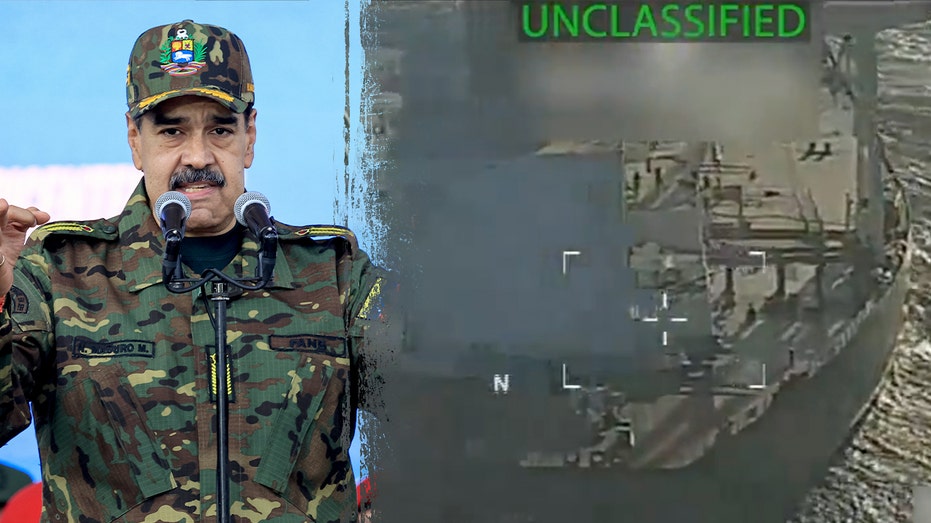
The current uptick in U.S. military presence follows strikes on alleged drug-smuggling vessels in the Caribbean and eastern Pacific, including a first reported strike on a vessel departing Venezuela. This reflects a longstanding pattern: counter‑drug operations doubling as strategic power projection.
Three underlying dynamics are often missed in basic reporting:
- From police work to militarized enforcement: Counter‑narcotics once centered on intelligence, law enforcement, and partner capacity-building. Increasingly, especially where states are deemed complicit—as in U.S. indictments of Maduro and associates—militaries are taking the lead, using aerial surveillance, maritime interdiction, and now kinetic strikes.
- Blurring criminal and political targets: The U.S. frames some Venezuelan officials as part of a “Cartel of the Suns,” merging the logic of counter‑drug operations with regime-change pressure. That makes every interdiction a potential political signal, not just a law enforcement action.
- Regional ripple effects: Pressure on trafficking routes through Venezuela does not eliminate flows; it reroutes them through neighboring countries with weaker institutions, potentially destabilizing them and increasing their dependence on U.S. security support.
In that context, the F/A‑18 flight is not an isolated event; it’s one node in a widening mesh of surveillance, interdiction, and deterrence oriented around Venezuelan territorial waters and airspace.
What Mainstream Coverage Often Misses
Standard reports emphasize proximity to Venezuelan airspace and quote officials describing the sortie as routine. What tends to be underplayed is:
- The testing function: Every close‑in flight is an opportunity to map radar coverage, response times, and communications patterns of Venezuelan forces. It’s reconnaissance by presence.
- Alliance signaling: U.S. bomber and fighter flights reassure Colombia, Guyana, and Caribbean states that Washington is not ceding the region to extra‑hemispheric powers—even as China and Russia expand their economic and military footprints.
- Domestic Venezuelan politics: Maduro uses U.S. military activity to frame himself as a defender of sovereignty against “Yankee aggression,” rallying his base and justifying internal repression. The regime needs external enemies as much as the U.S. needs external threats to justify certain operations.
- Risk of normalization: The more frequent these “routine” flights become, the higher the chance that one encounter—an accidental border crossing, a misinterpreted radar track, a nervous pilot—spirals into a crisis.
Expert Perspectives: Deterrence, Escalation, and Symbolism
Security scholars and practitioners offer different lenses on this kind of operation:
- Deterrence and reassurance: Analysts like Adm. Montgomery emphasize that quickly neutralizing Venezuela’s air and maritime threat is feasible, meaning such flights reinforce deterrence at relatively low risk.
- Escalation management: Experts on crisis stability, such as MIT’s Barry Posen, have long warned that frequent close‑in military probes can backfire if the weaker state feels compelled to respond to avoid looking weak—especially if its leadership depends on nationalist legitimacy.
- Symbolic politics: Latin America specialists point out that these operations play heavily in domestic politics on both sides. For U.S. administrations, muscular moves against an unpopular regime can be framed as standing up to authoritarianism and drug traffickers. For Maduro, they are proof of an imperial threat justifying militarization and emergency measures.
Looking Ahead: What to Watch
Several indicators will reveal whether this episode is part of a contained pattern or a prelude to something more dangerous.
- Frequency and profile of U.S. flights: If F/A‑18s, bombers, and ISR (intelligence, surveillance, reconnaissance) aircraft continue to operate close to Venezuelan airspace with increasing visibility, it suggests a deliberate campaign of sustained pressure rather than isolated training.
- Venezuelan military responses: Watch for intercepts, radar lock incidents, or publicized air-defense drills. Any move to fire warning shots or launch missiles—even if ineffective—would radically raise stakes.
- Legal and political moves in Washington: Congressional efforts to limit the president’s ability to conduct strikes on Venezuela could either constrain escalation or provoke a showdown over war powers.
- Third-party involvement: Increased Russian or Iranian advisory presence in Venezuelan air-defense units, or port calls by Russian naval vessels, would convert a regional standoff into a node in global great-power competition.
The Bottom Line
Two F/A‑18s flying near Venezuelan airspace will not change the balance of power by themselves. But they are a visible manifestation of a deeper shift: the slow transformation of the Caribbean basin into an active theater of gray-zone competition, where drug enforcement, airspace control, and regime legitimacy are tightly intertwined.
For policymakers, the challenge is managing deterrence without normalizing brinkmanship. For Venezuelans, the stakes are even higher: each new display of force—on either side—can be used to justify further internal repression, deeper economic isolation, or risky gambles by a regime that has fewer and fewer non-military tools left to maintain control.
Topics
Editor's Comments
What’s striking in this episode is how normalized near-crisis behavior has become in U.S. policy toward Venezuela. A fighter flight that would have been treated as a major provocation in another context is now publicly downplayed as routine training, even as officials and analysts quietly acknowledge its signaling value. That normalization carries risks. The U.S. appears to be betting that Venezuelan capabilities are sufficiently degraded, and its leadership sufficiently rational, that close‑in operations can be conducted with minimal danger. But this risk calculus may underweight political incentives in Caracas: a regime with limited economic tools and eroding domestic legitimacy has strong reasons to dramatize external threats. One poorly handled intercept, or a decision by Maduro to deliberately manufacture a confrontation for internal consumption, could force Washington into a rapid escalation that it has not fully debated domestically. The bigger question is whether the U.S. has a clear endgame beyond pressure and signaling—or whether the region is sliding into a semi-permanent pattern of managed brinkmanship that solves none of the underlying political and humanitarian crises inside Venezuela.
Like this article? Share it with your friends!
If you find this article interesting, feel free to share it with your friends!
Thank you for your support! Sharing is the greatest encouragement for us.