Dangling From the Tail: What a Skydiver’s Near-Death Ordeal Reveals About Hidden Risks in Modern Skydiving

Sarah Johnson
December 12, 2025
Brief
A skydiver’s miraculous survival after dangling from an aircraft tail isn’t just a viral clip—it exposes systemic weaknesses in skydiving safety design, training, and regulation that the industry can’t afford to ignore.
Skydiver’s Near-Death Ordeal Exposes Hidden Risks in an Industry That Sells Adrenaline and Safety
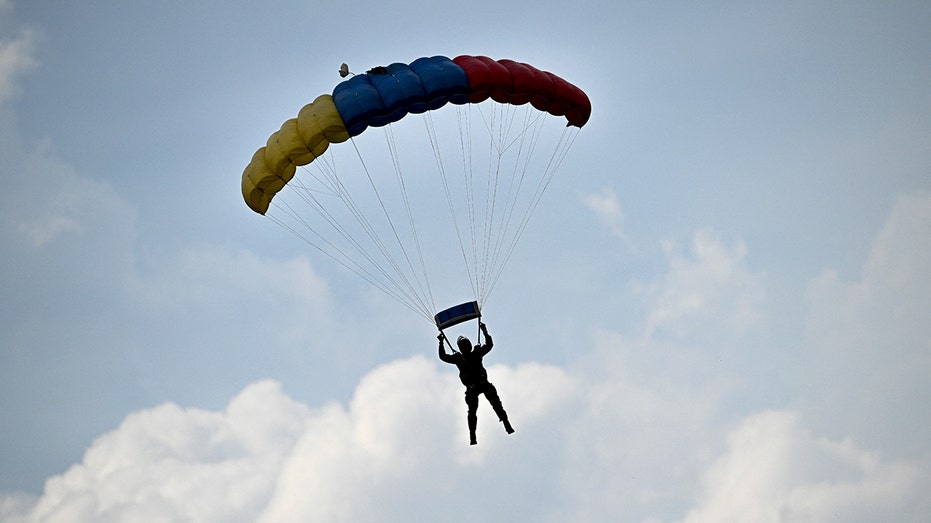
The video of an Australian skydiver dangling from the tail of an aircraft after an accidental reserve deployment looks like a freak, one-in-a-million event. But beneath the viral drama lies a more consequential story: how modern skydiving has become dramatically safer over the decades—yet still hinges on a fragile chain of procedures, equipment design choices, and human factors that can break in unexpected ways.
This incident is less about one lucky survivor and more about the edges of a system that usually works so well the public forgets how unforgiving gravity is. It forces regulators, operators, and jumpers to confront a difficult question: when safety has improved this much, what kinds of rare risks are we willing to accept as the price of extreme sports?
How Skydiving Became “Safe Enough” to Go Mainstream
To understand the significance of this accident, you have to look at how far the sport has come. In the 1970s and 1980s, skydiving was a fringe pursuit with relatively high fatality rates, limited regulation, and equipment that would look primitive by today’s standards.
- Fatality trends: In the United States, the national skydiving association recorded around 50–60 fatalities per year in the 1970s and 1980s. In recent years, despite far more jumps being made, that number has dropped to roughly 10–15 annually.
- Risk per jump: Modern estimates put the risk of death in recreational skydiving at roughly 0.5–1 per 100,000 jumps—safer than many assume, and significantly less risky than it was a generation ago.
That improvement didn’t just happen. It came from:
- Mandatory reserve parachutes and strict packing standards.
- Software-controlled automatic activation devices (AADs) that fire a reserve if a jumper is still in freefall too low.
- Better harness/container designs with protected handles and risers.
- Standardized training protocols and incident reporting that feeds back into safety rules.
Ironically, the safety feature that exists to save lives—the reserve parachute—was at the center of this near-disaster. Its premature deployment while the jumper was still attached to the aircraft shows that even highly evolved systems can fail in ways designers did not fully anticipate.
The Mechanics of a Rare but Catastrophic Failure
According to the Australian Transport Safety Bureau, the skydiver’s reserve handle snagged on the aircraft’s flap as the plane soared, triggering the reserve parachute while the jumper was still at the door. That triggered a cascade of failures:
- The reserve parachute deployed into the aircraft slipstream.
- The jumper hit the tail and the reserve canopy wrapped around the left horizontal stabilizer and elevator.
- The canopy deflated but held the skydiver suspended under the tailplane.
- The jumper used a hook knife—a small, standard emergency cutting tool—to sever lines and break free.
- Upon breaking free, he deployed the main parachute, which then entangled with remaining reserve lines, creating twists and an uncontrolled spin.
- He had to manually arrest a rapid turn by pulling a brake line above the line twists and untwisting the lines, regaining control around 8,000 feet.
Both the skydiver and pilot survived—the jumper with serious leg cuts, the pilot with a damaged aircraft that still managed to land. From a safety engineering standpoint, this is a textbook example of what’s called a “low probability, high-consequence event”: incredibly rare, but nearly unsurvivable without a combination of training, equipment, and luck.
Why This Accident Matters More Than the Headline Suggests
Two things stand out about this incident that matter far beyond one flight:
- The failure was initiated by contact between the jumper and the aircraft structure. That’s not a canopy malfunction in freefall; it’s an interface problem between human, gear, and aircraft—a zone where responsibilities overlap and are often under-scrutinized.
- The jumper’s survival depended on skills that are increasingly rare among casual participants. Using a hook knife under extreme stress, managing severe line twists, and stopping a spin are advanced skills. Yet tandem students and inexperienced jumpers now make up a large share of commercial jumps worldwide.
This raises a wider question: are safety systems and training evolving fast enough to match the commercialization and “bucket list” marketing of skydiving?
Design and Human Factors: The Overlooked Weak Link
Reserve handles are designed to be easy to grab in an emergency, even under stress and in awkward body positions. That very feature makes them vulnerable to snagging on aircraft interiors, seat belts, door frames, or—as in this case—external structures like flaps.
Human factors experts often talk about the “paradox of safety”: as systems become safer, we push them closer to their limits. Skydiving aircraft are frequently modified for rapid exits—door removals, step platforms, handholds—creating environments rich in snag hazards.
Dr. Nancy Leveson, a leading safety engineering researcher, has long argued that accidents are less about a single failed part and more about mismatched assumptions between designers, operators, and users. This incident is a stark illustration: gear designers assume certain exit procedures; pilots assume jumpers move in predictable ways; jumpers assume aircraft surfaces are free of hidden snag points. When those assumptions collide, you get a near-fatality.
Expert Perspectives: Not a Freak Accident, a Systems Warning
Several safety experts have warned for years that “rare” skydiving incidents often stem from predictable systemic gaps.
Bill Booth, a legendary parachute designer often called the father of the modern tandem system, has repeatedly emphasized that skydiving safety advances come from learning from non-fatal as well as fatal accidents. Incidents like this are exactly the kind of near-misses that should trigger widespread review:
“Every time someone walks away from a situation that should have killed them, that’s a message. Either we get curious and learn from that message, or we wait until the same thing kills someone who isn’t as lucky or skilled.”
Similarly, aviation safety analyst Dr. Sydney Dekker has argued that modern safety culture needs to move from “who screwed up?” to “how did the system make this outcome possible?” Applied here, the questions become:
- Why was the reserve handle exposed to snag hazards in that specific aircraft configuration?
- Were pre-jump briefings and aircraft inspections fully adapted to that environment?
- Do standard procedures adequately address the risk of contact with control surfaces during exits?
These are design and organizational issues, not individual blame issues.
Data: How Rare Is This Type of Incident?
While comprehensive global statistics are patchy, available incident reports suggest:
- Most skydiving fatalities involve landing errors, low turns, or canopy collisions, not aircraft entanglements.
- Accidental reserve deployments in or near the aircraft are rare but not unheard of. There have been past incidents of premature deployments at the door, occasionally resulting in jumpers being dragged or contacting the tail.
- Serious aircraft tail strikes during skydiving operations are relatively uncommon but high-consequence, as they can endanger both jumpers and everyone on board.
The rarity of this category of accident is exactly why it can be under-addressed: it’s not where the bulk of fatalities occur, so it can slip down the priority list. Yet the potential for an in-flight loss of control if a tailplane is compromised makes this just as important from a risk management perspective as more frequent canopy mishaps.
Commercial Pressure vs. Safety Margins
Skydiving today is a multi-billion-dollar global industry that depends heavily on first-time tandem customers, tourism, and high-volume operations. That business model introduces subtle pressures:
- Fast turnarounds: Aircraft often fly back-to-back loads, leaving minimal downtime for detailed snag-hazard inspections after cabin reconfigurations or maintenance.
- New aircraft types and modifications: As operators switch airframes or modify doors and steps, the “known” safety envelope can shift.
- Variable experience levels: Loads can mix highly experienced skydivers with relatively new ones, increasing the complexity of exits and movement around the door.
The Australian incident underscores that economic efficiency and safety are always in negotiation. Every minute an aircraft sits on the ground for additional inspection or briefings costs money. But every unexamined snag risk or procedural gap increases the chance of a rare, catastrophic event.
What Might Change After This Incident
Regulators and operators now have a live case study of a worst-case scenario avoided by inches. The likely ripple effects include:
- Aircraft-tailored gear checks: More emphasis on checking handle exposure, loose straps, and clothing for each specific aircraft and door configuration, not just generic pre-jump checks.
- Door and flap hazard mapping: Systematic identification and documentation of potential snag points around exits, steps, and flaps—and physical mitigation where possible (fairings, covers, or modified procedures).
- Revised briefing standards: More detailed briefings for jumpers—especially those exiting near the tail or in tight formations—on where not to place hands, feet, or bodies as they leave the aircraft.
- Gear design tweaks: Manufacturers may revisit reserve handle shapes, locations, and retention systems to reduce snag risk without compromising accessibility in emergencies.
Equally important is training. The jumper in this case didn’t just survive because the gear eventually worked; he survived because he knew what to do when it didn’t. That raises an uncomfortable issue: many modern skydivers—particularly tandem students—are shielded from the complexity of emergency procedures by design. That’s appropriate for casual participants, but it places even more responsibility on instructors and operators to understand and mitigate edge-case scenarios like this.
Looking Ahead: A Stress Test for Safety Culture
What happens next will reveal a lot about the maturity of skydiving and aviation safety culture:
- If this is treated as an odd, freakish survival story, not much will change—and the same factors could align again, perhaps with a different outcome.
- If it is treated as a systemic warning, it could drive meaningful improvements in aircraft/jumper interface design, training, and risk assessment.
For passengers and casual thrill-seekers, the takeaway is not that skydiving is uniquely dangerous; statistically, it is safer today than at any point in its history. The real issue is transparency about what “safe enough” means when the consequences of failure remain so absolute.
For regulators and industry leaders, the lesson is sharper: safety is not just about preventing the most common accidents. It’s about hunting for the unlikely, high-impact failures hiding at the seams between technologies, procedures, and human behavior. This incident—one jumper dangling from a tailplane with his life literally hanging by a few lines—is a stark reminder of how thin that seam can be.
The Bottom Line
This Australian near-miss is more than a dramatic video clip. It’s a reminder that even in a highly regulated, data-driven, and technologically advanced sport, true safety depends on anticipating how systems can fail in ways we haven’t yet fully imagined. The skydiver survived because he had a knife, the skill to use it, the composure to manage a malfunctioning main canopy, and enough altitude left to solve multiple problems in sequence. That’s heroism—but it’s also a warning. A safety culture that relies on heroism is one accident away from tragedy.
Topics
Editor's Comments
What’s most striking about this case is not the drama of the video but how ordinary each link in the accident chain is when viewed in isolation: an exposed handle, a protruding control surface, the slipstream around an open door, a standard emergency knife. None of these elements are new or exotic; what’s new is the particular combination and the fact that it nearly resulted in a dual tragedy—a lost jumper and a crippled aircraft. That should push regulators and operators to think less in terms of fixing single issues and more in terms of mapping interactions. How does gear behave in different airflows? How do door modifications change where bodies and handles travel in space? Are current checklists built around a canonical, ideal jump environment that no longer exists in heavily commercialized, high-throughput drop zones? The contrarian view here is that focusing purely on the heroics of the survivor misses the point. The real story is whether the system can learn from an incident in which everything went wrong yet somehow still ended with everyone alive. That’s a rare and fragile opportunity for change.
Like this article? Share it with your friends!
If you find this article interesting, feel free to share it with your friends!
Thank you for your support! Sharing is the greatest encouragement for us.