Trump’s Escalating Feud with The New York Times: What It Reveals About Media, Power, and Democracy

Sarah Johnson
December 6, 2025
Brief
An in-depth analysis of Trump’s intensifying feud with The New York Times reveals deeper implications for media freedom, political polarization, and democratic accountability in America today.
Why Trump's Escalating Feud with The New York Times Signals a Broader Crisis in U.S. Media and Politics
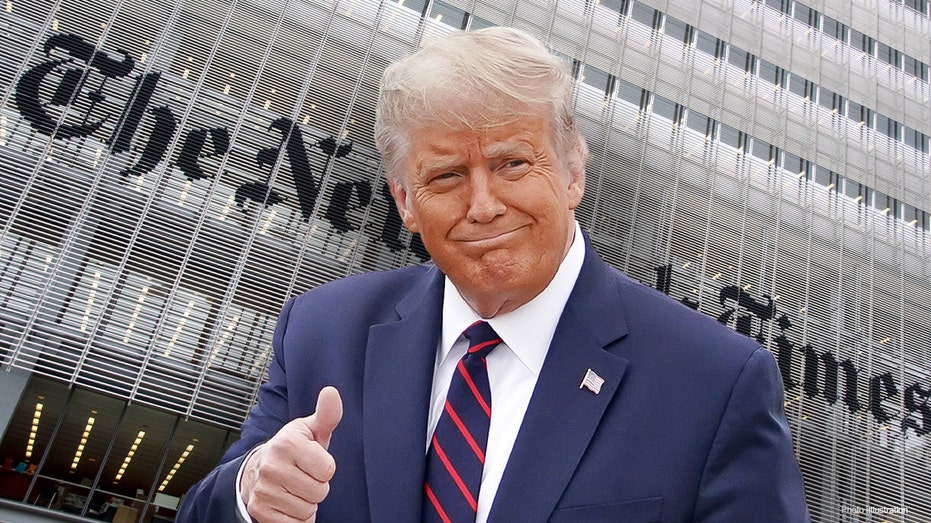
The recent intensification of hostilities between former President Donald Trump and The New York Times transcends a mere personal spat. It encapsulates deep structural tensions over media credibility, political polarization, and the evolving role of journalism in American democracy. This latest chapter—with Trump’s sharp insults, ongoing multi-billion-dollar defamation lawsuits, and the Times’ legal pushback against Pentagon press restrictions—illustrates how the conflation of politics and news is sparking fundamental questions about press freedom, political accountability, and information trustworthiness.
The Bigger Picture: Historical Roots of a Contentious Relationship
Trump’s feud with The New York Times is not new—it's rooted in decades of mutual antagonism dating back to his emergence as a New York real estate mogul in the 1970s. While Trump once sought public validation from the paper, a progressive shift in both its editorial stance and Trump’s political ambitions created an irrevocable rift. Over the past four decades, the Times evolved into a liberal-leaning institution openly critical of Trump’s policies and character. Conversely, Trump has repeatedly labeled mainstream outlets "fake news," weaponizing media distrust to energize his base and undermine unfavorable coverage.
This adversarial dynamic intensified sharply during and after the 2016 election, amid wider societal fractures. The growing public skepticism toward institutional actors—media, government, judiciary—has created a volatile environment where leaders and reporters alike are frequently attacked, legal battles are weaponized, and political discourse becomes combative rather than constructive.
What This Really Means: Implications for Press Freedom and Democracy
At its core, this battle spotlights critical issues surrounding resilience and independence of the press in an era marked by political polarization. Trump's defamation lawsuits, seeking $15 billion, aim not merely at financial damages but arguably at chilling investigative journalism by burdening news organizations with costly litigation—a tactic experts warn risks undermining democratic oversight.
Simultaneously, the Times' lawsuit against the Pentagon’s new press policy raises urgent First Amendment concerns about governmental controls over reporter access and potential retaliation. Vague or opaque criteria for revoking press credentials risks enabling viewpoint-based exclusions, damaging transparency around military and government operations that are foundational to an informed citizenry.
Moreover, the mocking and dismissive tone from Trump and his allies toward critical media coverage erodes norms of respectful public discourse. It perpetuates a cycle where facts become contested terrain and journalists are targeted not for misconduct but for reporting inconvenient truths.
Expert Perspectives
Maria Ressa, Nobel Peace Laureate and press freedom advocate: "The Trump-Times conflict is emblematic of a global trend where populist leaders delegitimize journalism as a way to consolidate power. Defamation suits weaponize legal systems to discourage scrutiny, threatening the watchdog role vital to democracy."
Jay Rosen, media scholar, NYU: "This feud illustrates 'hostile media perception' driven by tribal identity politics. Trump supporters view the Times as an enemy, which undermines common facts. But the Times must still adhere to rigorous standards to maintain credibility amid accusations of bias."
Nicole Hemmer, historian: "The Times' confrontation with Trump is part of a longer history of elite media struggling to define their role—between being an establishment voice and holding power to account in polarized times."
Data & Evidence: Media Trust and Political Polarization
Recent Gallup polls indicate trust in mass media hovers near historic lows; only about 29% of Americans express a great deal or fair amount of trust in news media. This distrust correlates strongly with partisan identity, with Republicans markedly less trusting than Democrats. Such divergent trust levels foster asymmetric news diets, where outlets like the Times are vilified by a substantial segment of the populace.
Meanwhile, litigation against media grows. A report from the Reporters Committee for Freedom of the Press documents a surge in defamation suits filed by political figures in recent years, largely against investigative outlets. This trend raises concerns about abuse of the legal system to suppress journalism.
Moreover, access restrictions at government agencies, including the Pentagon’s new press policy, contribute to a narrower press landscape, with less direct oversight and fewer channels for independent reporting.
Looking Ahead: What to Watch
The outcome of these intertwined lawsuits could set important legal precedents regarding defamation thresholds for public figures and the scope of constitutional protections for journalists covering the government. Observers should monitor the judicial reasoning in decisions related to the Pentagon policy—particularly how courts balance national security against transparency and press freedom.
Stakeholders will also be watching if this feud influences newsroom behaviors—whether fear of litigation or attacks leads to self-censorship or, conversely, emboldens more aggressive investigative work amid defiant resistance.
Finally, the broader conversation about media reform, trust rebuilding, and depolarization remains urgent. This case underscores the necessity for public media literacy and models of non-partisan, accountable journalism that can bridge divisions.
The Bottom Line
The Trump-New York Times confrontation is more than a personalized vendetta; it reflects fundamental tensions at the heart of the U.S. media ecosystem and political culture. At stake are the freedoms of the press to challenge power, the obstacles imposed by weaponized lawsuits and government constraints, and the polarized public’s willingness to accept shared facts. How this unfolds will be a bellwether for American democracy’s resilience in a fractured age.
Topics
Editor's Comments
This feud serves as a poignant case study of how political leaders can weaponize media skepticism and legal systems to challenge independent journalism. It raises difficult questions about balancing governmental interests with constitutional freedoms, especially as polarization fuels mistrust. Going beyond surface-level conflict, it is critical to understand that the erosion of press credibility and open access to power corridors threatens the very fabric of democratic accountability. Observers and citizens alike must grapple with how to preserve journalistic integrity and freedom in an age increasingly hostile to them.
Like this article? Share it with your friends!
If you find this article interesting, feel free to share it with your friends!
Thank you for your support! Sharing is the greatest encouragement for us.