Beyond the ‘Married Her Brother’ Claim: What the Ilhan Omar Controversy Reveals About Power and Belonging

Sarah Johnson
December 12, 2025
Brief
Ilhan Omar’s ex-husband’s resurfaced social media and Trump’s revived ‘married her brother’ claim expose a deeper battle over immigration, Muslim identity, and who is seen as a legitimate American.
Ilhan Omar, Trump, and the Politics of Personal Scandal in the Immigration Wars
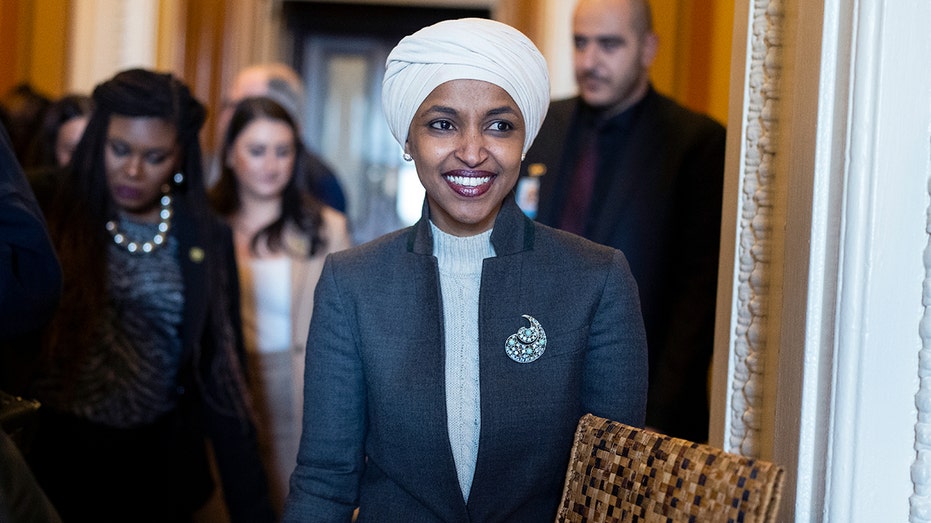
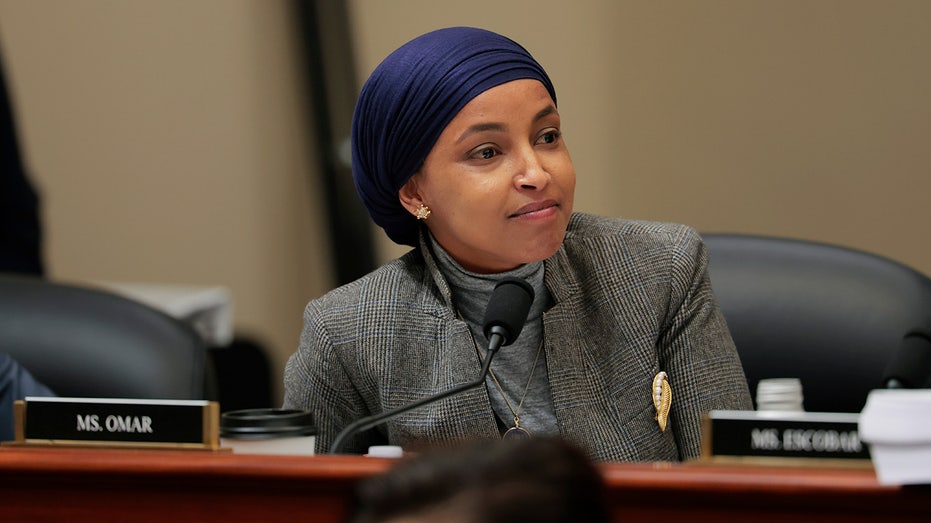
Rep. Ilhan Omar’s complicated marital history, the resurfacing of her second husband Ahmed Nur Said Elmi on social media, and Donald Trump’s renewed accusation that she "married her brother" are not really about one congresswoman’s private life. They are about how immigration, race, and Muslim identity are weaponized in U.S. politics—and how personal scandal has become a proxy battlefield for much larger ideological wars.
What looks like a tabloid story is actually a case study in how narratives about legitimacy—who belongs, who deserves power, who is "really" American—are constructed and contested. It’s also a test of whether evidence, due process, and norms of privacy can compete with viral insinuation in an election-cycle media ecosystem.
The bigger picture: From refugee to lightning rod
Ilhan Omar’s trajectory is central to understanding why her personal life attracts this level of scrutiny. Born in Somalia, she spent years in a refugee camp in Kenya before resettling in the United States and becoming a naturalized citizen in 2000. In 2018, she became one of the first two Muslim women elected to Congress and the first Somali-American in that body.
Her rise coincided with three major trends:
- Post-9/11 Islamophobia: For over two decades, Muslim identity has been politicized, with Muslim public figures routinely subjected to loyalty tests—asked to prove they are not extremists, not foreign, not a threat.
- Escalating immigration politics: The Trump era transformed immigration from a policy debate into an existential cultural fight. Refugees, asylum seekers, and undocumented migrants became symbols in a narrative about national decline or renewal, depending on who was talking.
- Rise of the progressive left: Omar became a prominent voice in the left-wing "Squad," challenging both Republicans and the Democratic establishment on foreign policy, policing, corporate power, and U.S. support for foreign governments, especially Israel. That visibility made her an ideal villain for conservative media and a frequent target at Trump rallies.
Against that backdrop, her unconventional marital history—religious and civil unions overlapping in time, a spouse with dual nationality, and a tight-knit diaspora community—became fodder for a narrative that she was not just politically radical, but personally fraudulent.
How a complex private life became a political weapon
Omar’s marital timeline is unconventional but not unheard of in immigrant and religious communities:
- A religious marriage to Ahmed Abdisalan Hirsi in 2002 (not initially registered as a civil marriage).
- A civil marriage in 2009 to Ahmed Nur Said Elmi, a British citizen, while maintaining the religious union and family life with Hirsi.
- Separation from Elmi in 2011; civil divorce not finalized until 2017.
- Civil marriage to Hirsi in 2018, divorce in 2019, and later marriage to political aide Tim Mynett in 2020.
These overlapping religious and civil frameworks are common in many cultures. Where a U.S. bureaucratic system sees a "marriage," Somali or Muslim community norms may see a religious union that is distinct from the legal one. The gap between those systems creates ambiguity—and that ambiguity is what political actors have seized on.
The specific allegation that Omar married her brother for immigration purposes has never been substantiated by documentary evidence. Multiple investigations and fact-checks have noted inconsistencies and unanswered questions about her family naming conventions and timelines, but none have produced proof that Elmi is her biological or legal brother, nor that any immigration fraud occurred. Yet the claim persists because it is politically useful.
The function of scandal: Why Trump keeps returning to this story
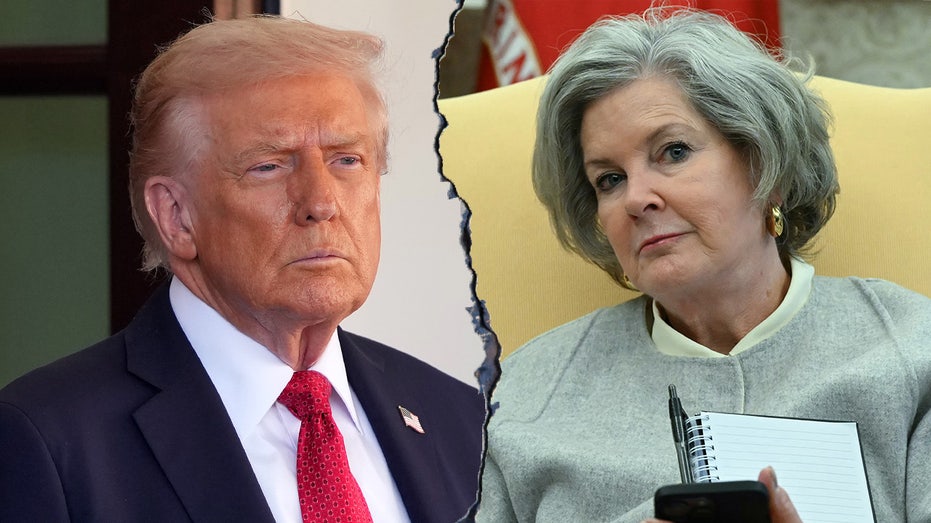
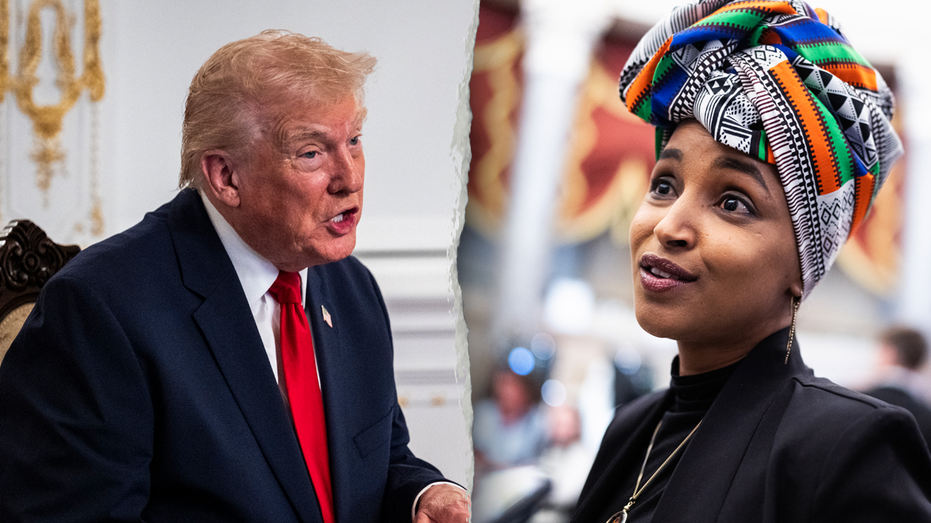
Trump’s decision at a Pennsylvania rally to again claim, “She married her brother to get in… Therefore, she’s here illegally. She should get the hell out,” is telling. This is not a new allegation; it is a recycled one. The question is why it keeps getting revived.
There are several overlapping motives:
- Delegitimizing critics: Omar is an outspoken critic of Trump’s policies, particularly on immigration, foreign policy, and civil rights. Casting her as fundamentally illegitimate—"here illegally"—is a way of discrediting both her and the agenda she represents.
- Signaling to the base: Attacks on Omar resonate with a segment of Trump’s base that views Muslim, Black, immigrant, and especially visibly hijab-wearing women as cultural outsiders. The allegation becomes a shorthand for broader grievances about demographic change and multiculturalism.
- Moral double standard: Trump’s line, "Can you imagine if Donald Trump married his sister?" sets up a rhetorical trap: what would be outrageous for him is presented as supposedly tolerated because of elite "political correctness" protecting Omar. It feeds a narrative that minorities get away with things white conservatives never could.
- Immigration as identity politics: By framing the allegation as immigration fraud, Trump positions Omar not just as a political opponent, but as a symbol of a broken immigration system supposedly exploited by foreigners.
This is classic identity politics in reverse: the attack is framed as a defense of the nation’s integrity, but its core is about race, religion, and who counts as a legitimate American.
Why Omar’s ex-husband’s Instagram matters symbolically, not factually
The resurfacing of Ahmed Nur Said Elmi in South Africa—posting playful, fashion-forward content and calling himself a "dirty dandy" while connected to academic institutions—does not materially change the core allegations or the available evidence. It does, however, serve a symbolic purpose.
His online persona offers three narrative hooks:
- Visual fodder: Images of a cosmopolitan, carefree ex-husband abroad are easy to frame as suspicious, decadent, or unserious, depending on the outlet’s slant, even if they have no legal relevance.
- International mobility: As a British citizen with an academic trajectory and a presence in South Africa, Elmi embodies the global connectedness that populist movements often frame as elitist and unpatriotic.
- Gender and sexuality subtext: His academic interests—gender studies, queer theory, decolonization—are lightning rods in their own right, tied to culture war battles over universities and "woke" politics.
In other words, Elmi’s visible life now provides new imagery to graft onto an old narrative: a transnational, progressive, queer-theory-adjacent figure linked to a Muslim congresswoman who criticizes U.S. foreign policy. The substance hasn’t changed, but the optics have become richer for political storytellers.
Evidence, due process, and the erosion of factual boundaries
What’s striking about the persistence of the sibling-marriage allegation is how little it relies on formal investigative outcomes. No law enforcement agency has publicly brought charges related to immigration fraud in this case. Omar has denied the claims consistently. Yet the story is treated as perpetually open—never resolved, never closed.
This reflects a broader shift: in polarized politics, the bar for repeating serious allegations against political enemies has dropped. Claims live on as "questions" or "controversies" even when supporting evidence doesn’t materialize. The goal is less to prove guilt than to create enough doubt to render the target permanently suspect.
As Prof. Sophia Jordán Wallace, a political scientist who studies immigration politics, has argued in her research, controversies around immigrants in office are often less about specific legal violations and more about "symbolic boundary maintenance": keeping certain groups outside the circle of presumed legitimacy even when they meet all formal requirements.
Race, gender, and the politics of who gets scrutinized
Omar’s case also reveals a stark asymmetry in how personal histories are examined. Many politicians have complicated family or marital histories. Few, however, see those histories repeatedly framed as evidence of criminality and foreignness.
- Racialized suspicion: Black and Muslim public figures often start from a position of presumed illegitimacy. Barack Obama faced years of "birther" claims, also pushed by Trump, despite clear documentary evidence of his citizenship. Omar’s story follows that pattern: citizenship and legality are continually put on trial.
- Gendered vulnerability: Women of color in politics frequently face attacks that fuse the political with the personal—sexual history, relationships, clothing—more intensely than their male counterparts. In Omar’s case, the alleged marriage fraud ties directly into perceptions of her morality and authenticity.
- Religious difference: Muslim marriage practices, naming conventions, and kinship structures are more complex than the U.S. bureaucratic model assumes. That complexity makes them easy to misrepresent to audiences unfamiliar with these norms.
These dynamics help explain why a story about an ex-husband’s Instagram presence can be elevated into a national political talking point rather than treated as a curiosity with little public policy relevance.
Overlooked angles: Somali diaspora politics and local power struggles
Much mainstream coverage frames this as a clash between Omar and Trump, but misses the internal dynamics of the Somali diaspora and Minnesota politics:
- Internal community debates: Somali Americans are not politically monolithic. There are real internal arguments about corruption, nonprofit fraud cases, integration, and generational differences. Omar’s critics within the community sometimes use U.S. media narratives to pursue local power struggles or discredit rivals.
- Nonprofit and fraud scandals: The broader context includes Minnesota’s high-profile "Feeding Our Future" fraud case involving COVID meal programs and some Somali-linked entities. Omar has been pressed to explain oversight failures, and her opponents attempt to connect these issues to her personally, even where there is no direct evidence of wrongdoing.
- Refugee representation: For many Somali refugees, Omar’s presence in Congress is deeply symbolic: proof that the system can work for those who arrived with nothing. Attacks on her are perceived not just as about one politician, but about the legitimacy of their presence and participation in American democracy.
Ignoring these intra-community dynamics flattens the story into pure red-versus-blue spectacle, missing how diaspora politics themselves are shaped by U.S. narratives about fraud, terrorism, and loyalty.
What this means for future immigration and identity debates
The Omar-Elmi story foreshadows several broader developments:
- Increased forensic scrutiny of immigrant politicians
Future candidates from refugee and immigrant backgrounds can expect their family structures, naming patterns, and international ties to be mined aggressively for potential scandal. The standard for "normal" will be implicitly based on white, native-born norms, making any deviation suspect. - Normalization of conspiracy framing
If a high-profile allegation like "she married her brother" can persist for years without conclusive evidence, similar claims about others—relating to sham marriages, birth certificates, dual loyalties—are likely to proliferate. The incentive structure rewards repetition, not resolution. - Policy debates overshadowed by personal narratives
Substantive questions about immigration reform, refugee quotas, asylum procedures, and integration policies risk being eclipsed by personality-driven controversies. In effect, one congresswoman’s marriage becomes a stand-in for the entire immigration system’s perceived failures. - Further erosion of privacy boundaries
Elmi’s "dirty dandy" Instagram persona, academic career in gender and queer theory, and international lifestyle will likely be folded into narratives about Omar irrespective of relevance. That signals to future public figures that the private lives of ex-spouses, siblings, and extended family are fair political game.
Expert perspectives
Several strands of research help clarify what’s happening here:
- On immigrant officeholders and suspicion: Political scientist Christina Beltrán has written about how Latino and immigrant politicians are often framed as "conditional citizens," whose belonging is always revocable. Omar’s experience fits this pattern extended to Black Muslim refugees.
- On conspiracy politics: Historian Kathryn Olmsted’s work on conspiracy theories notes that such narratives thrive when institutions are distrusted and when they confirm pre-existing biases. For audiences already predisposed to see Muslim immigrants as threats, the sibling-marriage story requires little evidence to be persuasive.
- On gender and scandal: Scholar Kimberly Moffitt and others who study Black women in politics have documented how their personal lives are more likely to be policed and sexualized, and their authority questioned. Omar’s layered marital history offers a target-rich environment for this kind of gendered scrutiny.
Looking ahead: What to watch
Several questions will shape how this story evolves:
- Media responsibility: Will mainstream outlets continue to treat the sibling-marriage allegation as an unresolved "controversy" or finally categorize it explicitly as an unsubstantiated smear unless new factual evidence emerges?
- Democratic Party response: How aggressively will party leadership defend Omar as a member in good standing versus keeping distance from her to avoid inheriting the controversy?
- Legal thresholds: Unless credible new documents or testimony surface, law enforcement is unlikely to act. But the absence of legal movement hasn’t stopped the narrative so far. The gap between legal reality and political rhetoric may widen further.
- Impact on Muslim and refugee candidates: Will this episode deter others from refugee backgrounds from seeking high office, or will it galvanize communities to support candidates who are willing to withstand these attacks?
The bottom line
The reappearance of Ilhan Omar’s second husband on social media, and Trump’s renewed claim that she "married her brother," are not new facts but new fuel. They feed a long-running effort to cast a Black Muslim refugee lawmaker as permanently suspect, regardless of her legal status or the evidentiary record.
At stake is more than one politician’s reputation. This is a test of whether immigrant and refugee Americans can ever be fully accepted as legitimate wielders of power—or whether their personal lives will always be mined for narratives that question their right to be here in the first place.
Topics
Editor's Comments
What’s most revealing in this episode is not whether every detail of Ilhan Omar’s marital history has been perfectly explained—few politicians could withstand that standard—but how selectively that standard is applied. Ambiguity in the lives of white, native-born officeholders is typically treated as a human quirk or a private matter, unless clear evidence of criminality emerges. For Omar, ambiguity itself is treated as incriminating. That inversion tells us a lot about who is presumed innocent in American public life and who is presumed suspect. It also raises a hard question for media outlets: at what point does repeating an unproven allegation, even in the name of covering the controversy, function to launder it into the mainstream? As long as the story is framed as an open question instead of an unsubstantiated claim, it continues to do political work against immigrant and refugee participation in democratic institutions, regardless of what the documents actually show.
Like this article? Share it with your friends!
If you find this article interesting, feel free to share it with your friends!
Thank you for your support! Sharing is the greatest encouragement for us.