T.J. Watt’s Hospitalization Exposes the NFL’s Fragile Dependence on Defensive Superstars

Sarah Johnson
December 12, 2025
Brief
T.J. Watt’s lung-related hospitalization reveals deeper issues in the NFL: extreme dependence on defensive superstars, medical transparency tensions, and how aging elite defenders navigate risk in a 17-game era.
T.J. Watt’s Hospitalization Exposes the NFL’s Uncomfortable Truth About Player Health and Team Dependency
Pittsburgh Steelers star linebacker T.J. Watt being hospitalized for lung discomfort is more than a one-week injury update. It’s a flashpoint in three converging stories: the NFL’s ongoing struggle with player health and transparency, the extreme dependence of modern franchises on a handful of elite superstars, and the economic and ethical pressures driving players to push their bodies to the edge late in their careers.
On the surface, the question is simple: Will Watt play Monday night against the Miami Dolphins? But the deeper issue is what this episode reveals about how the league manages risk, how teams are structurally built around single high-value players, and how aging defensive superstars are navigating the twilight of their prime in a league that demands more snaps, more games, and more pressure than ever.
The context: A high-stakes moment for the Steelers and the AFC
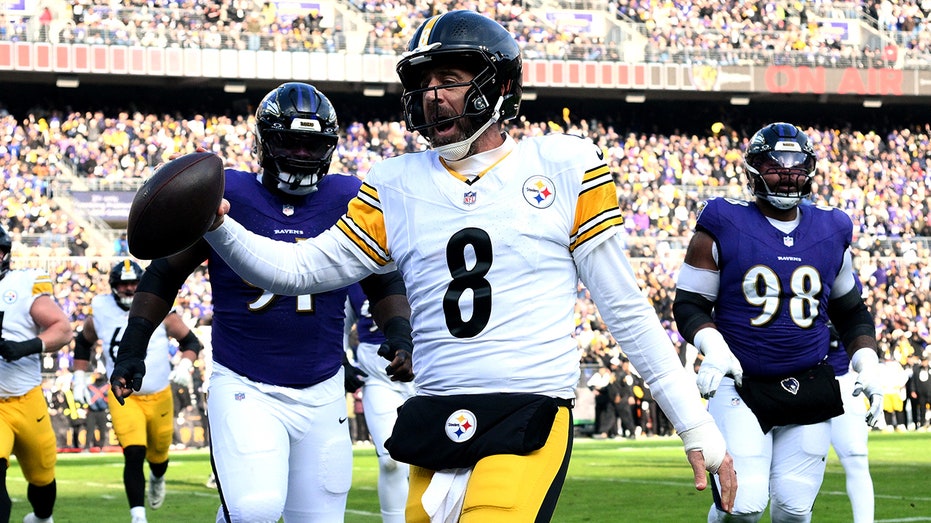
The timing of Watt’s hospitalization could not be more consequential. The Steelers, at 7–6 and coming off a statement win over the Ravens, sit atop the AFC North in a tightly packed playoff race. Their identity under Mike Tomlin has long been defense-first, and Watt is the cornerstone of that identity.
In 13 games this season, Watt has seven sacks, three forced fumbles, and 53 total tackles. That raw stat line undersells his impact. Since entering the league, he’s been one of the most disruptive defensive players in football: 115 career sacks in 134 games, 36 forced fumbles, a Defensive Player of the Year award in 2021, and four first-team All-Pro selections. The Steelers’ pass rush and overall scheme are built to assume that Watt is on the field affecting every snap.
Meanwhile, the Dolphins, at 6–7 after a slow start, are surging with four straight wins. Both teams are fighting for playoff lives. A late-season primetime AFC game, just as seeding and tiebreakers tighten, is exactly the type of scenario where star players often lean toward playing through health concerns. That’s part of what makes this moment so revealing.
NFL history is full of health “scares” that weren’t treated like scares at the time
Watt’s issue has been described only as “lung discomfort” so far, and we don’t yet know whether it’s minor irritation, something like a bruised lung, or a more serious condition. But framing it as a simple question of availability misses a larger historical pattern.
For decades, the NFL’s culture has treated serious medical risks as just another obstacle to be managed around kickoff time:
- Concussions were long dismissed as “getting your bell rung,” with players returning to games after symptoms that today would trigger the league’s concussion protocol.
- Cardiac-related events have been rare but sobering, most notably Damar Hamlin’s on-field collapse in 2023, which forced a public reckoning with how fragile player safety can be, even under modern protocols.
- Internal injuries such as punctured lungs or rib-related trauma have occasionally been played through or minimized. Justin Herbert, for example, played weeks with fractured rib cartilage in 2022; Tyrod Taylor suffered a punctured lung from a pregame pain injection in 2020.
These episodes share a theme: the medical reality is often more serious than the public framing—and sometimes more serious than the player is fully willing to acknowledge in the moment. Lung discomfort is not a normal part of football. In a high-contact sport where rib, chest, and upper body trauma are common, it’s a red flag that demands caution, not a gameday decision question.
Why defensive superstars are under unprecedented physical and strategic strain
Watt’s situation is also a product of how the modern NFL uses elite defenders. As passing has exploded, disruptive edge rushers have become as valuable as many quarterbacks. Teams build their cap structure and schematic identity around them, then lean on them relentlessly.
Several factors increase the load on players like Watt:
- Pass-heavy offenses: More dropbacks mean more pass-rush snaps, more collisions, and more high-intensity plays, especially late in games.
- Expanded season: The shift from 16 to 17 regular-season games adds roughly 6% more exposure to injury, not counting deeper playoff runs.
- Sub-package football: Defenses live in nickel and dime, with edge rushers on the field for the vast majority of critical downs, especially stars who rarely rotate out.
- Contract incentives: Sack totals, snap counts, and performance escalators can create subtle pressure to stay on the field even through health issues.
At 31, Watt is at the inflection point many elite defenders hit: still dominant, but with an accumulation of wear-and-tear and a shrinking margin for health risks. Historically, premier pass rushers often begin to decline in their early 30s unless their workload is strategically managed. The Steelers’ dependence on Watt may be colliding with the reality that his body can no longer absorb unlimited punishment without consequences.
The Steelers’ structural dilemma: Built around one man
Pittsburgh’s defensive metrics over the past several seasons sharply illustrate Watt’s importance. When he has been healthy and on the field, the Steelers’ defense has typically ranked in the top tier in pressure rate, takeaways, and third-down efficiency. When he has missed time, those numbers have often dropped to league-average or worse.
In other words, Pittsburgh’s defensive floor and ceiling are directly tied to Watt’s availability. This raises a strategic question that goes beyond his current health scare: Can a franchise sustainably build its identity around one aging defensive superstar in a 17-game era?
This is not a purely on-field issue. There are cap allocation and roster construction dynamics at play:
- Heavy cap concentration in a few stars can leave depth thin, particularly in the pass-rush rotation.
- Scheme rigidity can emerge when a system is designed around a specific player’s unique skill set, making it harder to adjust when he’s out.
- Coaching incentives favor riding stars in pivotal games, even at long-term risk, especially for a team in a tight playoff race.
Watt’s hospitalization is a reminder that the Steelers’ short-term playoff ambitions are in tension with their long-term responsibility to protect the health of their franchise cornerstone—and to evolve toward a more diversified defensive identity.
Transparency, competitive secrecy, and player autonomy
The team’s statement that Mike Tomlin will provide updates “at the appropriate time” underscores a persistent tension in the NFL: the balance between medical privacy, competitive advantage, and public accountability.
Teams have incentives to say as little as possible about injuries, especially in the days leading up to a pivotal primetime matchup. Opponents game-plan differently if they know a star like Watt is definitely out versus a true game-time decision. But this culture of strategic opacity can clash with broader concerns:
- Fan and betting markets are increasingly sensitive to late-breaking injury news in a landscape where legalized sports betting is widespread.
- Public trust in the NFL’s safety claims depends on the perception that serious health risks are treated transparently and conservatively, not framed as tactical secrets.
- Player autonomy is complicated when the full scope of risk isn’t publicly clear, and when social and financial pressures tilt toward playing.
How the Steelers handle and communicate Watt’s situation will be watched not only by fans, but by other players and agents assessing whether teams are truly prioritizing long-term health over short-term wins.
Expert perspectives: What lung issues mean in a collision sport
While we don’t know the precise medical diagnosis, medical experts in sports medicine tend to approach any lung-related symptoms in contact athletes with heightened caution.
Dr. Thom Mayer, longtime medical director for the NFL Players Association, has previously emphasized a conservative approach with internal injuries, particularly in the chest and abdomen. The core concern is not simply pain tolerance, but the risk of exacerbating a condition that could rapidly become life-threatening if a player absorbs another high-impact blow before fully recovering.
From a performance standpoint, even “minor” lung-related issues can compromise stamina, breathing, and recovery between plays—critical factors for a player whose game is built on burst, leverage, and pursuit.
On the team-building side, analysts like Bill Barnwell and Warren Sharp have long argued that franchises relying disproportionately on a small number of defensive stars expose themselves to volatility. An unexpected health event—especially one unrelated to a straightforward orthopedic injury—can upend a season more quickly than any single loss on the schedule.
The overlooked angle: How this shapes the late-career calculus for defensive greats
One of the more under-discussed aspects of stories like Watt’s hospitalization is how they influence the way aging stars think about their careers. Quarterbacks often play deep into their 30s or even 40s; defensive players live in a different world of repeated high-velocity impacts.
We’ve already seen a growing number of elite defenders retire earlier than expected over the past decade—players like Luke Kuechly and Patrick Willis walked away in what would traditionally be considered their prime, citing health concerns and long-term quality of life. These decisions were heavily influenced by increased awareness of chronic injuries, brain health, and cumulative trauma.
If Watt’s lung issue turns out to be serious—or even if it’s a scare that forces him to confront his own vulnerability—it could mark a quiet psychological turning point. Players who have already achieved accolades (Defensive Player of the Year, All-Pro honors, franchise records) begin to weigh legacy versus longevity in a more immediate way once non-orthopedic issues arise.
Even if he returns quickly, this moment might accelerate conversations about snap counts, rotational support, and how the Steelers envision his role over the next three to five years. Those are conversations that typically happen behind closed doors, but they shape the competitive trajectory of the franchise.
What to watch next: Beyond Monday night
The immediate focus will be on whether Watt is cleared to play against Miami. But the more important long-term storylines are:
- How conservative is the medical decision? If there’s any non-trivial risk, does the team hold him out in a must-win situation? That will signal how much the Steelers are willing to prioritize health over the standings.
- Does the Steelers’ defensive approach shift? If Watt misses time, do we see more blitz variation, coverage-heavy game plans, or different personnel packages that hint at a future less centered on his singular impact?
- How does Watt speak about the episode? His public comments afterward—about risk, recovery, and how he felt—will offer clues about whether this was a blip or a turning point in his mindset.
- League-wide implications: If this incident sheds light on another category of under-discussed risk (like certain internal injuries), the NFLPA and medical committees may quietly adjust guidelines, even if there’s no public rule change.
The bottom line
T.J. Watt’s hospitalization is not simply a question of whether the Steelers lose their best defender for a week. It’s a reminder of how precarious the modern NFL’s model really is: teams lean heavily on a tiny number of superstars, medical transparency is filtered through strategic considerations, and aging players are carrying record workloads in the most physically punishing roles on the field.
How Pittsburgh and the league respond will be a telling test of whether the rhetoric about player safety and long-term health truly matches the decisions that get made when a playoff race and a primetime stage are on the line.
Topics
Editor's Comments
What’s striking about the T.J. Watt situation is how familiar the pattern feels—and how little has structurally changed, despite years of rhetoric about player safety. A star player encounters a potentially serious health issue at a critical point in the season; the team offers carefully limited information; and the discourse immediately centers on availability for the next game rather than the broader implications for his long-term wellbeing. We’ve seen this arc before with concussions, soft-tissue injuries, and even cardiac scares. The question isn’t just whether the Steelers handle this responsibly in the short term, but whether incidents like this nudge the league toward rethinking how much responsibility is placed on individual stars. As long as franchises design their entire competitive model around a tiny number of players, the incentives will always tilt toward pushing those players back onto the field as soon as possible. The real reform may not be in medical protocols alone, but in how teams distribute risk across their rosters and how we, as an audience, measure success beyond who suits up on Monday night.
Like this article? Share it with your friends!
If you find this article interesting, feel free to share it with your friends!
Thank you for your support! Sharing is the greatest encouragement for us.