Aaron Rodgers, Mike Tomlin, and the Noise: What the Steelers’ Spiky Win Really Reveals

Sarah Johnson
December 9, 2025
Brief
Aaron Rodgers’ prickly postgame remark in Pittsburgh reveals deeper tensions around Mike Tomlin’s future, media narratives, and how the Steelers are stress-testing their culture in the modern NFL spotlight.
Aaron Rodgers vs. the Noise: What the Steelers’ Prickly Win Really Tells Us About Power, Pressure, and the Modern NFL
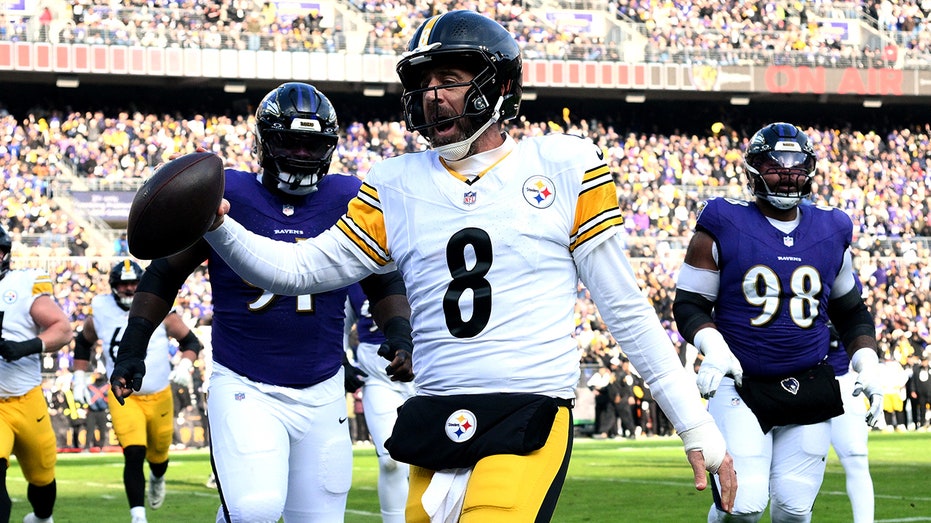
The quote that ricocheted around social media after the Steelers’ 27–22 win over the Ravens wasn’t about first place in the AFC North, or a schematic wrinkle, or even Mike Tomlin’s job security. It was Aaron Rodgers’ icy retort to a question about what the victory meant after a week of speculation:
“Means maybe you guys will shut the hell up for a week.”
On the surface, it’s a spicy soundbite from a star quarterback tired of questions. Beneath it, though, is a dense story about how modern NFL teams manage crisis narratives, the evolving relationship between players and media, and the way one franchise has turned external chaos into a recurring organizational stress test.
Why this moment matters
Rodgers’ frustration and DK Metcalf’s public defense of Mike Tomlin aren’t just a postgame vent. They reveal:
- How the Steelers’ culture is being tested by a rare wave of public doubt about Tomlin.
- How star players increasingly see themselves as buffers—and sometimes shields—against media-driven narratives.
- How winning in high-pressure weeks still temporarily “resets” the discourse, but no longer eliminates deeper structural questions.
In other words, this wasn’t just a win over Baltimore; it was a referendum on who controls the story of the 2025 Steelers—the organization, the players, the media, or the results on the field.
The bigger picture: A rare kind of heat in Pittsburgh
To understand why this week felt different in Pittsburgh, you have to start with the franchise’s unusual stability. Since 1969, the Steelers have had only three head coaches: Chuck Noll, Bill Cowher, and Mike Tomlin. That makes them an outlier in a league where seven or eight coaching changes per offseason is typical.
Tomlin took over in 2007 and has never had a losing season. But he hasn’t reached the AFC Championship Game since the 2016 season and hasn’t been to a Super Bowl since the 2010 season. In the modern NFL, where offensive fireworks and young “quarterback whisperer” coaches dominate the narrative, a defense-first, stability-focused coach with fewer playoff runs in the last decade naturally becomes a target.
By 2024–25, criticism around Tomlin had coalesced around three main themes:
- Perceived offensive stagnation despite changes in coordinators and personnel.
- An inability to advance deep into the postseason even when maintaining regular-season competence.
- Questions about the Rodgers experiment—whether pairing an aging, strong-willed quarterback with a proud, old-school organization was a bold win-now move or a structural risk.
So when the Steelers hit a rough patch and Tomlin’s future became “a hot topic of debate,” it wasn’t emerging from nowhere. It was the convergence of long-simmering doubts about the team’s offensive ceiling, the Rodgers gamble, and a rare wobble in a historically steady regime.
What Rodgers’ irritation really signals
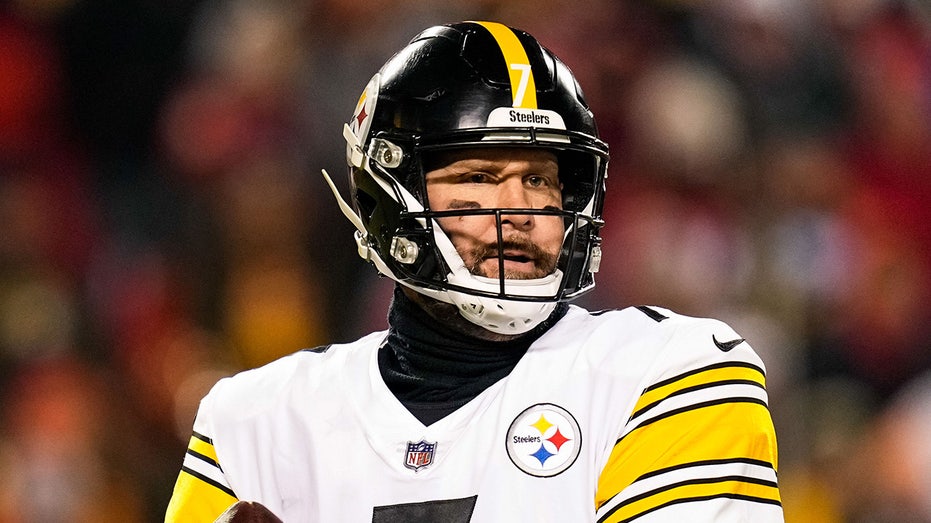
Rodgers’ stat line against the Ravens—23-of-34, 284 yards, a passing touchdown, plus his first rushing TD since his Green Bay days—would normally be the headline. Instead, his comment to reporters became the focal point because it distilled a broader tension:
Players increasingly experience media questions not as information-gathering, but as narrative enforcement.
Rodgers has had a long, public history of friction with media coverage, from his departure from Green Bay to his views on COVID-19 and vaccines to speculation about his leadership style. In Pittsburgh, he’s walking into an organization defined by controlled messaging, yet now bracing against a level of external scrutiny it rarely gets.
His “shut the hell up” line reveals three key dynamics:
- Fatigue with weekly existential questions. When every game becomes framed as a referendum on Tomlin’s job and the Rodgers experiment, players experience it as a constant attack on the legitimacy of their work, not just analysis.
- A belief that the team has internal clarity the outside world doesn’t see. Rodgers and Metcalf both emphasized ignoring “outside noise,” indicating they view much of the public conversation as misaligned with internal reality.
- A shifting power balance: star players as narrative actors. Rodgers isn’t just answering questions; he’s actively trying to reset the discourse, using his platform to push back on the legitimacy of the criticism itself.
Tomlin as lightning rod—and shield
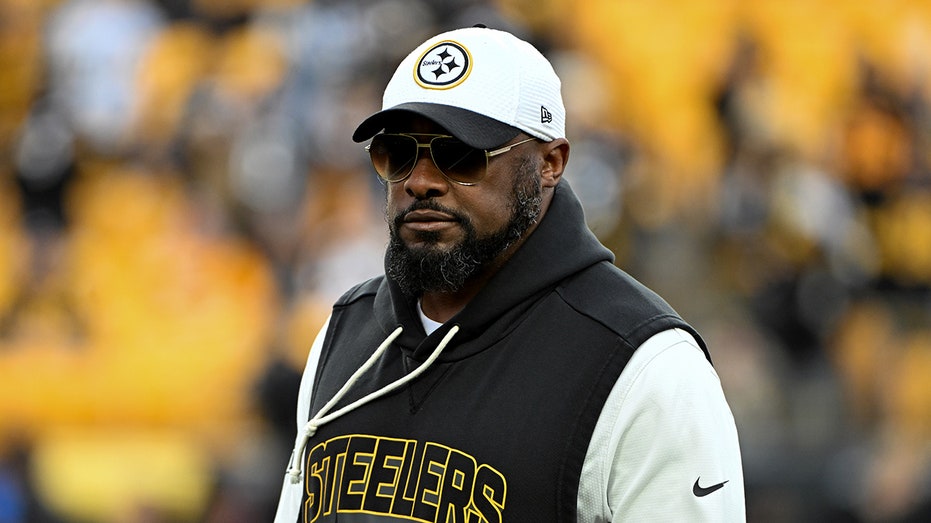
DK Metcalf’s comments about Tomlin may be the most revealing part of the story:
“Coach T is a great leader for us, and he's done nothing but take the bullets for us… even when we're high and when we're low, he's always come in every day, has been steady and stayed the same.”
“Taking the bullets” is a telling phrase. It acknowledges that Tomlin is routinely absorbing blame, whether or not it’s fully deserved. In modern NFL locker rooms, that kind of leadership has value beyond X’s and O’s. Tomlin is playing three roles at once:
- Cultural anchor in a franchise defined by continuity.
- Public shock absorber who draws criticism away from players.
- Internal stabilizer who keeps messaging consistent regardless of short-term swings.
That’s why this week was so delicate: when Tomlin himself becomes the question—“Should he still be the guy?”—the team’s primary shield is under attack. Players like Metcalf instinctively respond by reinforcing Tomlin’s legitimacy, both for public consumption and for the locker room.
For a front office, this kind of vocal player support is data. It informs ownership’s calculus: you’re not just firing a coach; you’re potentially detonating the culture that convinces veterans to buy in, play through pain, and trust the process after ugly losses.
The data behind the noise
Strip away the quotes and you’re left with a cold question: is the “noise” around Tomlin and the Steelers justified by performance, or is it disproportionate to the results?
Consider a few contextual markers from the Tomlin era and the modern league environment:
- Under Tomlin, the Steelers have consistently been in the playoff hunt and rarely uncompetitive, even in transition years.
- Across the NFL, roughly 25–30% of head coaches are replaced every two seasons, often in desperation moves that backfire.
- Continuity correlates with stability: teams with long-tenured coaches (e.g., Andy Reid in Kansas City, John Harbaugh in Baltimore, Sean Payton in New Orleans during his run) typically outperform high-churn franchises over time.
The legitimate criticism isn’t about basic competence; it’s about ceiling. Have the Steelers, in the Tomlin–Rodgers era, built an offense capable of beating the AFC’s elite in January? That’s a schematic and roster question, not a rhetorical one. But weeks like this turn it into a binary media narrative: “Tomlin in or out?”
Media, players, and the battle over narrative
Rodgers’ comment sits inside a larger evolution: athletes now have far more direct channels to fans (podcasts, social media, player-led platforms) and are less dependent on traditional media to tell their story. That has two effects:
- Players feel emboldened to challenge reporters publicly. The cost of being combative is lower when you have your own audience and brand.
- Reporters double down on accountability framing. When players push back, media often respond by emphasizing their watchdog role—questioning, scrutinizing, and holding powerful figures to account.
Rodgers is emblematic of this tension. He’s comfortable being polarizing, and he knows that any contentious quote will dominate discourse for a news cycle. From his perspective, if the coverage will be noisy anyway, he might as well use the microphone to rally his locker room and signal defiance.
What gets lost is nuance: the difference between asking legitimate questions about competitive direction and fueling speculative drama about job security for clicks. Fans, caught in the middle, are left to sort out which is which.
Steelers–Ravens: More than a rivalry win
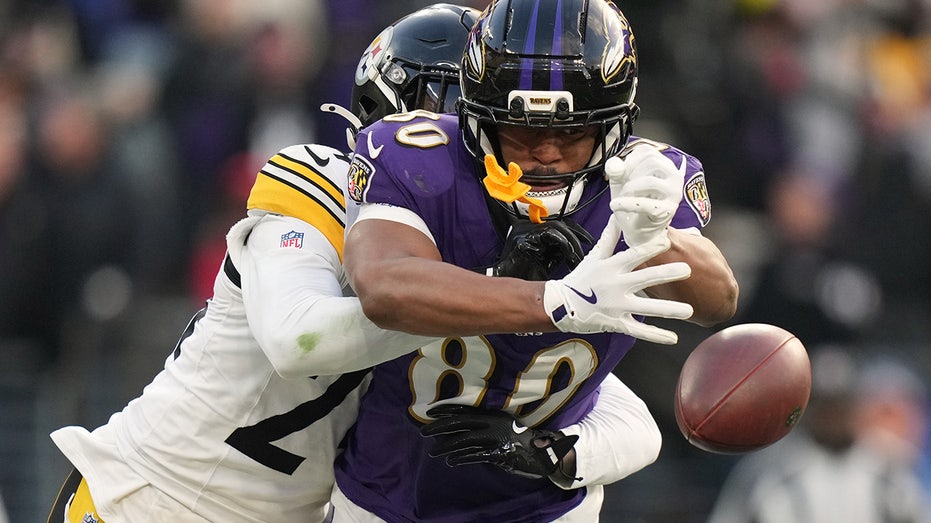
Tomlin called it “classic Steelers vs. Ravens.” That phrase carries decades of history: bruising divisional games where the margin is thin and physicality is the brand. But this particular win had layered stakes:
- First place in the division—a tangible, standings-based rebuttal to narratives of collapse.
- A validation point for the Rodgers move—a veteran QB joining a defense-anchored team and delivering in a critical rivalry game.
- Evidence that the locker room is aligned behind Tomlin, not fraying under speculation.
Metcalf’s 148 receiving yards and Jaylen Warren’s impact as a pass catcher underscore something else: when the offense is efficient and diversified, the noise naturally recedes. Performance is still the most powerful narrative tool in sports.
What’s being overlooked in the conversation
Most coverage will focus on Rodgers vs. the media and Tomlin vs. his critics. What’s less discussed but equally important:
- The front office’s structural bet. Pairing Rodgers with Tomlin is a specific organizational strategy: short-term offensive elevation wrapped in long-term cultural continuity. The risk isn’t just performance; it’s what happens when that tension erupts.
- The emotional load on veteran stars. Rodgers and Metcalf are clearly taking on vocal leadership roles. That’s energizing when you’re winning, but can become an emotional tax if the season turns.
- The Dolphins game as a narrative hinge. The “shut the hell up for a week” line contains its own acknowledgement: all of this resets next Monday. Beat a surging Miami team in prime time and Tomlin’s critics quiet further; lose badly, and the noise returns at a higher volume.
Looking ahead: The next few weeks as a referendum
The upcoming matchup with the Dolphins is more than another regular-season game. It’s a stress test across multiple dimensions:
- Can the Steelers’ defense contain a high-octane offense in a way that reinforces Tomlin’s defensive pedigree?
- Can the offense sustain efficiency so that Rodgers’ explanation of the team’s identity aligns with what fans see on the field?
- Can the organization manage the narrative so every week doesn’t become a referendum on job security?
If the Steelers stack wins, Tomlin’s future becomes less about panic and more about succession planning on the organization’s terms. If they stumble, the conversation shifts from “Is the criticism fair?” to “How long can ownership afford to ignore it?”
The bottom line
This wasn’t just Rodgers snapping at a reporter. It was a moment that crystallized the collision between a historically steady franchise, a polarizing veteran quarterback, and an NFL ecosystem where every week feeds a 24/7 debate machine.
For the Steelers, the win over Baltimore bought time and proved the locker room is still firmly behind Tomlin. For the media, it raised uncomfortable questions about how coverage amplifies or distorts legitimate football concerns. For Rodgers, it was another public salvo in his ongoing fight to control his own narrative.
The real story isn’t whether the press will “shut up for a week.” It’s whether the Steelers can keep playing in a way that makes the loudest voices less relevant—and whether ownership believes that Tomlin, even under fire, is still the right person to stand in front of the bullets when the noise returns.
Topics
Editor's Comments
One underappreciated angle in this storyline is ownership’s incentive structure. The Steelers are not a reactionary franchise; their identity has been built on patience, continuity, and a belief that institutional stability outperforms emotional decision-making. That’s precisely why the current wave of public doubt around Mike Tomlin is so destabilizing—it pressures ownership to act out of character. Firing Tomlin wouldn’t just be about upgrading schemes; it would signal a philosophical shift toward the same churn that defines less successful organizations. The Rodgers acquisition raises the stakes: if you believe the window is now, the temptation to make a dramatic sideline change grows. But that logic can be self-defeating. The evidence across the league is that frequent resets often lead to cyclical mediocrity, not breakthrough success. The contrarian view is that the Steelers’ best competitive edge may be resisting the pressure to ‘do something’ and instead doubling down on cultural coherence while ruthlessly fixing schematic weaknesses within the existing framework.
Like this article? Share it with your friends!
If you find this article interesting, feel free to share it with your friends!
Thank you for your support! Sharing is the greatest encouragement for us.