Russell Wilson, Jaxson Dart, and the NFL’s New Quarterback Economy

Sarah Johnson
December 12, 2025
Brief
Russell Wilson’s Giants benching and Jaxson Dart’s rise reveal how the NFL is revaluing quarterbacks, from mega-deals to bridge roles. This analysis unpacks the deeper market and legacy stakes at play.
Russell Wilson, Jaxson Dart, and the NFL’s New Quarterback Economy
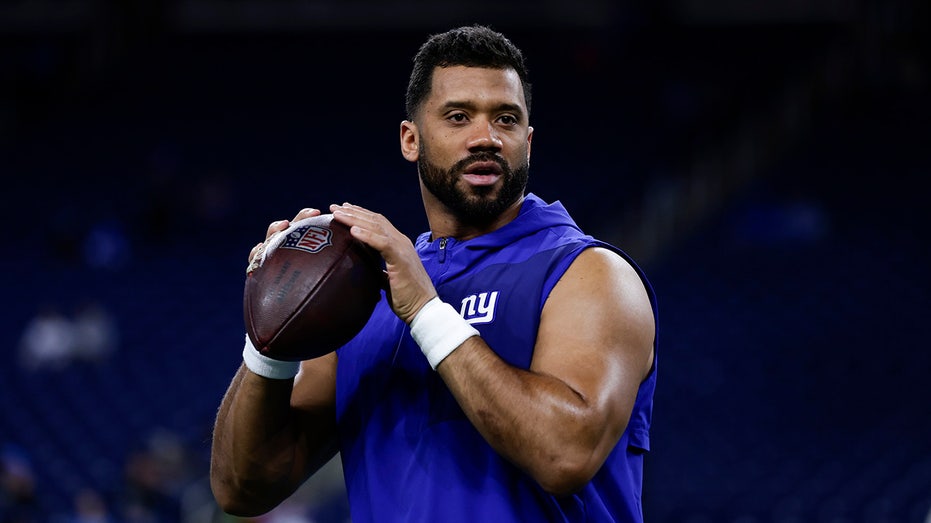
Russell Wilson’s quiet slide from franchise cornerstone to backup on his third team in four seasons could be mistaken for a simple decline story. It isn’t. His situation with the New York Giants — and the emergence of rookie Jaxson Dart as the team’s preferred option — is a window into how the modern NFL is radically revaluing quarterbacks: how they’re paid, how quickly they’re replaced, and how teams balance aging stars against cheap, upside-heavy rookies.
Wilson’s recent social media declaration — “I gotta get back to Ballin’ & being Me… It’s time. Time to go Dark” — is less a motivational slogan than a public acknowledgement that his next contract, and perhaps his legacy, will be shaped in 2026 by whether he can reinvent himself in a league that has largely moved on.
From ‘Face of the Franchise’ to ‘Bridge Quarterback’
To understand what’s happening now, you have to remember what Russell Wilson represented just a few years ago. From 2012 to 2020 in Seattle, he was the prototype of the modern dual-threat quarterback: mobile but efficient, capable of explosive plays but generally careful with the football.
- From 2012–2020, Wilson posted a 98.3 passer rating, 267 TDs to 81 INTs, and a 101–52–1 regular season record.
- He made nine Pro Bowls and led Seattle to two Super Bowls, winning one.
- By 2019–2020, he was routinely mentioned as an MVP-caliber player and future Hall of Famer.
That’s the “2017–2020 Russell Wilson” a fan invoked on X, arguing that version of Wilson “would be the best QB in the NFL if he played today.” Wilson’s response — signaling a desire to rediscover his early-career form — highlights a key tension: the league has changed, he’s changed, and the cost of decline at that position has never been higher.
His trajectory since leaving Seattle in 2022 tracks almost perfectly with a growing pattern: elite quarterbacks on massive contracts becoming organizational anchors — not in the positive sense, but as financial dead weight when their play slips even one tier.
How the Broncos Trade Changed the Quarterback Market
The trade that sent Wilson from Seattle to Denver in March 2022, followed by a massive extension, is now a case study in how quickly quarterback investments can turn toxic:
- The Broncos gave up multiple first- and second-round picks and players to acquire Wilson.
- They extended him on a five-year deal reportedly worth over $240 million, with significant guarantees.
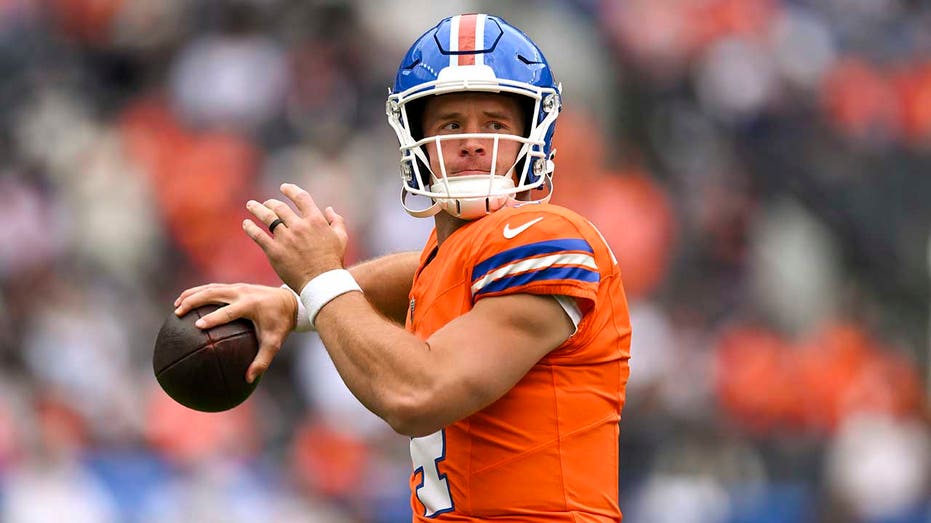
- Within two seasons, Denver had benched him and eaten enormous dead cap charges to move on.
This wasn’t just a bad deal; it became a cautionary tale. General managers and owners watched as Denver’s roster flexibility evaporated, and as the team had to prioritize escaping a contract over building around the player. Wilson’s move to Pittsburgh in 2024, then to the Giants in 2025, wasn’t just about performance. It was about the league recalibrating how much risk it’s willing to take on aging quarterbacks whose best years were clearly behind them.
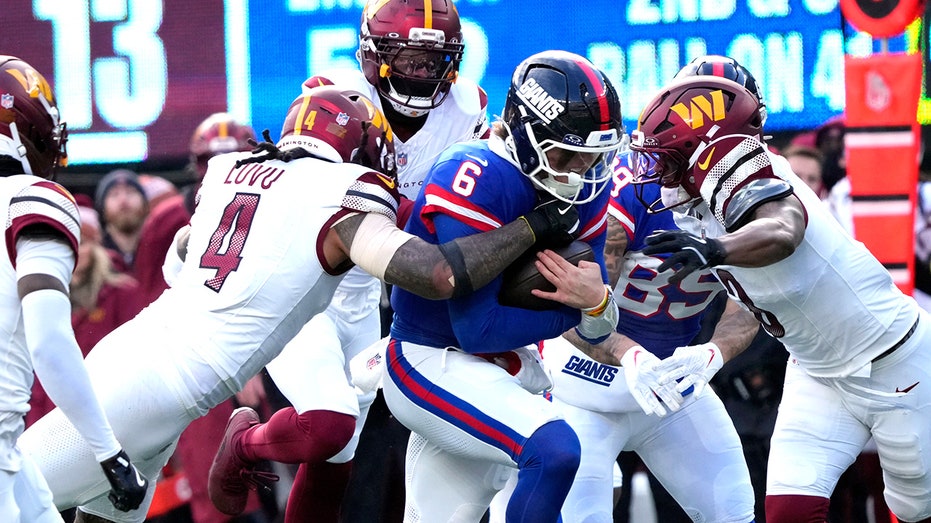
By the time Wilson arrived in New York, he was no longer a franchise savior — he was a low-cost reclamation project and insurance policy. The real organizational bet, as it turns out, was on Jaxson Dart.
Why Jaxson Dart’s Rise Matters More Than Wilson’s Decline
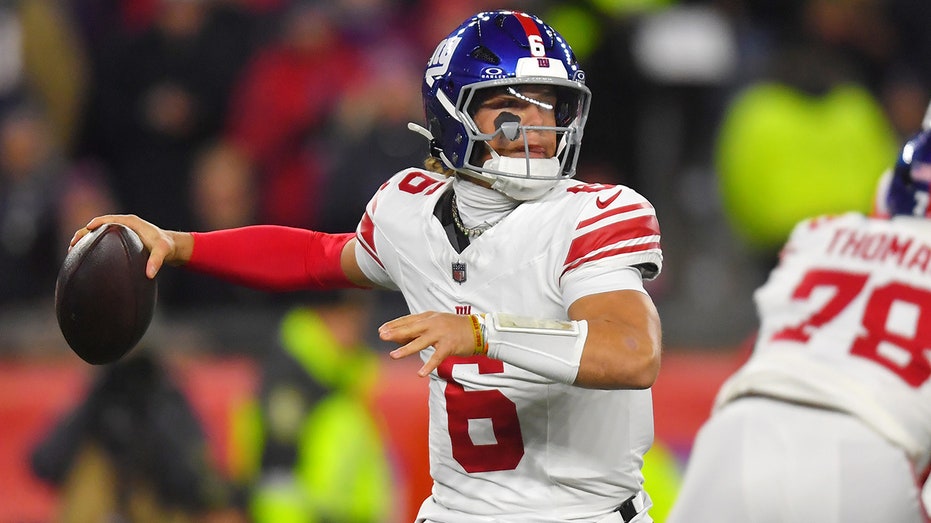
Dart’s emergence as the Giants’ preferred option is not just a rookie-over-veteran story; it reflects the league’s broader shift toward optionality at quarterback. Teams increasingly prefer:
- A young, cost-controlled passer with upside, even if raw
- Over a former star whose floor has visibly fallen and whose ceiling is mostly memory
Even when Dart was injured, the Giants turned to Jameis Winston rather than Wilson. That choice was revealing. Winston is volatile but familiar: a gunslinger with turnover issues, but one whose style can keep an offense aggressive. Wilson, by contrast, has evolved into something many coaches fear more than volatility: a conservative, pocket-averse veteran who takes sacks, avoids risky throws, and no longer creates explosive plays with his legs at the rate he once did.
That risk profile is strategic. For a rebuilding team, a quarterback who is too cautious can stall evaluation of the rest of the roster. You can’t tell how good your receivers, your protection schemes, or your offensive concepts are if the quarterback won’t pull the trigger. Dart, for all his rookie mistakes, gives the Giants information. Wilson, right now, does not.
Wilson’s Stat Line and What It Actually Tells Us
On paper, Wilson’s 2025 numbers are grim:
- 831 passing yards
- 3 touchdowns, 3 interceptions
- Limited snaps over six games
- On pace for career lows in both passing yards and touchdowns
But those numbers are more symptom than cause. He wasn’t benched in New York because of a disastrous season; he was acquired with the tacit understanding that he was a short-term option unless he played well enough to disrupt the team’s plans for Dart. He did not.
What’s more important is how the league is likely to read this stat line in context:
- Three teams in four seasons signals instability and declining perceived value.
- Back-to-back benchings in Denver and New York raise questions about coachability and scheme flexibility, fair or not.
- The lack of explosive production makes it harder to sell him even as a short-term starter to fan bases hungry for upside.
Yet, paradoxically, this is exactly why he may be attractive in 2026 — but as something very different than what he once was.
The Coming Market for ‘Bridge Quarterbacks’
The report that Wilson could draw interest as a bridge quarterback in 2026 fits a clear structural trend. The anticipated free-agent quarterback class is thin, and the demand curve is steep:
- Several teams will be stuck in the “too good to pick top-3, too bad to contend” tier.
- Quarterback-needy teams often miss on their first-choice rookies in the draft.
- Coaches in win-now mode often prefer a veteran who can run an offense while the rookie sits.
Bridge quarterbacks — think Alex Smith in Kansas City, Tyrod Taylor in Buffalo, or more recently Baker Mayfield in Tampa as a quasi-bridge, or Jacoby Brissett on multiple squads — occupy an increasingly important role: stabilize, compete, and buy time without long-term commitment.
Wilson’s résumé still holds value in that niche:
- Super Bowl winner, extensive playoff experience
- Long history of ball security compared to more turnover-prone journeymen
- Leadership reputation and professionalism, particularly from his Seattle years
If he accepts the reality that his next job is likely a 1–2 year deal as a mentor and stopgap, he could extend his career and reshape his late-career narrative. The alternative — chasing a situation where he’s promised a long-term starting role that no longer exists — risks a quiet exit from the league.
What Wilson’s Reinvention Would Actually Require
Wilson’s “Time to go Dark” vow hints at a reset. But this is less about work ethic and more about identity. To stay relevant as a 37-year-old quarterback heading into 2026, he has to confront three uncomfortable truths:
- He’s no longer the system. In Seattle, the offense eventually bent around his preferences — deep shots, extended plays, less emphasis on timing-based quick game. Going forward, he has to be the one adapting to the system, not the other way around.
- Mobility isn’t his superpower anymore. Aging, hits, and accumulated wear have eroded his margin for improvisation. He needs to fully lean into pre-snap processing, timing throws, and getting the ball out quicker — traits that extend the careers of players like Drew Brees and, more recently, Matthew Stafford, even if their skill sets differ.
- His role is as much teacher as player. Any team signing him as a bridge in 2026 is likely pairing him with a high draft pick or a young QB. His value will be measured partly in how quickly that player develops.
If Wilson can embrace those realities, he can carve out a second act closer to what we saw from late-career Kurt Warner or Alex Smith: not quite what they once were, but invaluable in specific contexts. If he clings to the idea that he’s still a franchise centerpiece, he risks repeating Denver’s misalignment — on a smaller scale, but with similar frustrations.
How Jaxson Dart Fits the New Quarterback Prototype
Dart’s rise is part of a broader pattern: teams are aggressively cycling through young quarterbacks, looking for difference-makers on rookie deals. The logic is ruthless but clear:
- If you hit on a young quarterback, you get 3–4 years of high-level play at below-market cost.
- That surplus value lets you spend heavily on defense, offensive line, and weapons.
- If you miss, you move on quickly rather than being tied to a massive second contract.
In that environment, a 37-year-old Wilson is not competing against his own 2017–2020 self — he’s competing against the possibility of the next Jaxson Dart: cheaper, more mobile, and aligned with current offensive trends built on RPOs, movement, and multi-threat looks.
That doesn’t mean Dart is a lock to be the Giants’ long-term answer. Many promising rookies fade. But the organizational choice is telling: they’re willing to ride Dart’s variance, even through an injury and expected rookie mistakes, because that path offers future upside. Wilson offers familiarity and floor, but not enough ceiling to justify slowing the experiment.
What Most Coverage Misses About This Story
Much of the conversation around Wilson’s situation focuses on whether he’s “washed,” whether the Giants are disrespecting a veteran, or whether he deserves another chance as a starter. That misses three deeper dynamics:
- The de-risking of quarterback contracts. Wilson’s Denver deal accelerated a trend: teams are now far more cautious with second and third big-money quarterback contracts. His current marginalization is partly fallout from that overcorrection.
- The shrinking patience window. Franchise QBs once had years to prove themselves. Today, rookies get 1–2 seasons; veterans often get less. Wilson’s quick benching in Pittsburgh and New York reflects that compressed timeline.
- The growing value of humility and flexibility. Veterans who accept bridge roles — and visibly support their younger counterparts — can extend their careers and influence. Those who resist can find themselves without a market, regardless of past glory.
Looking Ahead: What to Watch in 2026
As 2026 approaches, several key questions will shape Wilson’s future and the larger quarterback market:
- Which teams will need a bridge? Franchises that miss on their preferred rookie in the draft — or that move on from mid-tier starters — will be prime candidates. Think teams drafting between 8–20 overall, too low to pick the top QB but too unsettled to stand pat.
- How does Wilson position himself publicly? If he uses the offseason to signal openness to mentoring, competing without guarantees, and running any system, his market expands.
- Does his Hall of Fame case slip? While Canton debates aren’t decided on late-career stats, prolonged irrelevance can shift perception. How he handles this phase — and whether he has one more meaningful season — will matter.
- Does Dart solidify his hold on the Giants’ job? If he stays healthy and productive, the Wilson era in New York will be remembered as a brief insurance policy, not a missed opportunity.
The Bottom Line
Russell Wilson’s situation with the Giants isn’t just about one star fading and a rookie rising. It’s about a league that has fundamentally changed how it values quarterbacks, especially aging ones. As Jaxson Dart embodies the future — cheap, mobile, and full of unknown upside — Wilson faces a choice: reinvent himself as one of the NFL’s most valuable commodities in a different way, as a short-term stabilizer and mentor, or remain anchored to a self-image that the market no longer supports.
His declaration that it’s “time to go Dark” will only matter if it’s followed by something far harder than offseason training clips: a complete redefinition of what success looks like for a former franchise quarterback trying to stay in a league that has already moved on.
Topics
Editor's Comments
What makes the Wilson–Dart story more than a sports headline is how cleanly it maps onto a broader labor-market question: how do institutions handle aging stars whose pay and status are based on past performance in a system that increasingly rewards flexibility and future potential? The NFL has quietly shifted from treating franchise quarterbacks as untouchable, decade-long pillars to viewing them as assets with sharply defined windows of surplus value. Wilson, fairly or not, has become a symbol of what happens when teams pay for what a player was, not what he’s likely to be. At the same time, it’s worth interrogating whether the league’s new ruthlessness carries its own risks: shorter patience windows may cause teams to churn through young quarterbacks too quickly, and the bridge role, while efficient on paper, can reduce veterans to interchangeable placeholders. The real tension going forward is whether players like Wilson can reclaim agency by redefining their value, or whether the system simply moves on and replaces them, no matter how loudly they insist they’re ready to "get back to ballin’."
Like this article? Share it with your friends!
If you find this article interesting, feel free to share it with your friends!
Thank you for your support! Sharing is the greatest encouragement for us.