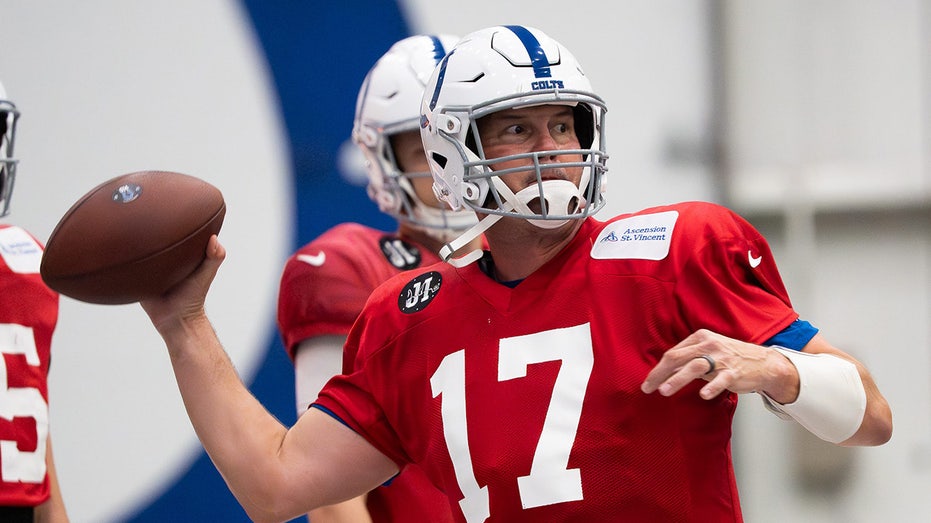
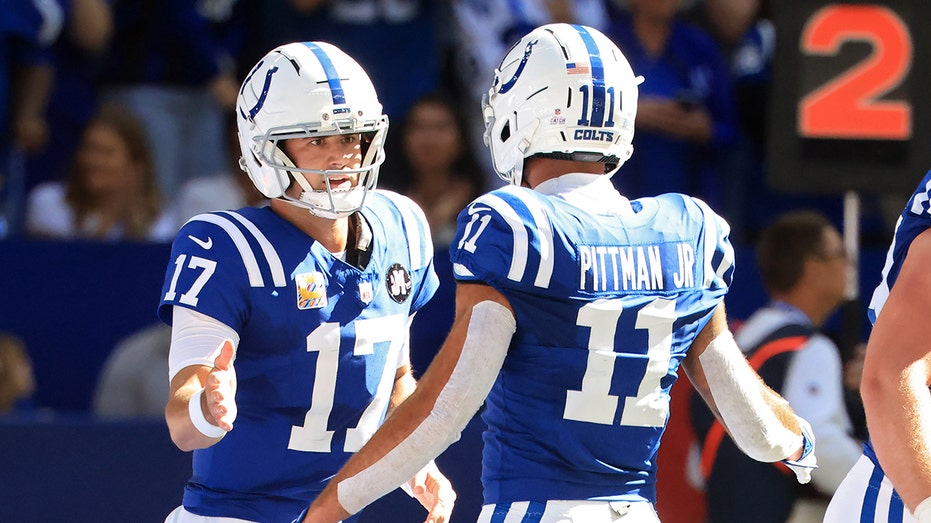
Daniel Jones, the Colts, and the New Quarterback Economy Behind Michael Pittman’s Endorsement

Sarah Johnson
December 13, 2025
Brief
Daniel Jones’ injury and Michael Pittman Jr.’s public support reveal a deeper story about the Colts’ QB dilemma, the changing quarterback market, and how locker room politics shape contract decisions.
Daniel Jones, the Colts, and the New Quarterback Economy: Why a WR’s Endorsement Matters More Than It Seems
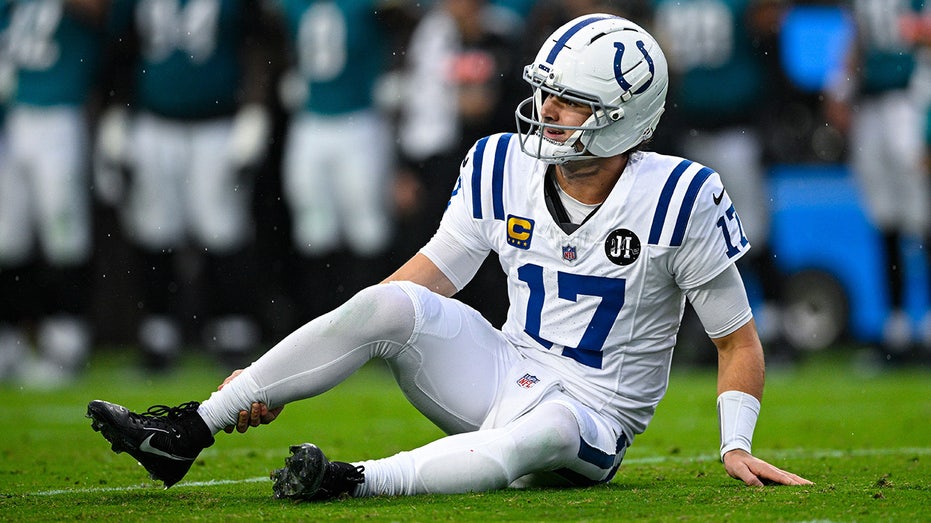
Daniel Jones’ season-ending Achilles tear – and teammate Michael Pittman Jr.’s public call for the Colts to bring him back in 2026 – looks like a small, feel‑good story on the surface. Underneath, it’s a case study in how the NFL’s quarterback economy is changing, how teams are rethinking risk around injured veterans, and how locker room politics and public messaging shape contract decisions.
From New York Cautionary Tale to Indianapolis Revival
To understand the significance of Pittman’s endorsement, you have to rewind to Jones’ arc with the New York Giants.
- 2019: Drafted 6th overall, Jones was positioned as Eli Manning’s successor and the franchise centerpiece.
- 2023: After an up‑and‑down early career, he signed a major extension reportedly worth over $160 million, only to suffer a torn ACL and see performance questions intensify.
- 2024: The Giants cut bait mid‑season, swallowing an expensive financial and reputational hit – a public admission that the extension was a mistake.
By 2025, Jones was on a prove‑it deal in Indianapolis – the NFL equivalent of a professional reset. He did more than just steady the ship. In Shane Steichen’s offense, he was on pace for a career season:
- 3,101 passing yards in 13 games – just 104 yards shy of his career high
- 68% completion rate – a career best
- 19 passing TDs, plus 5 rushing TDs
That performance matters in context. It suggests that what looked like a “Giants problem” may have been as much about environment, coaching, and roster construction as about Jones himself. In Indianapolis, with a balanced offense (Jonathan Taylor playing like an MVP candidate) and weapons like Pittman, Ty Warren, Alec Pierce, and Josh Downs, Jones looked closer to the quarterback the Giants hoped they’d drafted in 2019.
Then came the Achilles tear, on top of a fractured fibula and a recent ACL tear – the kind of injury stack that traditionally scares off front offices, especially for a mobile quarterback.
The Bigger Picture: How QB Markets and Medical Reality Are Colliding
Jones’ situation isn’t happening in a vacuum. It’s unfolding at a moment when three big structural shifts are converging:
- Quarterback contracts have exploded. The top tier is north of $50 million per year. Even the “middle class” of starters is expensive, making mistakes far more costly than a decade ago.
- Medical advances are changing risk calculus. ACL and Achilles injuries used to be near‑career enders. Now, players like Kirk Cousins (Achilles), Joe Burrow (ACL), and others have returned at high levels, reshaping expectations and timelines.
- Teams are rethinking rookie vs. veteran trade‑offs. The rookie QB contract remains the holy grail for roster building, but the bust rate is high. A known, if imperfect, veteran who fits your system can be cheaper – and safer – than a top‑10 draft swing.
The Colts sit right at the intersection of all three. They already have a highly drafted young quarterback in Anthony Richardson. They just watched a veteran – Jones – flourish in their system, only to get hurt. And now they’re facing a 2026 decision in a league where “injury risk” is becoming a more nuanced concept than it was even five years ago.
What Pittman’s Public Support Really Signals
On paper, Pittman’s quote – “I’m on board with it and I think that most of the players are” – reads like simple support for a teammate. Inside an NFL building, that kind of statement plays a different role.
There are at least three layers to it:
- Locker room politics. When a star receiver publicly backs a quarterback, it’s a message to the front office about where the locker room’s trust lies. For skill players, continuity at quarterback is a livelihood issue: timing, chemistry, stats, and ultimately their own contracts depend on it.
- Signal to the market. Teammate buy‑in matters around the league. If other teams see Colts players vouching for Jones’ work ethic and production, it boosts his value even if Indianapolis doesn’t re‑sign him.
- Subtle pressure on the Richardson timeline. Endorsing Jones as a long‑term option implicitly raises questions about how the roster really views Anthony Richardson’s readiness. It doesn’t mean they’ve given up on Richardson, but it suggests Jones earned genuine confidence that a young QB may not yet command.
In short, Pittman’s quote is as much about power dynamics as it is about friendship. It’s the core of the modern NFL tension: player‑driven preference for stability versus front offices’ appetite for upside and cost control.
The Colts’ Strategic Dilemma: Stability vs. Upside vs. Health
By 2026, the Colts will likely be choosing among three paths:
- Give Jones a multi‑year deal with protections.
Something like a two‑ or three‑year, incentive‑heavy contract with injury protections and modest guarantees. It rewards performance and locker room standing while hedging against medical risk. - Double down on Richardson as the clear QB1.
If Richardson develops quickly and stays healthy, the front office may decide the long‑term ceiling is simply higher with him, using Jones only as an insurance policy at a backup rate – if he’s willing to accept that role. - Reset entirely.
If both health and performance remain cloudy, Indianapolis could pivot to another veteran or draft option, letting the market set Jones’ value elsewhere.
The complicating factor is money. Teams do not like paying starter‑level money to quarterbacks coming off multiple major injuries unless:
- The medical outlook is strong and supported by data on similar comebacks.
- The scheme fit is clearly established – which Steichen and Jones have arguably demonstrated in 2025.
- The alternative options are either unproven or significantly more expensive.
Given the numbers he posted in 2025, Jones has given the Colts a data‑based argument that he can be their functional solution – even if he isn’t a top‑five quarterback league‑wide. In today’s NFL, that’s often enough to justify a second contract, provided the medicals and the price align.
Injury Risk and the New Science of Second Chances
It’s easy to frame Jones as “injury prone.” But modern sports medicine complicates that label. Achilles repair and rehabilitation protocols have advanced significantly in recent years. Quarterbacks, who rely more on timing, processing, and pocket mobility than pure top‑end speed, have a better chance of returning close to form than, say, a running back or cornerback.
The bigger question isn’t just, “Will Jones be healthy?” It’s, “How comfortable are you building a multi‑year plan at the most important position around a player with this medical history?” Statistically, recurrent lower‑body issues increase risk, but the exact impact is hugely individualized.
From a front‑office perspective, the decision isn’t binary. It becomes a probabilistic calculation: What contract structure reflects the risk without alienating the player or the locker room? That’s where Pittman’s remarks add pressure. If management lowballs Jones, it could be perceived by players as undervaluing someone they believe transformed the offense.
What Mainstream Coverage Often Misses
There are three under‑discussed angles here that go beyond the typical “Will they re‑sign him?” storyline:
- Impact on Richardson’s developmental runway. Keeping Jones on anything more than a pure backup deal would effectively shorten or complicate Richardson’s path to being the unquestioned QB1. That echoes situations like Alex Smith/Patrick Mahomes in Kansas City or Tyrod Taylor/Justin Herbert with the Chargers, where timing and communication were crucial.
- The reputational stakes for the Colts’ front office. Indianapolis already gambled and won by signing Jones on a prove‑it deal. If they let him walk and he succeeds elsewhere, they risk the perception of failing to capitalize on a successful reclamation project.
- The growing power of player‑driven narratives. Public endorsements from stars have always mattered, but in the social media era – where players brand themselves as much as teams do – a WR backing his QB becomes part of the negotiation theater, not just a quote in a story.
Looking Ahead: What to Watch Between Now and 2026
A few signposts will reveal how serious the Colts are about Jones as a long‑term option:
- How they talk about Richardson publicly. If coaches emphasize Richardson as “the future” while calling Jones “a great pro and leader,” that’s a clue the team sees Jones more as a bridge.
- Any early extension or injury‑protection talk. If reports emerge of the Colts exploring a 2026 deal early – even a modest one – that signals real interest in building around him.
- Jones’ recovery timeline and mobility. Preseason 2026 footage will matter. If he looks close to his 2025 form, his market widens. If he’s clearly limited, the leverage shifts sharply to the team side.
- Other QB market moves. A surplus of veteran starters (from cap casualties or draft displacements) could push Jones into a crowded second tier, lowering his price but increasing the chances someone takes a one‑ or two‑year flier.
The Bottom Line
Michael Pittman Jr. saying he’s “on board” with Daniel Jones returning in 2026 is more than a show of loyalty. It’s a window into how players view Jones’ impact on the offense, how much they value stability at quarterback, and how modern NFL teams must navigate a complex mix of medical risk, salary cap realities, and locker room dynamics.
Jones’ story in Indianapolis isn’t just about whether an injured quarterback gets another contract. It’s about whether a franchise that watched him thrive in its system is willing to bet – again – that fit, culture, and scheme can overcome both past perception and present injury risk.
Topics
Editor's Comments
The most revealing piece of this story isn’t Daniel Jones’ stat line or even the severity of his injuries—it’s who is doing the talking and what they stand to gain. Michael Pittman Jr. is not a fringe voice; he’s a core offensive pillar staking out a public position on the team’s most consequential long‑term decision. That suggests real confidence in Jones, but it also subtly raises questions about how the locker room views the Anthony Richardson era. Front offices tend to frame these situations as purely analytical—cap, medicals, performance metrics—but this is a good reminder that elite teams often succeed because their football and human calculations align. If the Colts’ decision on Jones ignores the locker room’s visible preference for stability and continuity, they risk undermining buy‑in, especially if 2026 starts slowly. The contrarian question here is whether Indianapolis can afford to be purely rational in a market that increasingly rewards continuity, even when it comes wrapped in medical risk.
Like this article? Share it with your friends!
If you find this article interesting, feel free to share it with your friends!
Thank you for your support! Sharing is the greatest encouragement for us.