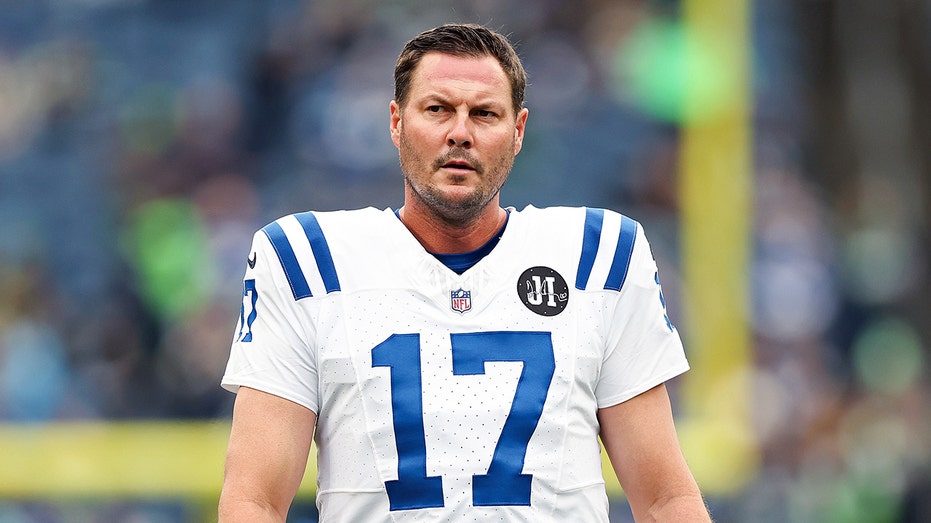
Philip Rivers’ NFL Return: The Hidden Economics of Health Insurance, Aging QBs, and One Last Run

Sarah Johnson
December 18, 2025
Brief
Philip Rivers’ surprise Colts return isn’t just about a playoff push. It exposes how NFL health benefits, aging quarterbacks, and family security quietly shape late-career comebacks and retirement decisions.
Philip Rivers’ Surprise NFL Return Exposes a Hidden Truth About Player Health, Benefits, and Aging Stars
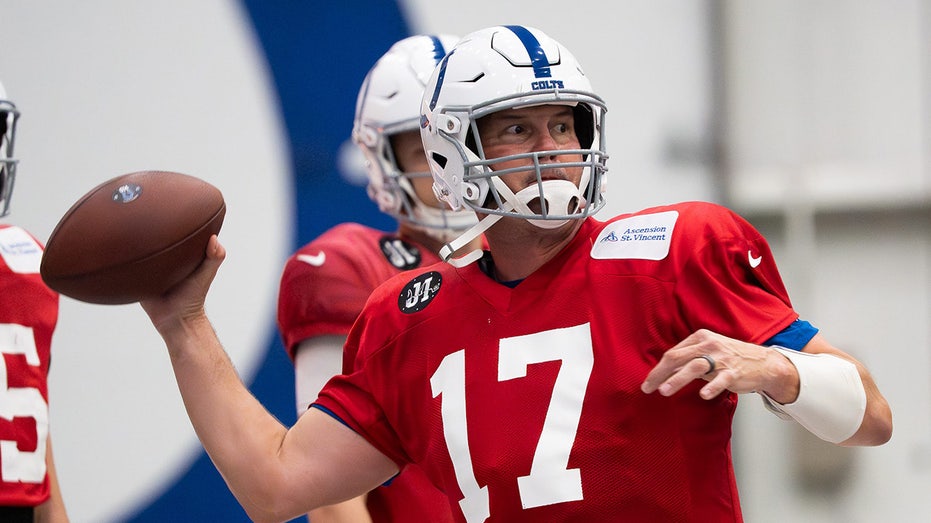
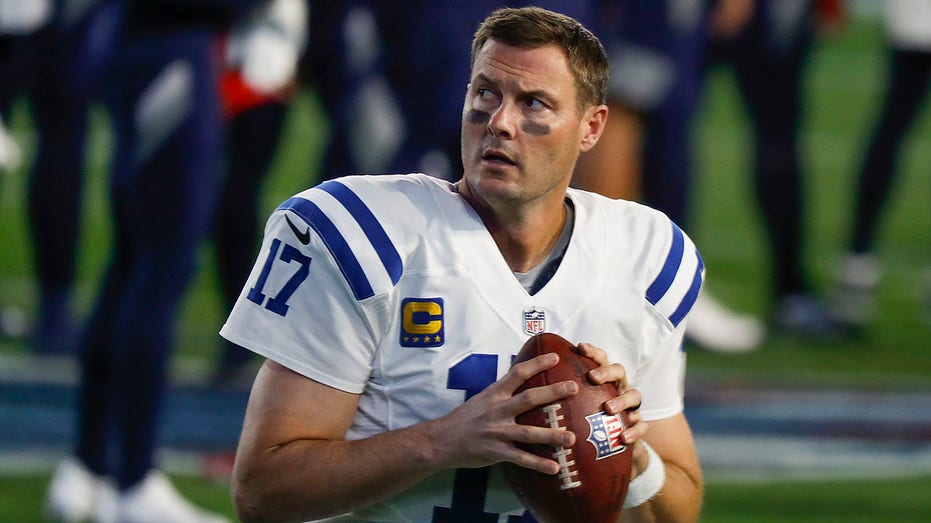
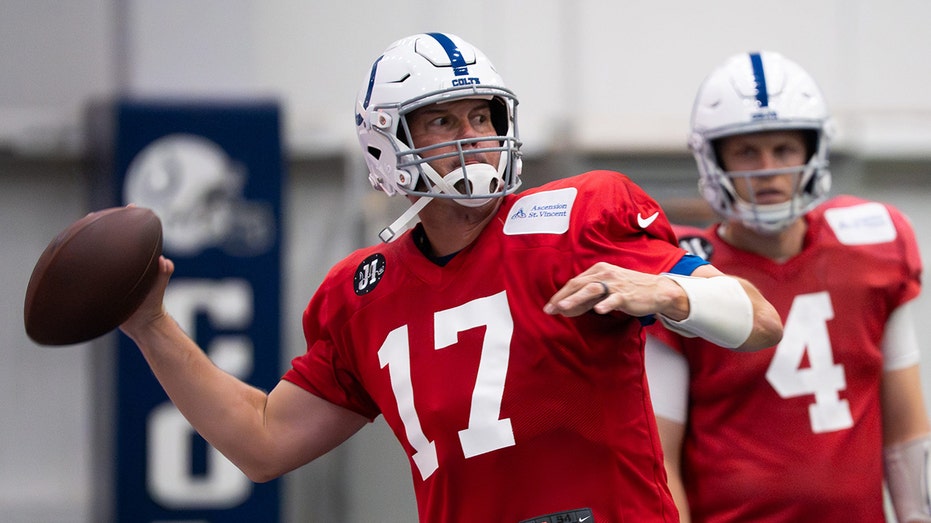
Philip Rivers’ late-season comeback for the Indianapolis Colts looks, on the surface, like a feel-good desperation move: a beloved veteran answering the call to help a playoff hopeful. But the fine print of his return — especially the reset of his NFL health insurance clock — reveals a deeper story about how the league treats aging bodies, family security, and the economics of short-term comebacks in modern sports.
The six-figure paycheck for four games is getting the headlines. The more important detail is that Rivers, a 44-year-old father of 10, just bought his family five additional years of NFL health coverage, pushing it out to 2030. That incentive says as much about the structure and limitations of NFL benefits as it does about Rivers’ competitive fire.
Rivers’ Return in Context: The NFL’s New Era of Extended Careers
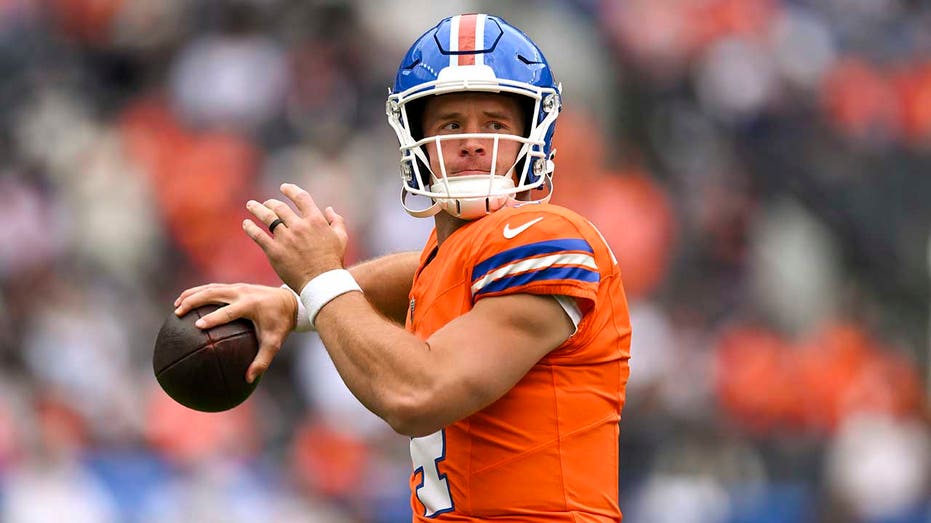
Rivers’ comeback fits into a broader trend of aging quarterbacks stretching the boundaries of what was once considered possible. Tom Brady played to 45, Drew Brees to 42, Aaron Rodgers is attempting a return at 41, and even non-Hall-of-Fame-level starters are staying viable into their late 30s.
What’s changed isn’t just training regimens and nutrition. Rule changes have systematically insulated quarterbacks from the most violent impacts: stricter roughing-the-passer calls, protections on low hits, and a culture shift in how defenders are coached to approach the position. In that context, a 44-year-old returning after several years away is no longer science fiction; it’s the logical extension of an NFL that has heavily invested in keeping its most marketable stars upright.
But Rivers’ case is different in one crucial way: he had already fully transitioned into life after football as a high school coach and family man. His return is less about chasing legacy — his Hall of Fame candidacy will hinge on his 2020 résumé, not a four-game cameo — and more about short-term competitive opportunity and long-term family security.
The Overlooked Story: Health Insurance as a Powerful Incentive
One detail buried in this story deserves far more attention: Rivers’ post-career NFL health coverage was reportedly set to expire after this season, five years after he retired following the 2020 campaign. By signing this late-season deal, he effectively resets that clock, extending his access — and his family’s access — to NFL health coverage through 2030.
That is not a trivial benefit. The cost of comprehensive health insurance for a large family in the United States can run tens of thousands of dollars per year. For players who have endured orthopedic surgeries, concussions, and chronic pain, the stakes are even higher. Rivers, by virtue of his long, well-compensated career, is better positioned than most former players to pay out of pocket, yet even he clearly values the institutional security of league-backed coverage.
His decision underscores a hard reality: even in a league that generates over $20 billion annually in revenue, long-term health care is still a patchwork system of time-limited benefits, negotiated union provisions, and personal financial planning. The fact that a multi-millionaire quarterback is nudged back onto the field partly because of insurance illustrates the structural power of benefits in the NFL ecosystem.
How NFL Health Benefits Actually Work — and Why Rivers’ Case Matters
The NFL’s benefits landscape is notoriously complex, but several broad points frame why this insurance reset is meaningful:
- Post-career health coverage is limited in duration. Many former players receive only a few years of league-subsidized coverage after they retire. Extended benefits vary by tenure and collective bargaining agreements, but they are not lifetime guarantees.
- The average NFL career is short. Historically, the average career length has hovered around 3–4 years. That means many players exit the league in their 20s with a few years of health coverage and then must navigate the private market with lifelong injuries.
- Medical needs are long-term. Studies commissioned by the NFL Players Association and independent researchers have repeatedly found elevated rates of arthritis, chronic pain, and mental health issues among retirees, many of which intensify with age.
Rivers’ extension of benefits to 2030 does not just cover him; it protects a household of 12 people for years where his children will be moving through adolescence and young adulthood. For a father of 10, with a lifetime of cumulative hits and physical wear, that is arguably more valuable than the roughly $279,000 in prorated salary he will earn for four regular-season games.
Risk, Reward, and the Psychology of the Comeback
Rivers’ remarks after his first game back — a narrow 18–16 loss to the Seahawks — framed his return as a lesson in courage and risk-taking:
“The guaranteed safe bet is to go home or to not go for it, and the other one is, ‘Shoot, let’s see what happens.’ I hope in that sense that can be a positive to some young boys, or young people.”
This language is telling. He’s not talking about him needing football; he’s talking about modeling a mindset for his sons and his players at the school where he coaches. To him, the comeback is as much a character statement as a football decision.
Yet embedded in this framing is a tension that’s central to modern football: the league markets risk-taking as heroism, while the long-term medical consequences of those risks are often discounted or delayed. In Rivers’ case, those risks are mitigated by his position (quarterbacks are the most protected players on the field) and his relatively brief return. But for fans, young players, and even his own athletes, the romantic narrative of “not being scared” can obscure the material calculus: this is also a rational financial and benefits decision made by a husband and father.
The Colts’ Calculation: Leadership, Stability, and the Human Factor
From the Colts’ perspective, the move is less mystifying than it might first appear. They are trying to halt a four-game losing streak after an 8–2 start and stay in the AFC playoff hunt. Plugging in a quarterback who already knows the franchise, has a long history of processing complex defenses, and commands instant respect in the locker room is attractive, even if his arm strength and mobility are diminished.
In 2020, Rivers led the Colts to an 11–5 record and a playoff berth. His familiarity with organizational culture, expectations, and pressure environments has real value in December football, when the margin for error is slim and games are often decided by situational awareness rather than pure physical talent.
Shane Steichen’s immediate commitment to Rivers as the starter for Monday Night Football against the 49ers signals that this is not a mere sentimental signing. It’s a calculated attempt to stabilize a team in free fall by importing a proven field general for a short, high-stakes stretch.
What This Says About the Modern NFL Labor Market
Rivers’ return is also a case study in how the NFL quietly functions as a market for short-term, high-skill labor in crisis. As the season wears on, injuries mount and depth charts thin. Front offices increasingly tap retired veterans, practice-squad journeymen, and even alternative league players to plug critical gaps.
What’s different here is that Rivers isn’t being paid like an emergency savior. He’s on a veteran minimum deal, prorated, with his primary upside embedded in benefits rather than cash. That arrangement reflects several dynamics:
- Cap discipline. The Colts preserve future flexibility by avoiding a big late-season hit, even as they chase a playoff spot.
- Market reality. With limited options and no offseason ramp-up, Rivers’ bargaining leverage was modest, especially with his stated motivation being more than financial.
- Benefits as compensation. The revived insurance coverage functions as an under-the-radar, non-cap, non-cash element of his total compensation — something that is rarely discussed publicly but heavily influences player decisions.
Expert Perspectives: Health, Identity, and the Post-Career Cliff
Sports economists and medical experts see Rivers’ move as emblematic of bigger structural issues.
Dr. Zachary Binney, a sports epidemiologist who has long studied football injuries, has noted in similar contexts that, “The NFL’s benefits design often creates subtle pressures on players to stay connected to the league a bit longer than they might otherwise, especially if it means extending health coverage into middle age, when many of the longer-term effects of football begin to surface.”
On the psychological side, Dr. Michael Gervais, a high-performance psychologist who has worked with elite athletes, has written about the “identity void” that many players face upon retirement. The pull to return isn’t always about money; it’s often about regaining structure, purpose, and a familiar arena for competition.
In Rivers’ case, that void may have been partially filled by his high school coaching role and family life. But the chance to re-enter the NFL not as a fading backup, but as a starting quarterback in a playoff race, is a rare confluence of opportunity and meaning — with the added benefit of extending a vital safety net for his family.
Data Points: Aging Quarterbacks and Late-Career Returns
Several trends frame just how unusual — yet also how predictable — Rivers’ comeback is:
- Quarterback longevity is rising. In the 1980s and 1990s, it was rare for quarterbacks to remain high-level starters into their 40s. Today, conditioning, rule changes, and offensive scheming have made it more common for top-tier QBs to play deep into their late 30s and early 40s.
- Return-from-retirement cases are increasing. From Brett Favre to Marshawn Lynch to Jason Witten, the number of notable players who have left and returned to the league has grown over the past 15–20 years. Often, the returns are short-term and situational, aligned with team needs late in the season.
- Economic scale makes marginal decisions more rational. In a league where a single playoff berth can be worth tens of millions in incremental franchise value (ticketing, local revenue, future sponsorship leverage), signing a veteran for a few hundred thousand dollars is easy to justify.
Looking Ahead: What Rivers’ Story Signals for the Future
Rivers’ brief return is unlikely to dramatically alter his legacy, but it does raise several forward-looking questions for the NFL:
- Will more veterans time comebacks around benefits? As players and agents become more sophisticated about the long-term value of health coverage, we may see more targeted short-term returns designed as much around benefits as on-field opportunity.
- Will the league face renewed pressure on lifetime care? Cases like this will fuel ongoing debates within the NFLPA about whether high-revenue growth should translate into more robust, longer-duration health coverage for all retirees, not just stars.
- Will coaching careers be interrupted by “last runs”? Rivers’ switching back and forth between being a high school coach and an NFL quarterback highlights a new reality: highly experienced players may toggle between developmental roles and short, high-impact NFL stints.
On the field, the more immediate storyline is simpler: can Rivers rediscover enough rhythm, timing, and command in a matter of weeks to pull the Colts out of their nosedive and into the postseason? His first outing — 18-of-27 for 120 yards, one touchdown, one interception — looked like exactly what it was: a veteran still seeing the game well but not yet fully in sync physically or schematically.
The Bottom Line
Rivers’ return is not just a quirky December storyline. It’s a window into how the NFL’s benefit structure shapes player decisions, how extended careers and new norms around aging quarterbacks are rewriting the timeline of retirement, and how family security can be just as powerful a motivator as competitive pride.
For fans, the narrative will center on whether he can lead one more playoff push. For current and former players, the more important lesson may be this: in the modern NFL, the game doesn’t always end when the jersey comes off — especially when health coverage and long-term security are still on the negotiating table.
Topics
Editor's Comments
What’s striking about Philip Rivers’ return is how cleanly it exposes a tension the NFL rarely wants in the spotlight: players are celebrated for their toughness and willingness to take risks, yet the league’s safety net remains partial and time-bound. Rivers is not the typical case; he’s wealthy, beloved, and returning to a franchise that knows him well. But the same incentive that nudged him back — five more years of health coverage — is the very pressure point that squeezes far less secure players into difficult choices. It raises an uncomfortable question: if even stars feel compelled to structure their lives around the architecture of limited benefits, what does that say about what rank-and-file veterans are facing? As revenue climbs and quarterback careers extend, the league’s moral and financial calculus on lifetime care will only become harder to defend in its current form. Rivers’ story may read as a romantic football epilogue, but beneath it lies a policy debate that the NFL and its union can’t indefinitely delay.
Like this article? Share it with your friends!
If you find this article interesting, feel free to share it with your friends!
Thank you for your support! Sharing is the greatest encouragement for us.