Matt Campbell’s Jump to Penn State Exposes the New Reality for Programs Like Iowa State

Sarah Johnson
December 7, 2025
Brief
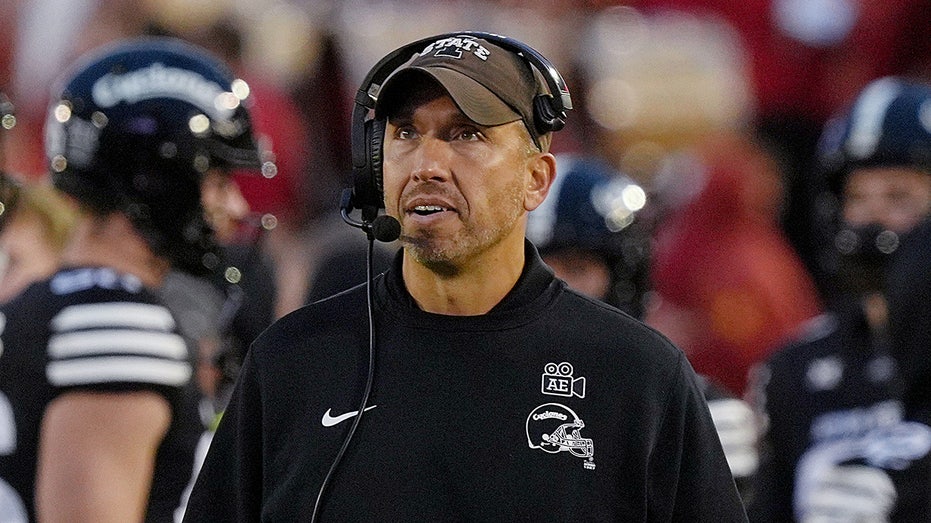
Matt Campbell’s move to Penn State is more than a coaching change. It exposes how modern college football’s economics, expectations, and emotional toll are reshaping programs like Iowa State and powers like Penn State.
Matt Campbell to Penn State: What Iowa State’s Emotional Goodbye Reveals About the New Economics of College Football
When Iowa State athletic director Jamie Pollard fought back tears discussing Matt Campbell’s departure for Penn State, it was more than a sentimental farewell. It was a rare public acknowledgment of how brutally transactional – and emotionally exhausting – modern college football has become for everyone except the fans, who are still encouraged to believe in loyalty and permanence.
Pollard’s comment that Campbell “owes Iowa State nothing” cuts directly against the dominant fan narrative that coaches should stay out of loyalty, not opportunity. That single line is a window into a deeper structural shift: Power Five football now operates on churn, leverage, and risk management, not on fairy-tale tenures.
Iowa State’s Rise Under Campbell: Why This Departure Hurts So Much
To understand the emotional weight in Pollard’s voice, you have to understand what Matt Campbell did in Ames, one of the toughest jobs in the Power Five.
- Campbell went 72–55 in 10 seasons at Iowa State – and became the winningest coach in school history.
- He delivered eight winning seasons in a decade, in a program that had historically struggled to even reach bowl eligibility.
- Iowa State reached two Big 12 championship games under his watch – something that would have sounded delusional 15 years ago.
Before Campbell, Iowa State football was defined by flashes of respectability rather than sustained success. From 1970 to 2015, the Cyclones had only 9 winning seasons in 46 years. Campbell nearly matched that in one decade.
So Pollard wasn’t just losing a coach; he was losing the architect of a rare institutional identity in a small-market college town. In the current realignment era, identity can be as important as win–loss records when conferences and TV partners decide who matters.
The Historical Pattern: Successful Builders Leave, and the Market Rewards Them
Campbell’s move fits a long historical pattern in college football: the upward migration of program builders from resource-poor environments to blue-blood jobs with national reach.
Recent parallels are instructive:
- Chris Petersen moved from Boise State to Washington after turning the Broncos into a BCS-busting power.
- Brian Kelly left Cincinnati for Notre Dame after taking the Bearcats to the edge of the BCS title game.
- Luke Fickell departed Cincinnati for Wisconsin after a Playoff appearance.
Campbell’s jump from Iowa State to Penn State follows the same logic: he’s taken a historically modest program close to its ceiling and is now heading to a brand-name job with a bigger recruiting footprint, larger NIL capacity, and a more forgiving brand power when it comes to national perception.
What’s different is the clarity with which Pollard acknowledges the transactional nature of this move. Athletic directors used to lean harder into public disappointment or symbolic pressure on departing coaches. Pollard’s response – “he owes Iowa State nothing” – is effectively an admission that Iowa State benefits from this market logic too: they had a top-10 caliber coach for a decade, at a place where that doesn’t usually happen.
Why Penn State Wanted Campbell – and Why Now
Penn State’s interest also follows its own institutional logic. After firing James Franklin nearly two months prior, the school needed a coach who checked several boxes:
- Proven program builder in less-than-ideal circumstances (Toledo, then Iowa State).
- Midwestern recruiting ties that can be applied to Pennsylvania and surrounding Big Ten territories.
- Clean program reputation at a school still sensitive to image after the Sandusky era.
Campbell’s track record – 35–15 at Toledo, followed by sustained relevance at Iowa State – offers a specific value proposition. He’s not just a good play-caller; he’s a systems builder who can navigate the messy realities of NIL, the transfer portal, and Big Ten realignment while projecting stability.
It’s also notable that Penn State waited nearly two months to finalize a hire. That suggests deliberate vetting and possibly complex negotiations in an era where top candidates weigh not just salary, but NIL infrastructure, admissions policies on transfers, and administrative alignment. Campbell’s willingness to jump at this stage of his career signals that Penn State likely offered strong guarantees on institutional support – financial and philosophical.
The AD’s Emotional Moment: A Rare Public Glimpse of the Human Cost
Pollard’s comments about “sacrifices that fans will never understand” are a quiet indictment of the way the sport’s economics have evolved. Behind every coaching transition is a hidden layer of:
- Staff uprooting their families, often repeatedly, as they chase contracts.
- ADs betting their jobs on single hires in a hyper-reactive media environment.
- Players facing instability in schemes, position coaches, and development plans.
While fans typically frame departures as betrayals, Pollard’s message reframes it as inevitable churn in a profession where burnout and insecurity are common. On average, FBS head coaches last around four years at a given job; Campbell’s 10-year run at Iowa State is an anomaly. In that light, Pollard’s tears aren’t just about losing Campbell – they’re about knowing that even the best-case scenario in this system is temporary.
What This Move Signals About the New Power Structure in College Football
Campbell leaving for Penn State underscores several larger structural trends:
- Resource gravity is intensifying. Big Ten and SEC schools now operate with significantly higher media payouts than most of the Big 12, and that gap is widening. Talent – coaching and playing – flows toward the money.
- Developmental programs are becoming stepping stones by design. Schools like Iowa State are increasingly positioning themselves as launchpads: they offer control, patience, and a platform. In return, they accept that if they get it right, they’ll eventually lose their coach.
- Stability is being redefined. For a school like Penn State, stability doesn’t mean a 20-year coach anymore. It means predictable competitiveness, recruiting continuity, and NIL alignment – all of which a coach like Campbell is expected to deliver within a shorter horizon.
Expert Perspectives: How Insiders See This Shift
Coaching movement of this kind is rarely about one job versus another in isolation; it’s about risk management across a career arc.
Sports economist Dr. Victor Matheson has frequently pointed out that coaches operate in a “perishable value window,” where a few strong seasons can radically increase their market price, but downturns are punished swiftly. Campbell, at 46, is squarely in that window. Staying too long at Iowa State risked the possibility of one bad injury year or a recruiting miss turning his stock downward.
Former athletic director and consultant Tom McMillen has argued that schools like Iowa State increasingly have to think like “venture investors” in coaches: they hire younger builders, provide support, and accept that exits are part of the model. Pollard’s comments are almost a textbook articulation of that philosophy.
From a player perspective, modern NIL and transfer rules also change the calculus. With athletes able to move more freely, continuity of scheme and culture is harder to maintain even if the head coach stays. That makes ADs prioritize leaders who can rebuild quickly – something Campbell has already demonstrated at two stops.
The Data: Why a Move Like This Was Almost Inevitable
Several underlying data points explain why Campbell’s jump was likely a “when,” not an “if”:
- Program ceiling: Iowa State, despite recent success, still recruits outside the top 30 nationally most years. Penn State is a top-15 recruiting brand with access to denser talent pools.
- Financial muscle: Big Ten media deals are projected to deliver tens of millions more annually per school than most Big 12 packages over the next decade. That gap translates into facilities, staff salaries, and NIL ecosystems.
- Tenure rarity: A 10-year tenure at a mid-tier Power Five job is incredibly rare in the modern era. Statistically, the longer Campbell stayed without a major bowl breakthrough, the more his market value risked stagnating.
Viewed through this lens, Pollard’s insistence that Campbell “owes Iowa State nothing” is not just gracious; it’s a pragmatic recognition that both sides extracted maximum value from the partnership.
What’s Next for Iowa State
For Iowa State, the next hire will answer a crucial question: was Campbell a singular outlier, or did he build a sustainable framework that another coach can inherit?
The Cyclones do have assets they didn’t have 10 years ago:
- An elevated national profile and proof of concept that you can win there.
- Improved facilities and infrastructure built during Campbell’s tenure.
- A fan base now conditioned to expect bowl games and competitiveness in conference play.
The risk is a reversion to the historical mean: long stretches of mediocrity, especially in an era where conference realignments could eventually squeeze mid-tier brands further down the pecking order. Pollard will likely prioritize another culture-builder over a pure schemer – someone who can sell the Iowa State project to recruits and staff despite the obvious resource gaps.
What’s Next for Penn State – and the Big Ten
For Penn State, Campbell’s tenure will be judged against a higher bar than the one he faced in Ames. Competing in the Big Ten’s new mega-conference alignment – with brands like Ohio State, Michigan, USC, and others – means:
- Top-10 finishes may be treated as the baseline, not the peak.
- Playoff appearances will be seen as the expectation once the expanded format settles.
- Recruiting misses become harder to hide when talent-rich programs now coexist under the same conference umbrella.
Campbell’s reputation as a teacher and culture architect will be tested against whether he can turn that into top-10 talent acquisition and big-game execution in a pressure cooker Lincoln Financial-types of environment: massive donors, national TV scrutiny, and impatient fan expectations.
The Overlooked Story: Emotional Honesty in an Industry Built on Spin
Mainstream coverage will focus on the transactional element – who left, who was hired, what the record was. What’s easy to miss is how unusual Pollard’s tone was.
In a sport where administrators often default to carefully scripted talking points, Pollard’s public emotional struggle and his refusal to cast Campbell as disloyal mark a subtle but important shift. It acknowledges that:
- Fans’ expectations of loyalty are often out of sync with the actual labor market of coaching.
- Administrators recognize that they are asking coaches and staffs to live fundamentally unstable lives.
- Success for a school like Iowa State may increasingly be defined not by holding onto a coach forever, but by maximizing the window while he’s there and managing the transition with minimal damage.
Pollard saying “the sun will come up in the east” isn’t just a cliché. It’s a subtle instruction to his fan base: appreciate the era you just lived through, accept that it couldn’t last forever, and judge your program not by whether it kept a star coach indefinitely, but by what it builds next.
The Bottom Line
Matt Campbell’s move from Iowa State to Penn State isn’t just another line in the coaching carousel ledger. It’s a case study in how the modern college football marketplace rewards builders, pressures mid-tier programs, and forces athletic directors to become both realists and storytellers.
Jamie Pollard’s tearful, honest farewell may be a preview of a new kind of leadership in college sports – one that stops pretending loyalty trumps economics, and instead tries to humanize the churn that the system itself demands.
Topics
Editor's Comments
One under-discussed angle here is how athletic directors like Jamie Pollard are slowly reframing the social contract between fans, coaches, and institutions. By publicly rejecting the idea that Campbell “owed” Iowa State continued loyalty, Pollard is normalizing a more transactional understanding of success – and in doing so, subtly asking fans to modernize their expectations. This matters beyond one coaching change. As media money concentrates in the Big Ten and SEC, more programs will find themselves in Iowa State’s position: capable of winning, but structurally disadvantaged in the long run. ADs can either sell nostalgia – the fantasy that one great coach will stay forever and elevate them into permanent contender status – or they can sell cycles: hire, build, exit, repeat. Pollard appears to be choosing the latter, which may be more honest but is also more emotionally demanding for fan bases. The key question is whether transparency about the realities of the market will ultimately build trust, or simply accelerate cynicism about the entire enterprise.
Like this article? Share it with your friends!
If you find this article interesting, feel free to share it with your friends!
Thank you for your support! Sharing is the greatest encouragement for us.