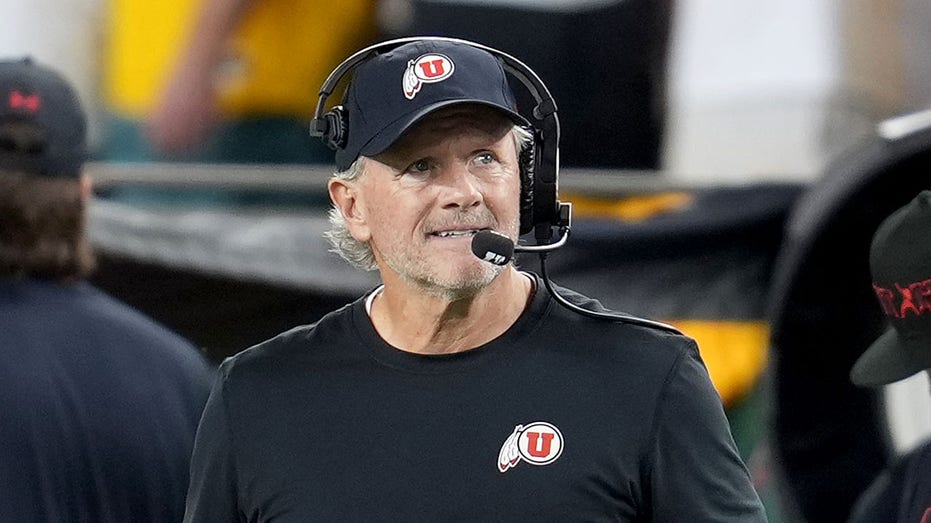
Kyle Whittingham’s Retirement Marks a Turning Point for Utah and the New Big 12

Sarah Johnson
December 13, 2025
Brief
Kyle Whittingham’s retirement ends more than a 21-year tenure at Utah. It closes a transformational era for the Utes just as they enter the Big 12 and college football’s landscape is being radically reshaped.
Kyle Whittingham’s Exit Isn’t Just a Coaching Change – It’s a Turning Point for Utah, the Big 12, and the Future of College Football
When a 66-year-old head coach with a 21-year tenure announces he’s stepping down, it’s easy to frame it as a simple retirement story. Kyle Whittingham’s decision to make the Las Vegas Bowl against Nebraska his final game as Utah’s head coach is far more than that. It’s the closing chapter of one of the most important – and underappreciated – transformational projects in modern college football: taking a regional, often overlooked program and turning it into a national, power-conference force just as the sport itself was entering an era of seismic change.
Whittingham’s exit lands at a moment when college football is being radically reshaped by conference realignment, NIL economics, expanded playoffs, and the transfer portal. Utah is moving into the Big 12 at a time when that league is desperately searching for new standard bearers. The question hanging over this announcement isn’t just who replaces Whittingham – it’s whether Utah can remain Utah without him, and what his departure tells us about the growing strain on long-tenured coaches in the modern game.
From Mid-Major Afterthought to Power-Conference Problem
To understand why Whittingham matters, you have to remember where Utah came from. When he joined the Utah staff in 1994 as a defensive line coach, the program was a respectable but hardly nationally relevant member of the WAC and later the Mountain West. Regional recruiting footprint. Modest budgets. Limited national TV time.
The inflection point came in the early 2000s. Urban Meyer’s brief but explosive tenure (2003–2004) produced a 12–0 season and a Fiesta Bowl win that made Utah the first BCS-buster of the modern era. Whittingham, then the defensive coordinator, co-coached that 2004 Fiesta Bowl and then took over full-time in 2005. At most schools, following a star coach like Meyer is a recipe for regression. Utah never regressed.
Across 21 full seasons, Whittingham delivered 18 winning campaigns and a reported 11–6 bowl record – a postseason performance most Power Five coaches would envy. More importantly, he led Utah through two existential transitions:
- From mid-major to BCS-level program: Sustaining success after Meyer proved Utah wasn’t a one-coach wonder.
- From Mountain West to Pac-12 power: Accepting a Pac-12 invitation in 2011, Utah spent the early years adjusting to deeper, more talented rosters in California and the Pacific Northwest. By the late 2010s and early 2020s, Utah wasn’t just surviving – it was winning conference titles and playing spoiler in the College Football Playoff race.
Whittingham’s identity was clear: physical, defense-first, trenches-focused football built on player development and continuity. In an era of constant scheme experimentation and high-speed spread offenses, Utah’s brand became toughness, patience, and consistency.
Why Step Down Now? The Hidden Pressures Behind a ‘Perfect Timing’ Exit
Officially, Whittingham framed the decision as the “right time” to step down. At 66, with more than two decades as head coach and a legacy secured, retirement reads as natural. But pulling back the lens, there are deeper forces at work that are reshaping the profession.
Modern college coaching is no longer a seasonal job with recruiting lulls. It’s a 12-month, 24/7 arms race with three particularly exhausting fronts:
- Transfer portal churn: Since the portal’s expansion and the one-time transfer rule, roster management has become perpetual triage. Coaches now recruit their own players year-round to keep them from leaving.
- NIL and donor politics: Head coaches are de facto fundraisers, salespeople, and negotiators in a new NIL marketplace. The ability to organize collective support and manage expectations from wealthy boosters is now core to the job.
- Conference upheaval: With the Pac-12 imploding and Utah shifting into the Big 12, Whittingham was staring at a new conference map, new recruiting battles, and new travel and logistical realities late in his career.
While Whittingham hasn’t publicly tied his decision to these pressures, many veteran coaches have hinted at burnout. Bob Stoops retired from Oklahoma at 56. Chris Petersen stepped away from Washington at 55 citing the emotional toll. Nick Saban and other legends have openly talked about how the job has fundamentally changed. Whittingham’s timing – on the cusp of Utah entering a new league – suggests a deliberate choice to let the next era begin under fresh leadership, rather than forcing a late-career tactical reinvention from a coach who’s already proven everything he needs to.
Why Utah’s Next Hire Will Shape the Big 12’s Balance of Power
Utah is entering a Big 12 in transition. With Texas and Oklahoma gone, the league no longer has an obvious flagship. It has a cluster of ambitious programs – Utah, TCU, Kansas State, Oklahoma State, Arizona, among others – all vying to become the new face of the conference.
Whittingham’s departure turns Utah from a known quantity into one of the biggest variables in that race. Under him, an annual 8–10 win baseline felt almost baked in. Utah was the Pac-12’s most consistent physical program and had the kind of line play that travels in any league. Without him, several pivotal questions emerge:
- System continuity vs. reinvention: Will Utah promote from within, likely maintaining Whittingham’s defensive identity and continuity, or bring in an external offensive mind to chase a more explosive style suited to the Big 12’s offensive reputation?
- Recruiting and retention: Whittingham’s personal credibility with players and parents – a former WAC Defensive Player of the Year, pro experience in the USFL and CFL, and three decades at the school – was a major selling point. Can his successor replicate that trust in the NIL/portal era?
- Leadership vacuum in a new league: Utah was poised to enter the Big 12 as one of its most battle-tested programs from a Power Five setting. A rocky transition could open space for other schools to claim that mantle.
For the Big 12, Utah’s stability is not a side issue. A strong, stable Utah bolsters the league’s national credibility, improves playoff access odds, and helps offset the loss of blue-blood brands. A Utah that stumbles could further fragment a conference still searching for a clear identity.
What Whittingham’s Career Says About the Changing Nature of Success
Whittingham’s record – 117–88 over 22 seasons, with 18 winning campaigns – doesn’t jump off the page in the way of, say, Saban’s at Alabama. But the context is everything.
Utah was rarely the most talented roster in its league. Yet the Utes regularly punched above their weight. They became known for turning overlooked recruits and transfers into NFL-caliber linemen and defensive standouts. In many ways, Utah under Whittingham foreshadowed where a swath of college football is heading:
- Development over star-chasing: As NIL consolidates top-end talent at wealthy blue-bloods, programs like Utah that have already built a culture of developing 3-star recruits into pros have a roadmap others are now trying to copy.
- Stability as a competitive edge: Long-tenured staff and coherent identity gave Utah an advantage in game planning and culture-building. As more programs churn through coaches every 3–4 years, Whittingham’s era shows the value – and rarity – of institutional patience.
- Physical football still matters: Even as spread offenses exploded, Utah’s emphasis on line play and defense consistently neutralized more “talented” teams. In a 12-team playoff environment, that profile is extremely dangerous.
If there’s an overlooked part of Whittingham’s legacy, it’s this: he proved that a non-blue-blood program could develop a sustainable, nationally relevant identity without chasing every fad, as long as the school, coach, and recruiting pipeline were aligned.
Expert Perspectives: A Blueprint Coach in a Time of Chaotic Change
Coaching analysts and former players often speak about Whittingham in terms that go beyond wins and losses. They point to his teams as a model for what a modern non-blue-blood program should aspire to be.
Defensive coaches in particular have long praised Utah’s adaptability. The Utes blended old-school physicality with modern defensive flexibility – shifting fronts, disguising coverages, and developing hybrid defenders long before positionless defense became trendy.
From an administrative perspective, athletic directors have cited Utah under Whittingham as evidence that investing in infrastructure – facilities, nutrition, support staff – can gradually reposition a program’s ceiling over a decade, not a single hiring cycle. That long view runs counter to the current climate, where a couple of mediocre seasons often trigger a reset.
What Comes Next: Stability, Risk, and the Las Vegas Bowl as a Symbolic Pivot
The Las Vegas Bowl against Nebraska now becomes something more than an exhibition. Symbolically, it pits an old-line blue-blood brand trying to rediscover relevance (Nebraska) against a program built into a modern overachiever (Utah) just as its architect exits. It’s a snapshot of college football’s identity crisis: tradition and nostalgia versus modern efficiency and development.
For Utah, the medium-term outlook hinges on a few key factors:
- Staff retention: How many of Whittingham’s assistants – especially on defense and in the strength and conditioning program – stay under the next head coach? That will determine whether Utah’s culture remains intact.
- Portal and NIL strategy: The next coach will need to reassure current players and recruits quickly to avoid an exodus. Strong alignment between the athletic department, boosters, and coaching staff on NIL will be critical.
- Maintaining identity while modernizing: The ideal successor will protect Utah’s toughness and developmental edge while adding enough offensive innovation to compete in a wide-open Big 12.
On a broader level, Whittingham’s exit is another data point in a trend: the era of 20-year tenures at one school is ending. The job has become too big, too invasive, and too political for most coaches to last that long. His career may be one of the last of its kind in major college football.
The Bottom Line
Kyle Whittingham isn’t just Utah’s winningest coach; he’s one of the central architects of college football’s middle class – the programs that aren’t blue-bloods but routinely play like them. His departure comes at a moment of profound flux for the sport and for Utah specifically, as the school steps into a new conference battlefield without its longtime general.
What happens next at Utah will tell us whether a carefully built culture can outlast the coach who created it – and whether, in the new era of college football, stability and development can still compete with money, branding, and constant churn.
Topics
Editor's Comments
What’s striking about Whittingham’s retirement is how it crystallizes two parallel stories: the end of a rare, long-term coaching project and the acceleration of systemic volatility in college football. Utah under Whittingham represents the kind of steady, incremental program-building that once defined the sport – patience from administrators, clear identity on the field, and a developmental model that turned marginal recruits into impact players. That model is under direct stress from NIL economics and the transfer portal, which reward rapid roster turnover and splashy moves over slow-burn continuity. The open question is whether Utah can insulate the culture Whittingham built from those external pressures, or whether his departure will expose how much of that stability was tied to one person’s leadership. There’s also a broader, under-discussed issue: as the job becomes less sustainable for long tenures, do we lose the very architects who are best equipped to navigate complexity? Whittingham chose his exit; many of his peers may not get that luxury in the years ahead.
Like this article? Share it with your friends!
If you find this article interesting, feel free to share it with your friends!
Thank you for your support! Sharing is the greatest encouragement for us.