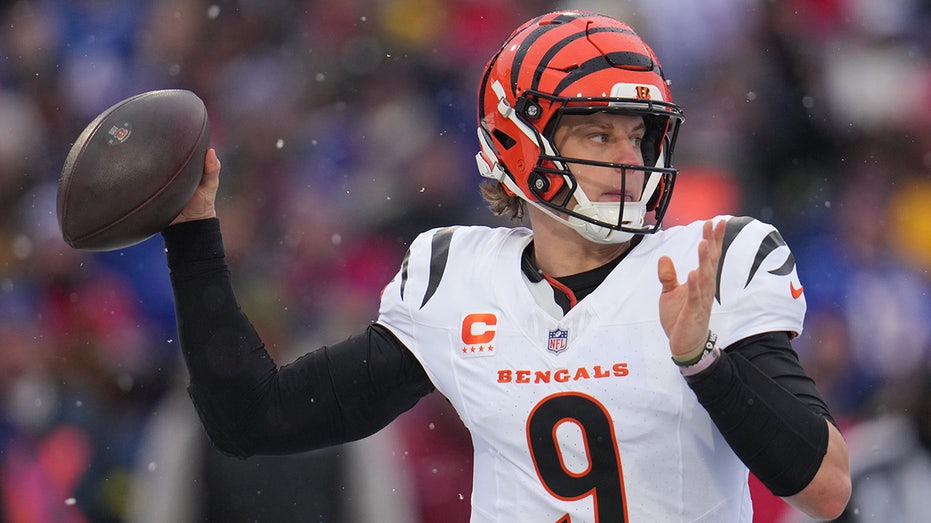

Joe Burrow Isn’t Leaving Yet, But His Comments Just Put the Bengals on the Clock

Sarah Johnson
December 18, 2025
Brief
Joe Burrow downplays talk of leaving the Bengals, but his ‘fun first’ comments reveal deeper pressures on Cincinnati’s front office and the evolving power of NFL quarterbacks over franchises.
Joe Burrow’s ‘Fun First’ Comments Expose the NFL’s New Quarterback Power Era
Joe Burrow insists he “can’t see” himself in another uniform by 2026, and on paper he’s locked into Cincinnati through 2029 with a no-trade clause and $275 million reasons to stay. Yet his recent comments about fun, burnout, and his NFL future are more than a passing quote—they’re a window into a shifting power structure in pro football and a franchise at a crossroads.
Underneath the soundbites lies a deeper story: a small-market team trying to capitalize on a rare elite quarterback, a player already battered by injuries and heavy expectations, and a league where star QBs increasingly act less like employees and more like strategic partners—or, when pushed, disruptors.
Why this moment matters for Burrow and the Bengals
Three straight seasons without a playoff appearance would be disappointing for any franchise, but for a team that reached a Super Bowl (2021 season) and an AFC title game (2022), it’s an early-warning siren. Against that backdrop, Burrow’s comments about needing to “have fun” and his future being something he has to “think about” aren’t trivial. They speak to:
- How much physical and mental cost he’s already absorbed in just six NFL seasons
- The limits of long-term contracts in a league where elite QBs can force structural change—or exits—without ever hitting free agency
- The pressure on the Bengals’ front office to prove they can build and sustain a Super Bowl-caliber roster, not just pay one star quarterback
The story isn’t whether Joe Burrow demands a trade tomorrow. It’s whether Cincinnati understands that this is a relational era of quarterback management, not a transactional one. Money alone doesn’t buy loyalty—or competitive windows—anymore.
From franchise savior to franchise stakeholder: How we got here
To understand why Burrow’s words resonate now, you have to place them in the context of both Bengals history and the recent evolution of quarterback power in the NFL.
Cincinnati’s long history of wasting (or missing) windows
- 1990–2010: The lost decades. After a Super Bowl appearance in the 1988 season, the Bengals went 14 straight years without a playoff berth. Discipline issues, conservative spending, and unstable coaching defined the era.
- Andy Dalton era (2011–2015): Competent but capped. Five straight playoff berths, zero playoff wins. The franchise proved it could be respectable, rarely elite. When injuries hit or roster depth was tested, they had no extra gear.
- Burrow era (2020–present): A brief peak, then plateau. Burrow dragged the Bengals to a Super Bowl in his second year behind a leaky offensive line and followed it with another deep playoff run. Since then, injuries—to Burrow and key pieces—and roster regression have chipped away at that momentum.
Historically, Cincinnati has been known as a franchise that is cautious with guaranteed money, slow to modernize infrastructure, and heavily reliant on internal development rather than aggressive external moves. Drafting Burrow signaled a reset, but it didn’t erase decades of organizational habits.
The new quarterback era: When contracts stop being the final word
Burrow’s massive 2023 extension—and his no-trade clause—suggest a QB tied to one team for the long term. But the last decade of NFL history argues otherwise:
- Tom Brady left New England after 20 years, won a Super Bowl in Tampa Bay, and proved that even legends can walk away from dynasties when they feel capped.
- Aaron Rodgers forced his way out of Green Bay after tension over roster decisions and organizational direction, ending a 17-year partnership.
- Deshaun Watson (off-field issues aside) demonstrated that a star QB under contract can force a franchise into a complete reshuffle—or trade demand—if the relationship collapses.
In this landscape, a contract is less a cage and more a negotiation platform. No-trade clauses, which Burrow has through 2029, are supposed to protect players from being shipped off unilaterally. But they also give the player leverage: no move happens without his consent. That subtly shifts power toward Burrow, not away from him.
What Burrow’s ‘fun’ comments really signal
On the surface, Burrow’s remarks about needing to have fun to keep playing football are easy to dismiss as cliché. But in context—coming off injuries, offensive line issues, and another lost season—they sound more like a soft boundary line.
He said: “If I want to keep doing this, I have to have fun doing it. I've been through a lot, and if it's not fun, then what am I doing it for?” That’s not a player threatening to retire or demanding a trade. It is, however, a player:
- Publicly acknowledging the toll the game has taken on him
- Reframing his career as a choice, not an obligation
- Subtly warning that future decisions will weigh quality of life and organizational direction, not just salary
That’s a major shift from the old model of franchise quarterbacks, who were expected to declare blind loyalty no matter how broken the roster or how questionable the decisions upstairs.
Injury, pressure, and the quiet rise of quarterback burnout
In six seasons, Burrow has already suffered:
- A torn ACL and MCL as a rookie
- Multiple nagging injuries, including calf and wrist issues
- Relentless hits behind a line that’s been upgraded but still inconsistent
Layer onto that the expectation that he is not just the quarterback but the cultural reset and face of the franchise in a small market. When Burrow talks about “having fun,” it’s partly about winning—but it’s also about whether the franchise is making his job sustainable.
How the Bengals’ front office is being quietly challenged
Burrow went out of his way to clarify his comments, saying they had “nothing to do with Cincinnati” and were solely about his mindset. But in the NFL, public clarifications are often about damage control, not full transparency.
Everything about Burrow’s situation still points back to one key question: Will the Bengals match his ambition with structural change?
1. Roster construction: Can they stay aggressive?
The Bengals’ window is not purely tied to Burrow’s contract—it’s tied to the team’s ability to keep talent like Ja’Marr Chase and build depth around them. The risk:
- Big QB money crowds out mid-tier but vital contributors (offensive line, secondary, defensive rotation players)
- Draft misses matter more because free-agency spending has less margin for error
- Any perception that the team is penny-pinching on support talent feeds a narrative of organizational complacency
2. Culture and infrastructure: Beyond the locker room
Cincinnati has historically lagged in areas like indoor facilities and support infrastructure compared with richer franchises. They’ve improved in recent years, but the margin for error is slim when you’re asking a quarterback with multiple injuries to keep playing at MVP level into his 30s.
Burrow’s comments about joy and sustainability indirectly raise the question: is the organization truly all-in on performance, health, and innovation—or just enough to be competitive?
3. Communication and transparency
In the modern NFL, star quarterbacks increasingly expect a voice in major organizational decisions: scheme direction, key offensive hires, and sometimes even personnel choices. The question is less whether Burrow is committed and more whether he feels treated as a strategic partner in building a sustainable contender.
What experts see beneath the surface
Sports psychologists, economists, and former players all see signals in Burrow’s remarks that go beyond local panic about a potential Bengals split.
Sports psychologist and performance consultant Dr. Michael Gervais has long argued that elite athletes are increasingly intentional about mental health and career design. Burrow’s framing—tying his continuation in the sport to enjoyment and meaning—fits that pattern. It’s a subtle rejection of the “play until you break” model that defined previous generations.
On the football side, coaching analysts point to repeated patterns: quarterbacks with heavy physical tolls and long-term deals eventually exert leverage for change. They don’t always leave, but they often force the franchise to evolve—schematically, financially, or structurally—or risk a slow erosion of trust.
Looking ahead: What to watch over the next 2–3 years
Burrow’s comments aren’t about 2026 free agency; they’re about leverage now. The key indicators to monitor:
1. How aggressively the Bengals recalibrate the roster
- Do they invest heavily—again—in offensive line protection, even at the cost of other positions?
- Are they willing to push financial and structural boundaries to retain key playmakers?
- Do their moves signal “we’re going all-in while Burrow is in his prime,” or “we’ll stay just good enough”?
2. Coaching and scheme evolution
If the offense stagnates or continues to expose Burrow to unnecessary hits, pressure will mount for schematic change. A subtle harbinger of internal dynamics will be whether Cincinnati is proactive—adjusting scheme, staff, and philosophy—or reactive.
3. Burrow’s body language and messaging
Players almost never admit discontent early. Instead, it shows up in small shifts: more nuanced answers about the future, references to “business decisions,” or repeated emphasis on health and longevity.
Burrow downplaying the idea of leaving now is expected. But if his future comments continue to center joy, sustainability, and personal priorities, it will reinforce that he’s actively weighing the long-term cost-benefit of carrying this franchise.
The bottom line: This isn’t a trade story—it’s a power and priorities story
Joe Burrow’s insistence that he doesn’t see himself in another uniform by 2026 should calm short-term panic. His contract, no-trade clause, and public posture all point toward a player who expects to be a Bengal for the foreseeable future.
But the more important takeaway is this: Burrow is clearly signaling that money and years are no longer enough. He wants a career that is sustainable, competitive, and meaningful. That puts the onus squarely on the Bengals organization—not to convince him to stay, but to convince him that staying means more than just enduring.
In the modern NFL, quarterbacks don’t just play for franchises. They audit them. Burrow’s comments suggest that Cincinnati is being quietly, but very deliberately, audited right now.
Topics
Editor's Comments
One element that may be underestimated in this conversation is how quickly public and media narratives can harden into leverage. Right now, Burrow’s comments are being framed mostly as a curiosity—an unusually candid reflection on joy and burnout from a young star. But if the Bengals string together another mediocre season or two, these quotes will be retroactively reinterpreted as early warning signs of a fractured relationship. That retrospective reframing matters, because it shapes how fans assign blame and how other players view the organization’s reputation. Cincinnati is effectively being graded in real time not just on wins and losses, but on how they appear to be treating and protecting their most important asset. If they’re smart, they will view this not as a PR flare-up to extinguish, but as valuable feedback from inside the building: a quarterback telling them that the standard is now holistic—competitive, structural, and psychological—not merely financial. Ignoring that message could cost them far more than any cap hit.
Like this article? Share it with your friends!
If you find this article interesting, feel free to share it with your friends!
Thank you for your support! Sharing is the greatest encouragement for us.