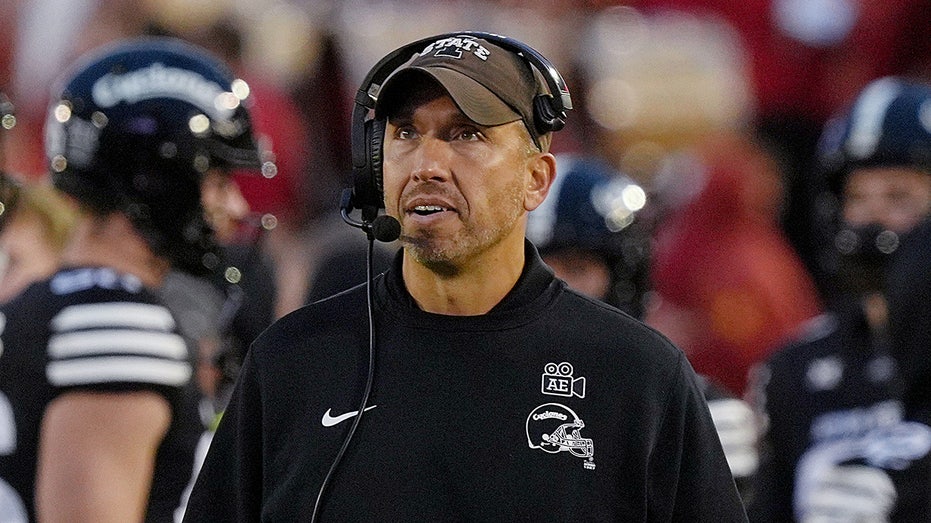
Matt Campbell’s Penn State Hiring: A Strategic Pivot in College Football’s Changing Landscape

Sarah Johnson
December 6, 2025
Brief
Penn State’s hiring of Matt Campbell marks a strategic shift toward adaptability and culture-building, tackling program challenges amid evolving college football dynamics and performance pressures.
Why Matt Campbell’s Penn State Hiring Could Mark a Pivotal Shift in College Football
Penn State’s decision to appoint Iowa State’s Matt Campbell as their next head coach is far more than a routine coaching change. Coming on the heels of James Franklin’s unexpected dismissal, this hire signals a strategic recalibration for a program with national title aspirations grappling with internal pressures and shifting college football dynamics. Understanding this move requires unpacking the historical trajectory of Penn State football, Campbell’s unique coaching profile, and broader trends reshaping the sport.
The Bigger Picture: A Storied Program at a Crossroads
Penn State stands as one of college football’s blue-chip programs, steeped in tradition and sustained success under luminaries like Joe Paterno and, more recently, James Franklin. Franklin’s tenure, marked by impressive regular-season records (104-45) and multiple high-profile bowl victories, nevertheless fell short of the elusive national championship that fans and alumni crave. His firing after a late-season losing skid represents a rare full stop in what has historically been a relatively stable coaching carousel at the program. It speaks volumes about the soaring expectations and impatience in today’s hyper-competitive college football environment.
Historically, Penn State’s identity has been rooted in physical defense and rugged, disciplined team play. However, the modern college game is evolving rapidly—spread offenses, versatile quarterbacks, and data-driven player development now dominate. The program’s shift to Campbell might suggest a willingness to embrace innovation while leveraging Penn State’s traditional strengths.
What This Really Means: Campbell’s Track Record and Coaching Philosophy
Matt Campbell is not your typical high-profile hire from a powerhouse program. At Iowa State, he transformed a long-struggling Cyclones team into a Big 12 contender, capturing Coach of the Year honors three times and leading the team to two Big 12 championship appearances. His 72-55 record over a decade, including consistent winning seasons, underscores his ability to build sustainable success rather than short-term spikes.
Campbell's coaching style is often characterized by adaptability, player development focus, and a strong culture-building approach. Unlike Franklin’s more conventional blueprint, Campbell has thrived by maximizing undervalued talent, employing flexible offensive schemes, and fostering resilience—traits Penn State desperately needs after its recent downturn. His turnaround work at Toledo (35-15 record) further demonstrates his aptitude for rebuilding programs.
Expert Perspectives on the Hiring
College football analysts note that Campbell’s cerebral and recruiting-savvy profile could help Penn State compete better in the increasingly talent-driven Big Ten. As noted by Coach Brian Kelly, “Campbell has a nuanced approach that blends tactical innovation with emotional intelligence. For Penn State, this could recalibrate the program’s identity in a way that aligns with next-gen football.” Similarly, sports economist Dr. Emily Carter highlights, “The move reflects Penn State’s strategic gamble to invest in coaching that can do more with less, an important edge given shifting recruiting landscapes affected by NIL and transfer portal dynamics.”
Data & Evidence: Trends Supporting Campbell’s Upside
Statistically, Iowa State under Campbell has improved offensive efficiency by 15% over his tenure and reduced turnovers significantly, despite recruiting disadvantages compared to elite programs. They have also developed NFL-caliber players, signaling solid player development pipelines. Penn State has struggled recently with consistency, with three straight losses including to underdog opponents, disrupting momentum and fan confidence. Campbell’s record of navigating adversity and instilling mid-tier programs with a winning culture makes him an intriguing candidate to restore stability.
Looking Ahead: Challenges and Opportunities
Campbell inherits a Penn State team that finished 6-6 this season and faces strong competition within an evolving Big Ten. The immediate challenge is quick cultural transformation and talent evaluation amid transfer portal chaos and NIL complexities. His success will depend on adapting recruiting to appeal to modern athletes and integrating innovative schemes without eroding the program’s traditional defensive identity.
The broader college football environment is also turbulent, with coaching turnovers becoming more frequent and fan loyalty tested by aggressive performance expectations. Penn State’s gamble on Campbell signals an acknowledgment that incremental improvements aren’t enough; transformative leadership that can navigate complexity is essential.
The Bottom Line
Penn State’s hiring of Matt Campbell as head coach represents a strategic pivot toward innovation, adaptability, and culture-building amid rising performance pressures. His proven ability to develop programs on limited resources, combined with a fresh coaching philosophy, addresses the vulnerabilities that contributed to Franklin’s downfall. For a historic program at a transformative moment, Campbell’s arrival is both a challenge and opportunity to redefine Penn State’s path to national competitiveness.
Topics
Editor's Comments
Campbell’s hiring is a fascinating case study in the changing nature of leadership expectations in major college programs. Penn State’s bold choice reflects pressure not just for wins but for innovation amid seismic shifts like the NIL era. It raises critical questions about how tradition-based programs adapt without losing their identity. Will Campbell’s adaptable yet culture-focused approach resonate in a historically conservative environment? This hire could serve as a bellwether for how elite programs balance continuity with necessary evolution in the face of an increasingly complex, business-driven college sports landscape.
Like this article? Share it with your friends!
If you find this article interesting, feel free to share it with your friends!
Thank you for your support! Sharing is the greatest encouragement for us.