
Why Maduro’s Appeal to OPEC Highlights Venezuela’s Deepening Isolation and Economic Collapse

Sarah Johnson
December 3, 2025
Brief
An in-depth analysis of Venezuela's Maduro appealing to OPEC amid U.S. sanctions reveals the geopolitical realities, economic collapse, and future challenges facing Latin America's oil giant.
Opening Analysis
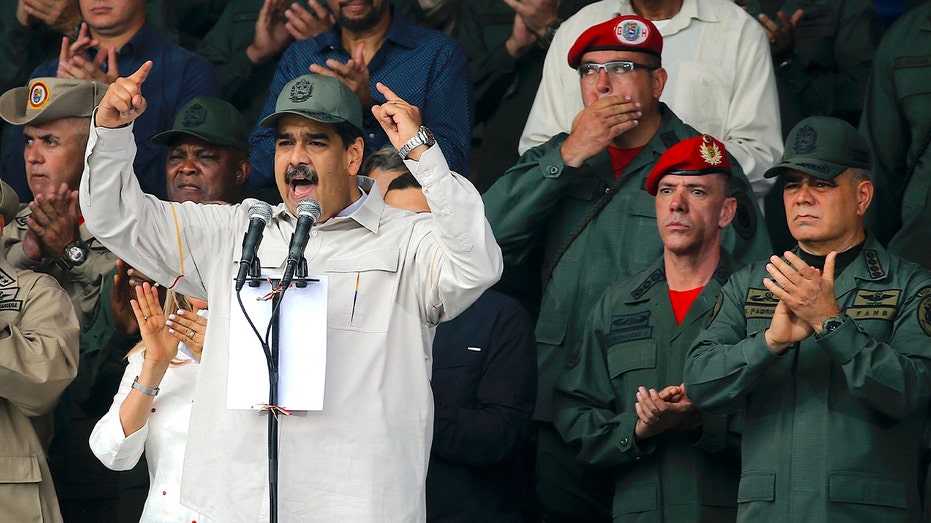
Venezuela’s escalating crisis is epitomized by President Nicolás Maduro’s recent plea to OPEC for assistance amid mounting U.S. sanctions under the Trump administration. This appeal highlights not just Maduro’s isolation but the deeper geopolitical and economic dynamics shaping Venezuela’s fate and the broader energy landscape. Understanding why Maduro resorted to this move, and why OPEC is unlikely to intervene, reveals the complex interplay between energy politics, U.S. foreign policy objectives, and Venezuela’s internal structural collapse.
The Bigger Picture
Historically, Venezuela was a leading global oil exporter, reaching production peaks north of 3 million barrels per day in the 1990s and early 2000s. Its massive reserves—the largest proven oil reserves worldwide—positioned it as a key OPEC member and regional power. However, years of mismanagement, corruption, and economic policy failures under the Chavez and Maduro regimes, combined with plunging oil prices and deteriorating infrastructure, shrunk output dramatically to roughly 0.5-0.6 million barrels per day by the early 2020s.
The recent U.S. sanctions regime intensified under President Trump targeted Venezuela’s vital state-run PDVSA, curtailing its ability to finance oil production and international sales. These sanctions are part of a broader U.S. strategy aiming to pressure regime change while curbing illicit activity such as drug trafficking that emanates from Venezuela. The broader context includes geopolitical competition in Latin America and concerns over Chinese and Russian influence via their economic ties with Caracas.
What This Really Means
Maduro’s letter to OPEC, imploring solidarity against what he calls “direct aggression” by the U.S., is largely symbolic. It is a strategic narrative framing designed to cast Venezuela as a victim of external forces to rally political and regional support. Yet, experts agree that powerful OPEC states, especially Saudi Arabia, are unlikely to confront the U.S. on Venezuela’s behalf. Saudi Arabia’s priority is to maintain stable relations with Washington and avoid entanglement in politically charged conflicts that threaten market stability.
More fundamentally, the crisis betrays Venezuela’s economic bankruptcy. The nation’s debt burden, estimated at $150 billion, alongside crippled oil output, makes any quick turnaround impossible without significant internal reforms and regime change—neither of which currently seems feasible. Venezuela’s current oil production represents a fraction of its potential, and only through opening the sector to foreign investment and restoring institutional stability can it approach former levels that generated roughly $90 billion annually at peak production.
Thus, while sanctions target regime behavior, the underlying problem is Venezuela’s institutional failure and political paralysis. Any recovery depends on a confluence of stabilized governance, investment influx, and global oil market conditions.
Expert Perspectives
Francisco J. Monaldi, Latin American Energy Policy Director: "Maduro knows perfectly well that he is not going to get the reaction that he would want, but is framing the conflict as a conflict about oil." Monaldi underscores that Venezuela’s dilemma extends beyond energy to governance and regional security, noting, "The U.S. has priorities to preserve the Western Hemisphere as a region in which geopolitical rivals are not strong... to reduce crime and drug trafficking... which have impacted the rest of Latin America."
Daniel Yergin, Energy Historian and Author: Though not directly quoted here, Yergin’s extensive research indicates that oil-producing states within OPEC tend to act in concert only when economic incentives align, not political solidarity—a factor that plays against Maduro’s hopes.
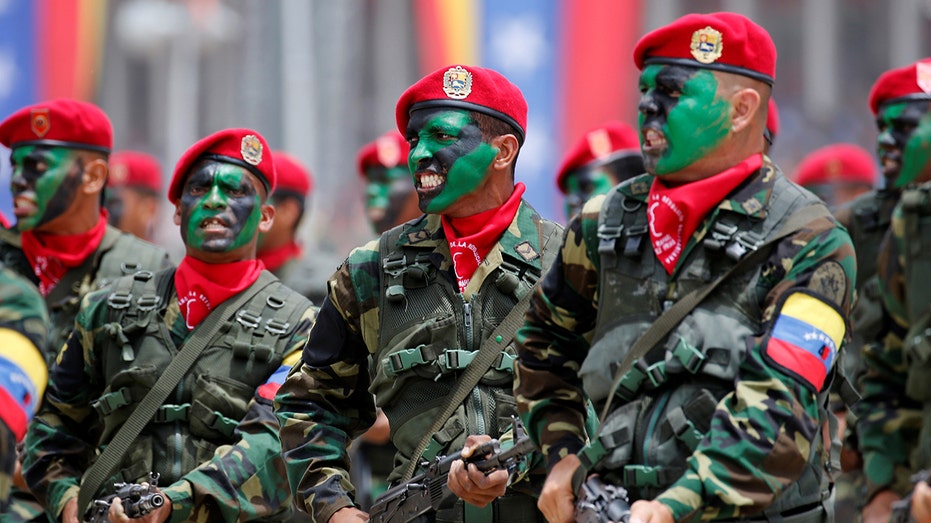
Alberto Villarreal, Latin American Political Analyst: "The Maduro regime’s survival hinges not on oil diplomacy but on its ability to retain internal security apparatus control and external patronage, which sanctions seek to undermine over time." This points to the multidimensional pressures facing the regime beyond the energy sector.
Data & Evidence
- Venezuela’s oil production has plummeted from ~3.2 million barrels per day (bpd) in 2005 to approximately 500,000–600,000 bpd in 2025.
- The country carries approximately $150 billion in sovereign debt, with very limited capacity to service it under current sanctions and economic conditions.
- Peak oil revenues once approximated $90 billion annually, underscoring the scale of lost income directly impacting Venezuela’s economy and social services.
- US sanctions on PDVSA and the restriction of Venezuelan airspace under Trump have severely limited Venezuela’s ability to sell or transport crude globally.
Looking Ahead
The future trajectory hinges on several interlinked factors. Regime change, while an explicit U.S. objective, faces uncertain prospects given Maduro’s consolidated internal security controls and patronage networks. Yet, absent reforms and political transition, Venezuela’s oil sector is unlikely to rebound meaningfully.
Geopolitically, OPEC’s silence signals a reluctance to disrupt ties with the U.S., the dominant market player and global power. Saudi Arabia and other Gulf producers will likely maintain production discipline focused on market stability rather than supporting Venezuela’s claims.
Furthermore, Venezuela’s crisis continues to fuel regional instability through migration, cross-border crime, and illicit economies. The U.S. and regional actors will remain engaged, balancing sanctions, diplomacy, and covert operations to influence outcomes.
In the energy market, any Venezuelan recovery would eventually alter global supply dynamics, potentially affecting prices and investment flows, but this remains a long-term prospect dependent on profound political and economic shifts.
The Bottom Line
Maduro’s OPEC appeal is a reflection of Venezuela’s isolation and desperate economic state more than a viable strategy to counteract U.S. pressure. The interplay of sanctions, political repression, and economic mismanagement undercuts any immediate recovery, even if Venezuela’s significant oil potential remains a long-term beacon. OPEC, led by Saudi Arabia, prioritizes geopolitical pragmatism over solidarity with Caracas, signaling that Venezuela’s resolution depends primarily on internal political transformation and broader regional dynamics rather than external intervention.
Topics
Editor's Comments
Maduro’s plea to OPEC serves as a window into how deeply Venezuela is isolated on the world stage, even among nominal allies. This analysis reveals how the intersection of geopolitical calculations, economic collapse, and U.S. policy shape a scenario where ideological loyalty matters less than pragmatic interests. The absence of OPEC’s intervention underscores a fundamental truth: Venezuela’s recovery is now less about oil markets and more about complex political restructuring. Readers should consider the broader implications of this dynamic for the region, including how external pressures risk prolonging humanitarian suffering while international actors jockey for influence. This is not just an energy story, but a case study in the limits of sanctions as a tool for political change and the interplay of regional stability, economic survival, and great power diplomacy.
Like this article? Share it with your friends!
If you find this article interesting, feel free to share it with your friends!
Thank you for your support! Sharing is the greatest encouragement for us.