
Beyond the Skipper: How a Single Tanker Seizure Expands America’s Sanctions Power at Sea

Sarah Johnson
December 12, 2025
Brief
The Skipper tanker seizure isn’t just sanctions news. It’s a test of how far U.S. domestic law can reach onto the high seas, reshaping maritime norms, sanctions tools, and Venezuela strategy.
Why a Single Venezuelan Tanker Seizure Could Reshape How America Uses Sanctions at Sea
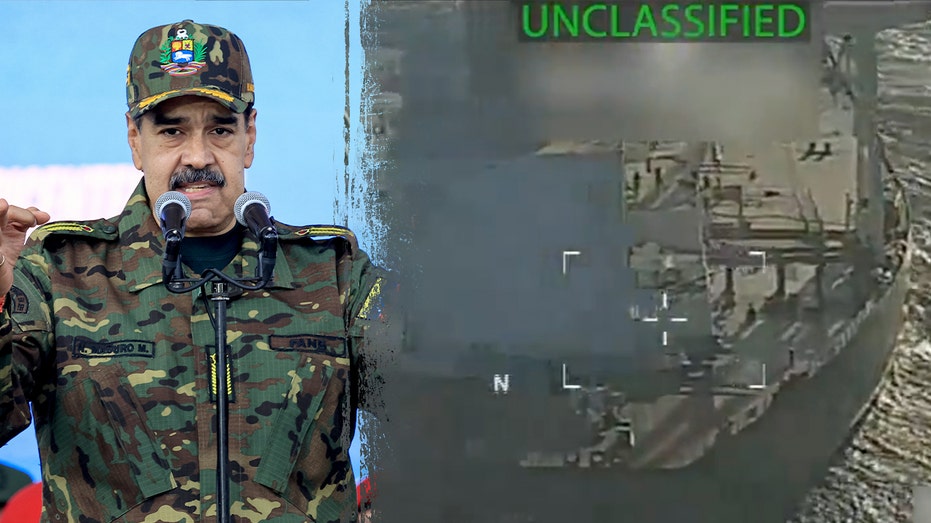
The quiet seizure of a Venezuelan crude oil tanker, the Skipper, looks at first like a technical sanctions story. It isn’t. It’s a live experiment in how far the United States can project its domestic economic laws onto the world’s oceans — and how Washington can squeeze hostile regimes without formally going to war.
What makes this episode especially significant is the legal fork in the road: the U.S. is not invoking wartime or self-defense authority for the seizure, even as it simultaneously uses a quasi-war framework to justify maritime strikes on drug cartels in the same region. That deliberate choice reveals how sanctions have become a parallel, quieter form of warfare, one that raises serious questions about sovereignty, maritime law, and the future of global energy trade.
The bigger picture: from gunboat diplomacy to sanctions gunboats
To understand why the Skipper matters, it helps to see this as part of a longer arc in U.S. power projection.
- Cold War precedents: The U.S. has long used the high seas to enforce strategic objectives – from the Cuban Missile Crisis quarantine in 1962 to naval interdictions aimed at limiting Soviet arms shipments. But those were overtly military and framed as security crises, not sanctions enforcement.
- Post-9/11 enforcement at sea: After 9/11, the U.S. expanded maritime interdiction to stop terrorism financing and WMD proliferation. Initiatives like the Proliferation Security Initiative (PSI) normalized the idea that ships suspected of violating international security norms could be boarded or diverted under various legal theories.
- Iranian and North Korean oil seizures: Over the last decade, U.S. courts have been used to justify seizures of oil shipments tied to Iran and North Korea, often under civil forfeiture and sanctions laws rather than classic wartime powers. These cases set precedents that the Skipper seizure is now building upon.
- Venezuelan context: Since 2017, Washington has escalated sanctions on Venezuela’s state oil company PDVSA, the Maduro government, and associated networks, with the explicit aim of cutting off hard currency and forcing political change. Maduro has increasingly relied on opaque networks, often involving Iran, to move oil and secure revenue outside the formal system.
The Skipper, allegedly part of a clandestine Venezuela–Iran oil network that channels revenue to foreign terrorist organizations, sits at the crossroads of all these trends: sanctions as regime-change tool, maritime interdiction as enforcement, and terrorism financing as legal justification.
What this really means: domestic law as a global enforcement weapon
The administration’s decision to rely only on sanctions and civil forfeiture law — not wartime or self-defense theories — is more than a legal footnote. It signals a strategic preference: use the perceived legitimacy of courts and domestic statutes to justify acts that look, from the outside, a lot like economic warfare.
Several key dynamics are in play:
1. Turning “blocked property” into a global concept
Under the International Emergency Economic Powers Act (IEEPA) and related OFAC regulations, once a person, entity, or vessel is designated, any of its property subject to U.S. jurisdiction becomes “blocked.” Traditionally, that meant assets in U.S. banks or transactions touching U.S. financial channels.
The Skipper case stretches this logic. Officials argue that because the vessel was designated and involved in sanctionable activity, it could be treated as blocked property subject to civil forfeiture — even on the high seas. That effectively exports U.S. sanctions jurisdiction onto international waters, especially when combined with arguments that the vessel was stateless or fraudulently flagged.
This is a subtle but profound shift: Washington is signaling that a ship’s legal status under U.S. sanctions can follow it anywhere, not just when it docks in a U.S. port or touches the U.S. financial system.
2. Statelessness as a legal gateway
One of the most consequential details is the claim that the Skipper may have been stateless or fraudulently flagged. Under international law, stateless vessels enjoy fewer protections; any state can exercise jurisdiction over them under certain conditions.
As law professor Julian Ku notes, if the Skipper is truly stateless, that provides the “strongest legal basis” for seizure. In practical terms, that means:
- The U.S. doesn’t need the flag state’s consent (because there isn’t a valid flag state).
- Challenges based on violating another country’s sovereignty become weaker.
- It becomes easier to argue that enforcement of domestic law at sea is compatible with international law.
But here’s the catch: the more the U.S. leans on statelessness and fraudulent flagging to justify seizures, the stronger the incentive for adversaries to manipulate registries, adopt flags of convenience from friendly states, or create shell registries to complicate interdictions.
3. A deliberate contrast with “wartime” authority
In the same geographic theater, the administration has defended strikes on cartel boats in international waters by invoking Article II “wartime” powers and arguing that the U.S. is effectively at war with foreign drug cartels. That assertion has already raised alarms in Congress, triggering bipartisan concern about executive overreach and war powers.
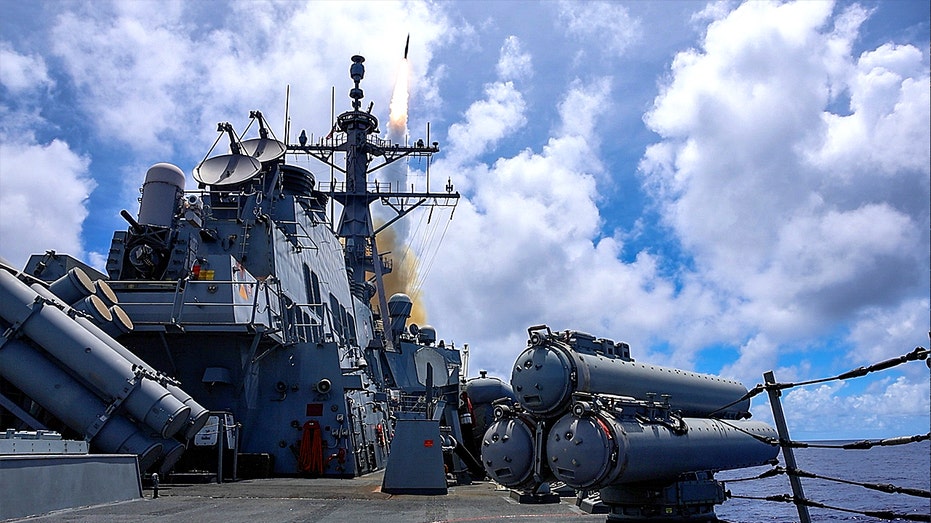
By contrast, the Skipper seizure is explicitly framed as not a wartime action: no battlefield authority, no self-defense claim, no invocation of armed conflict. Legally, it’s a civilian enforcement action—just one that happens to use Coast Guard vessels and Defense Department support.
This split-screen strategy suggests the White House is running parallel playbooks:
- Playbook A: Aggressive Article II claims for kinetic operations against cartels.
- Playbook B: Judicially anchored sanctions and forfeiture actions to hit regimes and networks tied to terrorism or rogue states.
Both are aimed at pressuring Nicolás Maduro, but only one invites constitutional war powers fights. The Skipper case shows how sanctions enforcement is being used as the “safer” legal and political channel.
What mainstream coverage tends to miss
Most surface-level reporting frames this as another round of U.S.–Venezuela brinkmanship. Several deeper issues are often overlooked:
- Norm-building by practice: Each seizure like this helps establish new norms about how far sanctions enforcement can reach. That matters not just for Venezuela, but for Iran, Russia, and future rivals.
- Reciprocity risk: If the U.S. treats its domestic “emergency powers” as globally enforceable on the high seas, other major powers could follow suit, targeting ships they claim violate their own domestic laws.
- Private sector uncertainty: Ship owners, insurers, and commodity traders now must evaluate not only the risk of being sanctioned, but the risk of losing the entire vessel if it’s suspected of participation in a sanctioned network.
- Blurred civil–military lines: Calling this a civilian enforcement action while relying on Coast Guard and War Department assets highlights how economic and military tools are increasingly fused in practice, even if separated on paper.
Expert perspectives: legal innovation or creeping overreach?
Legal and policy experts are sharply divided over what the Skipper seizure represents.
Maritime and international law scholars are watching the case as a test of how far states can push the “stateless vessel” doctrine to enforce unilateral sanctions:
Professor Julian Ku’s point about statelessness underscores a broader concern: if the vessel’s lack of valid nationality is not clearly established, the U.S. risks being seen as using domestic law to override the flag-state principle that underpins maritime order.
Sanctions practitioners see the case as part of a trend toward treating physical assets – not just financial flows – as legitimate targets of sanctions enforcement:
- Over the past decade, the U.S. has increasingly pursued ships, aircraft, and physical cargo linked to sanctioned networks.
- That shift increases leverage but also raises stakes, because states tend to respond more strongly to the loss of physical sovereign-linked property than to blocked bank accounts.
National security strategists point out that the Skipper seizure fits into a broader effort to cut off Maduro’s access to “shadow revenues.” As Venezuela’s oil income has collapsed under sanctions, clandestine networks involving Iran, shell companies, and discounted off-the-books cargoes have become central to regime survival.
Targeting a vessel allegedly tied to such a network isn’t just symbolic; it is designed to raise costs and uncertainty for anyone considering doing business with that ecosystem.
Data & evidence: the sanctions–oil–terror nexus
Several empirical trends amplify the importance of this case:
- Venezuelan oil collapse: Venezuela’s oil production has fallen from around 2.3 million barrels per day in 2015 to well under 800,000 barrels per day in recent years, with sanctions playing a central role.
- Expanded use of IEEPA: The U.S. has declared more national emergencies under IEEPA than at any time since the law’s creation in 1977, covering not only terrorism but corruption, cyber threats, and regional crises.
- Maritime sanctions enforcement: OFAC has issued increasingly granular guidance on ship-to-ship transfers, AIS (Automatic Identification System) dark activity, and deceptive shipping practices, reflecting a move from financial to physical enforcement.
- Iran–Venezuela linkages: In recent years, Iran has supplied fuel and technical support to Venezuela, while Venezuela has shipped crude in arrangements designed to circumvent sanctions. The Skipper is alleged to be part of this broader pattern.
These trends point to a future where tankers and cargo vessels are no longer neutral commercial platforms, but front-line assets in geopolitical struggles.
Looking ahead: what to watch
The Skipper seizure is unlikely to be the last such operation. Several developments bear close watching:
- Court challenges and precedents: If the seizure is contested in U.S. courts, judges will have to grapple with the extraterritorial reach of IEEPA and civil forfeiture on the high seas. Their rulings could either validate or narrow the government’s approach.
- Reactions from other states: How Venezuela, Iran, and potential flag states respond will help determine whether this becomes a one-off episode or a trigger for diplomatic pushback and competing legal narratives.
- Copycat strategies by other powers: Russia, China, and even regional powers could cite this case when justifying their own enforcement actions against ships they claim violate domestic laws—from sanctions to information controls.
- Integration with broader Venezuela policy: If the goal is to pressure Maduro to step down, the tanker seizure is one instrument among many: criminal indictments, targeted sanctions, diplomatic isolation, and support for opposition actors. The question is whether these measures alter the regime’s cost-benefit calculus or deepen its dependence on extra-legal networks.
The bottom line
The Skipper case is not just about one tanker or even one regime. It is a testbed for a model of state power that fuses domestic emergency laws, civil forfeiture, and maritime operations into a coherent tool of foreign policy.
If courts and other states acquiesce, Washington will have effectively widened the accepted perimeter of sanctions enforcement—from bank ledgers to open ocean. If they push back, this episode could mark the high-water mark of a sanctions-first strategy that’s straining the boundaries of international law.
Either way, the seizure of the Skipper shows that the 21st-century struggle over oil, sovereignty, and sanctions will be fought not only in negotiating rooms and trading floors, but on the world’s shipping lanes—one tanker at a time.
Topics
Editor's Comments
What’s most striking about the Skipper seizure is how normalized this kind of hybrid operation has become. Two decades ago, sending U.S. assets to seize a foreign tanker on the high seas under a domestic economic emergency statute would have been treated as extraordinary. Today, it’s presented almost as routine sanctions housekeeping. That normalization is precisely why this case deserves more scrutiny than it’s getting. If the U.S. can repeatedly use IEEPA and civil forfeiture to justify physical interdictions of foreign property abroad, we are edging toward a world where economic emergencies become a standing pretext for projecting coercive power without ever invoking war. In the short term, that may look efficient and legally tidy. In the long term, it risks eroding the distinction between commercial space and conflict space at sea, invites reciprocal behavior by other major powers, and shifts key decisions about coercive state action from the public realm of war authorization to the quieter, more technocratic domain of sanctions designations and sealed court warrants. That’s a significant constitutional and geopolitical evolution hiding inside a single tanker case.
Like this article? Share it with your friends!
If you find this article interesting, feel free to share it with your friends!
Thank you for your support! Sharing is the greatest encouragement for us.