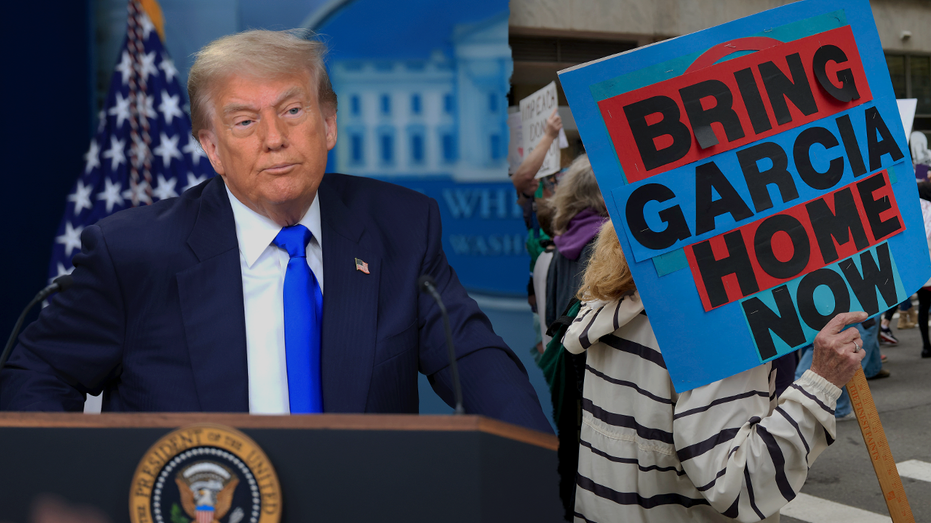

Beyond One Migrant: How the Kilmar Abrego Garcia Case Tests the Limits of U.S. Immigration Power

Sarah Johnson
December 12, 2025
Brief
The Kilmar Abrego Garcia case exposes a deeper power struggle over immigration: how far can a U.S. administration go in defying judicial limits while using gang labels and third-country deportations?
Kilmar Abrego Garcia’s Case Exposes the New Front Line in America’s Immigration Power Struggle
In a single week, the saga of Kilmar Abrego Garcia has shifted from a technical deportation dispute to a stress test of how far a presidential administration can go in using immigration enforcement as a tool of power. His case is no longer just about one Salvadoran man, or even about MS-13 allegations. It has become a live battle over the limits of executive authority, the independence of the judiciary, and whether due process protections still meaningfully constrain immigration detention and deportation in the post-9/11, post-Trump era.
What makes this story significant is not only that a federal judge twice intervened—first to order his return to the United States after what she called “wrongful detention” in El Salvador, and now to prevent his re-arrest—but that the administration responded by branding the decision “naked judicial activism” and vowing to fight it “tooth and nail.” That rhetoric signals a broader institutional conflict: who ultimately decides what lawful immigration enforcement looks like—judges, or the White House?
The Bigger Picture: How We Got to a Case Like This
To understand why Abrego Garcia’s case is explosive, you have to situate it in three longer arcs of U.S. immigration history:
1. A century of broad executive power over deportation
Since the late 19th century, the Supreme Court has treated immigration as an extension of foreign policy and national sovereignty, granting the executive branch sweeping discretion. The so-called “plenary power doctrine,” crystallized in cases like Chae Chan Ping v. United States (1889) and later decisions, created a zone in which courts traditionally defer to the political branches, especially on admission and removal.
That deference has allowed administrations—Republican and Democrat—to make aggressive enforcement choices, from mass deportations in the 1950s to post-9/11 national security removals. But it has always existed in tension with basic constitutional protections: due process, access to courts, and the prohibition against arbitrary detention.
2. The post-1996 enforcement machine
The 1996 immigration laws (IIRIRA and AEDPA) hardened this system by expanding deportable offenses, limiting judicial review, and streamlining removal. The result was a powerful bureaucratic infrastructure—ICE, DHS, large detention networks—that can detain and move people quickly, often faster than courts can react.
By the 2010s, that apparatus was removing hundreds of thousands of people per year. But it was still constrained by paperwork, process, and court orders: removal orders had to be valid, and violating a federal judge’s injunction was understood as a serious breach.
3. The Trump-era shift: from discretion to confrontation
Under Donald Trump’s first term, immigration enforcement moved from discretion-based prioritization (focusing on recent arrivals or serious offenders) toward a more maximalist approach, with rhetoric that portrayed judges as obstacles and sanctuary jurisdictions as enemies. As one example, the administration repeatedly clashed with courts over the travel ban, DACA rescission, and family separation policies.
In that context, the Abrego Garcia case is both familiar and new: familiar in that it involves alleged gang ties and complex removal logistics, new in that it openly tests how far an administration can go in ignoring or working around court orders it finds inconvenient.
What This Really Means: Beyond One Man’s Detention
1. The rule-of-law stress test: when deportation meets judicial orders
Judge Paula Xinis’s orders cut to a basic rule-of-law question: does the executive branch have to demonstrate a valid, properly finalized removal order before it can deport or re-detain someone for deportation—especially someone it previously removed in violation of a court order?
Her finding that Abrego Garcia was “re-detained, again without lawful authority” is not just a bureaucratic critique. It suggests that the administration’s use of detention may be drifting from legal enforcement toward punitive or retaliatory use of state power. If courts accept the administration’s position that such decisions are essentially unreviewable, the precedent could undercut judicial oversight for thousands of similar cases.
2. The weaponization of “gang member” labels
The Department of Homeland Security’s statement—“he is an illegal alien from El Salvador, a MS-13 gang member, and has a history of violence”—is designed to frame the entire debate. Once someone is branded MS-13, the political calculus changes: procedural violations become easier to dismiss as necessary, even righteous.
But gang labeling has a documented history of error. A 2017 review of gang databases in California, for example, found that minors were added without clear criteria; an Inspector General report later raised concerns about how gang designations were used in immigration enforcement. The public rarely sees the evidence underlying such claims, which are often based on tattoos, neighborhoods, or untested intelligence.
The legal danger is that a label with potent political resonance can become a de facto waiver of due process—something Judge Xinis’s orders implicitly push back against. Whether Abrego Garcia is or is not tied to MS-13 is important, but courts are signaling that even alleged gang members are entitled to lawful process.
3. Deportation to “third countries” and the new geography of removal
One of the strangest details in this case is the administration’s attempt to deport Abrego Garcia not just to El Salvador but to a set of African countries—Liberia, Eswatini, Uganda, and Ghana. This reflects a broader shift toward “third-country” deportations when primary countries refuse to accept returnees or when political considerations make direct removal difficult.
Historically, third-country resettlement has been used for refugees with no safe place to go, often under international agreements. Using it instead as an enforcement workaround raises legal and ethical questions: What obligations do destination countries actually accept? How voluntary are these arrangements? And how does the U.S. reconcile such moves with its own obligations under international law, including non-refoulement (the principle that you cannot send someone to a country where they face torture or persecution)?
Judge Xinis’s focus on the lack of a valid final removal order suggests courts may become more skeptical of improvisational deportation strategies that treat foreign countries as interchangeable endpoints.
4. Family separation 2.0: long-term trauma, short political cycles
When Abrego Garcia tells other families, “God is with you… keep fighting,” he is speaking into a vacuum that policy rarely fills. The trauma of family separation—children left without a parent for months or years while legal battles unfold—is increasingly well documented. Studies of previous deportation waves have linked parental removal to higher rates of depression, anxiety, and poorer educational outcomes among U.S. citizen children.
Yet enforcement politics still tends to compress these human narratives into brief, partisan sound bites: either “victims of illegal immigrants” or “victims of harsh enforcement.” His case shows how little infrastructure exists to repair damage even when courts later rule that a removal was unlawful.
Expert Perspectives
Immigration scholars and legal analysts see this case as part of a broader institutional collision.
Lucas Guttentag, a long-time immigration law scholar and former DOJ official, has warned for years that unchecked enforcement tools can erode constitutional norms: “When the government asserts that immigration decisions are essentially beyond review, it’s not just immigrants’ rights at stake; it’s the idea that no one is above the law.”
At the same time, former DHS officials argue that courts are increasingly intruding on core executive functions. A former senior DHS lawyer, speaking at a 2023 policy forum, framed it this way: “If every operational decision can be second-guessed by a single district judge, you no longer have an enforcement system, you have litigation policy.”
The Abrego Garcia case sits squarely at that fault line. When a DHS spokesperson calls a federal order “naked judicial activism,” it signals not just disagreement but a delegitimization of judicial oversight—language we’ve more often seen used against Supreme Court decisions on abortion or gun rights than against district court rulings in individual deportation cases.
Data & Evidence: How Typical Is This Case?
- Immigration detention scale: In recent years, ICE has typically held between 20,000 and 35,000 people in detention on any given day, with annual arrests in the hundreds of thousands. Most never gain the kind of legal representation or judicial attention Abrego Garcia has received.
- Gang-affiliated removals: DHS has, at various points, highlighted MS-13 as a key enforcement priority. However, publicly available data suggest that the share of all deportations involving confirmed gang ties is relatively small—often in the low single-digit percentage range—even when the rhetoric centers heavily on gangs.
- Court oversight: Since 2017, there has been a notable increase in nationwide injunctions and TROs in immigration cases, from travel bans to asylum restrictions. That trend reflects growing judicial willingness to scrutinize enforcement tactics that were once considered largely discretionary.
- Wrongful removals: While precise national figures are hard to quantify, multiple investigations have documented cases where individuals were deported despite pending appeals, valid relief claims, or existing court orders—usually due to communication breakdowns or bureaucratic haste rather than explicit defiance. The twist in this case is that the government has already admitted an “administrative error,” yet appears to be doubling down.
Looking Ahead: What to Watch as This Fight Escalates
1. The appeal and the future of judicial review
The Trump administration has vowed to “absolutely” appeal Judge Xinis’s order. On appeal, higher courts will be asked to answer not just whether the judge got the law right in this case, but how far district courts can go in policing the executive branch’s compliance with procedural requirements in deportation.
If appellate courts side strongly with the administration, it could narrow the pathways for individuals to challenge unlawful detention or removal. If they uphold or even expand the district court’s reasoning, they may strengthen a line of cases reinforcing that, even in immigration, process matters and court orders must be followed.
2. The politics of labeling judges “activists” in immigration cases
The term “judicial activism” is notoriously elastic, but using it to attack a judge for enforcing procedural limits carries risks. It may rally the administration’s political base, but it also feeds a narrative that the executive is at war with an independent branch of government.
Over time, repeated clashes like this could normalize the idea that immigration enforcement is a realm where ignoring or undermining judicial authority is acceptable. That’s a very different constitutional order from the one most Americans assume they live under.
3. International repercussions and bilateral relationships
Attempts to deport migrants to African third countries are not simply internal policy choices; they require cooperation from those destinations. If these states perceive they are being used to circumvent court orders or to warehouse controversial deportees, they may push back, complicating broader diplomatic and security relationships.
Conversely, if such arrangements proliferate quietly, we may see the emergence of a shadow geography of deportation—where people with tenuous ties to a destination country are relocated there for political convenience.
4. The precedent for future administrations
Perhaps the most under-discussed implication is that any power asserted by one administration can be used by the next. If courts ultimately accept the idea that an administration may repeatedly detain and attempt to deport someone despite defective paperwork and prior judicial reprimands, future presidents—of any party—will inherit that latitude.
In other words, the way this case is resolved will shape not only Trump-era policy but the toolbox available to his successors.
The Bottom Line
Kilmar Abrego Garcia is, in one sense, an individual with a disputed past: alleged gang affiliation, a contested removal history, and serious charges related to human smuggling. But the real stakes of his case lie elsewhere.
His saga exposes how thin the line can be between lawful enforcement and arbitrary state power when an administration is willing to test the outer limits of its authority—and when the courts are among the few institutions pushing back. It shows how politically charged labels like “MS-13” can be used to justify shortcuts, and how family separation and wrongful detention can persist long after previous scandals fade from the headlines.
Most importantly, it forces a hard question: in the United States, does an immigration detainee stand before the government as a person with rights and enforceable protections, or as a problem to be managed as the executive sees fit? The answer is being written, case by case, in courtrooms like Judge Xinis’s—and in the lives of families like Abrego Garcia’s.
Topics
Editor's Comments
What stands out in the Abrego Garcia case is less the underlying facts—contested gang affiliation, prior detention, logistical challenges of removal—and more the administration’s willingness to escalate a procedural dispute into a public confrontation with the judiciary. Historically, administrations have often bristled at court limits on immigration policy, but they have typically complied while seeking longer-term legal or legislative fixes. Here, the rhetoric of “naked judicial activism” and promises to fight a temporary restraining order “tooth and nail” suggest a different posture: one that treats judicial oversight as an adversary to be delegitimized rather than a co-equal branch. That may play well politically, particularly when the individual at the center can be framed as a violent gang member, but it raises uncomfortable questions about what happens when a less sympathetic administration deploys the same logic in other domains—environment, protest, surveillance. If the practical message becomes that inconvenient orders can be fought publicly and obeyed grudgingly, the long-term casualty may be not immigration control, but the shared commitment to a system in which courts retain the final word on what the law requires.
Like this article? Share it with your friends!
If you find this article interesting, feel free to share it with your friends!
Thank you for your support! Sharing is the greatest encouragement for us.