Has Feminism Become a ‘Megachurch’? What the Claim Really Reveals About Faith, Gender and Power

Sarah Johnson
December 7, 2025
Brief
Carrie Gress says feminism is a ‘megachurch’ rival to Christianity. This analysis unpacks the history, data, and power struggle behind that claim—and what it reveals about religion, gender and cultural authority.
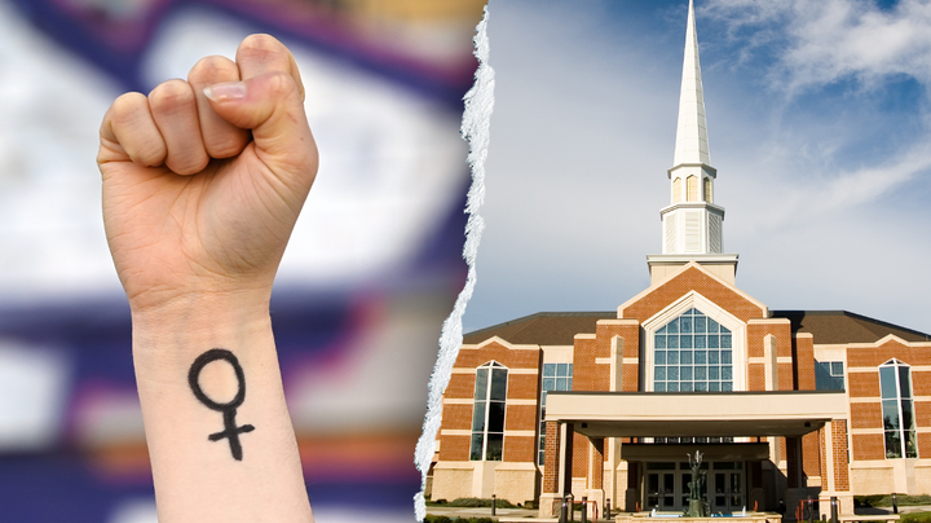
Is Feminism the New ‘Megachurch’? What This Culture-War Framing Reveals About Religion, Gender and Power
The claim that feminism has become a secular “megachurch” rivaling Christianity is less about sociology than about a deep cultural anxiety: Who gets to define morality, family, and female identity in the 21st century? Carrie Gress’s argument taps into a growing narrative on the religious right that treats feminism not as a political movement with internal diversity, but as a totalizing, quasi-religious system bent on displacing Christian norms.
Understanding this framing matters because it sits at the crossroads of three powerful trends: the decline of institutional religion in the West, the politicization of gender and family, and the emergence of value systems that function like religions even if they are explicitly secular. The debate is less about whether feminism is compatible with Christianity and more about who has moral authority over women’s lives—churches, states, or women themselves.
The bigger picture: How feminism and Christianity became rivals in the public imagination
Gress’s claim that feminism was “designed” as a rival belief system to Christianity is historically oversimplified, but it reflects a real, longstanding conflict between Christian institutions and feminist demands.
1. Early feminism was deeply entangled with Christianity. Many first-wave feminists in the 19th century were devout Christians who grounded their activism in biblical language. Figures like Sojourner Truth, Frances Willard, and many suffragists argued that women’s rights were compatible with — even demanded by — Christian ethics of justice and dignity. The Women’s Christian Temperance Union became one of the era’s biggest engines for women’s public engagement.
2. The real fracture emerged over sexuality, reproductive control, and authority. As feminism moved into the 20th century, especially with access to contraception and the rise of second-wave feminism (1960s–1980s), the battle lines sharpened around:
- Divorce and no-fault divorce laws
- Contraception and abortion
- Women’s ordination
- Sexual norms outside marriage
These issues directly challenged traditional Christian teachings on family, gender roles, and sexual ethics. The dispute became less about whether women should be valued, and more about who defines the terms of their value.
3. The “feminism vs. Christianity” binary is itself a product of modern culture wars. In the U.S., from the 1970s onward, abortion politics, the Equal Rights Amendment, and later LGBTQ+ rights pushed many conservative Christians into a posture of intellectual siege. Feminism was often framed not as a complex spectrum of ideas but as a monolithic threat—an anti-family ideology undermining Christian civilization. Gress’s “megachurch” metaphor is the latest iteration of that framing.
Is feminism really a ‘religion’? Why this metaphor keeps resurfacing
Describing feminism as a religion—or a megachurch—is not new. Social theorists have long noted that modern secular movements can take on religious characteristics. The question is: what does calling feminism a religion accomplish rhetorically and politically?
1. Social movement as faith community. Any large moral movement tends to develop:
- Core narratives (e.g., patriarchy as a system of oppression)
- Canon texts (Simone de Beauvoir, bell hooks, Betty Friedan, Kimberlé Crenshaw, and others)
- Rites and rituals (marches, consciousness-raising groups, hashtags, symbolic acts like wearing certain colors)
- Conversion stories (people describing how they became feminists)
In that sense, feminism does function as a meaning-making framework, especially for women who experienced religion as limiting or harmful.
2. But “religion” here is a loaded accusation, not neutral description. When critics label feminism a “religion,” they typically mean:
- It’s dogmatic and intolerant of dissent.
- It rests on unprovable assumptions rather than evidence.
- It competes for loyalty against Christianity.
This framing allows conservative voices to dismiss feminist claims as irrational ideology rather than legitimate political critique or empirical analysis of gender inequality.
3. The megachurch comparison reveals something else: scale and spectacle. Megachurches, especially in the U.S., are known for:
- High production values and emotional experiences
- Charismatic leaders and strong branding
- Large, often younger, crowds seeking belonging and meaning
Feminism today, especially through social media, conferences, influencers, and pop-culture icons, does mirror some of that energy. But equating a decentralized, internally contested global movement with a single megachurch structure obscures how fragmented feminism actually is—from Catholic feminists to radical separatists to corporate “lean in” careerism.
Dissecting the ‘three commandments’ claim: Shelley, Wollstonecraft, and the occult
Gress identifies three supposed “commandments of feminism”: contempt for men, rejection of monogamy, and involvement in the occult, linking them to Percy Bysshe Shelley and his circle. This is a dramatic narrative—but historically and intellectually, it’s shaky.
1. Feminism’s roots are broader than a Romantic poet’s personal life. While Shelley, Mary Wollstonecraft, and William Godwin indeed challenged conventional marriage and religion, the modern feminist movement draws on multiple streams:
- Enlightenment liberalism (arguments for legal and political equality)
- Socialist and labor movements (focus on economic exploitation)
- Anti-slavery and civil rights movements
- Christian social reform and missionary work
To reduce feminism to a kind of occult, anti-monogamy plot centered on one elite literary circle is to selectively cherry-pick the most scandalous elements for rhetorical effect.
2. “Contempt for men” vs. critique of patriarchy. While some feminist writing expresses genuine anger toward male behavior or structures of male power, mainstream feminist theory distinguishes between:
- Men as individuals (who can be allies, partners, or opponents)
- Patriarchy as a system (laws, norms, institutions favoring male dominance)
Conflating critique of patriarchy with blanket contempt for men simplifies a complex analysis into a caricature—and conveniently frames any challenge to male privilege as hatred.
3. The occult accusation is an old moral panic with new packaging. Linking feminism to witchcraft and occult practices taps into centuries of Christian imagery in which powerful, autonomous women were described as witches or seductresses. The recent pop-feminist embrace of witch imagery (tarot aesthetics, “witchy” branding, etc.) is often more symbolic rebellion than serious esoteric practice—but critics use it to suggest moral and spiritual corruption. Historically, accusations of occultism have often been used to delegitimize women’s alternative sources of authority.
The autonomy debate: Freedom, fulfillment, and the loneliness question
One of Gress’s central claims is that feminism “sells women a false promise” that fulfillment lies in autonomy, careerism, and detachment from family. There are several layers worth unpacking:
1. Data shows a more nuanced picture than either side admits.
- Some research, such as the widely cited work mentioned in The Guardian, has found that single, childless women often report higher levels of happiness and life satisfaction than their married, child-rearing counterparts in certain contexts.
- At the same time, large OECD and Pew surveys indicate that many adults still name family and children as their most important source of meaning, across religious and secular lines.
- Crucially, women’s reported happiness levels often track not simply marital status, but quality of relationships, economic security, and control over their own choices.
The reality is less “children = misery” or “career = loneliness” and more about whether women are forced into or denied roles—either as mothers or as professionals.
2. Feminism as a response to unpaid, unrecognized labor. A core feminist insight has been that domestic labor and caregiving—traditionally assigned to women—have been undervalued economically and socially. The push for autonomy wasn’t simply about telling women to avoid family; it was about insisting that women should not be economically trapped in marriages or dependent on male providers. In many societies, the ability to leave an abusive or untenable relationship is directly tied to economic independence.
3. The “pet parent” argument reveals something deeper: redirected care, yes—but why? Gress frames rising pet ownership as evidence that women, made for relationships, are misdirecting their nurturing instincts away from children toward animals. But there are structural factors she downplays:
- Housing and childcare costs in many Western cities have surged dramatically, making raising children financially daunting.
- Job insecurity and lack of paid leave force many women into stark trade-offs between career and caregiving.
- Delayed marriage and childbearing are not only ideological choices but rational responses to educational and economic pressures.
Interpreting pet ownership primarily as a spiritual misdirection rather than a rational adaptation to economic and social realities oversimplifies the story.
What’s really at stake: Competing moral ecosystems in a post-Christian West
Underneath the theological language, Gress is describing a real phenomenon: as institutional Christianity loses cultural dominance in North America and Europe, other frameworks—feminism, environmentalism, nationalism, and consumerism among them—are stepping in to provide identity, community, and moral purpose.
1. Feminism as a moral ecosystem. For many women (and men), feminism now offers:
- A moral narrative: injustice, struggle, liberation
- A community: online networks, activist groups, professional associations
- Practices: voting patterns, workplace advocacy, consumer choices, social media activism
- Heroes and martyrs: from suffragettes to modern #MeToo whistleblowers
In some lives, this does function in ways that used to be filled by religious affiliation.
2. For conservative Christians, this looks like displacement, not coexistence. If moral authority once flowed primarily from the church, scripture, and tradition, then seeing women derive moral guidance from feminist writers, online communities, or secular experts can feel like betrayal or apostasy. Labeling feminism a rival religion is a way of clarifying, in their minds, that allegiance to one must come at the expense of the other.
3. But many women live in the overlap. Surveys consistently show significant numbers of women who identify as both Christian and feminist, especially in mainline Protestant and Catholic contexts. These women argue that:
- Christian teachings about human dignity support gender equality.
- Critique of patriarchy can be a way of purifying the church, not abandoning it.
Gress’s argument is aimed squarely at this group, insisting that the overlap is illusory and that a choice must be made.
Expert perspectives: Theology, sociology, and gender studies weigh in
Different disciplines approach this question in distinct ways:
Theologians are divided. Conservative Catholic and evangelical thinkers often share Gress’s conclusion that certain forms of feminism—especially those embracing abortion rights and sexual autonomy—cannot be reconciled with orthodox Christian doctrine. Yet Christian feminist theologians like Elisabeth Schüssler Fiorenza or Sarah Coakley argue that:
- The Bible itself includes strong critiques of male abuse of power.
- Patriarchy is a distortion of Christian teaching, not its essence.
- Feminism can help recover marginalized biblical voices and early Christian women’s leadership.
Sociologists of religion see feminism as one among several “quasi-religions” emerging in post-institutional societies. They note that as formal religious affiliation declines, people often:
- Invest political identities with sacred intensity.
- Find community and ritual in causes and movements.
But they also warn against conflating functional similarities with doctrinal equivalence. Calling feminism a “religion” can be analytically useful—but only if we’re precise about what that means and where the analogy breaks down.
Gender scholars tend to critique the way Gress collapses diverse feminist strands into a single hostile entity. They point out that:
- Some feminists prioritize family-friendly policies (paid leave, flexible work, affordable childcare) precisely so women can have families without losing economic independence.
- There are pro-life feminists, Christian feminists, and “difference feminists” who emphasize women’s relational identities without endorsing rigid roles.
Looking ahead: Why this debate will intensify, not fade
Several trends suggest that the “feminism vs. faith” narrative is not going away:
1. Intensifying political polarization around gender. Abortion, trans rights, parental authority in education, and workplace equity are central flashpoints in U.S. and European politics. Framing feminism as a religious-like enemy allows political actors to mobilize religious voters more easily.
2. The crisis of male identity. Gress hints at the concern that men are “lost” without traditional roles. There is real data showing:
- Young men falling behind women in educational attainment.
- Higher rates of loneliness, suicide, and substance abuse among men.
Rather than treating this as a zero-sum conflict between men and women, emerging scholarship suggests that both genders are struggling to adapt to rapidly changing norms. Whether feminist and religious movements can cooperate on shared challenges—like loneliness and family instability—will shape future cultural battles.
3. The future of Christianity itself. As churches lose younger members, especially women who feel alienated by rigid gender roles, Christian institutions face a strategic choice:
- Double down on oppositional framing (feminism as rival religion), or
- Engage critically with feminist insights while maintaining doctrinal boundaries.
Books like Gress’s signal that a significant part of the Christian right is choosing the first path. That may deepen loyalty among some, but it also risks pushing away women who refuse to choose between faith and autonomy.
The bottom line
Describing feminism as a “megachurch” is a powerful metaphor that captures the movement’s scale and moral energy—but it also distorts a messy reality into a stark religious war. Underneath the rhetoric lie legitimate questions: How should societies balance women’s autonomy with family stability? Who gets to define womanhood—religious institutions, political movements, or women themselves? And what fills the moral vacuum as traditional faith declines?
The real struggle isn’t simply feminism versus Christianity. It’s over the architecture of meaning in a post-Christian, economically precarious world—where women, more than ever, are refusing to accept identities handed to them without their consent.
Topics
Editor's Comments
What’s striking about this controversy is how little it engages with the economic and policy realities shaping women’s lives. Both Gress’s critique and some of the pop-feminist responses reduce the conversation to lifestyle morality—career vs. family, autonomy vs. tradition—without asking why the trade-offs feel so brutal in the first place. When housing, healthcare, childcare, and education are prohibitively expensive, every decision about marriage or motherhood is high stakes. In that environment, ideological battles over ‘true womanhood’ risk becoming a distraction from structural reforms that would actually expand women’s choices: robust parental leave, flexible work, affordable childcare, and protections against domestic abuse. The deeper question isn’t whether feminism is a religion, but why so many societies still force women to choose between economic security and intimate commitments—and who benefits from keeping the debate framed as a spiritual war rather than a material one.
Like this article? Share it with your friends!
If you find this article interesting, feel free to share it with your friends!
Thank you for your support! Sharing is the greatest encouragement for us.