What ‘Wake Up Dead Man’ Really Says About Faith, Power, and Truth in 2025

Sarah Johnson
December 13, 2025
Brief
A deeper look at ‘Wake Up Dead Man: A Knives Out Mystery’ and how its church-set murder, darker tone, and ensemble of suspects reflect a 2025 crisis of faith, authority, and truth.
‘Wake Up Dead Man’ and the Curious Power of the Modern Whodunit
On the surface, Wake Up Dead Man: A Knives Out Mystery is another clever, star‑studded puzzle box built for a Friday night on Netflix: Daniel Craig, eccentric suspects, a corpse in a church, and a third round of Rian Johnson’s now‑familiar mix of farce and deduction. Underneath, though, this film lands at a telling cultural moment. Its shift to a darker, quasi‑gothic story set in a small-town church says as much about where audiences are psychologically and politically in 2025 as it does about the state of the murder‑mystery genre.
What’s really notable isn’t just whether the film “works” as a mystery; it’s how Johnson is quietly turning a nostalgic genre into a mirror for contemporary anxieties about faith, institutions, and truth itself.
From Country Houses to Streamer Eras: How ‘Knives Out’ Rewired the Whodunit
Classic whodunits of the Agatha Christie era were tightly controlled social laboratories: country estates, confined guest lists, rigid class hierarchies. They offered readers and viewers the comforting belief that however chaotic things became, a brilliant detective would reorganize the world by the final chapter.
By the early 2000s, that formula had thinned out. The mystery genre splintered into prestige crime dramas, forensic procedurals, and “gritty” serial‑killer tales. Old‑fashioned puzzle mysteries were largely relegated to niche channels or nostalgic pastiche.
Knives Out in 2019 changed that. Johnson fused the Christie structure with deeply 21st‑century concerns: immigration, inheritance, and the cruelty of the American rich. Glass Onion (2022) took aim at tech billionaires and pandemic‑era culture wars. Each film turned the whodunit into a vehicle for dissecting contemporary power and hypocrisy, all while feeling playful enough to pull in a mass audience.
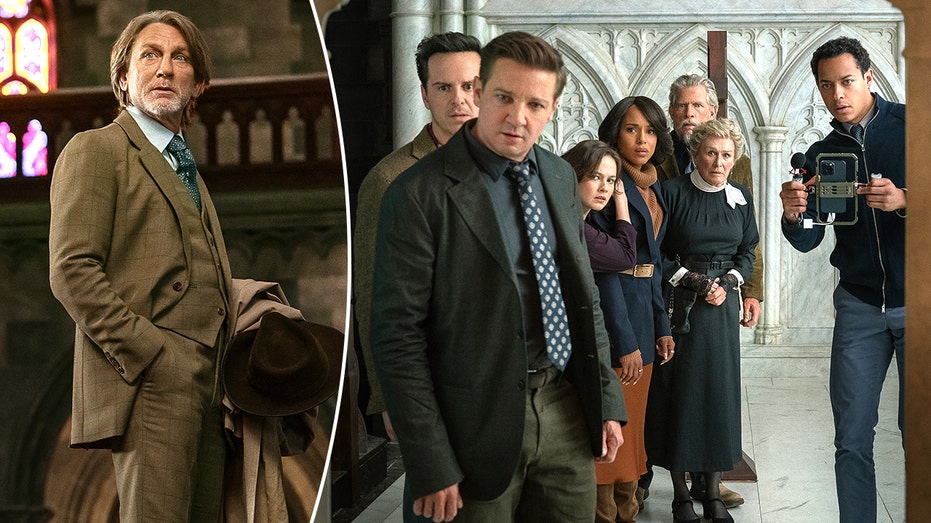
With Wake Up Dead Man, Johnson again moves the chessboard: this time to a small church in upstate New York run by Monsignor Jefferson Wicks. The suspects are no longer only the ultra‑rich; they’re a cross‑section of late‑American life—an ambitious lawyer and her viral‑obsessed son, a has‑been author, a disabled musician, a struggling priest, the loyal aide, the town doctor, the groundskeeper. Instead of a yacht or a tech billionaire’s island, we have a religious community in crisis.
That pivot matters. It suggests the franchise is evolving from skewering obvious elites to interrogating something more delicate and fraught: the moral and spiritual authority of everyday institutions.
Why a Church? The Politics of Setting and the Crisis of Authority
Placing the murder in a church is not incidental; it’s a choice that taps into several overlapping currents:
- Crisis of religious institutions: Across the U.S. and Europe, trust in organized religion has declined steadily. Scandals involving abuse, financial misconduct, and political entanglements have eroded moral authority.
- Small-town disillusionment: Rural and small-town communities are often portrayed as bastions of traditional values, but economically they’ve been hollowed out, their institutions—including churches—struggling for relevance and resources.
- A hunger for moral clarity: In an era of fractured information ecosystems, the idea of a singular moral authority feels both appealing and suspicious. A charismatic monsignor with “fiery, anger‑induced sermons” sits right at that uncomfortable intersection.
By making Wicks both charismatic and intimidating—someone whose anger can alienate, yet who still commands deep loyalty—Johnson is dramatizing the complicated emotional contract many people maintain with institutions they no longer fully trust but cannot entirely abandon.
The arrival of Rev. Jud Duplenticy, a former boxer and rookie priest, underscores the theme of generational and moral transition. When Wicks warns him, “Welcome to my church,” it signals the defensive hold of an older guard unwilling to cede power. This isn’t just a character beat; it’s a metaphor for aging institutions resisting reform even as younger figures arrive with different expectations and vulnerabilities.
From Rich Satire to Gothic Disillusionment
Early reactions describe Wake Up Dead Man as “the darkest of the three films” yet still laced with levity. That tonal shift deserves attention. The first Knives Out offered righteous satisfaction: the morally decent outsider (Marta) triumphs over a toxic rich family. Glass Onion bordered on cartoonish in its takedown of a buffoonish tech magnate, mirroring public exasperation with platform billionaires after a pandemic and multiple crypto collapses.
By contrast, a gothic church murder with a roster of ordinary, damaged suspects suggests something more fatalistic: everyone has motive, no one is fully innocent, and the power structures at stake are more intimate—faith, community, conscience. Rather than laughing at the foibles of the mega‑rich, audiences are asked to sit with the murkiness of flawed people trapped in moral systems they half‑believe in.
That mirrors a broader cultural mood. We’re moving from public rage at obvious villains (billionaires, oligarchs, corrupt politicians) into a more introspective phase: what do we do when the rot is embedded in institutions we rely on and identities we cherish? A murder mystery is a neat way to make that question feel safe to explore.
Benoit Blanc as Moral Arbiter in the Age of Epistemic Chaos
Detective stories are ultimately about the possibility of truth. In an environment saturated with misinformation and partisan spin, the figure of Benoit Blanc has become oddly reassuring: the genteel Southerner whose baroque accent belies a ruthless clarity about lies, power, and guilt.
It’s telling that Johnson delays Blanc’s entrance for roughly 35 minutes to establish the community, the victim, and the suspects. This pre‑Blanc section allows viewers to stew in the ambiguity: Who is Wicks to these people—abuser, savior, employer, spiritual anchor? By the time Blanc arrives, he doesn’t just solve a puzzle; he re‑orders a moral universe we’ve already inhabited.
That structure effectively captures our current relationship to expertise and authority. As Dr. Zeynep Tufekci, a sociologist who studies information and trust, has argued, people aren’t rejecting expertise outright; they’re rejecting institutions they no longer believe are acting in good faith. Blanc functions as a fantasy of the good expert—independent, incorruptible, beholden to truth rather than to any institution, with the charm to cut through cynicism.
By casting the church as the compromised institution and Blanc as the external moral compass, the film quietly asks: Does legitimate authority now have to come from outside our traditional structures—courts, churches, parties, media—to be believed?
The Ensemble as a Map of 2025’s Social Fault Lines
The suspects in Wake Up Dead Man are more than colorful archetypes; they reflect the fractures of 2025’s social landscape:
- Vera Draven, the uptight lawyer, and Cy, her viral‑obsessed adoptive son: This pairing captures the clash between professional, credentialed power and the volatile, attention‑driven economy of social media. Cy’s desire for virality hints at the way online visibility can reshape reputations, including those of religious leaders, overnight.
- Lee Ross, the has‑been author: A figure of cultural capital in decline, Ross evokes the precariousness of creative labor and the desperation that can follow obsolescence in a media environment that prizes novelty and youth.
- Simone Vivane, the disabled concert cellist: Her presence complicates easy moral and narrative binaries. Disability in mysteries is often fetishized as either superpower or vulnerability; centering her as a suspect suggests a more complex, less patronizing portrayal—someone who can be both victimized by and complicit in the system.
- Dr. Nat Sharp and Samson Holt: The town doctor and groundskeeper embody traditional local roles that once held quiet authority. Their motives for killing Wicks likely speak to how even these bedrock positions are under economic and ethical pressure.
Collectively, they form a microcosm of a society where every role is in flux, every authority figure is suspect, and every person feels both aggrieved and culpable. That “everyone had a reason to kill him” line isn’t just a genre trope; it’s an indictment of a system that forces people into moral corners.
Why Streaming Needs a Franchise Like This
From a media‑industry perspective, Wake Up Dead Man is also a case study in how streaming platforms are trying to manufacture durable IP. Netflix has struggled to build film franchises with genuine cultural staying power. Many of its big titles spike for a weekend and vanish.
Knives Out is different for three reasons:
- Rewatch value: Murder mysteries encourage repeat viewing to catch missed clues, making them ideal for streaming libraries that need resilient, evergreen content.
- Modular storytelling: A recurring detective with new casts and settings each time allows for freshness without the narrative fatigue that plagues linear franchises.
- Built‑in commentary: By design, each installment can interrogate a different social sphere—wealth, tech, religion, perhaps politics or climate in future entries—keeping the series culturally relevant.
Industry analyst Matthew Ball has noted that the streaming era favors “universes” over standalone hits. Johnson’s universe is unusual: instead of superheroes and multiverses, it centers on one very human superpower—moral and deductive clarity—in a world defined by layered deceit.
What This Installment Signals About Where the Franchise Goes Next
Three films in, patterns are emerging:
- The rich and powerful are still under scrutiny, but the lens is widening to include everyday institutions and emotional bonds.
- The tone is darkening, pointing to a franchise willing to risk discomfort in exchange for depth.
- Benoit Blanc is becoming less a gimmick and more an archetype—a contemporary hybrid of Christie’s Hercule Poirot and a secular confessor.
Looking ahead, it would be surprising if Johnson didn’t eventually tackle other contested arenas: perhaps a political campaign, a climate‑damaged community, or the entertainment industry itself. Each is rife with the kind of morally ambiguous motives—reputation, survival, ideology—that the series thrives on.
The crucial question is whether the franchise can continue to balance its puzzle‑box pleasures with its sociopolitical edge. If it leans too hard into message, audiences may feel lectured; if it coasts on formula, the sense of freshness evaporates. Wake Up Dead Man, by all accounts, threads that needle better than Glass Onion, suggesting Johnson understands the risk.
The Bottom Line
Wake Up Dead Man: A Knives Out Mystery isn’t just another clever whodunit. By staging its murder inside a small-town church and surrounding the victim with a cross‑section of contemporary anxieties—economic precarity, institutional decay, hunger for validation—it becomes a story about who we trust to tell us the truth in 2025, and what happens when those we trusted most become the primary suspects.
In that sense, Benoit Blanc isn’t merely solving crimes; he’s offering a temporary fantasy that, in a world of contested facts and compromised authorities, someone can still walk into the room, see through the lies, and put the story back in order—even if the order he reveals is darker than we’d like.
Topics
Editor's Comments
What’s most intriguing about Wake Up Dead Man is not simply that it’s darker, but where that darkness is directed. In the first two films, audiences could comfortably enjoy seeing the ultra-rich or ridiculous tech elites exposed. Here, the critique points inward toward institutions and identities that many viewers may still be emotionally tied to—churches, small-town life, even the idea of spiritual leadership itself. That’s a riskier move commercially and thematically. It raises questions the franchise can’t answer with clever twists alone: if every institution is compromised, does our faith migrate to charismatic individuals like Blanc? And if so, aren’t we just re-creating a softer form of the same authority structures the film critiques? The series is edging toward a larger conversation about where we locate moral legitimacy when both tradition and technocracy have lost credibility. Whether future installments confront that head-on will determine whether Knives Out becomes truly seminal or remains a very smart entertainment that flirts with, but doesn’t fully face, the implications of its own worldview.
Like this article? Share it with your friends!
If you find this article interesting, feel free to share it with your friends!
Thank you for your support! Sharing is the greatest encouragement for us.