Fragile Progress: Analyzing Ukraine Peace Talks Amid Corruption and Geopolitical Tensions

Sarah Johnson
December 3, 2025
Brief
Analysis of recent Ukraine peace talks amid negotiator resignation reveals complex interplay of corruption, diplomacy, and geopolitical stakes shaping the conflict’s fragile path forward.
Opening Analysis
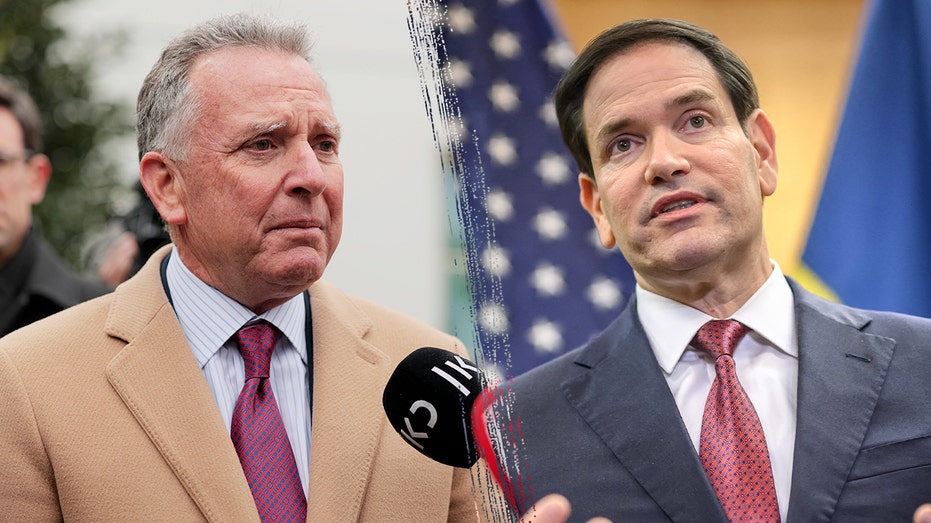
The recent meeting in Florida between U.S. Senator Marco Rubio, Special Envoy Steve Witkoff, Jared Kushner, and Ukrainian negotiators represents a critical juncture in the protracted conflict between Ukraine and Russia. Coming on the heels of the resignation of Ukraine's top negotiator amid a high-profile corruption scandal, these talks underscore both the fragility and potential momentum in peace negotiations. Beyond the immediate diplomatic wrangling, this story reveals deep fissures in Ukraine’s governance that complicate peacebuilding efforts, the strategic recalibrations of U.S. diplomacy, and the persistent challenge of balancing security, sovereignty, and political stability amid wartime conditions.
The Bigger Picture
The Ukraine-Russia war, which erupted in 2014 and escalated sharply with Russia’s full-scale invasion in 2022, has been as much about territorial integrity as larger geopolitical order. Ukraine’s aspiration toward EU integration and potential NATO membership has made it a flashpoint for East-West tensions, reminiscent of Cold War-era spheres of influence politics. Historically, peace negotiations in this conflict have repeatedly faltered due to mutually incompatible demands: Ukraine’s insistence on sovereignty and territorial restoration versus Russia’s maximalist goals to neutralize Ukraine as a Western-aligned state.
Against this backdrop, U.S. involvement has evolved from military aid and sanctions to increasingly active diplomatic engagement. The current peace framework emerging from Geneva and subsequent talks attempts to bridge past divides by trimming down contentious points—reportedly now 19 from an initial 28—though critics argue it risks conceding too much to Moscow. The Alaska summit referenced reflects a previous attempt at bilateral understanding between the U.S. and Russia, illustrating how top-level diplomacy sets the context but does not guarantee resolution on the ground.
What This Really Means
The resignation of Andriy Yermak, Ukraine’s chief negotiator, amid corruption probes into state-owned Energoatom, exposes vulnerabilities that extend beyond the battlefield. Such internal instability threatens to undermine Ukraine’s credibility in peace talks and may weaken public trust in governance, complicating implementation of any deal. For Kyiv, balancing the demands of fighting corruption while negotiating under duress is a precarious act that shapes domestic politics and international perceptions.
Meanwhile, the U.S. envoy team—including figures like Rubio and Kushner, who carry their own complex political legacies—reflects Washington’s intent to seize a diplomatic opening that could redefine its role from indirect supporter to mediator. This change carries risks: accepting a framework criticized by European allies as too favorable to Russia risks fracturing Western unity, already endangered by divergent strategic interests.
Russia’s steadfast position—demanding Ukrainian neutrality and territorial concessions, coupled with continuing offensive attacks such as nearly 1,400 drone strikes in one week—signals Moscow’s attempt to leverage military pressure alongside diplomacy. This dual approach aims to extract maximal concessions while maintaining plausible deniability of comprehensive aggression, complicating the peace process.
In essence, the negotiation process is navigating a volatile intersection of military stalemate, internal Ukrainian political turbulence, U.S.-Russia strategic competition, and broader international norms about sovereignty and security architecture in Europe.
Expert Perspectives
Michael McFaul, former U.S. Ambassador to Russia and Stanford professor, warns that: "Any peace deal that compromises Ukraine’s sovereignty or security guarantees its vulnerability to future Russian aggression. Ukraine’s internal political reforms must proceed alongside diplomacy to ensure lasting peace."
Olga Oliker, senior international policy analyst, notes: "The resignation of a top negotiator amid corruption probes highlights the significant domestic governance challenge Ukraine faces, which Western partners must condition support on addressing to maintain legitimacy in any peace deal."
Geoffrey Pyatt, former U.S. diplomat to Ukraine, observes: "Washington’s evolving role from military backer to active mediator signifies a strategic pivot, but here the U.S must carefully navigate alliance coherency, particularly with European security actors wary of diluted frameworks that ignore Russia’s responsibilities."
Data & Evidence
- Since the latest phase of the war began in 2022, the U.S. has provided Ukraine with over $80 billion in aid, including military, economic, and humanitarian support.
- Last week alone, Ukraine faced nearly 1,400 drone attacks, 1,100 guided aerial bombs, and 66 missile strikes by Russian forces, emphasizing ongoing intense conflict despite negotiations.
- Corruption remains a systemic issue: According to Transparency International, Ukraine ranks 122 out of 180 countries on the Corruption Perceptions Index (2024), reflecting persistent governance challenges.
- The original U.S. peace framework included 28 points; now it has been reduced to 19, indicating attempts to streamline demands but potentially raising concerns about concessions.
Looking Ahead
The immediate weeks will be critical as Steve Witkoff reportedly travels to Moscow and Ukrainian negotiators continue their work under Rustem Umerov’s leadership. Key factors to watch include:
- Whether Russia accepts the modified peace framework or insists on further maximalist demands, risking collapse of talks.
- Ukraine’s ability to stabilize its political environment, combat corruption, and unify support behind negotiators.
- The U.S. diplomatic balancing act to align its peace initiatives with European allies, many of whom remain skeptical.
- The impact of ongoing Russian attacks on public opinion in Ukraine and internationally, as continued violence may harden Ukrainian resistance.
- Potential shifts in global power dynamics depending on whether the war moves toward resolution or prolonged stalemate.
The Bottom Line
This evolving Ukraine peace negotiation encapsulates a multi-layered struggle involving military reality, diplomatic strategy, internal governance challenges, and geopolitical contestation. The resignation of Ukraine’s top negotiator amid scandal complicates an already delicate process, while U.S. diplomatic efforts signal a bid to recast its role—though not without risks to alliance cohesion and legitimacy. Ultimately, durable peace requires concurrent progress in security, governance reform, and international cooperation, making the path ahead both complex and pivotal not only for Ukraine, but for the broader order in Europe and U.S.-Russia relations.
Topics
Editor's Comments
This latest round of peace talks illuminates how internal political dynamics within Ukraine are as consequential as external diplomatic pressures. The corruption scandal surrounding Yermak threatens to erode both domestic and international support at a critical moment, suggesting that peace negotiations cannot succeed without concurrent reforms. Moreover, U.S. involvement, shifting from battlefield support to negotiation facilitation, signals a nuanced recalibration of American foreign policy—but risks alienating European allies wary of underselling Russian accountability. It’s crucial to watch how these overlapping pressures evolve because the ultimate outcome will shape the geopolitical stability of Eastern Europe for years to come.
Like this article? Share it with your friends!
If you find this article interesting, feel free to share it with your friends!
Thank you for your support! Sharing is the greatest encouragement for us.