Bulgaria’s Protests Ahead of Eurozone Entry: A Crucible for Democracy and Economic Reform

Sarah Johnson
December 4, 2025
Brief
An in-depth analysis of Bulgaria’s protests over its 2026 draft budget reveals challenges in governance, youth discontent, and external risks ahead of the country's critical Eurozone accession.
Why Bulgaria's Protests Signal a Crucial Moment Ahead of Eurozone Entry
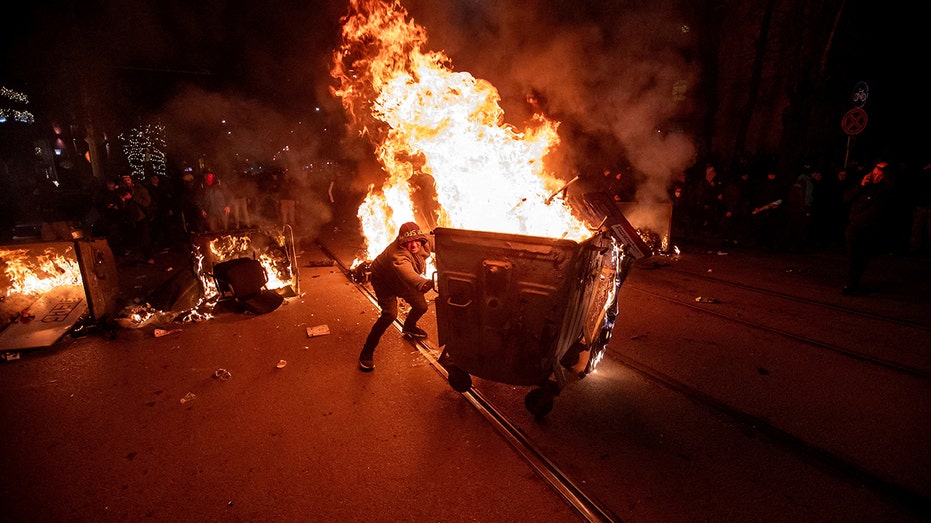
Bulgaria’s recent wave of protests against the government’s withdrawn 2026 draft budget transcends fiscal policy disputes, reflecting deeper anxieties about corruption, economic stability, and national identity as the country prepares for Eurozone membership. Tens of thousands—especially from younger generations—have voiced a demand not only for economic fairness, but for democratic renewal amidst fears of external interference and domestic political gridlock. This unrest underscores how Bulgaria’s transition into the Eurozone is as much a political and social trial as an economic milestone.
The Bigger Picture: Decades of Struggle and a Historic EU Shift
Bulgaria’s path since communist rule ended in 1989 has been marked by significant democratic development but persistent challenges with governance and corruption. Joining the European Union in 2007 was heralded as a breakthrough step toward modernization and integration with Western economies. However, Bulgaria remains one of the EU’s least affluent members, grappling with structural issues in public administration, economic inequality, and endemic corruption that erode trust in institutions.
Since pegging the Lev to the Euro and entering the ERM II mechanism in 2020, Bulgaria has been steadily preparing for formal Eurozone accession slated for January 2026. This adoption of the Euro is seen by policymakers as a guarantor of monetary stability and a pathway to investment and economic growth. Yet, skepticism runs deep among many Bulgarians who fear inflationary pressures, loss of monetary sovereignty, and further hardships amid already high living costs.
What This Really Means: The Convergence of Youth Discontent, Political Instability, and Security Risks
The protests highlight a generational divide, with young Bulgarians pushing for systemic reforms and transparency rather than incremental changes. Daniel Lorer, a parliamentarian, captures this sentiment: Gen Z wants a "renewed, different, corruption-free Bulgaria." The rejection of draft budgets envisioned as continuing burdensome tax hikes and debt accumulation points to widespread frustration over ineffective governance.
Beyond economics, this unrest strains Bulgaria’s political stability. President Rumen Radev’s opposition to the budget and calls for early elections signal a risky tug-of-war within state institutions. Radev’s known skepticism of the Euro and alignment with narratives sympathetic to Moscow introduce a volatile geopolitical dimension. Experts like Ruslan Stefanov warn this discord could invite more Russian meddling via disinformation campaigns, exploiting Bulgaria’s sensitive historical ties to Russia and its position as a NATO and EU member.
The protests’ predominantly peaceful character, interrupted by few violent clashes, also illustrates a society seeking dialogue and responsiveness from leaders rather than chaotic overthrow. Prime Minister Rosen Zhelyazkov’s concessions indicate government awareness that pushing unpopular policies at this crucial juncture could backfire politically and economically.
Expert Perspectives: Divergent Views but Shared Concern on Stability
Ruslan Stefanov, director at the Center for the Study of Democracy: "Bulgaria faces a turbulent moment where internal divisions threaten its Eurozone accession and alliances in the West. The interplay between domestic opposition and Kremlin-aligned narratives risks undermining national cohesion precisely when unity is needed most."
Daniel Lorer, Bulgarian MP: "The protests reflect a youthful demand for accountability and a break from the corrupt legacies of the past. The government’s initial budget failed to address these legitimate concerns, feeling like more of the same."
Economic analyst Ivanka Petrova: "Euro adoption can bring stability, but timing and social acceptance are critical. If authorities ignore public grievances, the transition risks exacerbating economic hardships rather than alleviating them."
Data & Evidence: Economic and Sociopolitical Indicators
- Bulgaria’s GDP per capita remains roughly 50% below the EU average, highlighting persistent economic disparities despite years in the Union.
- Public polls indicate that close to 60% of Bulgarians express skepticism about the Euro’s impact on inflation and livelihoods.
- Youth unemployment hovered around 18% as of late 2025, feeding into dissatisfaction with economic prospects at home.
- Reports by the EU anti-corruption watchdog regularly highlight Bulgaria among the member states struggling with effective judicial reform and corruption mitigation.
- Social media analysis reveals coordinated disinformation efforts originating from Russian-linked sources attempting to fuel dissent on NATO, EU policies, and domestic governance.
Looking Ahead: Navigating Eurozone Integration Amid Fragile Political Terrain
Bulgaria’s government faces a delicate balancing act in the coming months. The revised budget must respond to social demands for fairness and transparency while ensuring fiscal prudence to meet Eurozone convergence criteria. Failure risks alienating the electorate further and weakening Bulgaria’s negotiating position within the EU.
Political actors must also navigate President Radev’s opposition constructively to avoid institutional deadlock that could stall Eurozone accession or fracture Bulgaria’s commitments to NATO and the EU.
Externally, vigilance is needed against foreign interference campaigns exploiting internal divisions. Strengthening independent media, judiciary, and civil society mechanisms will be key to insulating Bulgaria’s democratic process during this transformative phase.
The Bottom Line: Beyond Currency, Bulgaria’s Reckoning with Democracy and Sovereignty
The protests are not solely a reaction to budgetary specifics but a manifestation of deeper frustrations surrounding governance, accountability, and Bulgaria’s future direction. Eurozone membership is a milestone with promising economic prospects, yet it cannot be detached from the urgent need for democratic reforms and social cohesion.
If Bulgaria can harness this moment to address corruption, engage its critical youth voices, and secure political consensus, the Euro adoption can catalyze long-term growth and integration into Europe’s economic core. Otherwise, the path risks instability exacerbated by internal fissures and external geopolitical pressures.
Topics
Editor's Comments
Bulgaria stands at a crossroads where economic policy, democratic governance, and geopolitical tensions collide. What makes this moment particularly precarious is not just the usual unease surrounding currency changeover, but the convergence of a politically active youth demanding systemic reform, a president skeptical of Western integration, and an external adversary keen to exploit divisions. The government’s initial budget misstep acted as a catalyst, bringing simmering grievances to the surface ahead of a milestone event—Eurozone accession—that promises economic opportunity but also demands political unity and accountability. Observing Bulgaria’s trajectory over the next year will provide key insights into how Eastern European states manage the complex interplay between domestic reform pressures and external strategic contestation while deepening ties to the West. This case highlights the necessity for inclusive governance as a foundation for economic integration to succeed.
Like this article? Share it with your friends!
If you find this article interesting, feel free to share it with your friends!
Thank you for your support! Sharing is the greatest encouragement for us.