Beyond the Manger: How an Illinois Church’s Nativity Scene Transforms the Refugee Story into a Sharp Critique of Immigration Enforcement

Sarah Johnson
December 4, 2025
Brief
An Illinois church’s controversial Nativity scene draws sharp parallels between the Holy Family’s refugee story and modern immigration enforcement, igniting deep debate on faith, justice, and social ethics.
Reimagining the Nativity: A Provocative Intersection of Faith, Immigration, and Social Justice
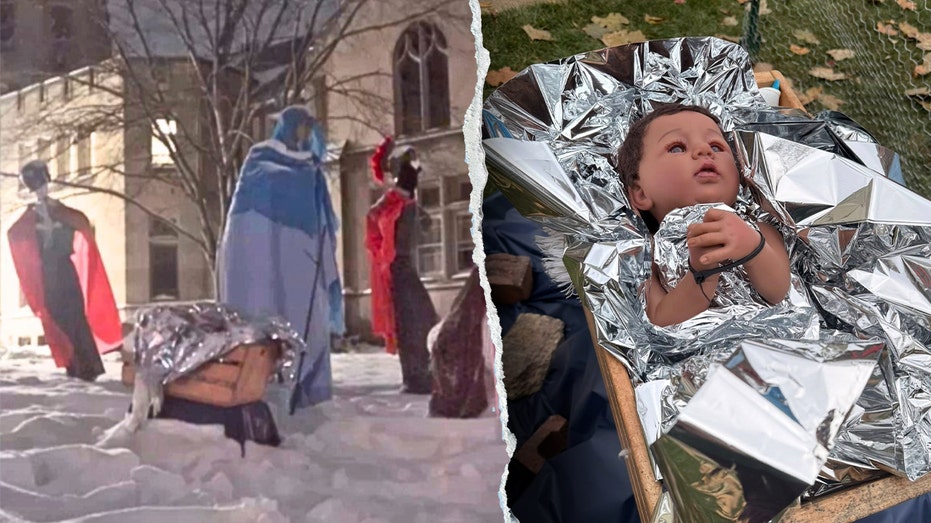
The recent Nativity scene displayed by Illinois' Lake Street Church, featuring baby Jesus with zip-tied hands guarded by ICE agents, is not just a controversial art installation—it is a charged symbol challenging viewers to reconsider timeless religious narratives through the prism of contemporary social and political realities. This provocative tableau forces a reckoning with how society treats migrants, refugees, and families under the shadow of immigration enforcement in the United States.
The Bigger Picture: Historical Context and Background
The Christian tradition has long embraced the Holy Family's flight to Egypt as the original story of refuge and displacement, a narrative that echoes across millennia and cultures. Historically, Jesus’ infancy as a refugee provides a foundation for Christian empathy toward the displaced and marginalized. Yet, this story has seldom intersected so explicitly with modern political discourse—until now.
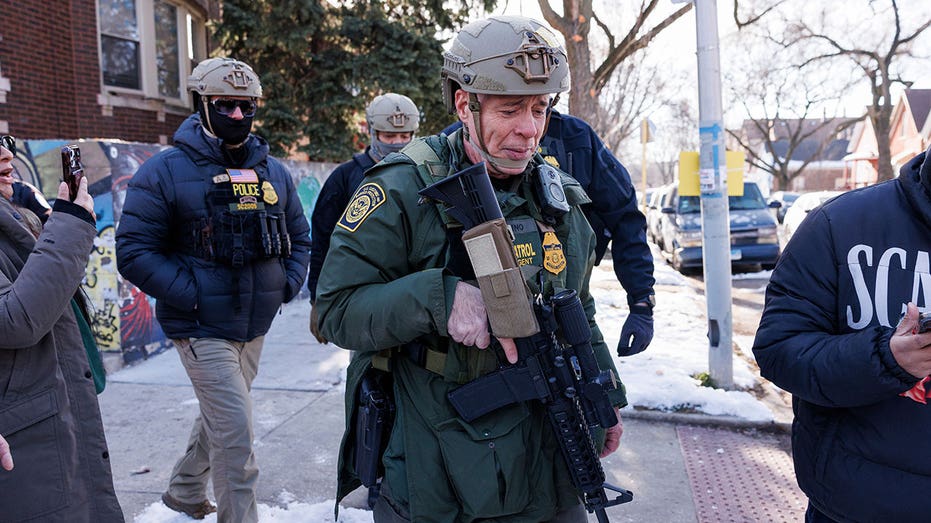
Lake Street Church’s installation situates this ancient story against the backdrop of U.S. immigration enforcement, notably Immigration and Customs Enforcement (ICE) raids and policies known to separate families, detain children in harsh conditions (including documented use of zip ties and emergency foil blankets), and criminalize migration. By rendering Biblical figures in contemporary detention-era attire—Mary with a tear gas respirator, baby Jesus zip-tied—the church demands a confrontation with how society’s most vulnerable are treated today.
It is essential to understand that this is part of a broader trend in which religious institutions grapple with immigration issues amid political polarization. The installation builds on decades of faith-based advocacy for migrants, exemplified by groups such as the Sanctuary Movement in the 1980s and faith coalitions opposing policies perceived as unjust or dehumanizing.
What This Really Means: Deep Dive into Implications and Significance
This Nativity scene encapsulates multiple tensions: between tradition and modernity, faith and policy, symbolism and lived experience. It reframes the Nativity—not as a naïve or purely festive story—but as a radical call for justice and protection for refugees. By doing so, it challenges narratives that depoliticize or sanitize migration, highlighting systemic issues within U.S. immigration enforcement.
Moreover, the depiction critiques the underlying motivations and consequences of immigration policies—pointing to enforced family separations, criminalization of asylum seekers, and the racialized enforcement tactics often obscured in mainstream discourse. The zip ties symbolize not abstract policy but concrete trauma inflicted on children and families. Through these representations, the church pushes back against what it calls "enforcement terror," which transcends legal status and affects entire communities.
However, the installation also sparked backlash and theological debate, with critics arguing that it distorts biblical accounts, mischaracterizes law enforcement’s role, or weaponizes religious imagery for political ends. This feedback reveals deep divisions in public understanding of migration and religious narratives, and indicates how immigration has become a cultural flashpoint in America.
Expert Perspectives
Dr. Maeve O’Connor, Professor of Theology and Migration Studies: “This installation powerfully invokes liberation theology, a tradition that reads scripture through the lens of social justice and the oppressed. It reconnects the Christmas story to contemporary human rights struggles, reawakening the radical hospitality central to Christian ethics.”
Javier Hernandez, Immigration Policy Analyst: “Using art to highlight the human cost of immigration enforcement is vital. This scene draws attention to the tangible impact of policies—such as family separation and detention conditions—that statistics alone can’t fully convey.”
Rev. Michael Woolf, Senior Minister at Lake Street Church: “Our Nativity scene asks: how can we celebrate a refugee child’s birth while rejecting real refugees today? It’s an uncomfortable but necessary question.”
Data & Evidence
- According to the American Immigration Council, over 5,000 children were separated from their families at the U.S. border during the 2018 zero-tolerance policy period.
- Reports from human rights groups show widespread use of restraints like zip ties during ICE raids, which disproportionately affect immigrant communities of color.
- Public opinion polls indicate increasing polarization around immigration, with faith-based communities often deeply divided on the issue.
- Sanctuary churches and faith groups have grown in number by 20% over the past decade, reflecting greater engagement with immigration justice.
Looking Ahead: Future Implications and What to Watch For
This installation forecasts a likely intensification of debates where religion, art, and politics collide. Institutions like Lake Street Church may become more prominent forums for social justice advocacy, using symbolic acts to influence public opinion and policy. Conversely, the backlash signals an entrenched resistance that may harden divisions over immigration and the role of faith in public discourse.
Policy-wise, heightened activism can pressure lawmakers to scrutinize detention practices, family separation policies, and ICE enforcement techniques more closely. This conversation also intersects with broader racial justice movements and debates about the U.S.'s identity as a nation of immigrants.
Watch how other religious communities respond—whether by adopting similar symbolic critiques or by reaffirming more traditional stances diverging from progressive activism. The future will reveal whether faith-based art projects like this can shift cultural norms or remain contested flashpoints.
The Bottom Line
Lake Street Church’s Nativity scene is a compelling example of how faith narratives are being reinterpreted to address urgent social issues. It revives the refugee origins of the Christmas story to highlight contemporary migration crises and critiques immigration enforcement practices. Far from mere provocation, it invites profound reflection on empathy, justice, and how society honors its most vulnerable members—in this Christmas season and beyond.
Topics
Editor's Comments
This Nativity scene is more than a momentary provocation; it exposes fault lines at the confluence of faith, migration, and justice in America. By transforming a cherished religious image into a critique of modern immigration enforcement, Lake Street Church invites us to question not only the policies in place but also the moral frameworks shaping our responses to displacement. The mixed reactions reflect a society struggling to reconcile deeply held religious beliefs with evolving political realities. Importantly, it raises difficult questions about how religious narratives are interpreted and employed in public life—whether to comfort, to challenge, or to catalyze change. In an era where immigration remains fraught and politicized, such symbolic acts play a critical role in fostering dialogue, even when they unsettle. The debate this scene inspires will likely endure as part of a broader conversation on faith’s place in social advocacy and the search for collective empathy.
Like this article? Share it with your friends!
If you find this article interesting, feel free to share it with your friends!
Thank you for your support! Sharing is the greatest encouragement for us.