Beyond the Maryland Crash: How One ICE Arrest Exposes Deeper Failures in Immigration and Public Safety Systems

Sarah Johnson
December 12, 2025
Brief
A brutal Maryland crash involving an undocumented immigrant exposes deeper failures in America’s fractured immigration, licensing, and public-safety systems—far beyond the typical ‘catch and release’ headlines.
ICE Arrest After Maryland Crash: What One Horrific Case Reveals About a System on Autopilot
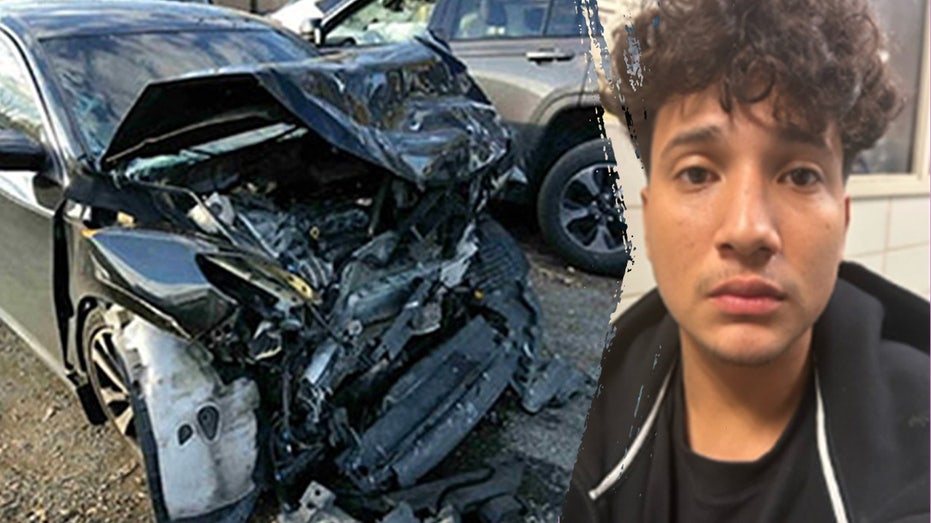
The Maryland crash that left a woman with shattered bones, internal injuries and a collapsed lung is horrific on its own terms. But the suspect’s immigration history — a Honduran national who crossed the border in 2022, was released on a notice to appear, and is now accused of fleeing a head-on collision — is being used as a political proxy for a much larger fight: what public safety actually looks like in an era of mass migration, backlogged courts and fragmented law enforcement.
Beyond the shock value, this case exposes something more structural: an immigration enforcement system that is neither fully “open” nor effectively “closed,” but stuck in a gray zone where responsibility is diffuse, data-sharing is inconsistent, and preventable tragedies become political talking points instead of catalysts for reform.
The bigger picture: how we got to ‘catch and release’ at scale
The details matter here. According to ICE, Kevin Alexis Mendez-Ortiz, a Honduran national, entered the U.S. near Hidalgo, Texas, in September 2022, was apprehended by Border Patrol, served a notice to appear in immigration court, and released on his own recognizance. More than a year later, he is accused of crossing into oncoming traffic in Oxon Hill, Maryland, causing a head-on collision, then fleeing the scene.
Critics call this “catch and release.” The government calls it a necessity.
Historically, the U.S. did detain a much higher percentage of unauthorized border crossers, particularly single adults from Mexico. That began to change in the 1990s and 2000s as:
- Courts expanded protections for asylum seekers and children (notably the 1997 Flores settlement and subsequent rulings).
- Detention capacity failed to keep pace with rising arrivals, especially families and unaccompanied minors.
- Immigration courts became severely backlogged; today there are over 3 million pending cases nationwide, according to the Executive Office for Immigration Review.
The Biden administration inherited a system already under strain and made policy choices that further shifted the balance toward alternatives to detention: more releases with notices to appear, expanded use of parole authority, and greater reliance on monitoring programs rather than physical detention. Supporters argue this honors legal obligations and limited resources; opponents say it invites abuse and undermines deterrence.
The Maryland case sits squarely inside this structural tension: a man without lawful status, not yet adjudicated in immigration court, living in the U.S. with minimal federal supervision, then allegedly engaging in dangerous driving and fleeing a crash.
What this really means: from immigration issue to public-safety stress test
It’s tempting to treat this as a singular horror. But from a policy perspective, it functions more like a stress test of how well local police, federal immigration agencies, and state licensing regimes work together when a noncitizen engages in repeated risky behavior.
Notice the progression described by ICE and local authorities:
- Illegal entry and release pending immigration proceedings.
- Over a year later, a serious traffic crash in Maryland.
- Citations for driving without proper authorization and multiple hit-and-run–related violations.
Hidden in those bullet points is a crucial operational question: at which points in that chain did the system have opportunities — and fail — to intervene?
Three systemic gaps stand out:
- Fragmented data and identity management. When someone is released on a notice to appear, their biographical and biometric data are in federal systems. But the downstream connections — to DMVs, local courts, and local law enforcement databases — are uneven. Did Maryland authorities know his immigration status when he was cited? Could they have?
- Weak consequences for repeated driving violations. In many jurisdictions, hit-and-run and driving without a license are under-penalized and under-enforced, regardless of immigration status. That creates a pool of habitual risky drivers — citizen and noncitizen alike — who are not meaningfully deterred or removed from the road.
- No integrated risk triage for noncitizens in the interior. ICE formally prioritizes those who “pose a threat to public safety.” But the public-safety lens is often reactive, triggered after a serious crime. The Maryland case suggests a need for earlier triage: when a noncitizen already in proceedings racks up serious traffic-related offenses, does that automatically trigger a review for detention or expedited action?
In other words, this case is less about a single decision at the border and more about an entire chain of decisions across agencies that treat immigration status and public safety as separate universes until a disaster forces them together.
Expert perspectives: crime, migration, and political framing
Whenever an unauthorized immigrant is accused of a brutal crime, the debate quickly polarizes between two incomplete narratives: “immigrants are dangerous” versus “immigrants commit less crime than natives.” Both miss the policy nuance.
Criminological research is clear on one point: at the population level, immigrants — including undocumented immigrants — are generally less likely to commit violent crimes than native-born citizens. A 2018 study in Criminology found no evidence that increased undocumented immigration led to higher violent crime rates; multiple state-level analyses, including in Texas, have found lower conviction rates among undocumented immigrants than among U.S.-born residents.
But those aggregate findings do not erase the moral and political potency of individual tragedies. As political scientist Michael Jones-Correa has observed, “Crime by noncitizens carries a different charge because the person arguably should not have been in the country in the first place.” The question shifts from “Are immigrants more criminal?” to “Did the state exercise due care in deciding who to admit, release, or remove?”
Security-focused experts emphasize this duty-of-care dimension.
Expert perspective:
Dr. Doris Meissner, former INS Commissioner and senior fellow at the Migration Policy Institute, has noted in past analyses: “The core challenge is not that every released migrant is a threat, but that the system lacks calibrated, consistent mechanisms to focus limited enforcement resources on the relatively small subset who are.”
On the other side, immigrant-rights advocates stress that high-profile cases are sometimes used to justify sweeping crackdowns affecting millions who pose no threat. They argue for targeted enforcement:
Expert perspective:
Tom Jawetz, former DHS official and immigration policy analyst, has argued: “The policy response to isolated but awful crimes should be smarter prioritization, not collective punishment. When we overgeneralize, we waste enforcement resources on low-risk individuals and miss the ones who actually endanger communities.”
The Maryland case sits at that fault line. It appears to involve exactly the type of behavior — dangerous driving, hit-and-run, lack of authorization — that could justify stronger, targeted intervention. The question is whether our current systems are capable of that fine-grained targeting without veering into blanket criminalization.
Data & evidence: how common is this scenario?
It’s important to distinguish between patterns and outliers.
- Immigration court backlog: As of 2024, the immigration court backlog exceeded 3 million cases. Average wait times can stretch three to five years or longer. During that time, most non-detained individuals live and work in U.S. communities.
- Use of notices to appear (NTAs): The majority of migrants apprehended at the southern border who are not rapidly expelled or detained are released with NTAs or similar documents. Absconding rates have historically been a concern, but more recent data show high appearance rates for asylum seekers enrolled in case management or legal-aid programs.
- Crime rates: Multiple studies, including those focused on Texas, have found that undocumented immigrants are statistically less likely to be convicted of violent crimes than U.S.-born citizens. However, serious incidents involving noncitizens receive outsized media and political attention compared with similar incidents involving citizens.
- Traffic fatalities and unlicensed drivers: The AAA Foundation has estimated that about 1 in 5 fatal crashes involves at least one driver who is unlicensed or whose license is invalid. Not all are noncitizens; many are U.S.-born. But any policy that leaves large populations — including unauthorized immigrants — driving without lawful licenses or insurance increases risk for everyone.
The data suggest that cases like this are statistically rare but politically powerful. The risk is that policy gets driven by the worst outliers, while mundane but fixable failures — like poor data-sharing and weak enforcement of serious traffic offenses — persist.
What’s being overlooked: licensing, insurance, and local policy choices
One under-discussed dimension is the role of state policy on driver licensing and insurance for undocumented residents.
Roughly half of U.S. states now allow undocumented immigrants to obtain some form of driver’s license. Maryland is among them. Proponents argue that bringing people into the licensing system improves road safety by requiring tests and encouraging insurance coverage. Critics say it normalizes illegal presence.
What’s unclear in this case — and what will matter for policy — is whether Mendez-Ortiz was eligible but unlicensed, ineligible, or operating with forged or borrowed credentials. Each scenario points to a different policy failure:
- If eligible but unlicensed: that suggests gaps in outreach or enforcement.
- If ineligible: that raises questions about whether limiting licenses actually deters driving, or simply pushes it underground.
- If fraud was involved: that points to identity-verification weaknesses and potential criminal networks.
Either way, focusing only on his immigration status misses the broader public-safety challenge: the U.S. tolerates a large universe of unlicensed, uninsured drivers, some of whom are citizens, some not. That’s a policy choice — and one that disproportionately harms victims like the woman in this crash.
Looking ahead: key fault lines and policy options
This case will almost certainly be pulled into the 2024–2026 political narrative around border control and crime. But beyond the politics, there are concrete, technical issues policymakers could address:
- Better risk-flagging for noncitizens with serious traffic offenses. DHS and local law enforcement could develop protocols so that when a noncitizen in proceedings is cited for serious hit-and-run or repeated dangerous driving, a dedicated review team assesses whether detention or accelerated adjudication is warranted.
- Improved data-sharing between ICE, state DMVs, and local courts. Carefully designed information flows — with privacy safeguards — could help identify high-risk cases without turning every police encounter into an immigration dragnet.
- Revisiting how we handle the immigration court backlog. Without reducing the backlog, “catch and release” versus “detain them all” will remain a false choice. Expanding immigration judges, legal representation, and alternative case-resolution mechanisms could shorten the limbo period and reduce the window in which incidents like this can occur.
- Rationalizing driver’s-license policies. States need honest evaluations of whether their licensing regimes for undocumented residents are improving or harming road safety. That means collecting and publishing data on crash rates, insurance coverage, and hit-and-run incidents before and after policy changes.
The public understandably demands accountability when someone who “shouldn’t have been here” is accused of causing devastating harm. The tougher task is designing a system that reduces the odds of that harm in the first place — without collapsing into mass criminalization or performative toughness that doesn’t actually make roads safer.
The bottom line
The Maryland crash is a human tragedy and a political Rorschach test. But it’s also a diagnostic snapshot of a system that has allowed immigration enforcement, traffic safety, and local policing to operate on parallel tracks that only intersect after disaster.
If policymakers focus solely on the border, they’ll miss the deeper lesson: our current approach to managing noncitizens in the interior — especially those who engage in risky behavior behind the wheel — is reactive, fragmented, and inadequate for a country with this level of migration and mobility. Fixing that will require less rhetoric and more integration of the systems that failed this victim long before her car was struck.
Topics
Editor's Comments
What’s most unsettling about this case is how familiar its structural failures are. We’ve seen versions of this story in different policy arenas: a school shooter known to local police but not flagged in national databases; a domestic abuser who slips through cracks between family court and criminal court; a drunk driver with prior incidents who is still on the road. The Maryland crash involving a noncitizen suspect is the immigration variant of a broader American governance problem: fragmented systems that each see part of the risk but not the whole. It’s convenient—politically and emotionally—to blame a single presidential administration or a single policy like ‘catch and release.’ It’s much harder to confront that we’ve built an immigration enforcement architecture that is heavily resourced at the border and comparatively underdeveloped when it comes to nuanced, risk-based management in the interior. Until Congress is willing to invest in that middle layer—faster courts, smarter triage, real data integration—these tragedies will keep being treated as partisan fodder rather than design failures demanding serious, cross-partisan repair.
Like this article? Share it with your friends!
If you find this article interesting, feel free to share it with your friends!
Thank you for your support! Sharing is the greatest encouragement for us.