
Beyond Detention: How the Dignity for Detained Immigrants Act Challenges U.S. Immigration Enforcement

Sarah Johnson
December 6, 2025
Brief
An in-depth analysis of the Dignity for Detained Immigrants Act reveals its potential to transform immigration enforcement by balancing human rights with national security and challenging entrenched detention practices.
Why the Dignity for Detained Immigrants Act Represents a Pivotal Moment in U.S. Immigration Enforcement
The recently proposed Dignity for Detained Immigrants Act, championed by Rep. Pramila Jayapal and over 120 Democratic cosponsors, marks a significant ideological and operational shift in how the United States approaches immigration enforcement—especially detention practices. While framed as a human rights corrective to thousands of detentions deemed unjust and inhumane, this legislation also threatens to redefine the powers and responsibilities of Immigration and Customs Enforcement (ICE), challenging entrenched assumptions about federal immigration authority and the role of private contractors. Beyond the immediate policy debates lies a complex interplay of historical enforcement trends, political dynamics, and broader societal questions about justice, security, and dignity in the immigration system.
The Bigger Picture: A Historical Context of Detention and Enforcement
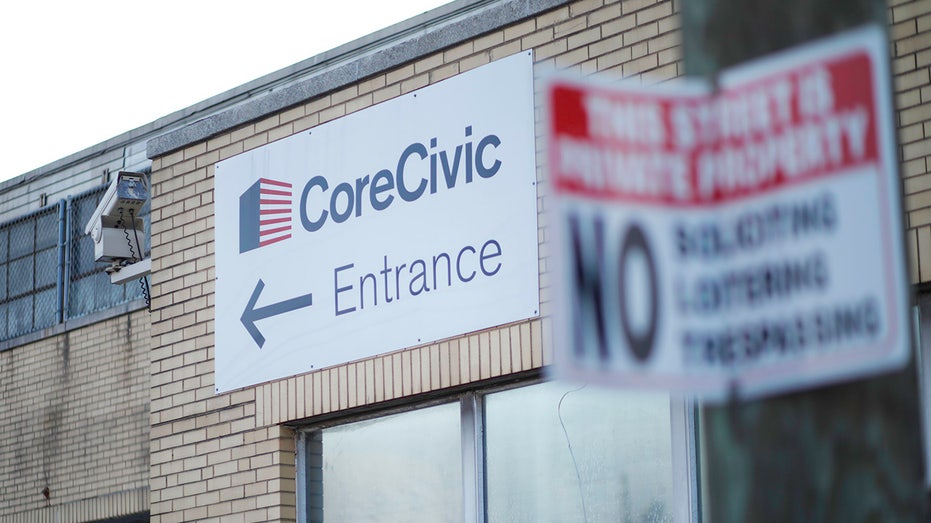
The use of detention centers for immigrants without legal authorization has long been a contentious aspect of U.S. immigration policy. Starting in the 1980s and expanding dramatically after 9/11, mandatory detention policies became central to the federal government's efforts to deter unauthorized entry and remove undocumented immigrants with criminal records. Over time, the rise of privately operated detention facilities added another dimension—introducing profit motives into a highly sensitive domain.
Under both Republican and Democratic administrations, ICE detention practices have been subject to criticism for overcrowding, insufficient medical care, and questionable legal standards—though data show variation across time and administrations. The Obama administration, for instance, increased detention numbers while also imposing certain oversight measures. Conversely, the Trump era saw aggressive enforcement paired with publicized humanitarian crises in detention centers, galvanizing progressive opposition. Now, the Dignity bill aims explicitly to reverse decades of enforcement-centric detention policies and privatization trends, advocating for decarceration and enhanced oversight.
What This Really Means: Reimagining Immigration Control and Human Rights
At its core, the bill proposes to eliminate mandatory detention for most detainees, create presumptions for release—especially for vulnerable groups—and phase out private detention centers by 2029. This represents not just operational reform but a philosophical shift from securitization to a dignity-first framework within immigration policy. Advocates emphasize the transformative potential to reduce wrongful detentions affecting individuals without criminal convictions, as well as to improve living conditions and access to care.
However, opponents warn that such reforms could eviscerate ICE’s enforcement capability, potentially undermining immigration law’s deterrent function and border security. The Day 1 Alliance, representing contractors, asserts the bill would effectively strip the government of meaningful tools to detain and deport unauthorized immigrants, framing it as a de facto abolition of ICE’s core functions.
This tension reveals a broader societal debate: how to balance national security and the rule of law with human rights and civil liberties in an increasingly polarized political environment. The bill also rekindles controversy over private contractors’ role in the justice system—highlighting whether profit incentives can ever align with humane detention.
Expert Perspectives
Jessica Vaughan, Director of Policy Studies at the Center for Immigration Studies, argues that "the bill dangerously undermines immigration enforcement by limiting detention tools necessary to manage custody effectively and prevent flight risk."
In contrast, Sophia Alvarez, a Human Rights Watch researcher specializing in immigration detention, sees the bill as "a crucial step toward dismantling systemic abuses that have plagued detention centers. Its emphasis on dignity and oversight could set a precedent for humane immigration policies worldwide."
Dr. Michael Jacobson, a criminologist who studies privatization in corrections, notes: "The growing privatization of detention centers has introduced conflicts between profit and welfare. Phasing out private facilities aligns with research showing improved conditions under public management."
Data & Evidence: What the Numbers Reveal
Since the Trump administration intensified interior enforcement, over 66,000 people have been detained—a figure cited by Rep. Jayapal—with nearly 75% lacking criminal convictions related to detention. Critics challenge these statistics, questioning data collection methods and definitions of "criminal convictions." According to the Department of Homeland Security, ICE detention deaths remain below 1%, purportedly better than many U.S. prisons.
Data on private detention centers reveal mixed outcomes: some studies document worse conditions and less accountability compared to government-run facilities; others point to logistical capacity and cost efficiency. Yet, the private detention industry has grown from near nonexistence in the 1990s to housing over half of ICE detainees currently—highlighting the scale of what reform would entail.
Looking Ahead: Potential Future Implications and Challenges
If enacted, the Dignity act could accelerate a nationwide move toward decarceration in immigration policy, leading to fewer detainees and a heavier reliance on alternatives such as supervised release programs, electronic monitoring, or expanded legal support. This may also reshape federal budget priorities, redirecting funds from detention infrastructure toward community-based services.
It will, however, likely face formidable opposition in the Senate and from law enforcement stakeholders advocating for stringent border and interior enforcement. Legal challenges could emerge concerning separation of powers and the executive branch’s role in immigration enforcement. Additionally, implementation logistics—particularly the phase-out of private detention centers—would require substantial oversight to prevent unintended security gaps.
How the bill’s successful passage or failure plays out will also significantly influence upcoming electoral politics, potentially mobilizing constituencies on both sides of the immigration debate. The evolving political landscape in border states and urban centers targeted in enforcement activities will be critical to watch.
The Bottom Line
The Dignity for Detained Immigrants Act encapsulates a bold vision to redefine U.S. immigration enforcement by centering human dignity and civil rights over traditional detention paradigms. Its historical context places it in the continuum of shifting U.S. immigration policy approaches, oscillating between security imperatives and humanitarian concerns. While it promises a substantial overhaul of enforcement, detention, and privatization practices, it also raises fundamental questions about balancing national security, law enforcement, and immigrant rights in an increasingly divided polity.
Ultimately, this legislation may signal the beginning of a paradigm shift that could ripple beyond immigration, influencing how the U.S. addresses incarceration, privatization, and human dignity in the justice system at large.
Topics
Editor's Comments
This bill crystallizes the deep fissures in America’s immigration debate, where issues of security are often pitched against fundamental human rights. While critics fear enforcement erosion, the bill’s push to challenge mandatory detention and privatization exposes long-standing systemic problems that have been obscured by partisan rhetoric. It raises urgent questions about the future direction of immigration policy: Will the U.S. double down on punitive measures, or will it embrace a new framework balancing security with dignity and due process? Moreover, the bill's impact goes beyond immigration, forcing reflection on how the state manages confinement, privatization, and oversight in our justice system. The coming months will reveal whether this act is a harbinger of reform or an unattainable ideal in a deeply divided political environment.
Like this article? Share it with your friends!
If you find this article interesting, feel free to share it with your friends!
Thank you for your support! Sharing is the greatest encouragement for us.