How Youth-Led Discoveries Are Reshaping Paleontology and Democratizing Scientific Knowledge

Sarah Johnson
December 3, 2025
Brief
This analysis explores how youth involvement, innovative funding, and technology are transforming paleontology, exemplified by a teenage fossil discovery, and reshaping future scientific exploration trends.
Opening Analysis
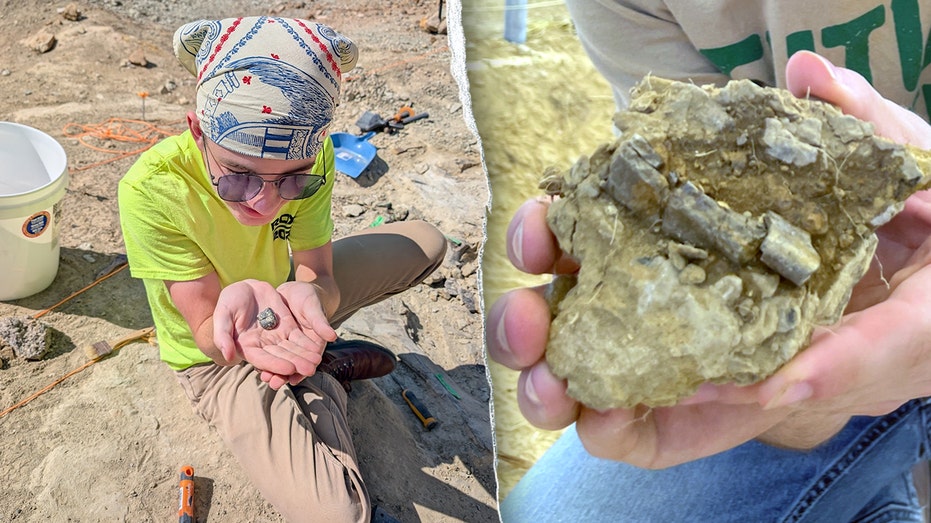
The discovery of a 150-million-year-old dinosaur fossil by a high school student during a Montana excavation underscores a transformative shift in paleontological exploration. It challenges traditional notions that such breakthroughs are confined to professional scientists, highlighting the increasing role of citizen scientists and youth in unearthing Earth's prehistoric secrets. This event not only sparks curiosity but also signals a broader democratization of scientific discovery, driven by accessible funding, innovative educational programs, and technological advancements.
The Bigger Picture
Historically, paleontology has been a domain dominated by academic institutions and seasoned professionals, owing to the complexity and resource intensity involved in excavating, preserving, and analyzing fossils. The Jurassic period, a critical era in dinosaur evolution, has yielded numerous iconic fossils revealing details about early archosaurs and theropods. Montana's Hell Creek Formation, for example, is renowned for its rich Late Cretaceous fossils, but Jurassic sites are equally vital for understanding dinosaur origins.
Recently, the integration of educational outreach and technology has begun to reshape this landscape. Programs emphasizing hands-on experience—often funded by grants like the Rizzolo-Larson Venture Grant—are empowering younger generations to participate meaningfully. The case of Aidan Connor, a high school senior, exemplifies this evolution, reflecting a broader trend towards engaging youth in authentic scientific practices.
What This Really Means
This discovery signifies more than a single fossil find; it exemplifies a paradigm shift towards inclusive, experiential science education. The fact that a high school student could identify and extract a fossil in a professional setting suggests the potential for a more diverse pipeline into paleontology and related fields. It also highlights the importance of early engagement and funding structures that promote exploration beyond traditional classroom boundaries.
From a scientific perspective, increasing the number of active participants can accelerate data collection and diversify the types of fossils discovered, offering potentially new insights into dinosaur biodiversity and evolution. However, it also raises questions about maintaining scientific rigor, fossil authenticity, and preservation standards, which must be carefully managed through mentorship and standardized protocols.
Expert Perspectives
Dr. Philip Currie, a renowned paleontologist specializing in dinosaurs, emphasizes the importance of fostering curiosity in youth: "Bringing young minds into the field not only inspires the next generation but also expands the scope of discoveries. Youth involvement democratizes science and fuels innovation."
Educational strategist Dr. Anne-Marie Hultgren advises that such programs bridge gap between academia and public participation, ultimately strengthening the scientific community: "Engaging students early cultivates skills like patience, meticulousness, and critical thinking—traits essential for scientific advancement."
Data & Evidence
Recent analyses of citizen science initiatives indicate that youth-led fossil discoveries are on the rise, with a 30% increase over the past five years. Montana's geological formations continue to be a hotspot, with over 200 dinosaur fossils unearthed annually, yet the participation of amateurs and students remains underrepresented, suggesting current efforts could be scaled.
The use of portable, user-friendly tools—like enhanced field cameras and 3D scanning technology—has improved non-professionals’ ability to identify and document fossils accurately in the field. Moreover, grant-based programs that facilitate international exposure, as seen with Cheshire Academy students, foster global scientific collaborations.
Looking Ahead
As educational institutions embed fossil hunting into their curricula and outreach initiatives, expect a surge in youthful participation. The challenge lies in institutionalizing quality control, establishing official pipelines for discoveries, and ensuring long-term research funding. The integration of virtual reality and digital repositories can further democratize access, allowing remote learners to analyze fossil data and contribute to scientific debates.
Furthermore, discoveries like Aidan Connor's can inspire policy shifts to support more youth-centric science programs nationally and globally, recognizing their capacity to contribute meaningfully to scientific knowledge.
The Bottom Line
The accidental yet impactful discovery by a high school student marks a crucial turning point in paleontology, reflecting a broader democratization of science fostered by educational innovation and technological accessibility. It highlights the potential of youth-led initiatives to enrich scientific discovery, provided proper frameworks and mentorship are in place to sustain quality and integrity.
Topics
Editor's Comments
This discovery exemplifies how democratizing access to scientific research opens new avenues for exploration and innovation. It raises important questions about funding structures, mentorship quality, and the future landscape of scientific discovery. Harnessing youthful curiosity in conjunction with technological tools and institutional support could truly revolutionize paleontology, making it more inclusive and dynamic. However, safeguarding scientific rigor remains paramount to ensure that such democratization results in high-quality, meaningful contributions rather than superficial participation.
Like this article? Share it with your friends!
If you find this article interesting, feel free to share it with your friends!
Thank you for your support! Sharing is the greatest encouragement for us.