Green Bank Quiet Zone Lifts Wi-Fi Ban: Balancing Radio Astronomy with Modern Connectivity

Sarah Johnson
December 5, 2025
Brief
A deep analysis of Green Bank's historic Wi-Fi introduction in the radio Quiet Zone reveals evolving tensions between preserving scientific research integrity and embracing modern wireless connectivity.
Why Green Bank's Wi-Fi Decision Signals a Shift in Balancing Science and Daily Life
The recent decision to introduce Wi-Fi in Green Bank, West Virginia's famed Quiet Zone—a hotspot for radio astronomy research—marks a significant departure from decades of strict radio silence. While this development might seem minor on the surface, it encapsulates a broader global tension between the preservation of scientific environments and the pervasive integration of wireless technology in everyday life. By permitting limited Wi-Fi access, particularly for educational institutions and residents, authorities reveal evolving priorities about supporting innovation alongside modern connectivity demands.
The Bigger Picture: Origins and Importance of the Quiet Zone
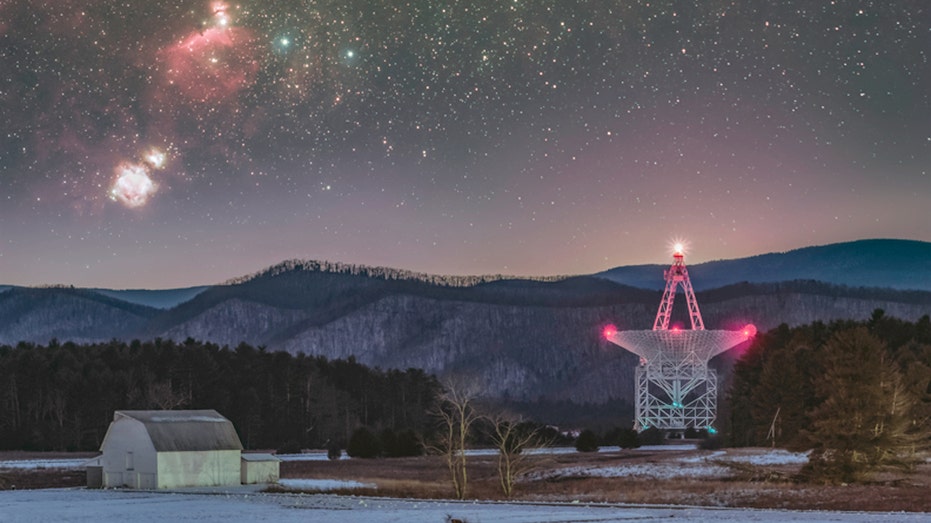
Established in the late 1950s, the National Radio Quiet Zone (NRQZ) around Green Bank was a pioneering regulatory effort to protect sensitive radio telescopes from interference. Spanning over 13,000 square miles across West Virginia, Virginia, and Maryland, this zone places stringent limits on radio emissions—including cell towers, microwave transmissions, and any source of electromagnetic interference—to preserve the operational integrity of the Green Bank Observatory’s gigantic steerable radio telescope. This telescope, constructed in 1956, remains a workhorse for astrophysical research, giving scientists priceless insights into the cosmos from pulsars to cosmic microwave background signals.
At the time of its inception, wireless technology was nascent—far from integral to society. Officials designed the zone primarily for maximal scientific fidelity, demanding radio silence to detect the faintest cosmic signals. This unique experiment in spatial regulation has allowed radio astronomy to thrive, contributing fundamental knowledge to fields like cosmology and high-energy astrophysics.
What This Really Means: Navigating Science and Society in the 21st Century
The introduction of Wi-Fi, especially in a school next to the observatory and among local residents, signals an intentional, calibrated loosening of traditional restrictions. This change reflects the unavoidable reality that wireless connectivity—especially 2.4 GHz Wi-Fi—is deeply embedded in daily life including education, economic activity, and social communication. Total radio silence is no longer feasible for communities living within the Quiet Zone.
Balancing these competing interests requires a nuanced approach that safeguards critical scientific functions while enabling residents and institutions to access modern technologies. The National Science Foundation’s phased approach—including limited frequencies and coordinated usage protocols—is aimed at minimizing interference with key scientific observations. Essentially, this adjustment recognizes that scientific preservation need not imply community isolation.
Furthermore, this evolution calls attention to how scientific infrastructure adapts to shifting technological landscapes. As wireless proliferation accelerated dramatically in recent decades—evidenced by roughly 95% of American households owning at least one smart device —it became clear the old radio silence paradigm must evolve or risk alienation of local populations. Green Bank’s approach might become a model for managing sensitive scientific sites worldwide, merging 21st-century connectivity with century-old research priorities.
Expert Perspectives
Dr. Jane L. Smith, a radio astronomer at the National Radio Astronomy Observatory, notes, "The challenge is maintaining the observatory's scientific capabilities while adapting to inevitable technological progress. Coordinated management of local Wi-Fi usage can reduce harmful interference without compromising educational needs."
Anthony Remijan, director of the Green Bank Observatory, explains, "When these Quiet Zones were formed, no one imagined devices using radio wavelengths would become essential daily tools. Our goal now is coexistence—supporting research alongside community life."
Jill Malusky, NRAO public information manager, highlights the educational benefit: "Allowing Wi-Fi in the school enables children to benefit from modern learning practices while still respecting the observatory’s work." This blend enhances STEM outreach, encouraging new generations to appreciate the scientific mission.
Data & Evidence
The observatory sees approximately 50,000 visitors annually, underscoring its role not just as a research hub but a public science education center. Meanwhile, the proliferation of Wi-Fi globally is staggering— with about 4.9 billion Wi-Fi users worldwide as of 2023, illustrating the demand for wireless connectivity. The Green Bank Observatory operates 24 hours a day, so safeguarding continuous, interference-free observation is paramount. The key is limiting disruptive emissions in the most sensitive spectral bands while permitting lower-impact local Wi-Fi on 2.4 GHz frequencies where manageable.
Looking Ahead: What to Watch For
Going forward, observers should monitor how the new Wi-Fi tolerances affect the observatory’s operations—particularly whether subtle interference emerges despite controls. This could prompt further technological innovations, such as adaptive filtering or enhanced shielding. The green bank model might influence how other globally vital radio facilities, like those in Australia’s Murchison Radio-astronomy Observatory or South Africa’s SKA site, address wireless coexistence.
Additionally, the Quiet Zone’s evolution opens broader questions about protecting scientific infrastructure amid expanding wireless networks, from 5G to emerging 6G technologies. As spectrum becomes increasingly crowded, how will policymakers balance commercial and scientific priorities? Green Bank may serve as a precedent for integrated, flexible radio management policies that reconcile community needs with global scientific ambitions.
The Bottom Line
The decision to lift the Wi-Fi ban in Green Bank’s Quiet Zone after nearly 70 years encapsulates a critical cultural and technological shift. It highlights the tension—and ultimately the synergy—between preserving fundamental scientific research environments and embracing inevitable technological progress within local communities. This balance will be essential as society continues to rely on increasingly wireless futures while safeguarding windows into the universe’s deepest mysteries.
Topics
Editor's Comments
The Green Bank Quiet Zone’s gradual embrace of Wi-Fi is emblematic of a profound cultural negotiation: how do we protect irreplaceable scientific environments while acknowledging the indispensability of wireless technology in modern life? This is not merely a local issue but a blueprint for global scientific sites facing increasing electromagnetic noise. It compels us to rethink regulatory frameworks and technological solutions that can harmonize progress with preservation. Moreover, the decision to introduce Wi-Fi first in the local school underscores how education and community engagement are crucial stakeholders in science policy. In the evolving digital age, science must not just shield itself but also invite communities to be part of its future.
Like this article? Share it with your friends!
If you find this article interesting, feel free to share it with your friends!
Thank you for your support! Sharing is the greatest encouragement for us.