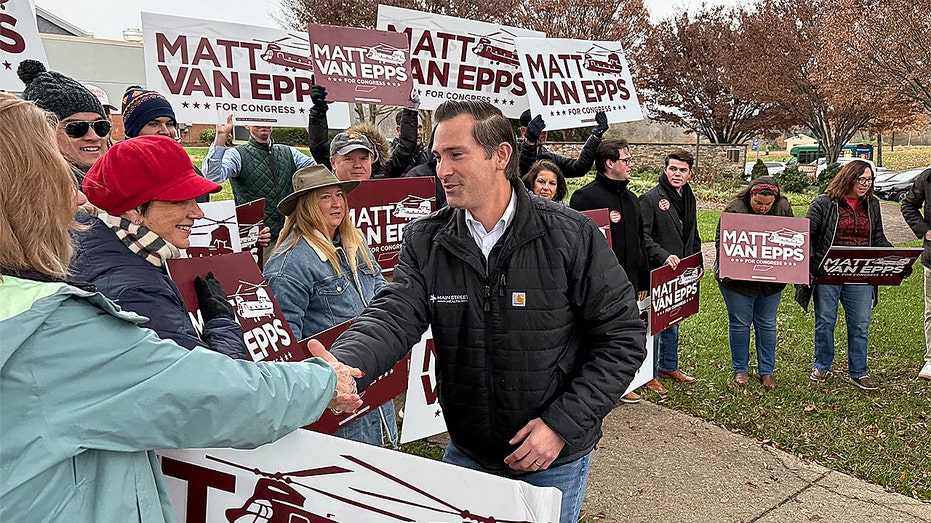

Tennessee’s Crucial GOP Special Election: A Bellwether for National Political Shifts

Sarah Johnson
December 3, 2025
Brief
An in-depth analysis of Tennessee's 7th District special election reveals its significance as a bellwether for GOP resilience, progressive outreach in the South, and the future trajectory of U.S. midterms.
Opening Analysis
The special election for Tennessee's 7th Congressional District unfolds as more than a local contest; it has become a microcosm of the national political battleground, reflecting shifting dynamics within both Republican and Democratic parties as well as voter realignment patterns in the American South. With Republicans narrowly holding the House majority, this race carries outsized weight, serving as a key litmus test for the GOP's ability to maintain its traditional strongholds amid a resurgent Democratic energy. The intense involvement of national figures, massive outside spending, and vivid contrasts in candidate profiles indicate that the outcome will echo well beyond Tennessee’s borders, signaling trends that could reshape the 2026 midterms and beyond.
The Bigger Picture
The Tennessee 7th District, encompassing parts of central and western Tennessee and extending from Kentucky to Alabama, has been a Republican bastion for decades. The district’s conservative identity was cemented through the 1990s and 2000s realignment when Southern states increasingly shifted from Democratic to Republican control in federal elections. Mark Green’s comfortable 20-point victories in 2022 and 2024 mirrored the entrenched GOP dominance.
However, this race occurs amid more complex undercurrents. Historically, special elections in deeply red districts often suffer from low turnouts and presumed GOP wins—yet this contest is defying expectations by energizing Democrats and attracting significant national attention. The Democratic nominee, Aftyn Behn, embraces a progressive, grassroots platform reminiscent of national figures like Alexandria Ocasio-Cortez, challenging assumptions about the political homogeneity of the region. Meanwhile, Republican Matt Van Epps, backed by Donald Trump and key GOP establishment figures, highlights the party’s internal strategy to mobilize voters who might skip midterms absent Trump’s direct presence.
What This Really Means
The implications of this election extend far beyond the immediate seat. First, it reveals fractures and potential shifts in voter coalitions nationwide. The Democrats’ ability to mobilize a strong progressive candidate in a district Trump won by 22 points signals demographic and ideological changes, particularly among younger and suburban voters who are increasingly open to progressive ideas even in conservative regions.
Second, the Republicans’ vigorous mobilization efforts underscore anxiety within the GOP about maintaining a razor-thin majority in a politically volatile climate. Speaker Mike Johnson’s hands-on campaigning and direct involvement of Trump speak to fears that complacency—even in safe districts—could cost the party control in the House. This reflects broader tensions within the GOP between Trump-aligned factions and traditional conservatives as they navigate how best to retain power.
Additionally, the enormous financial influx from both parties and outside groups underlines the race’s symbolic power as a bellwether for 2026. Success or failure here will likely influence donor confidence, candidate recruitment, and strategic decisions for races nationwide. It also spotlights the continuing nationalization of local elections, where local issues are often subsumed by ideological battles between major party coalitions.
Expert Perspectives
- Dr. Lisa Reynolds, political scientist at Vanderbilt University: "This special election encapsulates the growing complexity of Southern electoral politics. While the GOP still dominates, Democrats are making inroads by focusing on grassroots organizing and progressive messaging tailored to local concerns, signaling a potential realignment in some suburban and exurban areas."
- David Axelrod, senior political analyst: "The Republicans’ emphasis on turnout efforts, especially among Trump voters who often sit out off-year elections, highlights how fragile their House majority is. This race is less about Tennessee and more about the survival of a narrow governing coalition nationally."
- Dr. Anita Kumar, expert on campaigns and elections: "Massive spending by national committees and surrogates transforms what would otherwise be a routine political replacement into a high-drama testing ground for party strategies—particularly the effectiveness of progressive candidates in red districts, and the GOP’s reliance on Trump-centered enthusiasm."
Data & Evidence
The district gave Trump a 22-point lead in 2024, while GOP incumbent Mark Green won recent congressional elections by over 20 points, confirming its strong Republican tilt. Yet recent polling and early voting data indicated a tightening race this cycle. The unprecedented surge in campaign spending—estimated in the millions from both the DNC and RNC—reflects growing concern about voter volatility. Turnout figures from comparable special elections suggest that low-propensity voters, particularly among Trump’s base, are pivotal; mobilizing them could swing results despite broader demographic shifts.
Notably, the national enthusiasm following the 2024 election cycle for more progressive Southern candidates has seen a doubling of Democratic registrations in certain district precincts, according to Tennessee state election data. Conversely, GOP organizers point to early voting gains as evidence of solid Republican enthusiasm when combined with direct visits by figures like Speaker Johnson and Trump himself.
Looking Ahead
The outcome here will set a precedent that could influence strategic calculations by both major parties ahead of the 2026 midterms. If Van Epps wins decisively, it will embolden the GOP to lean on strong local ties coupled with Trump-era turnout efforts as the formula for holding the House. But if Behn narrows the margin or pulls off an upset, it could catalyze a broader Democratic push to expand competitive zones deep into traditional red areas, challenging the notion that the South is a monolith.
Moreover, the race will inform candidate selection strategies nationwide about the viability of progressive platforms in conservative regions and the importance of grassroots engagement. It could accelerate national efforts to tailor messages more closely to local electorates.
Finally, this contest shines a spotlight on the fragility of low-turnout elections and the pivotal role of voter enthusiasm—reminding political operatives that complacency, even in ‘safe’ districts, invites unexpected volatility.
The Bottom Line
The Tennessee 7th Congressional District special election represents a strategic crucible for American politics—where deep-rooted conservative dominance, emergent progressive activism, party survival instincts, and nationalized election dynamics converge. Beyond mere vote counts, it signals how demographic, ideological, and organizational shifts could redefine both parties' futures, shaping control over Congress and the country’s political trajectory in the years to come.
Topics
Editor's Comments
This Tennessee special election is a fascinating case study in the evolving nature of American political warfare. The entrenched Republican dominance faces a genuine challenge not just from Democratic opposition, but from changing demographics, ideological shifts, and strategic campaigning aligned with national narratives. What's most compelling is the election’s ability to reveal cracks in both parties’ assumptions: Republicans cannot take red districts for granted, and Democrats see opportunities where once there were barriers. As such, while the race itself might appear localized, its lessons and consequences will echo through future electoral battles. Observers should keep a close eye on turnout patterns and the effectiveness of grassroots mobilization, as these will provide critical clues about the stability of partisan coalitions moving forward.
Like this article? Share it with your friends!
If you find this article interesting, feel free to share it with your friends!
Thank you for your support! Sharing is the greatest encouragement for us.