
The Tennessee 'Waltz': Decoding the Political Dance Behind the 2025 Special Election Results

Sarah Johnson
December 4, 2025
Brief
An in-depth analysis of Tennessee's special election reveals the nuanced interplay of redistricting, voter behavior, and party strategy shaping the 2026 political landscape beyond the headline GOP win.
Why Tennessee’s Special Election Matters More Than It Seems
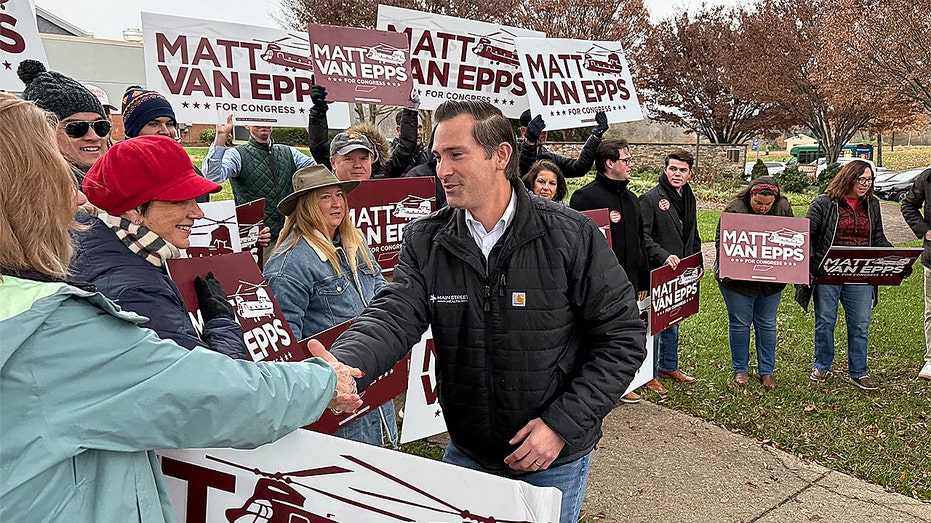
The recent special election in Tennessee's 5th congressional district, where Republican Matt Van Epps defeated Democrat Aftyn Behn by about nine points, may appear at first glance as business as usual for the state’s GOP-leaning seat. However, this outcome is a nuanced indicator that reveals deep currents shaping the political landscape both within Tennessee and nationally. Far from a simple win or loss, this race offers a window into electoral dynamics, party strategies, and the challenge of interpreting special election results as a roadmap to 2026.
The Bigger Picture: Historical Context and Party Fortunes
Historically, special elections are peculiar political creatures—off-cycle contests that often feature low turnout and intense outside spending, making them poor proxies for general elections. Tennessee’s 5th district has been safely Republican for years, particularly after 2010s redistricting fractured Nashville’s urban vote across several GOP districts. The current race is reminiscent of other mid-decade special elections, such as the 2017 contests where Democrats nearly flipped several Republican-held seats but ultimately fell short.
Redistricting here plays a pivotal role. Tennessee Republicans undertook an aggressive approach to redraw district lines that diluted Democratic urban centers—especially Nashville—splitting city voters into multiple GOP-leaning districts. This strategic gerrymandering remains a core reason why Van Epps’ margin aligned closely with expectations, affirming that electoral geography still significantly constrains Democratic advances regardless of candidate appeal.
Analyzing What the Result Really Means
Although Republicans held their ground with the expected margin, the broader question centers on what this says about party enthusiasm, voter behavior, and the durability of the Trump-aligned GOP coalition. Republicans cast this as validation that there is no Democratic wave on the horizon, highlighting the aligned margin with Cook Political Report’s rating. Yet political analysts understand that special elections are snapshots—sometimes noisy and occasionally misleading.
Democrats poured millions into this race and ran a progressive candidate, Aftyn Behn, in a district that leans slightly Republican but remains politically competitive. That strategy raises serious questions about candidate positioning in similar suburban or semi-urban districts. Could a moderate Democrat have narrowed the margin further or even flipped the seat? Comparing to Virginia’s recent success with centrist candidates, it appears Democrats must balance energizing the base with broader electability demands—an enduring internal debate.
Expert Perspectives on Electoral Dynamics
Dr. Elaine Kamarck, Senior Fellow at Brookings Institution, highlights, "Special elections are often more about turnout and targeted mobilization than broad trends. While this result is consistent with past ratings, it shouldn't be taken as a wholesale rejection of Democratic viability, especially with the right candidate in the right district."
Charlie Cook, founder of the Cook Political Report, noted, "When a district is rated at R+10 and the GOP candidate wins by nine, that’s essentially a status quo result. But the real test is how these coalitions hold up in the general midterm environment, where turnout expands and national factors play larger roles."
Data & Evidence: Patterns Beyond the Headlines
The district’s voter composition and past election data underline the structural advantages enjoyed by Republicans. The district voted for President Trump by roughly 22 points in 2024, so a nine-point victory here signals a modest but not dramatic erosion of GOP dominance. Nationally, special election trends from the last two decades show only a handful of true flips in House seats during midterms—and those typically presage shifting tides only if the margins create sustained momentum.
Turnout in Tennessee’s special election was reportedly robust compared to other specials, but still far short of general election participation, underscoring the limits of these contests as direct forecasts. Moreover, the heavy spending by Democrats forced Republicans to allocate major resources, draining campaign coffers and energizing base voters—an expensive dance with strategic consequences for both parties as they look to 2026.
Looking Ahead: Implications for the 2026 Midterms and Beyond
This Tennessee “waltz” foreshadows several key challenges for both parties. For Republicans, maintaining narrow majorities in the House amid internal fracturing and some moderate Republicans contemplating exit strategies creates vulnerability. Issues like healthcare funding, President Trump’s foreign policy stance on Ukraine, and the White House's agenda control weigh on the GOP caucus cohesion.
Democrats face a different dilemma: how to win in moderately red districts shaped by past gerrymandering while managing the ideological diversity within their own ranks. The progressive-centrists tension evident in Behn’s candidacy versus potential moderation reflects broader strategic questions. Successes like Virginia Governor-elect Abigail Spanberger’s centrist approach could offer a blueprint, but replication is far from guaranteed.
Additionally, upcoming special elections in Texas, New Jersey, and Georgia likely won’t shift the partisan balance significantly. Still, they will serve as incremental data points to measure party enthusiasm and organizational strength heading into a challenging midterm cycle. The 2026 landscape remains fluid—this Tennessee result neither guarantees GOP dominance nor Democratic resurgence but highlights persistent structural constraints and contested political narratives.
The Bottom Line
The Tennessee special election is less a bellwether than a reminder of the limitations and complexities special elections inherently possess. It underscores how redistricting continues to cement strategic advantages. Yet it also reveals nascent pressures inside both parties—Republican concerns over caucus stability and Democratic uncertainty on candidate positioning. Interpreted carefully, the race provides a sober lens for understanding electoral battle lines, voter engagement, and evolving partisan coalitions heading toward the 2026 midterms.
Topics
Editor's Comments
This special election is a textbook example of why politics is rarely straightforward. Both parties spin the results to fit their narratives, but the underlying reality is much more complex. Redistricting heavily shapes outcomes, yet voter sentiment and candidate selection remain game changers. As we approach 2026, the GOP’s narrow hold paired with internal fractures suggests potential vulnerability, while Democrats must grapple with ideological balancing acts to expand their reach. The Tennessee race highlights that the dance of U.S. politics involves choreography and improvisation—and that each election is but a moment in a longer, unfolding performance.
Like this article? Share it with your friends!
If you find this article interesting, feel free to share it with your friends!
Thank you for your support! Sharing is the greatest encouragement for us.