
Why The Supreme Court’s Review of Trump’s U.S. Attorney Appointments Matters for Executive Power and the Rule of Law

Sarah Johnson
December 3, 2025
Brief
An in-depth analysis of the Supreme Court's pivotal role in the battle over interim U.S. attorney appointments, revealing broader implications for executive power, Senate traditions, and judicial influence.
Opening Analysis
The recent judicial invalidation of the interim appointments of U.S. Attorneys Alina Habba and Lindsey Halligan highlights a profound institutional tug-of-war over executive appointment powers, Senate confirmation traditions, and the role of federal courts. At its core, this controversy reveals evolving tensions in the balance of power between the Presidency, the Senate, and the judiciary—a dynamic that has long-lasting implications for the functionality of the federal prosecutorial system and the enforcement of law across politically polarized states.
The Bigger Picture
The United States' appointment of U.S. attorneys operates under a complex framework set forth by the Constitution and statutory law, coupled with longstanding Senate customs. Historically, the "blue slip" tradition dates back more than a century and grants home-state senators extraordinary influence, effectively vetoing nominees from their states by withholding endorsement. This informal practice—though not mandated by law—has been a potent tool in Senate confirmations, often resulting in political gridlock when senators and the executive branch diverge along partisan lines.
More formally, 28 U.S.C. § 546 authorizes a U.S. Attorney General to appoint interim U.S. attorneys for 120 days. If the Senate fails to confirm a nominee within that time, a district court may appoint a U.S. attorney to serve until a permanent one is confirmed. This tripartite arrangement was designed to ensure continuity of federal law enforcement, but it also reflects a delicate balance: the executive nominates, the Senate confirms, and courts provide a limited fallback mechanism.
During President Trump's tenure, these appointment powers became flashpoints due to resistance from Senate Democrats, particularly in states with Democratic senators unwilling to return blue slips for Trump's nominees. The appointments of Habba and Halligan, made under the interim 120-day provision by then-Attorney General Pam Bondi, circumvented the Senate's blocked confirmations, triggering legal challenges that reached district courts. These courts sided against the executive appointments, reasoning that the Constitution’s Appointments Clause and statutory interpretation restrict interim appointments and vest selection authority in district judges after the 120-day period.
What This Really Means
This dispute signals a growing judicial reinterpretation of executive appointment authority that may hamper presidential control over federal law enforcement appointments, especially when Senate confirmation is blocked by partisan opposition. Courts invalidating these interim appointments effectively shift appointment power toward the judiciary in certain districts—an unprecedented encroachment on the executive’s traditional prerogatives.
At stake is the separation of powers in a polarized political environment. The executive branch relies on U.S. attorneys to enforce federal law consistent with administration priorities. When those appointments are stalled or reversed by courts, it risks creating a patchwork of politically influenced prosecutorial leadership, undermining both accountability and uniformity of federal law enforcement.
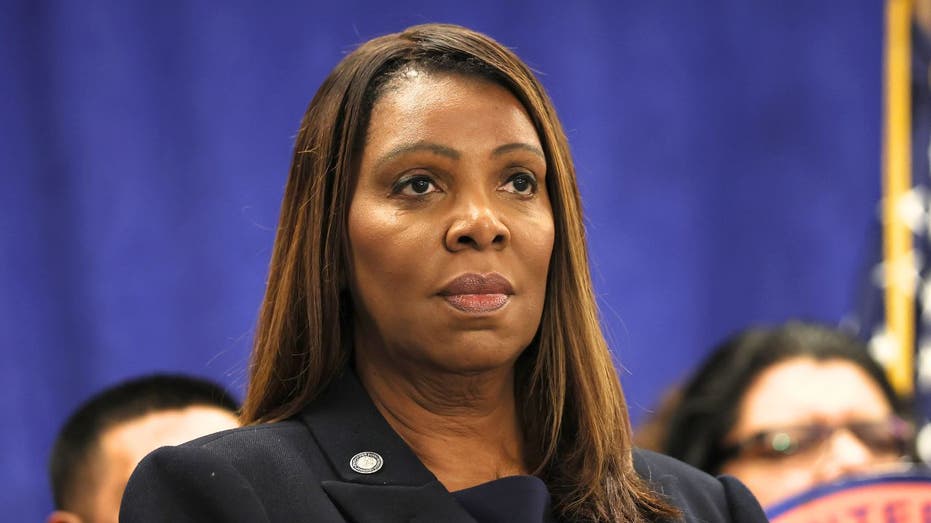
Moreover, this development has practical consequences for significant investigations and prosecutions. Lindsey Halligan’s office, for example, initiated indictments against figures such as New York AG Letitia James and former FBI Director James Comey related to high-profile political controversies. Judicial invalidation of Halligan’s appointment casts doubt on these prosecutions' legitimacy, potentially stalling or nullifying efforts to hold powerful actors accountable.
Finally, this conflict exposes how the blue slip tradition—though informal—has evolved into a de facto barrier for the executive branch that courts may increasingly uphold, even if it conflicts with constitutional principles. The courts’ rigid interpretation of the 120-day statutory timeline does not align with decades of precedent under both Democratic and Republican administrations, revealing that judicial philosophy and ideology may influence statutory construction more than historical practice.
Expert Perspectives
- Professor Neal Devins (Law, William & Mary): "The blue slip tradition represents a unique Senate prerogative that intersects awkwardly with executive appointment powers. The courts stepping in to effectively enforce this blocking mechanism raises serious separation of powers questions, particularly when the executive’s ability to propose functioning nominees is thwarted indefinitely."
- Professor Abbe Gluck (Yale Law School): "Judicial invalidation of interim appointments disrupts the balance Congress intended with 28 U.S.C. § 546, which allows the executive flexibility in appointments for continuity. This emerging jurisprudence could paralyze prosecutorial operations in politically divided states for extended periods."
- Former U.S. Attorney General Michael Mukasey: "The executive needs operational control of U.S. attorneys to ensure the faithful execution of federal laws. Ceding appointment power to district courts risks politicizing law enforcement and undermining the president’s constitutional role in appointments."
Data & Evidence
Historically, from 1986 to 2006, successive administrations have exercised the 120-day interim appointment power repeatedly without controversy. The current judicial pushback represents a departure from this multi-decade consensus.
Attorney General Pam Bondi and her legal team reportedly have achieved over a 90% success rate at the Supreme Court defending Trump administration policies, signaling strong legal advocacy despite lower court setbacks.
Politically, the states involved—New Jersey and Virginia—are represented by Democratic senators (Booker, Kim, Kaine, Warner) who have consistently withheld blue slips for Trump nominees, illustrating partisan stakes in the dispute.
Looking Ahead
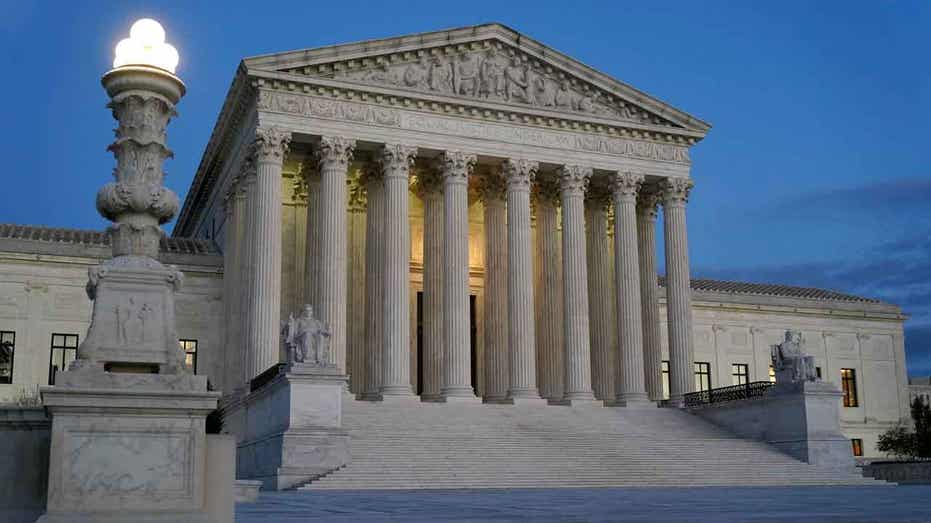
The Supreme Court’s impending review of these cases could set a critical precedent reaffirming or recalibrating executive appointment authority over U.S. attorneys. A ruling affirming the executive branch’s ability to make consecutive 120-day interim appointments or invalidating district court power to usurp these choices would restore executive discretion and curb judicial overreach.
Alternatively, a ruling upholding the courts’ restrictions could entrench judicial and senatorial gatekeeping, effectively paralyzing federal prosecutorial appointments in certain jurisdictions and complicating enforcement of federal statutes. Such a decision would also ignite broader constitutional debates on separation of powers and Congressional intent.
More broadly, the case underscores how Senate traditions like blue slips, combined with partisan judicial interpretations, may increasingly interlock to constrain presidential appointment power, foreshadowing institutional gridlock in future administrations—whether Trump or successors like potential candidates in upcoming elections.
The Bottom Line
This dispute is emblematic of deeper constitutional, legislative, and political frictions that define contemporary governance. The balance of appointment power between the President, Senate, and judiciary remains unsettled and contested terrain, with significant implications for the administration of justice, executive functionality, and the rule of law in a polarized political landscape.
The Supreme Court’s forthcoming decision will be a bellwether for the durability of executive appointment mechanisms and the future trajectory of federal prosecutorial independence.
Topics
Editor's Comments
This appointment controversy encapsulates the escalating friction between branches of government in the current polarized political climate. The blue slip tradition, once a modest Senate courtesy, has become a powerful partisan gatekeeping tool. Coupled with recent judicial activism, it threatens to erode the executive's constitutionally vested appointment power. The courts’ refusal to acknowledge decades of precedent represents a new front in institutional contestation. Beyond legal formalities, the stakes are practical and profound: who controls the levers of federal law enforcement can profoundly impact policy implementation, political accountability, and public trust. The Supreme Court’s forthcoming decision will not just resolve individual appointments; it will clarify how resilient our constitutional checks and balances are amid intensifying political deadlock.
Like this article? Share it with your friends!
If you find this article interesting, feel free to share it with your friends!
Thank you for your support! Sharing is the greatest encouragement for us.