The Safest Seat on the Plane Is Only Part of the Story: How Air Travel Quietly Shapes Your Infection Risk

Sarah Johnson
December 13, 2025
Brief
Choosing a window seat away from the bathroom can cut in-flight infection risk, but the deeper story is how air travel pushes public-health burdens onto individual passengers instead of fixing systemic issues.
Why Your Airplane Seat Choice Is Now a Public-Health Question
On the surface, the debate over the “healthiest” airplane seat sounds like another lifestyle tip for anxious holiday travelers. But beneath the click-friendly advice about choosing a window seat away from the bathroom lies a deeper story about how we understand airborne disease, how airlines design cabins, and how individual behavior has been turned into a frontline defense in global public health.
From ‘Dirty Tray Tables’ to ‘It’s in the Air’
For years, travel hygiene advice obsessed over surfaces: wipe down your tray table, avoid touching the armrest, carry disinfectant wipes. The expert in this story, Dr. Neha Pathak, flips that emphasis: for flu and COVID, it’s mostly about what you breathe, not what you touch. That shift mirrors a major scientific and institutional pivot that played out, often painfully, during the COVID-19 pandemic.
Until 2020, official guidance from many health agencies leaned heavily on droplet and surface transmission — a framework rooted in early 20th-century science. The pandemic forced a reckoning. By 2021, a broad scientific consensus had emerged that SARS-CoV-2 is primarily airborne, traveling in aerosols that can linger in the air, especially in poorly ventilated indoor spaces. That realization, pushed by aerosol scientists like Dr. Lidia Morawska and Dr. Jose-Luis Jimenez, transformed how we think about risk in places like airplanes.
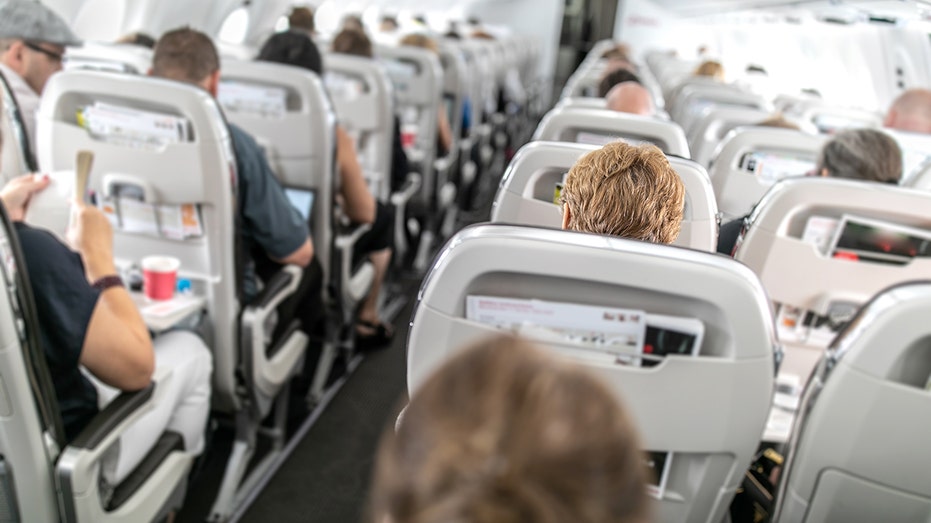
Airplanes, ironically, have become a case study in how engineering and behavior intersect. Modern commercial aircraft use HEPA filtration and high air-exchange rates — around 20 to 30 air changes per hour in many models, similar to or better than hospital-level ventilation. This helps dilute viral particles. Yet those advantages are offset by people packed shoulder-to-shoulder, exhaling, talking, coughing and standing up for bathrooms.
The result: proximity and duration of exposure matter more than whether your tray table was wiped down. That’s the logic behind Pathak’s recommendation: a window seat, away from the bathroom, limits how many people pass close by your face and how often you’re forced into close contact.
What the Data Actually Says About Seats and Sickness
Seat-based transmission risk isn’t just a hunch. One of the most important pre-COVID studies on in-flight infection was a 2018 paper in Proceedings of the National Academy of Sciences led by Dr. Vicki Stover Hertzberg and colleagues. They tracked passenger and crew movement on 10 transcontinental U.S. flights and modeled how a respiratory virus might spread.
Their key findings:
- Passengers seated within one row and within two seats of an infectious person had the highest probability of infection.
- Passengers in window seats had significantly fewer close contacts with others, largely because they left their seats less and had less aisle exposure.
- Aisle seats and seats near bathrooms saw more passersby and more interactions.
This aligns directly with Pathak’s advice: you reduce risk by limiting movement and limiting how many people come within the 1–2 meter zone in front of your face. A window seat naturally acts like a behavioral nudge — you’re less likely to get up, and fewer people can brush past you.
But the story is more nuanced. Seat choice is one variable in a stack of risk modifiers that include:
- Flight duration: A three-hour flight with one nearby infectious person can be higher risk than a one-hour flight with several infectious people further away.
- Masking behavior: One well-fitted high-filtration mask (N95/FFP2/KN95) can substantially reduce risk even in a suboptimal seat.
- Cabin ventilation and filtration: Newer aircraft and attentive airline maintenance improve air quality, while delays on the tarmac with ventilation systems off can increase exposure.
- Passenger behavior: Eating, talking loudly, and moving around amplify risk beyond what the seat alone would predict.
Surface Fears vs. the Reality of Norovirus and ‘Stomach Bugs’
Pathak’s distinction between respiratory viruses (flu, COVID) and the “classic stomach bug” is critical — and often neglected in mainstream coverage. While we’ve shifted away from obsessing over surfaces for respiratory infection, there is one major class of pathogens where surfaces still matter enormously: norovirus and other causes of viral gastroenteritis.
Norovirus is notorious in cruise ships and nursing homes for a reason. It is incredibly hardy: it can persist on surfaces for days or even weeks, withstand many common cleaning agents, and requires only a tiny infectious dose (as few as 18 viral particles) to cause illness. Airplane bathrooms and high-touch areas — door handles, latches, seatbelt buckles, tray tables — can become transmission hotspots if a sick passenger has recently used them.
That’s why Pathak, despite emphasizing airborne spread for flu and COVID, still highlights hand hygiene and face-touching as critical. These behaviors are a direct line of defense against norovirus-style infections, which don’t rely primarily on inhalation but on ingesting the virus via contaminated hands and surfaces.
In effect, airplane infection risk splits into two partly overlapping domains:
- Airborne respiratory illnesses: Mitigated by seat choice, masks, ventilation, and reducing close contact.
- Fecal-oral and surface-resilient pathogens: Mitigated by rigorous handwashing, avoiding touching the face, and being cautious with shared surfaces, especially in bathrooms.
The Hidden Politics of Personal Responsibility in the Air
Advice like “choose a window seat,” “turn on your overhead vent,” and “wear a mask” reflects a broader trend in public health: the shifting of responsibility from systems to individuals. Airlines emphasize HEPA filters and cleaning protocols, but most concrete recommendations pushed to the public involve individual behavior, not structural change.
This raises uncomfortable questions:
- Why do passengers need to choose a window seat for safety instead of airlines redesigning seating and boarding to minimize close contact?
- Why is masking a personal “option” rather than part of a risk-based policy, especially during known seasonal peaks?
- Why are we still boarding planes in ways that funnel people into prolonged, congested, face-to-face queues?
Throughout the pandemic, airlines lobbied aggressively to avoid long-term mandates on capacity and mask enforcement. Their messaging now emphasizes the safety of cabin air, but often glosses over the social dimension of risk: rows packed with unmasked strangers, inconsistent enforcement of sick travel policies, and economic incentives that push people to fly while symptomatic.
The result is a familiar pattern: we are encouraged to optimize our own micro-risk (pick the right seat, wear the right mask, sanitize the right way) in a system that remains structurally optimized for capacity and revenue, not infection prevention.
Overlooked Dimensions: Class, Disability, and Access to ‘Safer’ Seats
Hidden in the “just pick a window seat away from the bathroom” advice is an assumption: that you can afford to choose. Many basic economy tickets restrict seat selection or charge extra for anything but leftover middle seats. Families traveling together, especially with children, may prioritize sitting side-by-side over optimal infection control. People with mobility issues may need aisle access or proximity to bathrooms, precisely those spots with higher contact frequency.
This creates a subtle stratification of infectious risk:
- Travelers with more flexible budgets can pay for window seats, extra legroom, or exit rows with fewer neighbors.
- Low-income travelers and those locked into bare-bones fares often end up in more crowded, higher-contact sections.
- People with disabilities may face impossible trade-offs between accessibility and infection risk.
Public health advice that ignores these constraints risks reinforcing health inequities. It presents “optimal choices” as if they were universally accessible when they are, in practice, rationed by price and policy.
Why Your Overhead Vent Is More Than a Comfort Feature
Pathak’s mention of turning on the overhead air vent points to another under-discussed factor: localized airflow. The adjustable air nozzle above your seat doesn’t just cool you down — it affects how air (and potentially viral particles) move around your face.
Research on this is still emerging, but several engineering studies suggest that directing the vent to blow filtered air downward in front of your face can help create a kind of small, turbulent air curtain, pushing exhaled air away more quickly. While it doesn’t eliminate risk, combined with a good mask it can reduce the concentration of inhaled particles in your immediate breathing zone.
That said, this effect depends on aircraft design, airflow patterns, and passenger behavior. It’s a tool, not a shield — and one more example of how the burden of risk management has been pushed onto individual passengers armed with partial information.
What This Means for the Winter Travel Season
Heading into any winter — especially in years with overlapping waves of flu, RSV, and COVID — holiday air travel is a predictable amplifier for viral spread. Planes themselves are efficient transport systems not just for people, but for pathogens hitching rides between regions, states, and continents.
The most realistic public-health framing isn’t “how to avoid getting sick entirely” but “how to reduce your odds and prevent being part of a larger chain of transmission.” A window seat away from the bathroom is one tactical move within a broader risk budget.
For travelers, that broader strategy looks like:
- Staying up to date on vaccinations (flu, COVID, and others where recommended).
- Masking with a high-filtration mask, especially during boarding, deplaning, and in crowded terminals.
- Choosing a window seat and limiting movement when feasible, especially on longer flights.
- Rigorous handwashing after bathroom use and before eating, with sanitizer as a backup.
- Avoiding travel while acutely ill when possible, and using masks if travel is unavoidable.
For policymakers and airlines, the deeper question is whether they will continue to lean on individual behavior or move toward structural changes: better boarding procedures, improved sick leave and refund policies, dynamic mask or ventilation guidelines during surges, and more transparent air-quality metrics on flights.
The Bottom Line
The “best seat to avoid getting sick” isn’t just a holiday travel tip; it’s a window into how we’ve internalized a new understanding of airborne disease in a world that has largely moved on from COVID restrictions while quietly living with their consequences. A window seat far from the bathroom does offer real advantages: fewer close contacts, less aisle traffic, and lower exposure to contaminated surfaces near high-use lavatories.
But focusing only on seat selection risks turning a systemic public-health challenge into a private consumer choice. The real story is not just where we sit, but how our transportation systems, corporate incentives, and public-health institutions decide whose risk counts — and who is left to fend for themselves at 35,000 feet.
Topics
Editor's Comments
What’s striking about this seemingly simple travel-health tip is how it exposes a tension at the heart of post-pandemic life: we now know much more about airborne disease, yet the infrastructure we move through has barely changed. Airlines promote HEPA filters but rarely discuss how their seating density and boarding practices amplify short-range exposure, where filtration offers limited protection. The burden is placed on travelers to optimize their micro-environments—buying window seats, upgrading cabins, purchasing masks—within a system still optimized primarily for throughput and profit. That dynamic raises uncomfortable equity questions. During winter surges, a family in basic economy has fewer options to protect themselves than a solo business traveler in a premium cabin, even though both inhabit the same infectious ecosystem. Future coverage should probe whether regulators will continue to treat air travel as a private consumer risk or finally acknowledge its public-health externalities and regulate it as such, especially given its role in seeding and accelerating global outbreaks.
Like this article? Share it with your friends!
If you find this article interesting, feel free to share it with your friends!
Thank you for your support! Sharing is the greatest encouragement for us.