
Rabies via Kidney Transplant: A Rare Tragedy That Exposes Hidden Fault Lines in Modern Medicine

Sarah Johnson
December 12, 2025
Brief
A rare rabies death from a transplanted kidney exposes deep vulnerabilities in U.S. donor screening, zoonotic risk, and transplant ethics far beyond the immediate tragedy.
Rabies via Organ Transplant: A One-in-a-Million Tragedy That Exposes Systemic Blind Spots
A Michigan man’s death from rabies after receiving a kidney from an infected donor is being framed as a tragic anomaly. Statistically, that’s true. But rare events often act as stress tests on critical systems. This case exposes deeper vulnerabilities in how the U.S. manages donor screening, emerging infections, and the ethics of risk in life-or-death medicine.
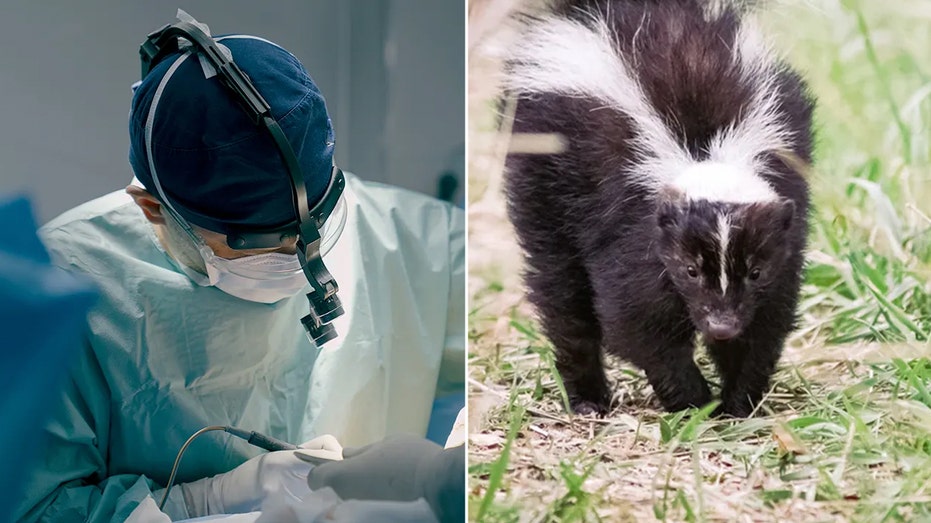
What looks like a freak chain of events — a man in Idaho scratches his shin while protecting a kitten from a skunk, develops undiagnosed rabies, becomes an organ donor, and transmits the virus to a kidney recipient in Ohio — is in fact a revealing case study in how modern healthcare is forced to operate at the edge of uncertainty.
The bigger picture: Rabies, organs, and a system built on triage
Rabies is almost uniquely unforgiving. Once symptoms appear, it is nearly 100% fatal. Yet in the United States, human rabies is exceptionally rare: typically fewer than 10 deaths per year, according to the CDC, largely due to widespread animal vaccination and post-exposure prophylaxis (PEP) for humans.
Historically, organ-transmitted rabies has been even rarer. This case is reportedly the fourth documented organ-transplant–related rabies transmission in the U.S. since 1978. That’s over nearly five decades of modern transplantation. During that same period, tens of thousands of organs have been transplanted annually. Statistically, the risk appears vanishingly small.
But the rarity is part of the problem. The organ donation and transplant system is structured around managing known, frequent risks — HIV, hepatitis B and C, some bacterial infections — using standardized testing, strict protocols, and clear regulatory guidance. Rabies sits outside that framework for three reasons:
- Extreme rarity in humans, making routine testing appear inefficient and costly.
- Diagnostic complexity and timing — rabies tests are not quick bedside screens, and results may not be available within the tight window in which organs must be used.
- Non-specific early symptoms that easily mimic other conditions, especially in critically ill donors.
So rabies isn’t routinely screened in organ donors. Instead, the system relies on risk assessment based on history — including animal exposures — combined with clinician judgment. This case shows how fragile that reliance can be when an infection mimics other illnesses and the clinical team is under intense time pressure.
The chain of missed signals — and why they’re hard to catch
In this case, the donor’s family did report an animal exposure: a skunk that approached aggressively and scratched the donor’s shin six weeks before his death. That detail was documented in a donor risk assessment. But hospital staff initially didn’t connect the exposure to rabies, reportedly attributing neurologic symptoms to chronic conditions and ultimately diagnosing him as brain-dead after a suspected cardiac event.
From a hindsight perspective, this looks like a series of errors. From a real-world clinical perspective, it reflects a more uncomfortable truth: clinicians routinely have to make life-altering decisions based on incomplete information, under narrow time constraints, with low baseline suspicion for rare diseases.
Three key gaps emerge:
- Low rabies suspicion in U.S. hospitals. Many physicians go their entire careers without seeing a human rabies case. Early rabies symptoms — hallucinations, difficulty swallowing, gait problems, stiff neck — overlap with stroke, encephalitis, substance withdrawal, or advanced chronic disease.
- Fragmented information flow. The family’s report of the skunk scratch made it onto a donor risk form seen by transplant coordinators, but not necessarily integrated in real-time into the clinical differential diagnosis for the donor’s neurologic decline.
- No clear playbook. The CDC itself notes that “no standard guidance currently exists for addressing reported donor animal exposures.” That means each transplant team is essentially improvising when such a risk is reported.
This case is less about individual blame and more about structural design: a system optimized for speed and volume of transplant — which saves many lives — but not fully adapted to low-probability, high-consequence infections in an era of changing animal and human disease patterns.
Rabies in a changing ecological landscape
The donor was infected with the silver-haired bat variant of rabies, indicating that the skunk itself had likely been infected by a bat, then transmitted the virus onward. That detail matters.
Over the past several decades, the ecology of rabies in North America has shifted. Mass vaccination campaigns in dogs dramatically reduced canine rabies, but bat rabies has emerged as the dominant reservoir for human cases in the U.S. Skunks, raccoons, foxes, and other wildlife can act as bridges between bat reservoirs and human environments.
Two broader trends are intersecting here:
- Suburban and rural interface with wildlife: As development encroaches on habitats, encounters with wildlife — including bats and skunks — become more common, particularly on small farms and rural properties like the donor’s.
- Underestimation of “minor” exposures: Public messaging often emphasizes bites, not scratches or close-contact behavior, even though rabies virus can be transmitted via saliva into open wounds or mucous membranes.
In that context, the donor’s decision not to seek rabies post-exposure prophylaxis after a bleeding scratch from an aggressively behaving skunk is less an individual failing than a predictable outcome of incomplete public risk communication.
What this really means for transplant medicine
Transplant teams now face a difficult recalibration: how to respond to extremely rare but catastrophic infections without collapsing a system that already operates under organ scarcity.
The CDC’s recommendation that transplant teams consult public health officials when there are recent bites or scratches from rabies-susceptible animals – especially in donors with unexplained neurologic symptoms – is a kind of middle path: not full routine rabies testing, but heightened vigilance and expert consultation in defined scenarios.
But that still leaves unresolved questions:
- How many donors will now be excluded? If any reported wildlife exposure plus neurologic symptoms triggers rejection of organs, the net effect could be fewer transplants, with some recipients dying on the waitlist.
- Is there a role for conditional use? Should there be protocols where certain organs from marginally higher-risk donors are used with informed consent and post-transplant rabies prophylaxis, rather than discarded?
- Who decides what level of risk is acceptable? Is it the transplant team, public health authorities, or the patients themselves, who are often choosing between certain death from organ failure and small but unknown infection risks?
This case pushes transplant ethics into sharper focus: risk cannot be eliminated; it can only be redistributed and managed. The central challenge is transparency — making sure that when very small risks are taken, they are taken knowingly, with robust systems to catch failures early.
Expert perspectives: balancing rare risk and real scarcity
In conversations over the years with transplant ethicists and infectious disease experts, a recurring theme has emerged: the impossibility of zero risk and the danger of overcorrecting after rare events.
Dr. Emily Blumberg, a leading transplant infectious disease specialist, has previously emphasized that, “We are always balancing the immediate risk of a patient dying while waiting for an organ against the uncertain risk of infection from using marginal donors. The goal is not to avoid all risk, but to make risk intelligent.”
Similarly, experts in zoonotic diseases repeatedly stress the need for what the World Health Organization calls a “One Health” approach — integrating animal health, human health, and environmental factors.
In this case, that lens reveals how:
- A wildlife rabies reservoir (bats) indirectly led to a human infection via a skunk.
- Rural animal-human contact patterns shaped the exposure.
- Human healthcare systems lacked both the suspicion and the standardized pathways to catch the disease in a donor.
It’s not just a transplant story; it’s a systemic, cross-sector failure to connect dots early enough.
Data and evidence: how rare is “too rare to test”?
Some key numbers help frame the debate:
- Approx. 1.4 million Americans receive care for possible rabies exposure each year.
- Fewer than 10 die from rabies annually in the U.S., largely due to effective PEP.
- Since 1978, only four U.S. cases of organ-transplant–related rabies transmission have been documented, including this one.
- Yet, tens of thousands of organ transplants occur annually, with more than 100,000 people on U.S. transplant waitlists at any given time.
From a public health cost-benefit perspective, routine rabies testing for all donors has long been judged disproportionate to the risk. But that calculation typically doesn’t factor in the non-linear impact of single catastrophic cases — the fear, policy shifts, and potential chilling effect on organ donation.
There’s also the question of outlier clustering: if climate change, land-use patterns, and wildlife population shifts increase bat and skunk rabies interactions with humans, historical risk baselines may underestimate future risk.
Looking ahead: What needs to change
Several concrete policy and practice shifts are likely — and necessary:
- Standardized donor guidance on animal exposure. The CDC’s acknowledgment that no standard exists is itself a call to action. Expect detailed algorithms that flag donors with both unexplained neurologic symptoms and recent wildlife exposures for either exclusion, testing, or expert review.
- Better integration of donor history into clinical care. Information provided in donor risk assessments needs to feed back into diagnostic reasoning for donors while they are still alive, not just into post-mortem organ allocation.
- Enhanced frontline clinician training. Emergency and ICU teams in rural and semi-rural hospitals are more likely to see animal-exposed patients. Targeted training and decision-support tools could raise rabies suspicion when appropriate.
- Clear frameworks for patient consent around rare risks. In cases where organs come from donors with low but non-zero infectious risk, transplant programs may need more explicit consent processes that discuss rare infections, including rabies.
- Improved public messaging on “minor” wildlife encounters. The donor’s story underscores that scratches and odd animal behavior — not just obvious deep bites — can constitute high-risk exposures.
At the same time, policymakers must resist reactionary responses that substantially shrink the donor pool in the name of eliminating already tiny risks. Every organ that isn’t transplanted is itself a lost life.
The bottom line
This case sits at the intersection of human generosity, ecological complexity, and systemic blind spots. A man tried to save a kitten, was scratched by a rabid skunk, unknowingly developed a nearly always fatal disease, became an organ donor, and posthumously transmitted that virus to an organ recipient desperately in need of a kidney.
It is tempting to treat this as an unrepeatable tragedy. But doing so would miss the point. The real lesson is not that the system failed once; it’s that the system is not yet fully designed for a world where rare zoonotic diseases, climate-driven wildlife shifts, and high-stakes medical interventions increasingly overlap.
The Michigan man’s death is unlikely to herald a wave of transplant-related rabies. It should, however, prompt a more honest reckoning with how we define acceptable risk in medicine — and how we adapt healthcare systems to a planet where the boundaries between human and animal disease are growing thinner.
Topics
Editor's Comments
The most unsettling element of this case is not the rarity of rabies transmission via organ transplant but the broader pattern it reveals: modern health systems are systematically underprepared for low-frequency, high-impact biological events that don’t fit neatly into existing protocols. We’ve seen similar dynamics with unexpected transfusion-transmitted infections, early HIV in the 1980s, and more recently with emerging pathogens like SARS-CoV-2 and mpox. Each time, the initial response is to frame cases as anomalies; only later do we confront how institutional incentives favor speed, throughput, and compliance with existing rules over flexible, anticipatory thinking. The rabies tragedy should prompt transplant centers and regulators to ask harder questions about how they detect and respond to weak signals—like an odd wildlife exposure or unexplained neurological symptoms—without grinding the system to a halt. That may require building new decision-support tools, integrating real-time public health input into donor evaluation, and, critically, involving patients in explicit discussions about the small but irreducible risks that accompany life-saving technologies.
Like this article? Share it with your friends!
If you find this article interesting, feel free to share it with your friends!
Thank you for your support! Sharing is the greatest encouragement for us.