
Beyond the Spartanburg Outbreak: How Measles Is Stress-Testing America’s Social Contract

Sarah Johnson
December 12, 2025
Brief
The Spartanburg County measles outbreak reveals how eroding vaccine trust, policy gaps, and social polarization are unraveling America’s hard-won elimination of measles — with deep consequences for schools, economies, and public health.
America’s Measles Wake-Up Call: What the South Carolina Outbreak Really Tells Us
South Carolina’s measles outbreak — 111 confirmed cases and hundreds quarantined in Spartanburg County — is not an isolated health scare. It’s a stress test of the United States’ entire public health and social contract in the post-COVID era. With more than 1,800 measles cases already reported nationwide in 2025 — the highest in three decades, and the most since the U.S. declared measles eliminated in 2000 — this story is less about one county and more about how a preventable disease is exploiting our political polarization, mistrust, and frayed institutions.
At the most basic level, the numbers tell you almost everything you need to know: of the 111 confirmed cases in Spartanburg County, 105 are unvaccinated. Schools are closing classrooms, hundreds of students are quarantined, and some have had to quarantine twice. The immediate headline is disruption. The deeper story is what happens when collective protection — herd immunity — quietly erodes over years, then suddenly fails.
The Larger Pattern: How We Got From “Eliminated” to “Everywhere”
The United States declared measles eliminated in 2000, meaning there was no continuous, endemic transmission for more than 12 months. That achievement rested on two pillars: the measles, mumps, and rubella (MMR) vaccine and very high coverage — roughly 95% of children vaccinated, the threshold needed to keep measles from finding enough susceptible hosts.
But elimination was never the same as extinction. Measles remained endemic elsewhere in the world, and every international traveler arriving with the virus was a test: did communities have enough vaccinated people to stop the spread?
Over the past 15 years, three trends have converged:
- Gradual weakening of childhood vaccine coverage. Nationally, MMR coverage among kindergarteners has drifted downward, from about 95% in the early 2010s to closer to 93% in recent school years. That sounds small, but measles is so infectious that even a 2–3 point drop can create pockets of vulnerability.
- Growth of vaccine exemptions and geographic clustering. State policies allowing religious and personal-belief exemptions have created concentrated communities where rates are far below the herd immunity threshold — not just individual families opting out, but entire neighborhoods and schools with 10–20% of children unvaccinated or under-vaccinated.
- An acceleration of misinformation and institutional mistrust. Social media platforms and politicized debate over COVID-19 vaccines have bled into attitudes about long-standing childhood vaccines. Skepticism that once lived on the fringe now circulates in mainstream communities, including some that previously trusted routine immunizations.
The Spartanburg outbreak contains elements of all three. Public health officials have already confirmed both travel-related cases and cases from “unknown” sources, indicating that the virus is now circulating locally. That’s exactly what happens when a single imported case lands in a community where too many people are unvaccinated — especially in tightly packed environments like schools and churches.
Why Spartanburg County Matters Beyond South Carolina
On the surface, this is a local story: an Upstate South Carolina county, an intermediate school with 43 students quarantined, eight schools affected overall, and hundreds of residents sidelined from work and daily life.
But the bigger story is how a measles outbreak exposes vulnerabilities across several systems at once:
- Education systems. Repeated quarantines mean missed instruction, learning loss, and operational chaos. Some students have had to quarantine twice already. We’ve seen from COVID how even short disruptions can widen achievement gaps. Measles, a disease we know how to prevent, is now eroding school stability again.
- Local economies and employers. Each quarantined person means missed work, lost income, and staffing gaps — especially for hourly or low-wage workers who cannot easily work remotely. Outbreaks in a local labor market ripple into productivity and service delivery.
- Public trust and political pressure. Quarantine orders and school exclusion policies are historically flashpoints for conflict. As parents increasingly view health mandates through a political lens, even routine public health measures can become contested, straining relationships between families, schools, and county health officials.
In that sense, Spartanburg is a microcosm of a national stress point: how far can public health authorities go to protect the community when adherence to basic prevention, like the MMR shot, is eroding?
What the Data Really Show — and What They Don’t
The numbers in this outbreak are stark:
- 111 confirmed cases in the Spartanburg County cluster alone.
- 105 of those cases are unvaccinated — roughly 95% — mirroring decades of epidemiological data showing measles almost exclusively targets the unvaccinated.
- 254 people quarantined and 16 in isolation, a ratio that shows how much preventive disruption is required to stop each cluster of cases.
- More than 1,800 measles cases nationwide in 2025, the highest in 30 years and the most since the disease was declared eliminated.
These figures underscore a few critical realities:
- MMR still works extremely well. As Connecticut’s health commissioner reminded the public, one dose is about 93% effective and two doses about 97%. That’s consistent with decades of global data. The problem is not diminished vaccine protection; it’s declining uptake.
- Measles exploits every coverage gap. The CDC estimates that 9 out of 10 unvaccinated individuals who encounter an infected person will get measles. That is an extraordinary transmission rate — far higher than seasonal flu and on par with or higher than early COVID variants. Any cluster of unvaccinated people operates like dry brush in a wildfire.
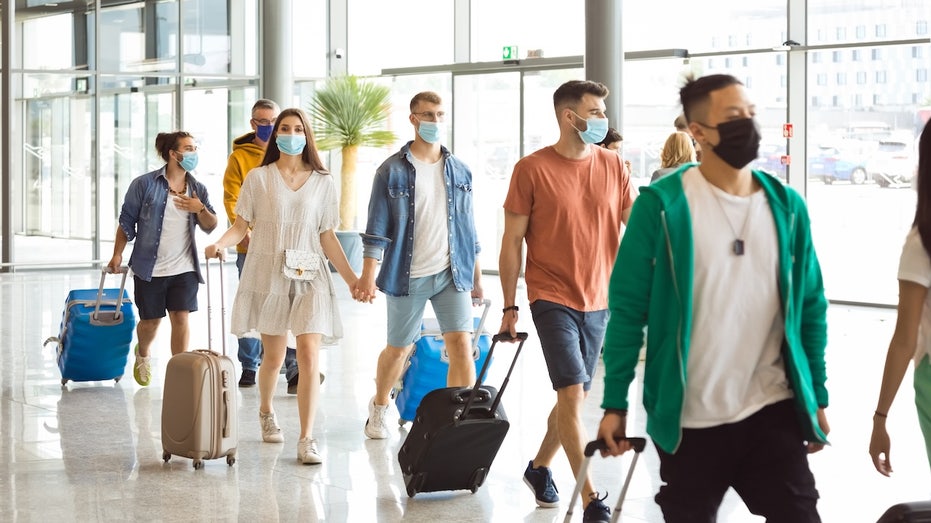
- Travel is still the spark, not the fuel. The Connecticut case — an unvaccinated child infected after international travel — is a reminder that global travel will continue to import measles into the U.S. The decisive factor is whether those sparks hit wet wood (highly vaccinated communities) or dry wood (pockets of low coverage).
One important unknown in the Spartanburg story is the detailed breakdown of who is unvaccinated and why. Are these mostly religious exemptions, philosophical objections, logistical barriers, or lack of access? The answer matters, because each driver requires a different policy response — from outreach and mobile clinics to tightening exemption rules or countering targeted misinformation.
The Social Contract Problem: Individual Choice vs Collective Risk
Measles forces a harder conversation that often gets obscured in polite public health messaging: vaccines like MMR are not just about individual protection; they are about protecting everyone else who cannot safely be vaccinated — infants under 12 months, patients receiving chemotherapy, people with certain immune conditions.
When enough people opt out, those who had no choice become the most exposed. And the consequences aren’t theoretical: measles can cause pneumonia, encephalitis (brain swelling), permanent hearing loss, and death. In past U.S. outbreaks, severe outcomes have fallen disproportionately on infants and medically vulnerable patients.
In Spartanburg, the image of entire schools quarantined is really the system forcing the costs of non-vaccination into the open. Where previously the ‘cost’ of declining vaccines was diffuse and delayed, now it shows up as lost school days, missed paychecks, and community-wide restrictions.
That raises a deeper question: how should society balance parental autonomy with the right of other children — and educators — not to be exposed to a preventable disease in school? Many states are quietly revisiting that question, revising exemption policies after significant outbreaks. This outbreak will likely intensify similar debates in South Carolina and beyond.
Expert Perspectives: What Specialists Are Worried About
In conversations with epidemiologists and vaccine policy experts over the last few years, a recurring theme emerges: measles is both a warning signal and a gateway problem.
Dr. Saad Omer, a leading vaccine researcher, has long warned that localized drops in coverage are more dangerous than national averages suggest: “Diseases like measles don’t care about country-level coverage; they look for pockets. That’s where outbreaks start, and that’s where trust has often eroded the most.”
Dr. Paul Offit, a pediatric infectious disease specialist, has argued that the post-COVID politicization of vaccines risks dragging previously uncontroversial shots into the culture war. Measles outbreaks are, in his words, “the predictable consequence of turning a medical tool into a political statement.”
Education experts raise a different concern: repeated disruption. After COVID, schools have limited tolerance for more instability. Chronic absenteeism is already at crisis levels in many districts; infectious-disease-driven exclusions compound the problem. Measles may be a health story, but its downstream impact on learning and youth mental health is substantial.
What’s Being Overlooked: The Hidden Costs and Long Tail
Most coverage of measles outbreaks focuses on case counts, quarantine orders, and vaccination reminders. Several critical dimensions often get far less attention:
- Long-term immunity debt. Measles infection can cause a phenomenon known as “immune amnesia,” temporarily erasing immune memory to other infections for months or even years. That means children who recover from measles may become more vulnerable to other diseases, a hidden burden rarely counted in the immediate outbreak totals.
- Health system diversion. Each outbreak demands surge contact tracing, public communications, clinic hours for post-exposure prophylaxis, and investigation. That pulls staff and resources away from other pressing health issues — from maternal care to chronic disease management — in already stretched departments.
- Equity implications. Lower-income families and marginalized communities are often hit hardest by the secondary effects. They are more likely to have jobs without paid sick leave, less flexible childcare, and limited access to telework. The same communities that suffered disproportionately during COVID disruptions may again bear the brunt of outbreak-related quarantines.
In other words, the real cost of measles isn’t only counted in hospitalizations and deaths; it’s also counted in missed paychecks, delayed learning, and diverted public health capacity.
Looking Ahead: What This Outbreak Signals for 2026 and Beyond
The Spartanburg outbreak and rising national case counts point to several likely developments:
- Policy tightening on school vaccine requirements. Expect renewed debates in state legislatures about religious and personal-belief exemptions, especially in states that experience repeated or large outbreaks. Lawmakers will face increasing pressure from both sides: parents demanding freedom of choice and parents demanding safer school environments.
- Targeted crackdowns on misinformation. Public health officials, tech platforms, and possibly regulators are likely to revisit how anti-vaccine content is amplified, particularly content that misrepresents long-standing vaccines like MMR. Enforcement, though, will be politically fraught.
- More frequent, localized outbreaks. Unless childhood vaccination rates rebound above the 95% threshold in most communities, sporadic outbreaks will likely become a regular feature of the American health landscape — particularly in communities with high exemption rates and frequent international travel.
- Shift toward community-level transparency. Parents may push for more granular data on school-level vaccination coverage, not just district averages, to inform their own choices. That raises privacy and stigmatization questions, but also reflects a demand for risk transparency.
In the near term, the critical indicator to watch in Spartanburg is whether cases begin to appear outside known exposure networks. If new infections arise with no clear link to schools, households, or known exposure sites, it will suggest more widespread community transmission and a longer, harder containment phase.
The Bottom Line
The South Carolina outbreak is not just about one county’s misfortune. It is a visible consequence of a slow-moving erosion in vaccination coverage, supercharged by misinformation and mistrust. The fact that 95% of cases in Spartanburg are among the unvaccinated is not an incidental detail; it is the story.
Public health officials are right to call vaccination “the best way to prevent the disruption that measles is causing.” But what this outbreak really exposes is that the fight over vaccines is no longer abstract. Communities are now choosing, in effect, between upholding a shared protective norm — or living with recurring waves of entirely preventable disruption, disease, and division.
Measles was the disease that helped prove modern vaccination could eliminate a virus in wealthy countries. Two decades later, it may be the disease that tells us how fragile that victory really was.
Topics
Editor's Comments
The measles resurgence tests something deeper than our vaccination system: it exposes how fragile collective norms become in a hyper-individualized, polarized society. For decades, childhood vaccination functioned as a largely depoliticized social consensus — a quiet agreement that some individual preferences would yield to a broader obligation to protect infants, the immunocompromised, and public spaces like schools. What’s striking now is how thoroughly that consensus has fractured. Outbreaks like Spartanburg’s impose visible costs on entire communities while the decision to decline vaccination remains framed, in much of the public debate, as a purely individual right. That asymmetry is unsustainable. One critical question for the next few years is whether policymakers and health leaders can rebuild a notion of ‘shared obligation’ without triggering further backlash. If they fail, measles may be a harbinger: other once-controlled diseases — from pertussis to polio — could exploit the same trust vacuum, forcing us to renegotiate, disease by disease, the basic terms of civic responsibility.
Like this article? Share it with your friends!
If you find this article interesting, feel free to share it with your friends!
Thank you for your support! Sharing is the greatest encouragement for us.