Patrick Mahomes Under Fire: Why Kevin Durant and Brittany Are Really Defending His Legacy

Sarah Johnson
December 7, 2025
Brief
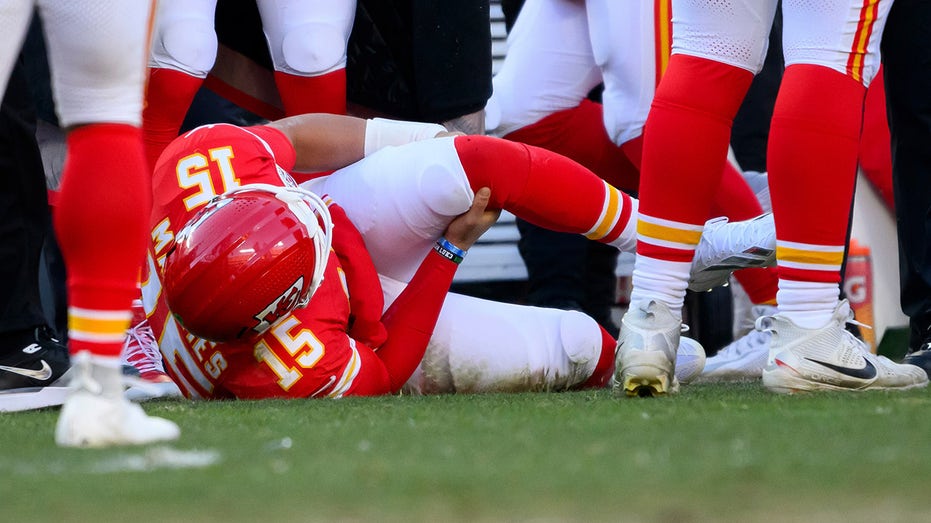
Patrick Mahomes’ rocky 2025 season has triggered instant legacy debates. This analysis explains why Kevin Durant and Brittany Mahomes are pushing back—and what it reveals about how we judge greatness today.
Patrick Mahomes, Brittany, and Kevin Durant: When Sports Fandom Turns Into a Culture War Over Greatness
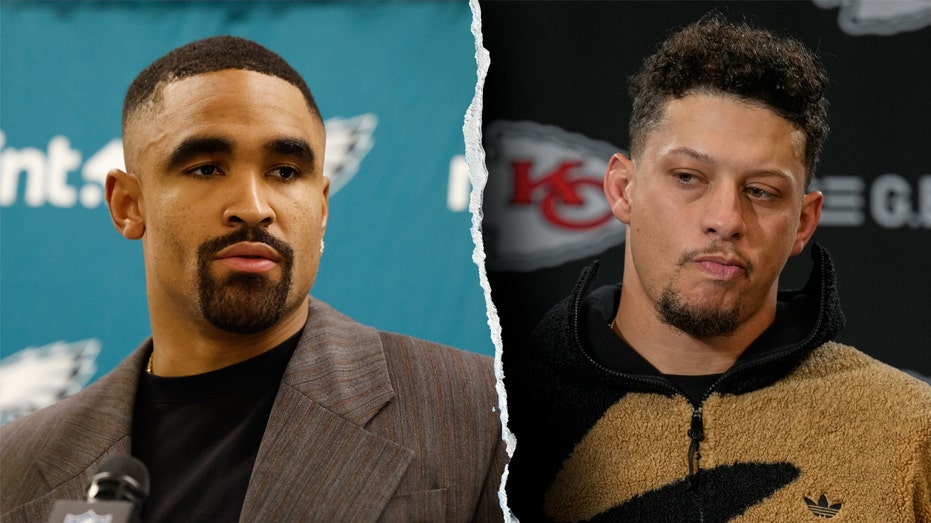
The surface story here is simple: the Kansas City Chiefs are wobbling, critics are circling Patrick Mahomes, and two very visible defenders—his wife Brittany Mahomes and NBA superstar Kevin Durant—are pushing back hard. But underneath that viral clip and Instagram comment is a deeper story about how we now define greatness, how social media weaponizes slumps, and why cross-sport stars feel compelled to defend each other’s legacies in real time.
This isn’t just about a 6-6 football team. It’s about how a sports ecosystem built on 24/7 discourse, betting lines, and engagement metrics has dramatically shortened the patience we extend even to generational talents. Mahomes is becoming a test case for what happens when a still-active all-time great has to defend his legacy in the middle of his career—not after it.
The bigger picture: How did Mahomes become “unquestionable” so fast?
Mahomes’ career arc isn’t normal. By his eighth season (2025), he’s already accumulated:
- 3 Super Bowl titles (and 4 appearances in 5 years)
- Multiple league MVPs
- Playoff win totals and efficiency metrics that place him statistically alongside or ahead of late-career legends
Historically, quarterbacks didn’t enter “untouchable” legacy territory this early. Tom Brady, Peyton Manning, and Drew Brees all had long stretches of postseason disappointment or transitional years before their mythos solidified. Joe Montana and Steve Young both had years complicated by injuries, roster turnover, or scheme shifts. Criticism came, but it wasn’t amplified by millions of users and algorithms rewarding the hottest takes.
Mahomes, by contrast, has been framed as a potential GOAT (Greatest of All Time) since his mid-20s. When you’re placed on that pedestal early, any dip—whether systemic, roster-related, or random—gets interpreted not just as a slump, but as a referendum on your entire legacy.
That’s the environment Kevin Durant is reacting to. His quote—“He can miss the playoffs for the rest of his career, I don’t give a damn… He’s still an all-time great”—isn’t just emotional defense. It’s a pushback against a new cultural norm: grading legacies in real time, season by season, like stock prices.
Why an NBA star is defending an NFL quarterback
Durant’s involvement might seem random, but it’s actually central to understanding the story. He’s not just a fan; he’s someone who has lived inside the same hyperscrutinized ecosystem.
Durant’s own career has been shaped as much by narrative as by performance: his move to Golden State, his rings questioned as “too easy,” and his social media feuds with critics. He’s acutely aware that in the modern conversation, context often loses to storylines. When he defends Mahomes, he’s also defending the idea that a legacy is defined over decades, not one off-year.
Cross-sport defense like this has grown more common in the social media era. Athletes form an informal fraternity across leagues, partly because:
- They consume the same digital discourse and see the same patterns of criticism.
- They understand how narratives can overshadow nuance—schemes, supporting cast, injuries, or front-office decisions.
- They increasingly see themselves as brands and stakeholders in a shared “athlete vs. media/fans” dynamic.
So when Durant says questioning Mahomes’ legacy “makes no sense at all,” he’s rejecting not just the specific criticism, but the whole premise that one difficult season should trigger existential debates about a player whose resume is already historic.
Brittany Mahomes and the new role of athlete families as public actors
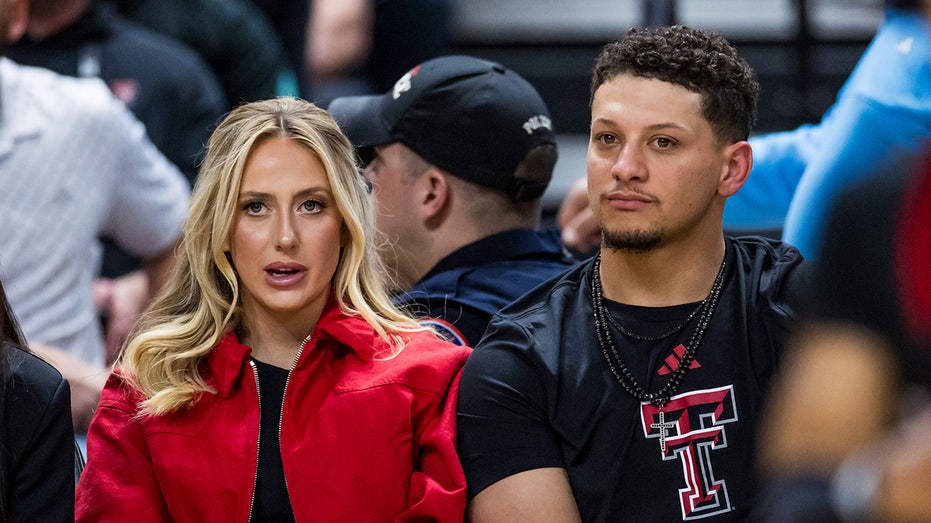
Brittany Mahomes’ three-word Instagram reaction—“Let them know”—might look like a throwaway comment, but it reflects how athlete families have become front-line participants in narrative battles.
In previous eras, spouses and family members were mostly background figures, occasionally appearing in human-interest features. Today, they’re visible, influential actors in real time:
- They have their own platforms, audiences, and sometimes independent brand deals.
- Their responses—likes, comments, reposts—are parsed as signals about locker room mood or personal pressure.
- They often absorb the same toxic criticism as the athlete, especially online.
Brittany has been outspoken for years, drawing both support and backlash. Her decision to amplify Durant’s defense shows a few things:
- Mahomes is very aware of the legacy conversation. This isn’t happening in a vacuum; the criticism is getting back to his inner circle.
- His camp prefers aggressive pushback over quiet dismissal. Rather than ignoring the chatter, they’re validating Durant’s framing: Mahomes is already in the all-time-great conversation, full stop.
- The line between personal emotional support and public messaging is blurred. What looks like a spouse cheering online also functions as narrative reinforcement.
This adds pressure, but it also builds a protective public wall around Mahomes. The signal is clear: questioning his week-to-week is fair; questioning his legacy is not.
What’s really being argued: performance vs. legacy
Underneath the noise, two different debates are being conflated:
- Is Mahomes playing at his absolute peak in 2025? Reasonable people can say no, given a .500 record and uneven offensive performances.
- Does a down year diminish what he’s already accomplished? That’s the argument Durant and Brittany are rejecting outright.
The Chiefs’ 6-6 record—after years of dominance—reflects a set of structural and contextual issues:
- Roster transition and cap realities after sustained success
- Opponents adjusting schemes and personnel to defend Mahomes’ style
- The randomness of one-score games and injury luck
None of those erase three championships. But today’s discourse often treats sports like a rolling referendum: what happened last week outweighs what happened over the last six years. That’s why Mahomes is uniquely vulnerable to “legacy talk” in a way past legends weren’t at this point in their careers.
Data and precedent: do down years really matter for all-time greats?
Looking at historical patterns, one season of regression has never disqualified a player’s GOAT candidacy:
- Tom Brady missed the playoffs in 2002 and 2008 (the latter due to injury). His legacy wasn’t re-evaluated downward; if anything, his longevity became the story.
- Peyton Manning had a disastrous final season in Denver by the numbers, yet retired with his legacy secure after a defense-led title.
- LeBron James missed the playoffs in his first Lakers season. The narrative became: how long can he remain elite, not whether his previous decade suddenly mattered less.
Mahomes, by most advanced metrics, is still operating at a very high level relative to league averages—even if 2025 isn’t his apex. The difference is that the narrative cycle has sped up. Instead of waiting for careers to end, we’re ranking, reranking, and tearing down in real time.
What experts see that hot-take culture often ignores
Football analysts tend to separate team outcomes from individual evaluation more rigorously than online discourse does.
Quarterback analysis increasingly leans on:
- EPA/play (Expected Points Added per play) to measure efficiency.
- CPOE (Completion Percentage Over Expected) to isolate accuracy from scheme and difficulty.
- Film-based grading that looks at decision-making and throw quality independent of box score results.
On those fronts, Mahomes’ “down” years often still rank in the top tier of the league. The Chiefs’ record, meanwhile, is influenced by factors like offensive line cohesion, receiver separation, defensive performance, and schedule strength.
Durant’s blunt take—“He can miss the playoffs for the rest of his career, I don’t give a damn”—is extreme, but it reflects an analytical truth: once a player reaches a certain threshold of sustained dominance and postseason performance, the legacy floor is very high. The GOAT argument may move around, but the “all-time great” label doesn’t get revoked.
What’s being overlooked: C.J. Stroud, new blood, and the narrative of succession
The other side of this matchup—C.J. Stroud and the Texans—isn’t just a scheduling note. It represents an undercurrent in all Mahomes discourse: the league’s constant search for “the next one.”
When young quarterbacks like Stroud, Joe Burrow, or Josh Allen rise, the conversation tends to swing toward succession: who’s next, who’s taking the crown, who’s the new face of the league? In that context, Mahomes’ struggles become more symbolically loaded. A loss to a rising young quarterback isn’t just a bad game; it’s framed as part of a generational power shift.
That’s another reason athletes like Durant bristle. They’ve lived through moments when every new star is framed as their replacement—and they know how much of that conversation is driven by marketing and media appetite, not just on-field reality.
Looking ahead: what this season will actually decide
This particular Chiefs season is unlikely to redefine Mahomes’ legacy, but it could reshape how his prime is managed and perceived.
Key questions going forward:
- Will the Chiefs’ front office retool aggressively? Down years often become catalysts for roster overhaul and schematic evolution.
- Does Mahomes adjust his style? Great quarterbacks often go through mid-career recalibrations—less improvisation, more surgical efficiency—as defenses adapt.
- How will Mahomes and his camp navigate narrative pressure? Brittany’s public defense and Durant’s intervention suggest they’re not ignoring the conversation. The choice is between embracing debate or trying to mute it.
This year might ultimately be remembered less as “the year Mahomes was exposed” and more as the moment when his camp, fellow athletes, and the broader sports world confronted the absurdity of treating one season as a legacy referendum.
The bottom line
The backlash to Patrick Mahomes’ critics—led by Kevin Durant and echoed by Brittany Mahomes—isn’t just about loyalty or fandom. It’s about resisting a culture that evaluates greatness on a week-to-week basis. Historically, all-time greats have had down years, injury seasons, and transitional phases. What’s new is the intensity of the real-time verdicts.
Mahomes’ resume already places him firmly in the all-time conversation. One uneven season might alter playoff seeding, contract strategies, or roster moves. It won’t erase three championships. The real story is how athletes and their inner circles are learning to push back—publicly and strategically—against a discourse that treats even generational talents as disposable narratives.
Expert Perspectives
To understand the gap between hot-take criticism and longer-view evaluation, it’s useful to bring in expert context.
On legacy and down years:
Sports historians note that legacy is ultimately a composite of peak performance, longevity, and postseason success—not a single season’s record. The GOAT debates that dominate television and social media are often backward-looking; applying that lens in real time exaggerates the significance of normal variance.
On modern scrutiny:
Media scholars point out that algorithms and engagement incentives reward extreme judgments, not nuanced analysis. Questioning a great player’s legacy after one off year isn’t a serious intellectual exercise—it’s a content strategy.
What to watch next
- How Mahomes plays down the stretch—especially in high-leverage drives and games—will shape narrative far more than raw record.
- Whether other high-profile athletes join Durant in publicly defending Mahomes, signaling a broader athlete pushback against real-time legacy grading.
- How Brittany Mahomes continues to use her platform: will she stay vocal, or does criticism of her become part of the story?
- The media framing of matchups against younger quarterbacks like C.J. Stroud—are they portrayed as passing-of-the-torch moments or just games?
Topics
Editor's Comments
What’s striking in this story isn’t the existence of criticism—every great athlete faces that—but how compressed the timeline has become between ascension and backlash. Mahomes is experiencing a cycle we usually associate with the end of a career—‘Has he lost it? Was he overrated?’—while still in what should be his prime. Kevin Durant’s intervention highlights how acutely modern stars feel this pressure, and how cross-sport solidarity is emerging as a response. But there’s a risk here: if every critique is framed as illegitimate ‘hate,’ we lose the space for serious discussion about scheme, roster construction, and adaptation. The challenge for media and fans is to separate honest performance analysis from performative legacy takes. The challenge for athletes and their circles, including figures like Brittany Mahomes, is to push back against the worst excesses of the discourse without dismissing all critique as noise. That tension will define how we talk about greatness in the next decade.
Like this article? Share it with your friends!
If you find this article interesting, feel free to share it with your friends!
Thank you for your support! Sharing is the greatest encouragement for us.