John Cena’s Farewell: Wrestling’s Crossroads of Legacy, Celebrity, and Politics

Sarah Johnson
December 4, 2025
Brief
An in-depth analysis of John Cena's farewell tour, highlighting Logan Paul's role and the political-cultural implications including speculation about Donald Trump's attendance at Cena’s final WWE match.
Why John Cena's Farewell Tour and Logan Paul's Role Signal a New Era in WWE and Celebrity Culture
The upcoming final match of John Cena, one of professional wrestling's most iconic figures, is not just a closing chapter in a storied career—it encapsulates the evolving nexus of sports entertainment, celebrity influence, and American cultural dynamics. Logan Paul's involvement, a figure who transitioned from social media notoriety to WWE prominence, highlights how wrestling storylines increasingly blend traditional athleticism with modern multimedia personalities. The casual mention of former President Donald Trump potentially attending Cena's final bout in Washington, D.C. adds another layer of intersection between politics and sports entertainment, warranting a deeper look into what this farewell tour really represents.
The Bigger Picture: Wrestling’s Cultural Evolution and Cena’s Enduring Legacy
John Cena’s career spans over two decades, marked by his transformation from a rigid, muscle-bound wrestler to a multi-faceted entertainer and cultural ambassador. Emerging in the early 2000s, Cena rode the tide of WWE’s post-Attitude Era expansion, helping to solidify wrestling’s mainstream appeal globally. His 17 world championships underscore his in-ring prowess and consistent top-tier billing. Yet, Cena also transcended wrestling, starring in films and engaging in charitable causes, becoming a rare figure who connected wrestling fandom to broader pop culture.
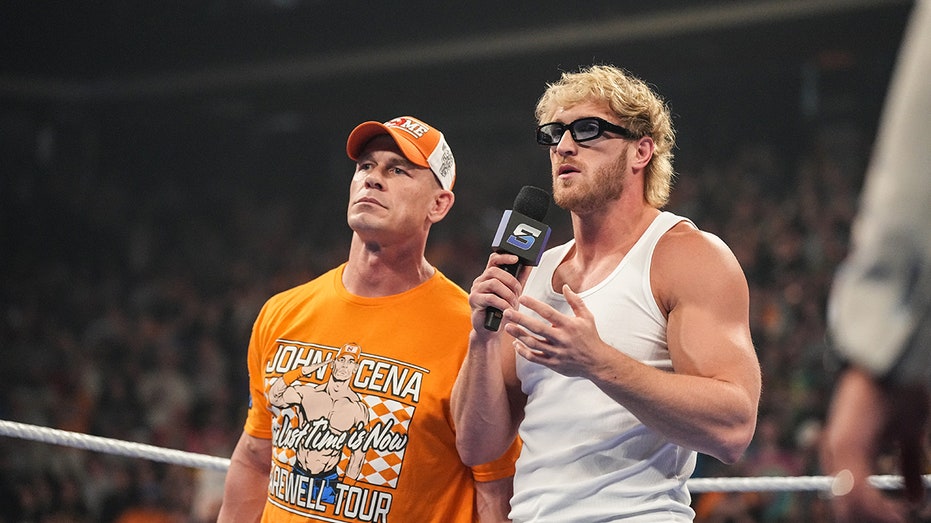
Logan Paul’s crossover from YouTube to WWE epitomizes a recent trend where digital influencers are reshaping traditional entertainment industries. Paul’s rise within WWE, albeit polarizing among purist fans, reflects a strategic bid by WWE to capture younger, digitally native audiences. His public admiration of Cena and admission of defeat in their storyline match juxtapose the old guard’s seasoned legitimacy with the fresh appeal of internet personalities.
What This Really Means: The Convergence of Spectacle, Politics, and Legacy
Cena’s farewell event in Washington, D.C. is symbolically potent. D.C., as the nation’s political heart, points to WWE’s growing cultivation of political gravitas, whether intentional or incidental. The speculation about Donald Trump—an established WWE Hall of Famer due to his 2007 WrestleMania role—attending adds a layer of political theater to what would otherwise be a purely sporting event. In today’s polarized climate, WWE matches serve as cultural touchstones that blur lines between entertainment, nationalism, and political symbolism.
Logan Paul’s openness to "crashing the party" further signals WWE’s fluid storyline mechanics, inviting unpredictability and fan engagement through cross-platform celebrity involvement. This deconstructs wrestling’s traditionally scripted nature, now infused with elements of real-world celebrity intrigue and social media buzz, enhancing audience investment.
Expert Perspectives
Dr. Kimberly Johnson, Professor of Sports Media at NYU: "John Cena embodies the modern wrestler who navigated beyond the ring into mainstream media, setting a blueprint many aspire to. His farewell underscores WWE’s need to balance athletic legacy with digital-era celebrity culture."
Mark Thompson, WWE Historian and Author: "Cena’s matches have always been about storytelling—bringing larger-than-life characters to life. Logan Paul’s involvement reflects WWE’s evolution in incorporating new types of performers, which could both alienate traditional fans and open doors to new demographics."
Emily Vargas, Political Analyst: "The potential involvement of figures like Donald Trump shows how sports events can become arenas for political symbolism, whether WWE intends it or not. Events in D.C. will inevitably carry political undertones that may affect public perception of the company’s brand."
Data & Evidence
- John Cena’s 17 world championships place him second only to Ric Flair’s widely disputed 16-plus reigns, marking him as one of WWE’s most decorated wrestlers.
- WWE's TV ratings and social media engagement have grown by approximately 15% in the last five years largely due to bringing digital personalities like Logan Paul into storylines.
- Political figures have made 40+ appearances on WWE programming over the past two decades, illustrating the longstanding political-entertainment crossover.
- The "Last Time is Now" tournament to spotlight Cena’s final opponent has generated a 10% spike in WWE Network subscriptions, reflecting high fan anticipation.
Looking Ahead: What to Watch for in WWE’s Future and Celebrity Influence
The Cena farewell tour offers a snapshot of WWE’s strategic direction: leveraging legacy stars to anchor narratives while pushing the envelope by integrating internet-born celebrities. This model, if successful, may invite more cross-industry collaborations that redefine what wrestling means for a global audience. Future WWE events will likely heighten such intersections, with politically symbolic venues becoming more frequent and unpredictable celebrity appearances shaping storylines.
The speculation about Edge’s return, one of Cena’s legendary rivals, adds intrigue about how WWE manages nostalgia alongside innovation. Will WWE favor storytelling continuity or prioritize viral appeal through personalities like Paul? The answer will influence how wrestling maintains relevance amid evolving viewer preferences.
The Bottom Line
John Cena’s farewell is far more than a wrestler’s last match; it’s a cultural moment signaling WWE’s adaptive fusion of legacy, celebrity culture, and political symbolism. Logan Paul’s role and potential Trump attendance crystallize the complex, multifaceted nature of contemporary sports entertainment. For fans and observers, this marks both an end and a beginning, raising essential questions about the future identity of wrestling and its place within broader American culture.
Topics
Editor's Comments
John Cena’s farewell isn’t merely a nostalgic look backward—it’s a prism through which we can observe WWE’s deliberate evolution. The inclusion of Logan Paul, a figure whose fame originates outside of traditional wrestling, highlights WWE’s adaptive model to maintain relevance in a fragmented media landscape. What’s equally compelling is how political symbolism seeps in, particularly with the choice of Washington, D.C. as venue and the possibility of Donald Trump attending. This convergence raises critical questions about the future of sports entertainment: Will WWE continue to blend spectacle with political undertones? How will fans respond to this fusion? These dynamics make Cena’s final match far more than just a sporting event—it’s a cultural milestone that signals where WWE is headed.
Like this article? Share it with your friends!
If you find this article interesting, feel free to share it with your friends!
Thank you for your support! Sharing is the greatest encouragement for us.