Mahomes’ ACL Tear Puts the Entire Chiefs Dynasty Model Under the Microscope

Sarah Johnson
December 18, 2025
Brief
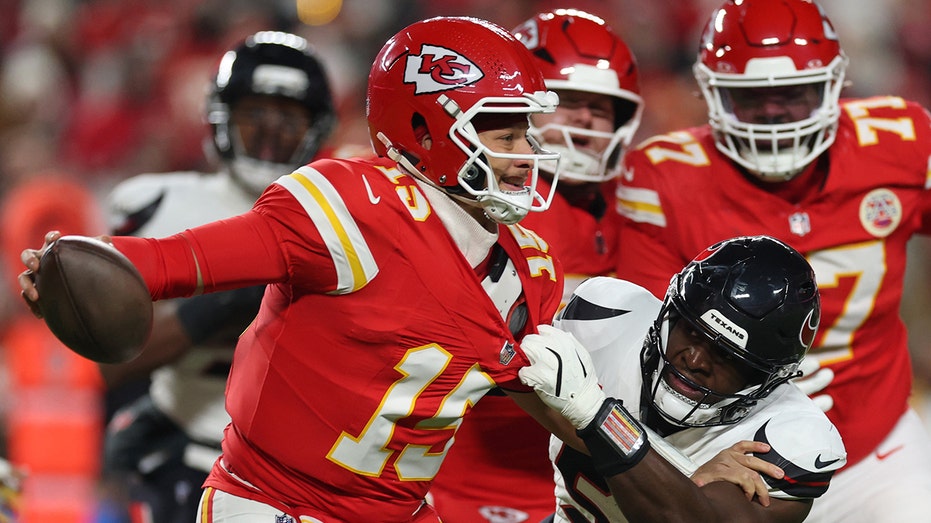
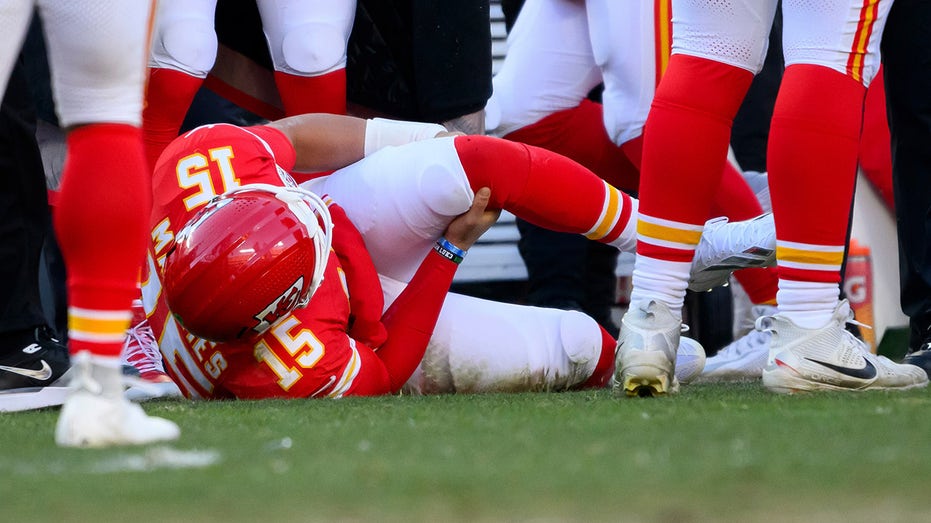
Patrick Mahomes’ ACL and LCL tear is more than a rehab timeline. It’s a stress test of the Chiefs’ dynasty model, QB risk in the modern NFL, and how Mahomes’ game may fundamentally evolve.
Patrick Mahomes’ ACL Tear Isn’t Just an Injury — It’s a Stress Test for the Modern NFL Dynasty Model
The news that Patrick Mahomes tore both his ACL and LCL is being framed as a nine‑month rehab story and a question of when he’ll be back. That’s too small a lens. This is a pivotal moment for how the NFL thinks about franchise quarterbacks, dynasties, and the long‑term costs of building entire organizations around a single transcendent player.
Mahomes’ recovery timeline matters for the 2025 season. But the deeper story is about how much risk the Chiefs — and the league — are willing to tolerate in a system that increasingly demands more snaps, more prime‑time exposure, more playoff games, and more improvisational, high‑risk play from its most valuable asset: the mobile, dual‑threat quarterback.
The bigger picture: Mahomes and the evolution of the franchise QB
Historically, the NFL has seen elite quarterbacks suffer major knee injuries and come back — but the context here is different.
- Tom Brady tore his ACL and MCL in 2008, missed the season, and returned to win three more Super Bowls. But Brady played in a mostly pocket‑based system with a quick release and minimal designed runs.
- Carson Palmer tore his ACL and MCL in 2005, returned effectively, and later had an MVP‑caliber season in Arizona.
- Deshaun Watson and Joe Burrow each returned from significant knee injuries and regained high‑level performance, though their styles evolved to slightly less risk and a quicker decision‑making emphasis.
Mahomes is different because of the degree of organizational dependence. The Chiefs are not just built around a great QB — they are built around this QB’s unique skill set: off‑platform throws, extended plays, and the ability to turn broken concepts into highlight‑reel production. That makes his knee stability, lateral movement, and confidence in cutting at full speed not just a medical question, but a strategic one.
In effect, Kansas City’s dynasty model has been:
- Pay heavily for Mahomes,
- Cycle through cheaper receivers, linemen, and running backs,
- Rely on Mahomes’ brilliance to overcome roster deficiencies.
An ACL+LCL tear tests whether that model is sustainable when the central piece becomes, even temporarily, a medical outlier.
What this really means: Risk, rehab, and the business of superstardom
The Chiefs’ medical staff is projecting roughly nine months, give or take. That aligns with typical timelines for modern ACL reconstruction and multi‑ligament knee injuries. But those numbers hide four intertwined realities:
1. Performance timeline vs. healing timeline
Rick Burkholder hints at a critical distinction: “They don’t heal up any faster. They just get back to performance faster.” Modern rehab can accelerate return to play, but not the basic biology of ligament healing and graft integration.
For Mahomes and the Chiefs, the core question is not: Can he be cleared by Week 1? It’s: How soon can he reach 90–95% of his pre‑injury movement quality without increasing re‑injury risk?
Sports medicine data suggests:
- Re‑tear rates are significantly higher when athletes return to full competition before 9 months post‑ACL reconstruction.
- Multi‑ligament injuries (ACL + LCL) typically carry more complexity and require more cautious progression.
That puts the Chiefs on a tightrope: commercial and competitive pressures to have Mahomes back early vs. the long‑term value of his next five to seven years.
2. The mythology of the “fast healer”
Andy Reid and the Chiefs staff repeatedly emphasize Mahomes as a “fast healer” with an elite work ethic. That narrative is well‑earned — he’s played through dislocated kneecaps, turf toe, high‑ankle sprains, and still won Super Bowls.
But there’s a risk in that mythology: when a player repeatedly beats timelines, organizations and fans can start assuming he will do it again, and again, and again — even for injuries where pushing the envelope can have permanent consequences.
In other words, what’s been a competitive advantage for the Chiefs — Mahomes’ pain tolerance and rehab discipline — can, if mismanaged, become a long‑term liability. You can’t “gut through” a graft’s integration period without increasing risk.
3. Style of play is on the table now
One of the least discussed angles is whether this injury forces a shift in how the Chiefs design their offense. Mahomes is not Lamar Jackson as a runner, but a large share of his value comes from:
- Extending plays horizontally and vertically,
- Escaping clean pockets to create off‑script reads,
- Trusting his lateral agility to avoid free rushers.
Post‑injury, the Chiefs may be compelled to:
- Lean more into quick‑game concepts and rhythm throws,
- Invest more heavily in offensive line continuity and pass protection,
- Reduce pure improvisation, at least early in his return.
That’s not necessarily a downgrade; it could mark a transition similar to what we saw with Aaron Rodgers and, later, Russell Wilson — less chaos, more pre‑snap mastery. But it will require humility from a player whose competitive identity is deeply tied to doing the impossible.
4. The dynasty narrative just hit a reset button
With the Chiefs missing the playoffs for the first time since 2014 and many already calling the end of the “dynasty,” Mahomes’ absence creates a forced reset. It’s not just about how long he’s out, but what Kansas City does with the breathing room.
Without Mahomes, the Chiefs are going to learn uncomfortable truths:
- How functional is the offensive system without a generational QB?
- Is the receiving corps viable, or has Mahomes been masking systemic flaws?
- Can the front office allocate resources differently to reduce fragility?
The stretch with Gardner Minshew isn’t just evaluation for backup purposes; it’s a live‑fire test of how much of the Chiefs’ success has been scheme vs. Mahomes’ improvisational genius.
Expert perspectives: What the specialists are really watching
Orthopedic surgeons and performance analysts will be focused less on the calendar date of Mahomes’ return and more on specific milestones:
- Quadriceps and hamstring strength symmetry (often targeting 90%+ of the healthy leg before return to full cutting).
- Valgus/varus stability under load, given the LCL involvement.
- Psychological readiness — trust in the knee is a known predictor of performance post‑ACL reconstruction.
What Burkholder describes — early neuromuscular activation, swelling control, a protective brace, and highly structured rehab — matches best practices used in elite European soccer and the NBA for star players with knee injuries. The Chiefs are clearly treating this as a bespoke, data‑driven project.
That reinforces a broader trend: in the modern NFL, top‑end sports medicine infrastructure is no longer a luxury. For teams whose valuation has soared into the billions, protecting one player who drives TV ratings, merchandise, and competitive relevance can justify eight‑figure investments in medical and performance science.
Data & evidence: The cost of mobility and the modern QB body
Mahomes’ injury also fits into a broader pattern: the league’s most impactful quarterbacks are increasingly mobile, and the physical cost is starting to show.
Consider:
- ACL injuries in the NFL hover around 50–60 per season, with skill positions and defensive backs disproportionately affected.
- Quarterbacks historically had lower rates of ACL injuries, but as designed QB runs, rollouts, and extended plays increased, so did exposure.
- Multi‑ligament knee injuries like ACL+LCL are less common but more serious, often associated with high‑velocity contact and awkward rotational forces.
The more the NFL incentivizes explosive, improvisational quarterback play — and the more rule changes protect QBs from direct hits while not preventing awkward contact at the legs — the more likely we are to see injuries that look like Mahomes’ in high‑stakes moments.
Looking ahead: Four big questions that will shape the post‑injury Chiefs
1. Do the Chiefs change how they manage Mahomes’ workload?
This injury may accelerate conversations about:
- Reducing designed movement plays, especially early in the 2025 season.
- Load management in practice — fewer reps, more mental work.
- Building a stronger running game and defense to reduce the need for weekly heroics.
That would mirror how NBA teams handle aging superstars: surround them with more support so they don’t have to save the franchise every night.
2. Does Kansas City rethink its roster‑building philosophy?
With Mahomes sidelined and the dynasty conversation cooling, the Chiefs’ front office has an unexpected window to reassess:
- Is it time to invest more heavily in elite offensive line depth?
- Should they commit real capital to a true WR1 instead of patchwork solutions?
- How much do they need a backup QB who can truly run a Mahomes‑lite version of the offense rather than just manage games?
If the Chiefs take this as a signal to build a more robust ecosystem around Mahomes, the injury could paradoxically extend the life of the dynasty.
3. What does this do to the league’s balance of power?
The AFC has already been shifting. Burrow, Allen, Lamar Jackson, Justin Herbert, C.J. Stroud, and others have crowded the top tier. A Mahomes‑less Chiefs team gives rivals a season to consolidate power, build playoff experience, and reshape narratives.
When Mahomes does return, he may find an AFC where Kansas City is no longer the default conference favorite, but one contender among many. That changes how the Chiefs must think about seeding, depth, and peaking at the right time.
4. How will Mahomes himself evolve?
Perhaps the most fascinating unknown is whether this becomes Mahomes’ personal pivot point — the moment he shifts from peak physical improviser to peak cognitive assassin. History shows that many great quarterbacks have a mid‑career inflection point where the game slows down mentally as their athleticism slowly declines.
For Mahomes, this injury might accelerate that shift. If he emerges from rehab with slightly less lateral burst but even more pre‑snap command, pocket discipline, and system trust, the “post‑injury Mahomes” could be a different kind of terrifying.
The bottom line
This is not just a nine‑month rehab story. It’s a referendum on how the NFL values and deploys its most important position, and how a modern dynasty adjusts when its singular foundational piece becomes vulnerable.
The Chiefs will sell optimism — and they’re not wrong to. Surgical techniques are better, rehab protocols are smarter, and Mahomes’ track record is exceptional. But underneath the upbeat quotes lies a serious, structural set of questions:
- Can an organization built around extreme quarterback dependence afford to keep playing the same way after a multi‑ligament knee injury?
- Will Mahomes’ greatest strength — his ability to push through pain and beat timelines — be carefully managed rather than exploited?
- And will this setback mark the end of a dynasty, or the beginning of a more sustainable second phase?
The answer won’t be clear when Mahomes first jogs back onto the field. It will emerge over the next three to five seasons — in how he moves, how the Chiefs call plays, and whether Kansas City learns from this moment or simply tries to outrun it.
Topics
Editor's Comments
What stands out most here is how quietly radical this moment is for the NFL’s economic model. The league has spent a decade engineering rules, marketing, and schedule design around making the quarterback — and specifically the charismatic, mobile superstar — the center of the product. Mahomes has been the prototype and the proof-of-concept: ratings driver, jersey seller, and living highlight reel. A multi-ligament knee injury to that exact archetype forces an uncomfortable reckoning. You can protect quarterbacks from high hits and late shots, but you can’t legislate away the torque and chaos that come with 280-pound defenders changing direction at full speed while QBs are sprinting and cutting in space. If Mahomes returns diminished or if the Chiefs are compelled to dial back his improvisation, it subtly undermines the league’s bet that ‘more quarterback-centric’ automatically means ‘more sustainable.’ The contrarian question owners and league executives should be asking is whether they’ve made the sport too dependent on a handful of hyper-exposed bodies, and whether the next era of innovation shouldn’t be more about dispersing risk — through scheme, depth, and style — rather than concentrating it even further on one or two stars per franchise.
Like this article? Share it with your friends!
If you find this article interesting, feel free to share it with your friends!
Thank you for your support! Sharing is the greatest encouragement for us.