Michelle Pfeiffer’s Second Act: How Her Career Exposes Hollywood’s Beauty and Age Dilemmas

Sarah Johnson
December 12, 2025
Brief
Michelle Pfeiffer’s new holiday film masks a deeper story: how her four-decade career exposes Hollywood’s beauty trap, motherhood penalty, and shifting power for aging women on screen.
Michelle Pfeiffer’s Second Act: What Her Long Career Reveals About Hollywood, Aging, and Women’s Power
Michelle Pfeiffer’s latest turn in a Christmas film and her upcoming role in Taylor Sheridan’s The Madison look, on the surface, like just another chapter in a long, glittering career. But viewed in context, her trajectory — from small-town beauty queen to box-office icon to semi-retired mother and now resurgent grandmother-star — is a case study in how Hollywood treats beauty, age, and female ambition, and how one woman quietly rewrote the rules.
From Pageants to Power: The Long Shadow of “Miss Photogenic”
Pfeiffer’s path into Hollywood through beauty pageants in the late 1970s wasn’t unusual for that era. The pageant circuit functioned as a parallel talent pipeline, especially for women who didn’t have industry connections. Winning Miss Orange County and being named “Miss Photogenic” at Miss California gave her visibility and, crucially, an agent.
But that entry route came with a built-in narrative: she was supposed to be the beautiful face, not the auteur or producer. The 1980s studio system routinely typecast conventionally attractive women as accessories to male-driven stories. Pfeiffer seemed destined to be a decorative presence in comedies and genre films — which makes the way she weaponized that beauty into serious prestige work all the more significant.
Her early resume looks like a tour through Hollywood’s genre machine: The Hollywood Knights, Grease 2, then Scarface. That last film, though criticized on release for its excess, has since become a canonical crime epic — and Pfeiffer’s icy, hollow Elvira is now recognized as more than a gangster’s girlfriend. She plays disaffection and entrapment with a subtlety that prefigured the layered, morally ambiguous women she’d portray later.
In other words, she entered through the beauty door, but she didn’t stay in the beauty box. For women of her generation, that pivot was both rare and risky.
The 1980s and 1990s: When Beauty Met Serious Craft
By the late 1980s, Pfeiffer was simultaneously one of Hollywood’s most bankable “sex symbols” and one of its most respected actors. The Oscar nominations for Dangerous Liaisons (1988), The Fabulous Baker Boys (1989), and later Love Field (1992) reflect more than individual performances. They mark a moment when Hollywood briefly allowed a woman widely marketed for her looks to be taken seriously as a dramatic performer without forcing a complete reinvention of her image.
That balancing act was unusual. Many contemporaries either leaned fully into sex symbol branding or tried to shed it entirely. Pfeiffer, by contrast, played into the allure while complicating it on screen: the vulnerable lounge singer in The Fabulous Baker Boys, the morally compromised socialite in Dangerous Liaisons, the feral, traumatized Catwoman in Batman Returns. Each performance is about a woman whose perceived surface — sexy, glamorous, pliant — masks a much darker or more complex interior life.
Her role in Batman Returns, now being retroactively claimed as her “first Christmas movie,” is especially telling. Catwoman is damaged, angry, and defiantly anti-domestic — a subversive figure to attach to a feel-good holiday frame. The fact that audiences now treat that film as a seasonal classic says something about how our idea of holiday stories has broadened: from wholesome nostalgia to darker tales about alienation, capitalism, and power. Pfeiffer was embodying that complexity before the discourse caught up.
Via Rosa and the Quiet Assertion of Female Creative Control
In 1990, at the height of her earning power, Pfeiffer co-founded Via Rosa Productions. This is a crucial but frequently underplayed part of her story. At a time when female-led production companies were far less common, the move signaled more than a vanity label; it was an attempt to curate and shape the stories she appeared in.
Via Rosa backed films like Dangerous Minds, One Fine Day, The Deep End of the Ocean, A Thousand Acres, and Love Field. Whether or not these films are all considered classics, they share two throughlines: female-centric narratives and roles for Pfeiffer that gave her emotional and narrative agency. In an industry that often sidelined women over 30, she built structures to keep herself at the center of the story.
This early turn to producing prefigures a trend we now see with Reese Witherspoon, Margot Robbie, and others using production companies to engineer better roles for themselves and other women. Pfeiffer was doing a quieter version of this decades earlier — in an era with fewer public conversations about representation.
Stepping Back: Motherhood, “Unhirable,” and the Care Penalty in Hollywood
Pfeiffer’s semi-retirement in the 2000s and her own description of becoming “unhirable” are a window into a larger structural issue: Hollywood’s systemic bias against caregiving women. She has said she carefully chose projects based on location, shoot length, and her children’s schedules, to the point that studios and producers stopped calling.
This isn’t about one actress’s personal choice; it’s about how the industry values availability and youth over experience and caregiving. The same behavior that reads as “dedicated” when male actors or directors set limits (think: choosing projects carefully, being selective) is often interpreted as “difficult” or “not worth the trouble” when women do it — especially once they have children.
Economists and sociologists talk about the “motherhood penalty” in earnings and promotions. In Hollywood, that penalty combines with the well-documented “age cliff” for actresses. For decades, women saw a steep decline in leading roles after 35–40. Pfeiffer’s absence in the 2000s sits squarely in that danger zone, suggesting that her step back was both chosen and structurally reinforced.
Her case also underscores a persistent double standard: male stars who vanish for a few years often return to open arms and prestige projects; women must actively engineer a “resurgence” and justify the gap.
The Resurgence: Why 2017 Marked a Turning Point
When Pfeiffer returned in force around 2017 — with Where Is Kyra?, Murder on the Orient Express, mother!, and the Emmy-nominated The Wizard of Lies — the industry she re-entered was not the one she left. Two things had changed:
- The streaming boom dramatically expanded demand for content, creating more space for older, complex characters.
- The #MeToo movement (which exploded later that same year) began pushing Hollywood to rethink its treatment of women, especially around power dynamics and longevity.
Pfeiffer’s own explanation — that she became an empty nester, felt more “balanced” when working, and was finally able to say yes to more projects — is important. But it’s only half the story. The other half is that the industry suddenly needed women like her again: established, respected, and capable of anchoring prestige dramas and IP-driven franchises alike.
Her casting in Sheridan’s The Madison, a spin-off in the commercially potent Yellowstone universe, underscores this. Sheridan’s world-building leans heavily on intergenerational power struggles and morally gray characters. Pfeiffer, now in her late 60s, brings both cultural memory and gravitas to that sandbox. She’s not a nostalgic cameo; she’s part of the new center of gravity.
Holiday Movies, Grandmotherhood, and the Rebranding of Aging
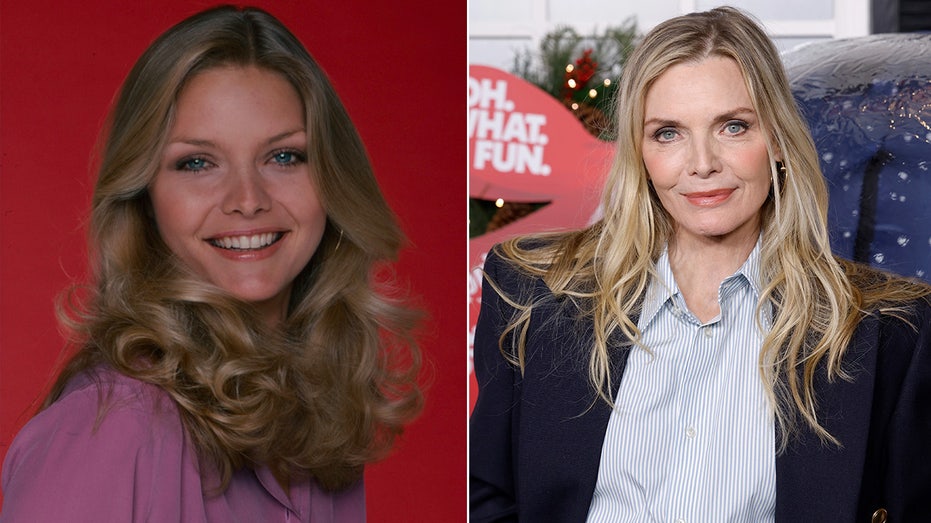
Pfeiffer’s decision to star in the Christmas comedy Oh. What. Fun. and then take most of 2026 off to focus on being a grandmother tells us something about how aging female stars are renegotiating their images.
In earlier Hollywood eras, the transition for women of a certain age was stark: from romantic lead to either invisible or relegated to caricatured “mom” roles. Pfeiffer’s current choices are different. She is openly embracing grandmotherhood — not hiding it, not apologizing for it — while simultaneously remaining in demand for major projects.
This dovetails with a broader demographic and cultural shift. Audiences over 50 are a powerful and underserved market. Data from theater attendance and streaming habits consistently show that older viewers are loyal, willing to spend, and hungry for stories reflecting their stage of life. That makes a star like Pfeiffer — glamorous, iconic, but also publicly talking about time, legacy, and “whatever time I have left” — strategically valuable.
Her willingness to say she plans to take a year off because of a grandchild also chips away at the idea that serious actors must be endlessly available. It’s a subtle redefinition of professionalism: you can be deeply committed to your craft while still prioritizing care and meaning.
What Pfeiffer’s Career Tells Us About Women and Power in Hollywood
Taken as a whole, Pfeiffer’s journey maps onto several long-running structural trends:
- Beauty as both gateway and trap: Being “Miss Photogenic” opened doors but also risked pigeonholing her. She spent years deliberately complicating her image through difficult, sometimes unglamorous roles.
- Early adoption of creative control: Via Rosa anticipated the now-common strategy of women using production companies to secure better roles and narratives.
- The motherhood and age penalty: Her “unhirable” phase reflects systemic biases that still haven’t been fully dismantled, even if conditions are improving.
- Resurgence in the streaming era: Prestige TV and franchise storytelling have reopened space for older women, but mainly for those with long-established reputations. It’s a partial victory, not a full structural change.
The industry’s embrace of Pfeiffer’s “resurgence” also reveals who gets to have a comeback. She is white, already canonized, and associated with a nostalgic golden age of late-20th-century Hollywood. Many women of color from her era, equally talented, have not been offered similar reentry paths. Her story is inspirational, but it’s also a reminder of unequal access to second chances.
Expert Perspectives
Film scholars and industry analysts see Pfeiffer’s trajectory as emblematic of broader shifts:
Dr. Mary Celeste Kearney, a professor of film and television, has argued that actresses of Pfeiffer’s generation were “the bridge between the studio-era star system and the contemporary IP-franchise era,” forced to constantly reinvent themselves as the economic logic of Hollywood changed. Pfeiffer’s movement from romantic leads to comic-book antihero to prestige drama stalwart tracks that evolution.
Industry analyst Stephen Follows has documented how actresses’ leading roles historically drop sharply after age 40, while male counterparts continue to headline films well into their 60s and 70s. Pfeiffer’s post-60 run challenges that pattern but doesn’t erase it; she’s an exception that proves the rule.
Culturally, writer and critic Angelica Jade Bastién has noted that Pfeiffer’s performances often “smuggle in a melancholic interiority” beneath their glamour — a quality that makes her particularly resonant in today’s era of anti-heroines and morally ambiguous protagonists.
Looking Ahead: What to Watch in Pfeiffer’s Next Chapter
Pfeiffer’s announced plan to take most of 2026 off and then return again will test how durable Hollywood’s new openness to older women really is. Key questions:
- Will she be welcomed back after another deliberate pause, or will the “unhirable” narrative reassert itself?
- Will her roles continue to be central and complex, or drift toward ornamental supporting parts?
- Will she return to producing or executive-producing vehicles that foreground older women’s experiences, especially around care, legacy, and power?
Her role in The Madison will also be a bellwether. If Sheridan builds a series around an older female protagonist with real moral and narrative agency, it could signal a new kind of Western — one that admits that the matriarch, not just the patriarch, is the center of the family saga.
The Bottom Line
Michelle Pfeiffer’s arc is far more than a feel-good story about an 80s icon getting a second wind. It’s a map of the pressures and possibilities facing women in Hollywood across four decades: the beauty trap, the struggles of caregiving in a punishing industry, the tentative gains of the streaming and #MeToo era, and the still-unequal politics of who gets a comeback.
By naming herself “unhirable,” embracing grandmotherhood, and still stepping into major roles, she’s quietly challenging the industry’s most enduring myths about age, beauty, and female ambition. Her latest Christmas movie may be light entertainment, but the career behind it is anything but.
Topics
Editor's Comments
One under-discussed angle in Michelle Pfeiffer’s story is how much of her resurgence depends on nostalgia capital. She isn’t just any talented older actress; she’s a symbol of a specific 1980s–1990s cinematic memory that streaming platforms and franchises now aggressively mine. That raises a tougher question: is Hollywood genuinely expanding space for older women, or selectively reactivating those with pre-existing cultural cachet that can be monetized? In other words, Pfeiffer’s comeback may indicate less a structural transformation and more a targeted form of legacy branding. The industry is comfortable elevating certain iconic white actresses from its own canon while still underutilizing or forgetting equally skilled peers, especially women of color, who never received that same mythologizing in the first place. Her success is real and hard-won, but it sits atop a hierarchy that remains largely intact.
Like this article? Share it with your friends!
If you find this article interesting, feel free to share it with your friends!
Thank you for your support! Sharing is the greatest encouragement for us.