Notre Dame’s Bowl Opt-Out Shows How College Football Is Quietly Rewriting Its Own Rules

Sarah Johnson
December 13, 2025
Brief
Notre Dame’s bowl opt-out after a playoff snub reveals a deeper shift in college football: players, brands, and data are reshaping postseason value and leaving traditional bowl culture behind.
Notre Dame’s Bowl Opt-Out Isn’t Just About One Game. It’s About What College Football Is Becoming.
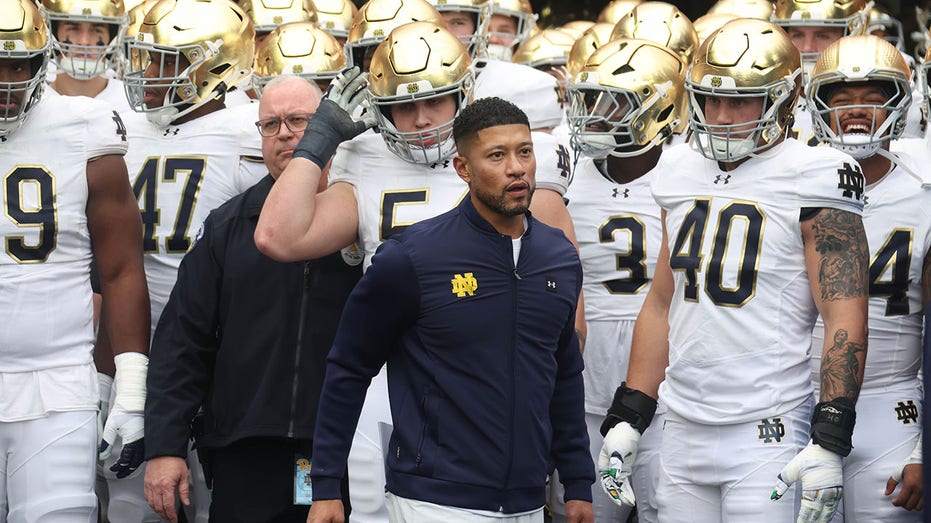
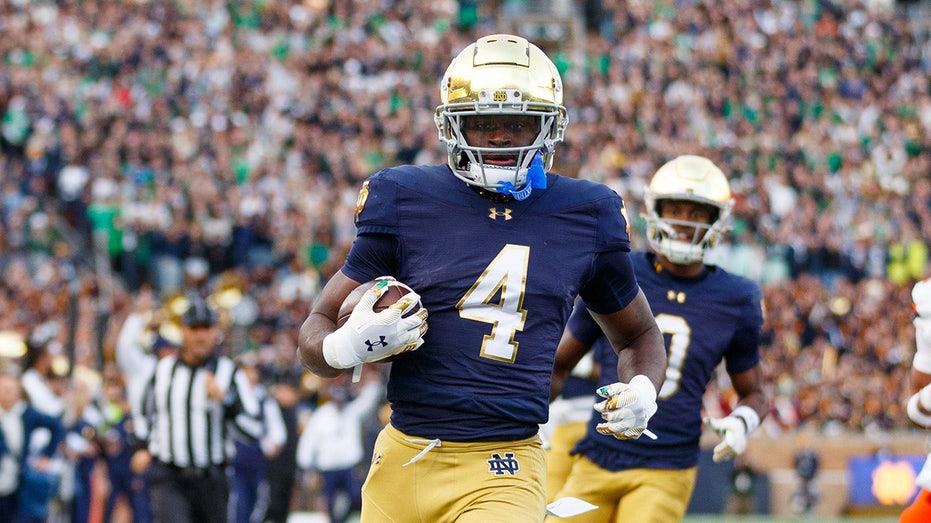
Jeremiah Love says he’s “already over” Notre Dame’s College Football Playoff snub. On the surface, that’s a star running back showing mental toughness. Underneath, it’s something bigger: a window into how elite players and programs now view the entire college football system.
Notre Dame’s decision to skip a bowl game after missing the playoff — with Love defending it as a “whole team decision” — marks a symbolic turning point. The move underscores three converging realities: the erosion of traditional bowl prestige, the increasingly player-centric economics of the sport, and the widening gap between the rhetoric of “team” and the business realities of modern college football.
The bigger picture: From reward games to risk games
To understand why Notre Dame’s choice is such a flashpoint, you have to look at how bowl games have evolved over the last 30 years.
- 1990s–early 2000s: Bowls were rewards. Seniors got one last trip, schools got national TV exposure, and fans saw matchups they’d never see otherwise. Opt-outs were essentially unheard of.
- 2014–present (Playoff era): Once the College Football Playoff (CFP) arrived, it effectively bifurcated the postseason. Two or three games mattered enormously; dozens of others became consolation prizes. Players started to act accordingly.
- Late 2010s–2020s: High-profile players began sitting out non-playoff bowls to protect their NFL futures — Leonard Fournette, Christian McCaffrey, Nick Bosa and many others. By the early 2020s, it was unusual not to see several stars absent from even major bowls.
Notre Dame is not the first program to treat a bowl as optional, but the decision hits differently because of who Notre Dame is: a historically independent, national brand that has long embraced bowls as part of its legacy. When a program like that says, in effect, “this game doesn’t reflect who we are, so we won’t play it,” it signals a deeper status shift for the entire bowl ecosystem.
What Love’s comments reveal about the new player mindset
Love’s reaction to the playoff snub — “I’m on to whatever’s next” — reflects a mindset that is increasingly common among elite players: the season is valuable as a platform, not as a closed narrative arc defined by tradition or sentiment.
Notice the priorities embedded in his remarks:
- Process over grievance: Rather than railing against the committee, he pivots immediately to preparation and future opportunities. That’s consistent with the modern training culture dominated by personal performance metrics, pre-draft positioning, and year-round development.
- Team identity as brand protection: Love argues the bowl would not “do this 2025 football team justice” because the roster would be stripped by opt-outs and transfers. That’s not just about loyalty; it’s about brand management. Notre Dame is effectively saying: the product we’d put on the field would be off-brand, so we’re unwilling to sell it.
- Future over nostalgia: For older fans, any Notre Dame team taking the field in a bowl is worth honoring. For current players, a bowl with a hollowed-out roster risks being a glorified scrimmage — with injury risk but limited upside.
Bowl games vs. the economics of risk
Behind the rhetoric about doing right by the “special” 2025 team lies a hard economic truth: non-playoff bowls increasingly ask players to assume significant risk with comparatively little personal reward.
- Injury risk: One game can cost millions in NFL earnings. Jaylon Smith — also from Notre Dame — famously suffered a catastrophic knee injury in the 2016 Fiesta Bowl, dropping from a projected top-5 pick to the second round and losing an estimated eight figures in guaranteed money.
- Limited upside: NFL teams already have a full season of tape and data. One more game rarely transforms a draft profile; it can, however, introduce new medical red flags.
- NIL and branding: Top players can now monetize their brand directly. The opportunity cost of a relatively low-stakes bowl game must be weighed against NFL prep, training, and off-season content or sponsor obligations.
From that vantage point, Notre Dame’s collective opt-out is a rational response: once the playoff is off the table, the main economic value of the game shifts from players to conferences, TV partners, and bowl organizers. Players are starting to ask why they should be the ones absorbing the risk in that equation.
Notre Dame’s brand, the playoff snub, and the committee’s message
The selection outcome itself — Miami, James Madison, Tulane, and Alabama making the field over Notre Dame — signals another subtle but important shift: brand alone is no longer enough.
Historically, Notre Dame’s national schedule and massive fan base gave it a structural advantage in rankings and bowl selections. If a program with that profile can be skipped over, it reinforces that the committee is at least attempting to prioritize a blend of metrics, strength of schedule, and conference results over pure TV draw.
That’s good for competitive legitimacy, but it has unintended consequences:
- Programs recalibrate incentives: If missing the playoff is more likely, schools must reassess what the “postseason” actually means. For some, it may increasingly mean portal strategy and NFL prep — not bowls.
- Players see confirmation: When the system treats the playoff as the only thing that truly matters, players internalize that logic. The incentive to treat non-playoff games as expendable only grows.
Commercialization on display: Samsung on the sideline
Love’s shout-out to Samsung isn’t just a casual endorsement line in a human-interest story. It encapsulates the further blending of sports science, tech, and commerce in college athletics.
- Wearables as performance infrastructure: Love talks about using Galaxy wearables to track sleep, recovery, and workouts. This reflects the broader “quantified athlete” revolution: players’ bodies are monitored like assets, and every decision (including whether to play a bowl game) is filtered through a performance and health lens.
- Endorsements as identity: When he says his watch and ring are “part of me now,” he’s not just describing utility; he’s describing personal-brand integration. The modern college star is both athlete and media property.
- Power shift to players: Deals like this give players independent leverage. They are no longer wholly dependent on school-controlled exposure. That autonomy reinforces their willingness to say no — to bowls, to risky games, to traditional expectations.
What’s being overlooked: The collateral damage
Much of the immediate reaction centers on whether Notre Dame “quit” on its season or made a smart business decision. What’s missing from much of the conversation are the secondary stakeholders:
- Non-NFL prospects on the roster: Plenty of Notre Dame players will never play professionally. For some, a bowl would be their last chance on a big stage. A team-level opt-out takes that decision out of their hands.
- Smaller bowls and host cities: Local economies — hotels, restaurants, service workers — depend on bowl tourism. If more big brands start opting out, the financial viability of many smaller bowls becomes shaky.
- Fans and alumni: For older generations, bowl trips are part of the cultural fabric. The shift from tradition to transaction changes not only what college football is, but what it feels like.
In other words, Notre Dame’s choice is rational at the top of the pyramid but disruptive lower down. That tension will define the next decade of college football.
Looking ahead: What this signals for the future of the sport
Several trends likely accelerate from here:
- More program-level opt-outs: Notre Dame just gave cover to other big brands. If a likely depleted roster is all that’s available, the argument to skip the bowl entirely becomes easier to make.
- Restructured postseason incentives: Expect growing pressure for appearance fees or enhanced NIL opportunities specifically tied to bowl participation, especially for non-playoff games.
- Further stratification of games: In practice, there will be three tiers: playoff games (treated as mandatory and legacy-defining), high-end New Year’s Six bowls (with mixed participation), and all other bowls, increasingly populated by backups and underclassmen or abandoned by top programs.
- Data-driven workload management: As wearables and sports science deepen, players and staffs will quantify risk more precisely. A bowl game coming off high snap counts and accumulated micro-injuries may look indefensible from a health perspective.
- Expanded playoff as partial solution — not cure-all: Even with a larger playoff field, opt-outs won’t disappear. They’ll simply migrate: the new fault line will be between playoff games and everything else.
The bottom line
Jeremiah Love’s calm dismissal of the playoff snub and his defense of Notre Dame’s bowl opt-out aren’t just quotes from a disappointed star. They capture a structural reordering of college football’s priorities.
Players are acting like the high-value assets they are. Programs like Notre Dame are starting to align public decisions with private calculations about risk, brand, and future recruiting. Bowls, once the sacred punctuation marks of a season, are becoming negotiable.
For traditionalists, that feels like loss. For players and many coaches, it looks like overdue realism. The real story isn’t that one team won’t play one bowl. It’s that a flagship program just signaled, loudly, that in the current system many bowls are no longer worth the cost.
Topics
Editor's Comments
The Notre Dame episode is a reminder that we’ve been telling ourselves a comforting story about college football that no longer matches reality. We still talk about bowls in the language of tradition, pageantry, and loyalty, but the decision-making framework has quietly shifted to resemble any other high-stakes labor market. Players are independent economic actors with access to medical data and endorsement deals; programs are global brands juggling recruiting optics, TV relationships, and long-term competitiveness. In that environment, it’s almost stranger that anyone still risks a non-playoff bowl than that Notre Dame walked away from one. The open question is what fills the cultural vacuum as bowls lose their grip: does an expanded playoff simply become the entire narrative, or do we see new forms of postseason or in-season competition emerge that align better with today’s incentives? If stakeholders don’t confront that misalignment honestly, more ad hoc decisions like Notre Dame’s will define the next era — and the sport will drift, rather than deliberately evolve, into its new shape.
Like this article? Share it with your friends!
If you find this article interesting, feel free to share it with your friends!
Thank you for your support! Sharing is the greatest encouragement for us.