Kyle Pitts’ Breakout and the Bucs’ Collapse: What This Walk-Off Win Really Reveals About Both Franchises

Sarah Johnson
December 12, 2025
Brief
Beyond a walk-off field goal, this Falcons-Bucs thriller revealed shifting offensive identities, Kyle Pitts’ potential turning point, and high-stakes implications for two franchises in a shaky NFC South.
Falcons’ Walk-Off Upset of Bucs Is About Much More Than a Field Goal
On the surface, the Falcons’ 29–28 walk-off win over the Buccaneers looks like a classic late-season spoiler story: eliminated team trips up a division leader on national TV. Underneath, it’s a snapshot of three much bigger NFL dynamics converging in one game: the tight end revolution, the volatility of the middling NFC South, and the razor-thin margins that define entire front-office careers.
This wasn’t just about Zane Gonzalez drilling a 43-yarder or Kyle Pitts finally having the kind of night his draft status promised. It was about how modern offenses are being re-engineered around versatile skill players, how one loss can reshape a franchise’s off-season calculus, and how a once-hyped star (Pitts) and a once-overlooked veteran (Kirk Cousins) are quietly testing the boundaries of what we thought we knew about their ceilings.
Kyle Pitts’ “Career Game” as a Turning Point, Not a One-Off
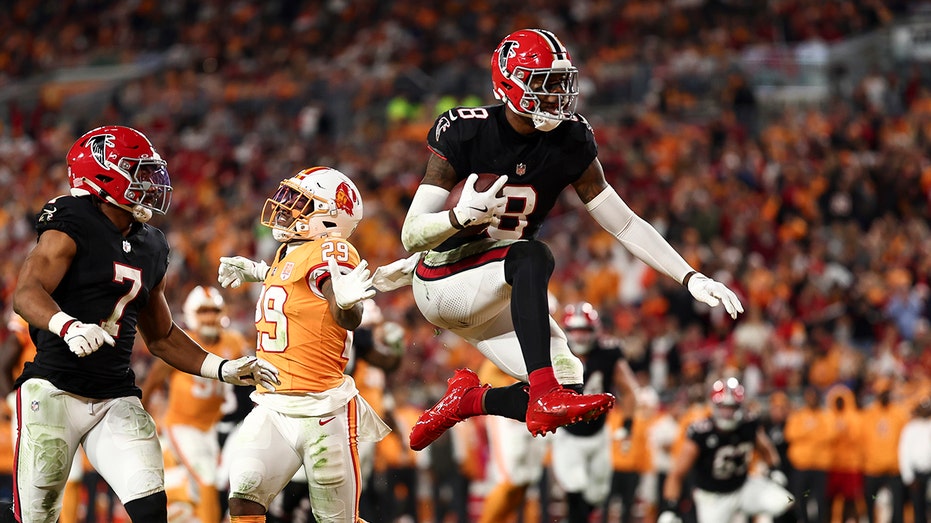
Kyle Pitts’ 11 catches for 166 yards and three touchdowns would be a headline outing for any receiver. For a tight end, it’s seismic. Historically, very few tight ends reach this level in a single game: think peak Rob Gronkowski, Jimmy Graham, or Travis Kelce in the playoffs. Pitts just placed his name on that short list in a season that, until now, had been defined more by questions than answers.
Context matters here. Pitts came into the league as the highest-drafted tight end in NFL history, taken fourth overall in 2021. The expectation was that he’d be a matchup nightmare – too big for corners, too fast for linebackers – and the centerpiece of Atlanta’s offensive future. Instead, he’s been used inconsistently through multiple offensive coordinators, quarterback changes, and a run-heavy identity under Arthur Smith that often left him on the periphery of game plans.
What we saw against Tampa Bay was the version of Pitts the league was promised: a primary option, not a luxury piece. With Drake London out, the Falcons had no choice but to treat him as WR1 in a tight end’s body. Kirk Cousins leaned into that, repeatedly hunting Pitts in high-leverage spots – red zone, third-and-long, game-deciding drive.
That shift is significant because the league is already in the middle of a tight end evolution. From Kelce in Kansas City to Sam LaPorta in Detroit, the most dangerous offenses are increasingly building in concepts where the tight end is a first-read weapon, not a safety valve. Atlanta has flirted with that idea since drafting Pitts. Thursday night was one of the first times it felt fully realized.
The question now is whether this game becomes an inflection point or just an outlier. If the Falcons treat Pitts as a true centerpiece—scheming him into motion, bunch sets, and isolated alignments the way top teams do with their stars—they’ll have a foundational piece for the post-2025 rebuild cycle. If not, this will be remembered as the night they were reminded of what they’ve been wasting.
Bucs’ Collapse and the NFC South’s Identity Crisis
The Buccaneers led 28–14 entering the fourth quarter. They had a returning Mike Evans producing like a WR1 (132 yards on six catches), a veteran quarterback in Baker Mayfield making plays, and a chance to stabilize their grip on a chaotic NFC South. Instead, they gave up 15 unanswered points, including the final walk-off field goal.
This isn’t happening in a vacuum. The NFC South has drifted from post-Brady contender to league punchline in just a few years. Since 2021, the division has been defined by mediocrity and churn:
- Multiple teams cycling through quarterbacks and offensive coordinators
- Constant “retool vs. rebuild” debates in front offices
- Low double-digit win thresholds—or lower—often good enough to take the division
The Bucs’ 7–7 record after this loss fits that broader narrative. They’re good enough to hang around but not stable enough to close out games they should win. For a franchise still living in the shadow of the Brady era, that’s dangerous territory: too competitive to bottom out, not strong enough to contend seriously.
Blowing a two-score fourth-quarter lead to a non-playoff team has consequences beyond a single column in the standings:
- Coaching scrutiny: Defensive breakdowns in the fourth quarter raise questions about game management, coverage calls, and in-game adjustments.
- Roster assessment: Front offices use games like this to decide who is part of the next iteration of the team—and who isn’t.
- Quarterback calculus: Mayfield has revived his career in Tampa, but losses like this complicate extension discussions and long-term planning.
The irony: in a weak division, this kind of misstep may still not prevent Tampa from staying in the hunt, which only deepens the strategic dilemma. Are you building for a 10-win ceiling in a bad division or aiming for something that can survive January?
Why This Game Was a Case Study in Margins
The closing sequence was chaos: Mayfield’s late interception, Cousins’ touchdown to Pitts that survived review, the failed two-point try, the Bucs’ inability to bleed clock, a near game-ending strip-sack, a pivotal dual-possession ruling, a drive started at second-and-28, and finally the Gonzalez winner.
All of that underscores how little separates “disappointing season” from “crisis mode” in the NFL. A few inches on Pitts’ elbow. A slightly different ruling on the strip-sack. One fewer holding penalty. Any of those go the other way, and we’re talking about a Bucs team with a gritty late-season win, Evans’ triumphant return, and a resilient defense that bent but didn’t break.
Instead, we’re talking about defensive collapses, late-game execution failures, and questions about whether Tampa has the mental toughness to close. One game, two completely different narratives, determined by a handful of plays.
For Atlanta, those same margins flip the conversation: from “lost season with a meaningless December game” to “signs of life around Cousins, Pitts, and Bijan Robinson.” In a league where careers and contracts are evaluated on these tiny sample sizes, that matters.
Cousins, Bijan, and the Blueprint for Atlanta’s Next Era
Kirk Cousins’ stat line—373 yards and three touchdowns—wasn’t just cosmetic. It was evidence that Atlanta may finally have the quarterback competence it has lacked since the late-stage Matt Ryan years. Cousins has always been a polarizing figure: productive but not spectacular, durable but rarely transcendent.
What he showed in this game was his value in a talent-rich but structurally confused environment. He delivered under pressure on a long-field, no-timeout drive that began with a strip-sack and a second-and-28 hole. That kind of late-game resilience is precisely what Atlanta hoped it was buying: a high-floor veteran who can elevate the offense enough for the front office to evaluate its young skill players properly.
Bijan Robinson’s 175 scrimmage yards (93 rushing, 82 receiving) further clarified that picture. He already leads the league in scrimmage yards, and the usage in this game—27 touches, both between the tackles and in space—shows Atlanta experimenting with a two-pillar model: Robinson as the multipurpose engine and Pitts as the matchup weapon.
Historically, the teams that successfully build around a young elite running back and an elite tight end do so by doubling down on multiplicity. Think the early 2010s Saints with Jimmy Graham and a rotating backfield or the modern 49ers with Christian McCaffrey, George Kittle, and positionless football. Thursday night hinted that the Falcons are finally moving in that direction rather than forcing a rigid, run-heavy identity that doesn’t maximize what they have.
What Mainstream Coverage Is Missing
Most recaps will focus on the drama—the walk-off, Pitts’ box score, the blown lead. The subtler story is structural:
- Atlanta’s front office validation: The Falcons have been criticized for taking a tight end at No. 4 and a running back at No. 8 overall in back-to-back drafts. A night where Pitts and Robinson combine for over 340 yards of offense provides ammunition for those who argue that, if you’re going to draft non-premium positions high, you must treat them like offensive hubs. This game was exactly that.
- Tampa’s defensive identity slippage: The Bucs were supposed to be a defense-first team as they navigated the post-Brady transition. Surrendering 29 points, including multiple late scoring drives, to a 5–9 team without its top receiver raises questions about whether that identity is still real—or just branding.
- The primacy of versatility: The three offensive stars in this game—Pitts, Evans, and Robinson—are all, in different ways, position-flexible. Evans can win inside and outside, Pitts can line up as a receiver or in-line, Robinson is just as dangerous split out as he is in the backfield. This is the modern NFL template. Scheme diversity isn’t a luxury; it’s a survival mechanism.
Looking Ahead: What This Means for Both Franchises
For Atlanta, this win won’t change their playoff fate this season, but it could influence everything from coordinator decisions to off-season priorities:
- Offensive philosophy: Expect more game plans that treat Pitts as a volume receiver and Robinson as a dual-threat rather than a traditional back. This game is a proof of concept.
- Contract and roster timing: A resurgent Pitts affects how Atlanta approaches his eventual extension and how aggressively they pursue another high-end receiver to complement him and London.
- Perception of Cousins: Nights like this bolster the case for Cousins as a bridge-plus option: good enough to contend in a weak division, stable enough to develop the rest of the roster.
For Tampa Bay, this is the kind of loss that shows up in January postmortems:
- Coaching evaluations: Late-game defensive lapses and conservative offensive sequences under pressure rarely escape ownership’s notice.
- Baker Mayfield’s future: Two touchdown passes and a mostly strong outing marred by a crucial interception and stalled closing drives. That’s the Baker conundrum: flashes of high-level play with just enough volatility to keep long-term commitment questions alive.
- Mike Evans’ role: His immediate high-impact return underscores his continued value. It also raises the question of whether Tampa is maximizing his final prime years—or wasting them on the treadmill of mediocrity.
The Bottom Line
This game will be remembered, in highlight packages, for a walk-off field goal and a tight end’s three-touchdown eruption. But its real significance lies in what it reveals:
- Atlanta may finally be aligning its scheme with its talent, turning Pitts and Robinson into the true offensive core they were drafted to be.
- Tampa’s margin for error in the NFC South is vanishing, and late-game collapses like this one will shape their off-season decisions as much as any season-long metric.
- In a league increasingly defined by versatility and high-leverage execution, both teams were exposed—Atlanta in its earlier inconsistency, Tampa in its inability to close.
On a random Thursday in December, two franchises got a brutally honest audit of who they are and who they might become. The standings will record only a one-point Falcons win. The tape will show something much more consequential.
Topics
Editor's Comments
What stands out most from this game is how sharply it contrasts perception with reality. On paper, the Falcons are a 5–9 team playing out the string; the Buccaneers are a .500 club trying to grind out a division title. Yet when you look past the records and into the core talent, Atlanta’s ceiling may actually be higher. They boast a rare combination of a premium tight end and a true dual-threat running back—both on rookie deals—and now a veteran quarterback capable of orchestrating complex passing concepts. Tampa, by contrast, is leaning heavily on the aging but still elite Mike Evans and a patchwork identity on both sides of the ball. The contrarian view here is that this wasn’t a typical spoiler upset at all; it was a preview. If the Falcons follow through on what this game showed them about their optimal offensive identity, they could leapfrog the Bucs in the medium term, even if the standings don’t yet reflect that future. The real risk is not that this was a fluke, but that Atlanta misreads it as one and fails to fully commit to the Pitts–Robinson-centric blueprint that was on display.
Like this article? Share it with your friends!
If you find this article interesting, feel free to share it with your friends!
Thank you for your support! Sharing is the greatest encouragement for us.