
Jelly Roll’s Fight for Gun Rights Exposes America’s Broken Notion of Redemption

Sarah Johnson
December 12, 2025
Brief
Jelly Roll’s plea to restore his gun rights exposes a deeper conflict in U.S. law: we celebrate redemption stories while maintaining lifetime bans that assume people never truly change.
Jelly Roll, Lifetime Gun Bans, and America’s Broken Ideas About Redemption
Jelly Roll’s plea for a “path to redemption” isn’t just a celebrity angle on gun rights. It’s a spotlight on one of the most entrenched contradictions in American criminal justice: we say we believe in second chances, while our laws are built to make them nearly impossible.
On its face, this looks like a familiar culture-war headline: a country star with a violent felony record wants guns back to hunt and protect himself. Underneath, it’s a story about how the U.S. uses permanent civil disabilities to quietly extend punishment for decades, long after a sentence has been served, and how that collides with public safety, celebrity, class, and faith-based ideas of forgiveness.
How We Got Here: Felons, Firearms, and “Civil Death”
To understand why Jelly Roll’s request is so fraught, you have to go back to how the U.S. treats people with felony convictions. Historically, many states imposed what scholars call “civil death”: losing core rights such as voting, serving on juries, holding office, or owning firearms.
Modern gun bans for felons emerge from a mix of 20th-century crime fears and federal law. The key pivot points:
- 1968 Gun Control Act – after the assassinations of Martin Luther King Jr. and Robert F. Kennedy, Congress created a federal ban on gun possession for people convicted of felonies.
- 1980s–1990s Crime Era – “tough on crime” politics expanded categories of people barred from guns and normalized lifetime prohibitions rather than time-limited ones.
- Post-9/11 and mass-shooting era – public safety arguments hardened around any rollback of firearm restrictions, even for people decades past their crimes.
Tennessee fits this pattern. It distinguishes between nonviolent and violent offenses but, as Jelly Roll notes, maintains effectively no real forgiveness for people with violent convictions, even long after they’ve demonstrated sustained change. A gubernatorial pardon can reduce stigma, but it often doesn’t fully erase the underlying legal disabilities.
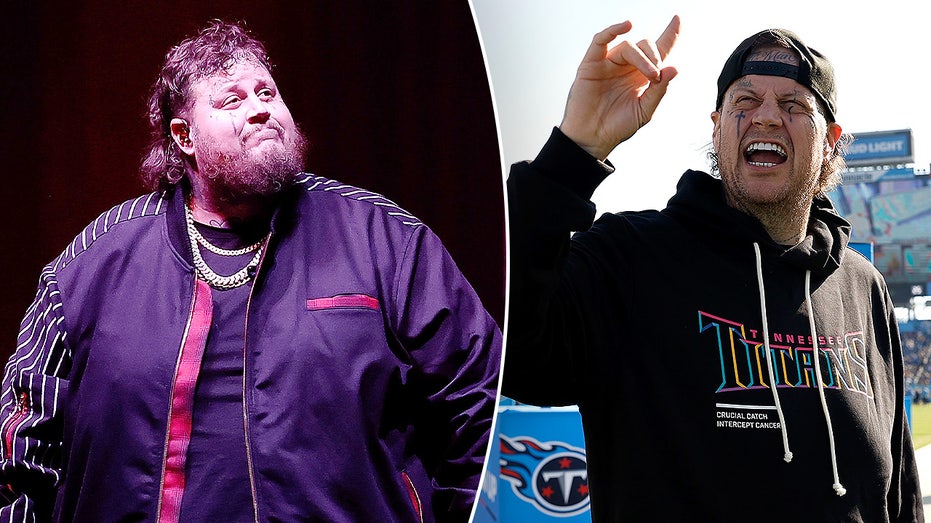
In Jelly Roll’s case, his aggravated robbery conviction at 16 – tried as an adult – permanently parked him in a category lawmakers built for society’s most dangerous, even though his life trajectory now looks like the opposite: sober, employed, tax-paying, and highly visible.
What’s Really at Stake: Redemption vs. Perpetual Risk Management
Jelly Roll’s argument on the podcast is not just about his personal desire to hunt or cut his security budget. He’s challenging the underlying logic of a system that treats a 16-year-old’s crime as an immutable risk marker at 40, 50, or 60 years old.
His line – “There should be some path to redemption. Even if it takes 30 years” – captures a core policy question: When, if ever, does the law believe that someone is no longer defined by their worst act?
Research increasingly suggests that after a certain period of crime-free living, a former offender’s risk of committing a new offense converges with that of the general population. A widely cited 2017 study by criminologist Alfred Blumstein and colleagues found that for many offenses, the “redemption time” can be under 10 years, sometimes significantly less, depending on age and crime type. Yet gun laws rarely reflect that nuance.
Instead, U.S. policy tends to default to permanent risk management:
- One serious conviction can trigger lifetime firearm bans.
- Restoration mechanisms exist in some states but are often opaque, expensive, or politically toxic to use.
- High-profile cases where someone with a prior violent conviction later commits a notorious crime can instantly freeze reform efforts for years.
Jelly Roll’s fame amplifies a debate that usually plays out quietly for people with no platform: how much ongoing risk should society tolerate in exchange for honoring rehabilitation, and who decides when that line is crossed?
The Celebrity Complication: Not Your Typical Felon-in-Possession Case
There’s also a class and visibility story here. Jelly Roll is not representative of most people living under firearm bans:
- He can spend “a million dollars plus a year in security,” a level of protection most ex-offenders could never dream of.
- He has a massive public platform to craft a narrative of redemption: documentary, interviews, awards shows.
- He is embedded in cultural categories – country music, Christianity, hunting – that traditionally align with Republican, pro-gun constituencies and lawmakers.
That mix makes him, paradoxically, both more likely to get serious political consideration and less representative of the typical person trapped by these laws. Advocates fear a world where celebrity exceptions are carved out while millions of unknown people remain under lifelong restrictions with no realistic avenue back.
This raises a critical policy question: if a state is willing to consider restoring gun rights for someone with a violent felony because he’s famous, why shouldn’t that same logic extend to a mechanic or school custodian with the same record and 20 clean years?
Religion, Redemption, and the Politics of Forgiveness
When Joe Rogan invokes Christianity’s belief in redemption, he taps into a deep cultural tension in states like Tennessee. The region’s religious language emphasizes forgiveness and transformation; its criminal laws often function as if people never truly change.
Jelly Roll’s self-description as “a redemption guy” aligns with a broader evangelical narrative: the sinner turned around by faith, family, and purpose. This resonates powerfully with many voters and politicians. But translating that theological language into policy is where the conflict begins.
Political scientist John Pfaff has argued that American penal policy is less about proportionate punishment and more about expressive politics – using harsh laws to signal moral condemnation. In that context, permanent disabilities like gun bans serve a symbolic purpose: they mark someone as forever suspect, regardless of individual transformation.
Jelly Roll is effectively asking lawmakers in a Bible Belt state: If you believe redemption is real, why does your legal code say it isn’t? That’s a difficult question for politicians who campaign on both Christian values and hardline “law and order” messages.
The Data Picture: Risk, Recidivism, and Public Safety
Any serious analysis has to grapple with public-safety concerns. People convicted of violent offenses do, on average, have higher recidivism rates than those convicted of nonviolent crimes. That reality drives much of the resistance to restoring firearm rights.
But there are crucial nuances:
- According to a 2019 Bureau of Justice Statistics study, most reoffending happens relatively soon after release. Rearrest rates drop steadily over time.
- Criminologists talk about the “age-crime curve”: crime rates spike in late teens and early 20s, then decline sharply with age. A 40-year-old with a crime at 16 is statistically very different from a 22-year-old just released.
- States that have structured processes for restoration – often requiring long crime-free periods, character references, and judicial review – have not seen clear evidence of large-scale public-safety breakdowns as a result.
None of this equals a blank check to return guns to everyone with a violent past. But it undermines the premise behind Tennessee’s “zero forgiveness” posture, especially when applied to people whose offenses occurred decades earlier.
Hunting, Mental Health, and the Cultural Meaning of Firearms
Jelly Roll emphasizes hunting as both a health practice and a cultural right: “It’s done a lot for my mental health. It’s done a lot for my physical health.” That framing matters politically.
In rural and Southern communities, hunting is not just recreation; it is:
- a cross-generational bonding ritual,
- a source of food and self-sufficiency,
- a marker of belonging in local culture.
By centering hunting rather than, say, self-defense against the government, Jelly Roll is aligning his ask with the more socially accepted end of gun culture. That’s a strategic move, whether consciously or not. It positions the issue as being about reintegrating a man into his community’s normal life, rather than arming a high-risk individual.
At the same time, his admission that he’d “cut [his security] bill in half tomorrow if I had the right to carry” underscores that this is also about personal protection. Given rising incidents of celebrity stalking, harassment, and violence, his safety concerns are not abstract. But here again, his situation is hardly typical; most formerly incarcerated people can’t hire private security at any price.
What a Real “Path to Redemption” Could Look Like
Strip away the celebrity and this story points toward a broader policy agenda that many criminal-justice experts already advocate:
- Time-limited firearm bans – shifting from automatic lifetime bans to structured review after a substantial crime-free period (e.g., 10–15 years for violent offenses), with clear criteria.
- Individualized assessments – judges or specialized boards weighing factors like age at offense, conduct since release, mental-health status, employment, and community ties.
- Transparency and accessibility – making restoration processes understandable and affordable, not reserved for those with lawyers, money, or fame.
- Narrow carve-outs – some countries allow restricted firearms access for sporting or hunting under strict conditions without full restoration of all gun rights.
Such systems already exist in various forms. States including Pennsylvania, Washington, and Minnesota have more structured mechanisms for restoring firearm rights under specific conditions. The federal government used to run a program allowing case-by-case relief from firearm disabilities but defunded it in the early 1990s, effectively turning the ban into a life sentence.
Jelly Roll’s case highlights how politically risky it is to revisit that decision – but also how increasingly out of step our laws are with both the science of desistance and the rhetoric of redemption.
Looking Ahead: Why This Story Won’t Stay in the Entertainment Section
Several trends suggest this won’t be a one-off conversation:
- Surging interest in criminal-justice reform has already led to major changes in sentencing, marijuana laws, and voting rights for people with felonies. Firearm rights are a logical – if politically explosive – next frontier.
- Christian and conservative reform movements have increasingly embraced the language of second chances, particularly around addiction and nonviolent offenses. Jelly Roll’s explicitly Christian, country-music persona could bridge that into more complex conversations about violent crime and youth offenders.
- The Supreme Court’s recent gun decisions, especially the 2022 Bruen ruling, are forcing courts to reevaluate firearm restrictions under historical-tradition tests. Some federal courts have already questioned the blanket constitutionality of lifetime bans for nonviolent felons; violent felonies will be the harder test case.
If Tennessee’s governor grants Jelly Roll a pardon but the state still bars him from gun ownership, it could create exactly the kind of high-visibility contradiction that lawmakers hate: a man publicly celebrated as a model of transformation, legally treated as if nothing has changed since he was 16.
Whether that leads to reform or a political backlash will depend on how the debate is framed: as a narrow exception for a famous artist, or as part of a broader rethinking of how long punishment should last in a country that claims to believe in redemption.
The Bottom Line
Jelly Roll’s push for the right to hunt – and to carry a gun – exposes more than his personal history. It reveals the deep tension at the heart of American criminal justice: we speak in the language of second chances while designing laws that assume people never really change.
If Tennessee and other states are serious about rehabilitation, they will eventually have to answer the question he’s asking out loud: How, exactly, does someone earn their way back to full citizenship – and who gets to decide when they’ve finally done enough?
Topics
Editor's Comments
What’s striking about the Jelly Roll story is how comfortably it sits in the entertainment section while dealing with questions that criminal-justice scholars have wrestled with for decades. We are watching, in real time, a famous man leverage his platform to challenge a policy architecture that millions of anonymous people live under silently. That raises an uncomfortable question: will policymakers be more willing to reconsider lifetime firearm bans because the petitioner is a Grammy-winning Christian country artist with a redemption arc, rather than a warehouse worker with the same record and 25 clean years? If reform grows out of celebrity exceptions, it risks deepening inequity even as it nods toward mercy. At the same time, public opinion often shifts when abstract issues acquire a human face. The test will be whether Tennessee, and states like it, use this moment to build a coherent, evidence-based path to restoration for everyone—or simply devise a bespoke solution for one man whose story happens to sell records and reassure voters they still believe in second chances.
Like this article? Share it with your friends!
If you find this article interesting, feel free to share it with your friends!
Thank you for your support! Sharing is the greatest encouragement for us.