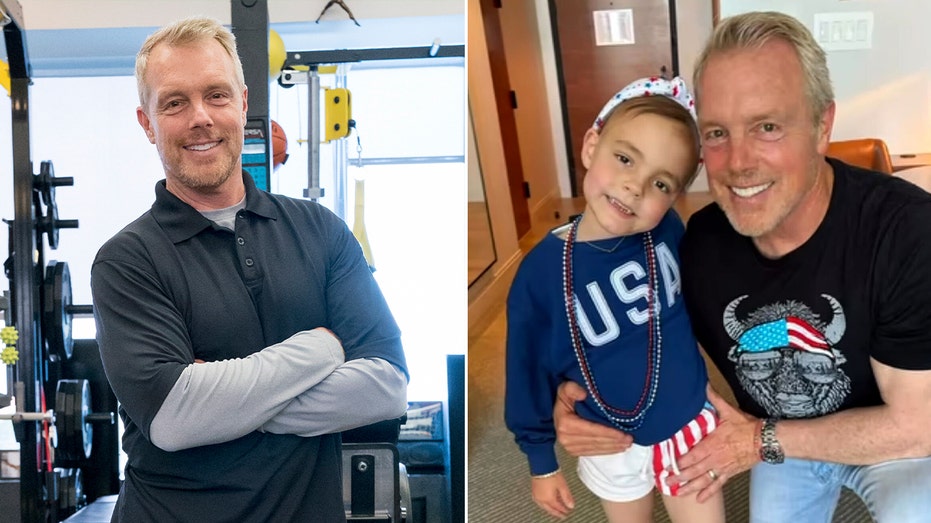

Beyond the Before-and-After: What Jelly Roll’s 300-Pound Weight Loss Reveals About Addiction and America

Sarah Johnson
December 12, 2025
Brief
Jelly Roll’s 300‑pound weight loss is more than a celebrity makeover. It exposes how addiction, class, touring culture, and shifting science are rewriting what obesity and recovery mean in America.
Jelly Roll’s 300-Pound Weight Loss Is Really a Story About Addiction, Class, and How America Treats Obesity
Jelly Roll’s revelation that he believed he was “six to 12 months away from missing it” at over 500 pounds is being framed as an entertainment story. In reality, it’s a case study in how obesity, addiction, mental health, and class collide in America—and how our culture is just beginning to shift from blaming individuals to understanding biology, trauma, and environment.
His transformation isn’t just about one artist losing 300 pounds. It’s a window into why the U.S. has some of the highest obesity rates in the developed world, why traditional “willpower” narratives keep failing, and how a new, addiction-informed approach to weight and mental health could rewrite both medical practice and public policy.
The Bigger Picture: From Personal Crisis to a National Pattern
Jelly Roll’s story follows a depressingly familiar arc, just in an extreme form:
- Morbid obesity (480–560 lbs in a single year of fluctuation)
- Multiple heart issues before 40
- Untreated or under-treated mental health problems
- Food as addiction, not just overeating
- Career success masking physical collapse
What’s striking is his own framing of his weight: he stopped seeing it as a “failure of willpower” and started understanding it as a “biological loop” he didn’t know how to interrupt. That phrase puts him on the leading edge of a scientific shift that’s been underway for years.
For decades, obesity in America has been moralized: too much food, not enough discipline. But research has been telling a more complicated story. The U.S. adult obesity rate has more than doubled since the 1980s; roughly 42% of adults are now obese, and about 9% have severe obesity (BMI ≥ 40). Those numbers moved too fast to be explained by genetics alone. Instead, researchers point to ultra-processed foods, chronic stress, disrupted sleep, socioeconomic factors, and what Jelly Roll himself calls “addiction.”
His admission—“I never planned on living … at least when I die my kids might be OK”—is a brutal encapsulation of something public health statistics rarely capture: how despair, trauma, and self-destructive expectations can shape a body long before heart disease shows up on a chart.
What This Really Means: Obesity as Addiction, Not Just Lifestyle
One of the most important lines in his interview is easy to miss: he stopped treating overeating as a moral flaw and started seeing it as a biological loop. That framing echoes a growing body of research on food addiction, particularly around ultra-processed foods high in sugar, refined carbs, and fats.
The parallels to substance addiction are increasingly clear:
- Dopamine pathways: Highly palatable foods light up reward circuits in the brain similarly to addictive drugs.
- Tolerance and escalation: People often need more of the same food stimulus to get the same emotional relief.
- Withdrawal-like symptoms: Irritability, cravings, and distress when trying to quit or restrict.
- Continued use despite harm: Eating patterns persist even as health, relationships, and mobility deteriorate.
Jelly Roll’s description of his weight swinging between 480 and 560 pounds in a single year—an 80-pound range—is consistent with the binge-restrict cycle clinicians see in addiction-like eating patterns. It’s not just “eating too much”; it’s being trapped in a neurochemical loop that punishes attempts to change.
His turning point is also telling. The catalyst wasn’t a lab number or a doctor’s warning. It was relational and existential:
- Realizing his son played football with his uncle instead of his father
- Recognizing his sex life was “terrible” and that his wife was losing intimacy because of his size
- Seeing his family cheer for a simple walk, and feeling the guilt and love in that moment
This tracks with what therapists and addiction specialists often see: change tends to stick when it’s anchored not in shame about the body, but in love, connection, and a reimagined future self.
Expert Perspectives: Where Medicine and Mental Health Are Catching Up
Jelly Roll’s shift in thinking mirrors a broader movement in clinical practice: treating obesity, especially at extreme levels, as a chronic, relapsing condition rooted in biology and environment, not just choice.
Endocrinologist and obesity specialist Dr. Caroline Apovian has argued for years that the “eat less, move more” narrative is dangerously simplistic. Hormones like leptin, ghrelin, and insulin, as well as the brain’s reward circuitry, influence hunger and cravings in ways willpower alone rarely overrides long-term. That’s why so many weight-loss attempts fail after initial success: the body actively fights to return to its highest weight set point.
At the same time, addiction psychiatrists emphasize that trauma and instability—both of which Jelly Roll has openly discussed in past interviews—make people more vulnerable to self-soothing behaviors, whether through substances, food, or both. His comment, “I never planned on living,” is not just a throwaway line; it’s a classic marker of someone who has internalized an early expiration date, often shaped by childhood chaos, incarceration, poverty, or violence.
His inclusion of therapy in the same breath as diet changes is crucial. Weight-loss stories usually spotlight cardio routines and diet plans; they rarely foreground the slow, unglamorous work of therapy. But psychologically, that may be the linchpin. You cannot sustainably change behavior if your underlying narrative is, “I’m not going to live long anyway.”
Data & Evidence: How Close Was He to the Edge?
Was Jelly Roll exaggerating when he said he was 6–12 months from death? No one can time it that precisely, but the risk profile he describes is brutal:
- Weight over 500 lbs: This typically implies a BMI well over 60 for an average-height man, a category associated with sharply heightened risk of heart failure, sleep apnea, diabetes, and sudden death.
- "Multiple heart issues" before 40: Developing heart problems that young, at that weight, combined with constant travel, drastically elevates the odds of a cardiac event.
- Traveling 280 days a year, 200–250 flights: Long flights and prolonged sitting increase the risk of blood clots and pulmonary embolism, especially in severely obese individuals.
According to CDC data, severe obesity markedly shortens life expectancy—by up to 8–10 years in some estimates. Add high stress, erratic sleep, a relentless touring schedule, and a history of substance use, and his sense that he could “go any day” was not melodrama; it was logical self-assessment.
His age is also a pivot point. He describes turning 39 and realizing he’d “never met a 500-pound 40-year-old.” It’s crass but accurate: most people who reach that level of obesity at that age either die early or become medically disabled. There are very few elderly people at that size for a reason.
What’s Being Overlooked: Class, Touring Culture, and the Economics of Obesity
Mainstream coverage tends to flatten this into a redemption arc: man almost dies, gets serious, loses weight, lives happily ever after. What’s missing are the structural forces that made his weight both predictable and profitable.
Class and food environment: Jelly Roll has roots in working-class and carceral environments where cheap calories, not balanced nutrition, are the default. Ultra-processed foods dominate low-income neighborhoods, and the people who grow up in those environments often internalize not just habits, but a sense that long, healthy life is not something people like them get to have.
Touring as a health hazard: The touring industry treats bodies as disposable. Late nights, alcohol-saturated environments, terrible food options, time zone shifts, and relentless performance pressure create near-perfect conditions for self-destruction. A 500-pound artist on 250 flights a year is not an outlier in terms of lifestyle risk—he’s just a more visible version.
Obesity as part of the “brand”: In some genres, a larger-than-life physical presence becomes part of the persona. Fans get attached to the body as symbol. When artists change, especially drastically, the public can react with discomfort or even hostility, accusing them of becoming “inauthentic.” That dynamic can quietly discourage change even when death is on the line.
Looking Ahead: A New Template for Public Figures and Public Health
Jelly Roll’s narrative does two important things culturally:
- It reframes obesity as an addiction-like, biologically reinforced condition rather than a simple moral failure.
- It models a recovery path that blends incremental habits (10,000 steps, diet changes) with therapy and a deeper reimagining of his future.
His choice to speak explicitly about sex, fatherhood, and shame is also significant. It drags often-hidden consequences of severe obesity into the light: not just lab numbers, but the inability to play with your kid, to be intimate with your partner, to believe you’ll live to see 70. Those details make public health data emotionally legible.
There are also policy implications. If a high-earning artist with resources, access to experts, and a powerful professional incentive to stay alive still nearly eats himself to death, what does that say about the odds for a low-wage worker juggling multiple jobs, living in a food desert, with no therapist and no time?
We’re already seeing a medical pivot with the rapid rise of GLP‑1 drugs (like semaglutide) to treat obesity. Jelly Roll’s more behavioral and therapeutic path doesn’t negate that trend; it complements it. The likely future of obesity treatment is multimodal: medication, therapy, environment change, and sustainable physical activity—not a single “miracle” fix.
The Bottom Line
Jelly Roll’s story is not just a feel-good transformation tale. It’s a warning and an opportunity.
The warning: America’s food culture, mental health crisis, and work patterns—especially in high-burnout industries like entertainment—are producing more people who, like him, quietly assume they will die young, and eat, drink, or use drugs accordingly.
The opportunity: when someone with his platform names obesity as addiction, centers therapy alongside diet and exercise, and openly admits he never expected to grow old, he challenges an entire culture to rethink what we consider “normal” and what we’re willing to tolerate—from our food systems, our health care, and our workplaces.
If we listen carefully, this is more than a celebrity weight-loss story. It’s a snapshot of where American health—and American hopelessness—really stand in 2025.
Topics
Editor's Comments
What strikes me most about Jelly Roll’s account is how quietly normalized early death had become in his own mind. The idea that he “never planned on living” is not just a personal tragedy; it’s a reflection of broader social hierarchies of whose lives are expected to be long and healthy. People from wealthier, more stable backgrounds grow up assuming they’ll reach retirement age. People from backgrounds marked by incarceration, addiction, and poverty often assume the opposite. That expectation shapes behavior long before a doctor ever uses the word ‘obesity.’ If you don’t believe you’ll be around at 70, the incentive to protect your future self collapses. This is why purely individualistic health messaging misses the mark. Until we reckon with the environments and narratives that make early death feel inevitable for entire swaths of the population, we’ll keep treating stories like Jelly Roll’s as exceptional redemption arcs rather than symptoms of a deeper, systemic failure.
Like this article? Share it with your friends!
If you find this article interesting, feel free to share it with your friends!
Thank you for your support! Sharing is the greatest encouragement for us.