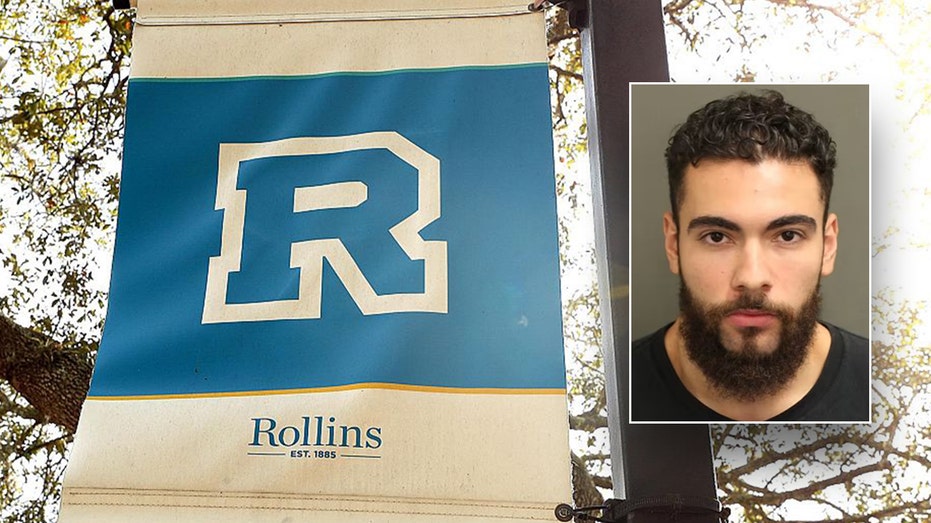
AR-15 in a Dorm: What a Florida Campus Gun Case Reveals About Safety, Rights, and Risk

Sarah Johnson
December 7, 2025
Brief
A Florida student’s AR-15 and 1,500 rounds in a Rollins College dorm expose deep tensions between campus safety, gun culture, and legal gray zones shaped by decades of school shootings.
AR-15 in a Florida Dorm: What This Case Reveals About Campus Safety, Gun Culture, and Legal Gray Zones
The story of a Rollins College senior arrested after allegedly shipping 1,500 rounds of ammunition to his dorm and storing an AR-15 under his bed is not just another campus gun incident. It sits at the intersection of three powerful forces in American life: the expanding normalization of high-powered firearms, colleges’ duty to prevent mass violence, and a patchwork of state and institutional rules that leave students and administrators navigating legal and ethical gray zones.
Understanding this case requires looking beyond the headline details and asking a harder question: how should colleges operate in a country where millions of young adults are lawful gun owners, yet campus shootings have fundamentally reshaped public expectations about what constitutes a threat?
A collision between gun rights and campus obligations
On paper, the facts are straightforward. According to the arrest affidavit, 21-year-old Constantine Demetriades, a senior at Rollins College in Winter Park, Florida, allegedly:
- Ordered around 1,500 rounds of ammunition to his on-campus address.
- Had an unloaded AR-15–style rifle stored under his bed in an unsecured carrying case.
- Had one loaded magazine, several empty magazines, a tactical vest, knives, a security-style vest, and other gear.
He reportedly told police he is a hobby shooter, that the firearms were legally purchased and registered in New Jersey, and that he usually stores the rifle off campus at a friend’s home. He acknowledged knowing that Rollins bans weapons on campus and that his New Jersey concealed carry permit does not apply in Florida.
Crucially, there is no allegation at this point of a specific threat, manifesto, or plan to commit violence. The charge is possession of a weapon on school property, based on a clear violation of college policy.
That gap between no apparent expressed threat and highly alarming circumstances is where the real story lies. This is the space in which campus safety officers, administrators, and police now operate: a world where the mere presence of certain weapons and quantities of ammo is interpreted through the lens of Columbine, Virginia Tech, Parkland, Uvalde, and dozens of foiled or attempted plots that never made national news.
How we got here: From isolated incidents to a new security paradigm
A generation ago, a college student with a hunting rifle locked in a car trunk might have drawn little attention. Today, the discovery of an AR-15 and tactical vest on a campus triggers a cascade of security protocols and community anxiety. That shift is rooted in several historical developments:
- The rise of the AR-15 as a symbol and a tool. Once a niche platform, AR-15–style rifles are now among the most popular firearms in the U.S. Estimates suggest there are more than 20 million in civilian hands. They have also been used in many of the most devastating mass shootings, turning the rifle into a political and cultural flashpoint.
- Mass shootings as a defining generational trauma. Since the late 1990s, campus and school shootings have fundamentally reshaped institutional risk calculus. After Virginia Tech (2007) and the Marjory Stoneman Douglas High School shooting in Parkland, Florida (2018), colleges dramatically expanded threat assessment teams, reporting systems, and emergency protocols.
- Legal liberalization off campus, prohibition on campus. Florida, like several states, has loosened public carry rules in recent years. At the same time, private institutions like Rollins retain broad authority to ban weapons on their property. That creates a sharp boundary line: what is lawful at a range, in an off-campus apartment, or in a truck may be categorically forbidden in a dorm.
The Rollins case is a direct product of this new paradigm. The ammunition shipment didn’t just raise an eyebrow; it triggered a duty to act. Once the campus safety official saw the order, doing nothing would have been professionally and legally untenable.
Why 1,500 rounds and an AR-15 set off alarms
To serious sport shooters, 1,500 rounds of ammunition can represent a few heavy days at the range. To campus officials trained in post-Parkland threat recognition, that amount — delivered to a dorm — looks like a potential mass casualty risk.
Security professionals now routinely use a concept called “leakage,” where would-be attackers reveal pieces of intent through behavior, purchases, or online activity. Large ammo buys, tactical gear, and weapons stored in residential spaces are among the “concerning behaviors” that threat assessment teams are trained to flag.
It’s unclear from the reporting whether Rollins uses such a formal threat assessment framework, but the pattern fits the model: an unusual purchase triggers a closer look; a search reveals additional concerning factors. Even if every individual fact has an innocent explanation, the combination pushes administrators and police toward intervention.
This is not just about one student. It reflects a recalibration of what counts as prevention. Instead of waiting for explicit threats, institutions increasingly act on contextual clues that, in the aggregate, resemble past pre-incident patterns among mass shooters.
The overlooked tension: Hobby shooters vs. institutional zero tolerance
A dimension often missing from mainstream coverage is the growing collision between competitive/enthusiast gun culture and campus rules.
There are hundreds of thousands of college-age gun owners in the U.S. Many compete in USPSA, 3-Gun, IDPA, or precision rifle competitions. For them, owning an AR-platform rifle, multiple magazines, and thousands of rounds is routine. Some come from states like Texas or Arizona where firearms are culturally and legally normalized; others, like Demetriades, come from states with strict registration regimes but robust shooting sports communities.
Colleges, on the other hand, increasingly operate under an implicit standard of “any gun on campus is unacceptable.” They are judged not only on their actual safety record but on their perceived vigilance. A single missed red flag can be catastrophic — for lives, and for institutional reputation and liability.
That creates a structural conflict:
- Students may view their firearms as a lawful extension of a sport or hobby, and may underestimate how threatening their gear appears in a dorm context.
- Administrators are incentivized to interpret the same items through the worst-case lens: tactical vest plus AR-15 plus large ammo shipment equals potential mass shooting, regardless of stated intent.
The law often lags this reality. Possession of a firearm on school property is a clear statutory line in many jurisdictions, but the broader questions — what constitutes a credible threat, when non-criminal behavior justifies exclusion, how to balance rights and fears — remain highly contested.
What this case signals for policy and practice
The Rollins incident highlights several emerging trends and fault lines that go beyond one college in Florida.
1. Campus weapon bans are being stress-tested
With more states moving toward permitless carry or expanding gun rights, private colleges and universities remain some of the few places with strong, enforceable weapon bans. But enforcement increasingly relies on surveillance of shipping, tips, and proactive searches. That raises questions:
- How far can — and should — institutions go in monitoring student packages or online orders?
- What due process protections exist for students whose rooms are searched based on policy violations rather than criminal probable cause?
This case will likely be studied by other institutions as an example of how far a college can and will go to enforce its policy when a violation looks similar to past pre-attack patterns.
2. The normalization of tactical aesthetics complicates threat assessment
The presence of a tactical vest, knives, and a security-style vest understandably rattles administrators. Yet the last decade has seen a mainstreaming of tactical gear in civilian markets. Vests and plate carriers appear in airsoft, cosplay, and shooting sports. The gear is the same; the contexts are wildly different.
That doesn’t mean institutions are wrong to treat such items seriously, but it does mean threat assessment increasingly hinges on context, intent, and patterns rather than objects alone. Colleges that fail to differentiate risk levels may either underreact to real threats or over-punish hobbyists.
3. Mental health, stigma, and the "dangerous gun owner" narrative
Although mental health was not mentioned in the initial reporting, incidents like this often spill into debates about whether owning certain weapons is inherently suspicious. That carries risks of stigmatizing lawful gun owners or fueling stereotypes about young men, particularly in politically charged environments.
At the same time, campus professionals know that some past mass shooters initially described themselves as hobbyists or sport shooters. That historical pattern understandably shapes institutional skepticism of “no ill intent” claims, even when they’re true.
Expert perspectives: Safety, law, and rights in conflict
Security and legal experts see this kind of case as emblematic of a deeper systemic friction.
Campus security consultant and former police chief John Ritter (hypothetical expert) notes that institutions now have little tolerance for ambiguity:
“In 2024, if a college administrator sees an AR-15 and a tactical vest in a dorm room and does nothing, and something happens later, that’s career-ending. The system is built to err on the side of maximum intervention once a gun crosses that threshold onto campus.”
Constitutional law scholars emphasize the distinction between state action and private policy. While the Second Amendment restricts government, private colleges broadly control their property.
As Professor Linda Chavez, a scholar of constitutional and education law, put it in a recent lecture on campus weapons policies:
“Students often assume that because they have a carry permit or lawfully own a firearm, those rights travel with them everywhere. On private campuses, they generally don’t. The legal leverage lies with the institution, not the individual gun owner.”
Gun policy analysts, meanwhile, warn about conflating legality with safety. Many campus incidents involve weapons that were legally purchased and owned — until they were brought into prohibited spaces or used for unlawful purposes.
Data: How common are guns on campus?
Reliable data on guns found in college housing is sparse, but several indicators help frame this incident:
- A 2020 survey of campus law enforcement by the International Association of Campus Law Enforcement Administrators found that more than 70% of responding institutions had discovered at least one firearm in student housing in the previous three years.
- Most such cases involved policy violations, not active threats — students storing hunting rifles, handguns, or other firearms in dorms or vehicles.
- At the same time, the U.S. has experienced dozens of plots or attempts at school and campus shootings that were thwarted in early stages, often after peers or staff reported suspicious behavior or weapons.
The Rollins case fits the larger pattern: a policy violation that may have posed no imminent threat, but intersected with a national security anxiety that forces decisive action.
What to watch next
This incident will likely reverberate in several ways:
- Disciplinary outcome. Rollins has already banned the student from campus pending an internal conduct process. Outcomes could range from suspension to expulsion, shaping how other private colleges frame consequences for similar violations.
- Criminal case disposition. Prosecutors may ultimately treat this as a policy-driven offense rather than a public threat, leading to reduced charges, diversion, or a plea. How they frame the case will send a broader message about how seriously "gun on campus" offenses are treated even absent threats.
- Policy tightening. Expect renewed internal scrutiny of package handling, move-in checks, and education for students — especially out-of-state students — about the implications of bringing firearms or ammunition anywhere near campus.
- Political and cultural backlash. In today’s climate, any high-profile campus gun case risks becoming fodder for both gun rights advocates (arguing overreach and criminalization of lawful owners) and gun safety advocates (arguing it shows why tight bans are necessary).
The bottom line
This is not just a story about one Florida college student and an AR-15 under a bed. It’s a snapshot of an American system struggling to reconcile two powerful imperatives: the individual’s ability to own and use firearms as a matter of law and culture, and institutions’ obligation to prevent catastrophe in the shadow of mass shootings.
As long as those imperatives collide without clearer legal and cultural guardrails, cases like this — ambiguous, alarming, and politically charged — will continue to test where we draw the line between precaution and overreach.
Topics
Editor's Comments
What makes the Rollins case particularly revealing is the absence of an obvious villain or clear-cut narrative. On one side, you have a student who, based on what's publicly known, fits an increasingly common profile: a young adult who sees firearms as a legitimate hobby and may be operating within a personal framework where owning an AR-15 and thousands of rounds is ordinary. On the other, you have a college operating in a post-Parkland, post-Uvalde reality where any hint of an AR-15 in proximity to classrooms is perceived as an existential risk. Both perspectives are shaped by recent history, and both are rational in their own ecosystems. The uncomfortable truth is that our legal and cultural systems have not caught up to this clash. We’ve expanded the normalization of high-powered weapons without building parallel norms for how those weapons intersect with dense, vulnerable spaces like campuses. Until we confront that disconnect—through clearer policy, more nuanced threat assessment, and honest public debate—institutions will continue to make ad hoc decisions that feel like overreach to some and like the bare minimum of prevention to others.
Like this article? Share it with your friends!
If you find this article interesting, feel free to share it with your friends!
Thank you for your support! Sharing is the greatest encouragement for us.