Diego Pavia’s F-Bomb and the Heisman: A Clash Between Player Power and Old-Guard Gatekeepers

Sarah Johnson
December 18, 2025
Brief
Diego Pavia’s F-bomb at Heisman voters exposes a deeper clash between empowered athletes and entrenched media gatekeepers in the NIL era, raising questions about power, image, and the Heisman’s legitimacy.
Diego Pavia vs. the Heisman Voters: What a Four-Letter Word Reveals About Power, Image, and College Football’s New Economy
Diego Pavia’s “F--- all the voters” outburst, and the very public rebuke from Heisman voter and columnist Chase Goodbread, is not really about one quarterback losing his temper. It’s a flashpoint in a much larger collision: old-guard college football culture versus a new era of player empowerment, NIL money, and social media authenticity. The language may be crude, but the underlying fight is about who gets to control the narrative in a billion-dollar industry built on the labor—and emotions—of young athletes.
On the surface, this is a familiar storyline: a star player feels snubbed, lashes out, apologizes, and the university scrambles to repair the brand. But look deeper, and Pavia’s Instagram caption and Goodbread’s “punk move” column expose deeper tensions over the Heisman’s credibility, the expectations placed on 20-something athletes in a hyper-commercialized system, and the uncomfortable reality that the adults cashing in on college football still demand deference from the players who make it all possible.
How We Got Here: The Heisman as a Cultural Institution
The Heisman Trophy has long been more than a football award. Since 1935, it has functioned as a cultural symbol of not just on-field excellence but also character, poise, and a certain polished brand of leadership. Historically, Heisman winners are presented as clean-cut faces of the sport, even when the reality of their lives and programs is far more complicated.
At the same time, the award has always been shaped by politics and perception as much as by statistics. Regional bias, media exposure, and program prestige are baked into the process. Players at blue-blood programs with national TV slots have long had an advantage over equally talented players from smaller or less historically relevant schools. Behind the curtain, a large voting bloc of media members—whose access and status often depend on maintaining relationships inside the sport—effectively gatekeep who gets an invitation to New York.
Within that context, Goodbread’s column is telling. He doesn’t just criticize Pavia’s language; he invokes Pavia’s age, degrees, legal battles with the NCAA, and NIL earnings to argue that the quarterback should know better than to anger the voters. The subtext is clear: we gave you a seat at the table; you owe us deference. That’s an old model of power asserting itself at a moment when players have more leverage than ever before.
The New College Football Economy: NIL, Courts, and Controlled Authenticity
Pavia isn’t an average undergrad. He’s a six-year college player who reportedly beat the NCAA in court to gain extra eligibility and leveraged his performance into NIL money. That is exactly the kind of trajectory the post-2021 landscape was supposed to enable: athletes using the courts and market value to reclaim a piece of the revenue they generate.
But NIL hasn’t actually democratized power; it has monetized it. Universities and brands now market authenticity as part of a player’s appeal, as Vanderbilt’s athletic director Candice Lee hinted when she said Pavia’s “authenticity has been nurtured and celebrated here.” In other words: be fiery, passionate, and unapologetically yourself—up to the point where it threatens institutional relationships or public image.
Pavia crossed that invisible line by turning his frustration on the voters themselves, not just on the result. That makes his outburst dangerous in a way that, say, trash talk toward an opponent is not. He didn’t just break decorum; he briefly challenged the legitimacy of the people whose judgment underpins the Heisman’s authority.
That’s why the response was so swift and so moralizing. Goodbread’s “punk move” and “jackassery” rhetoric doesn’t merely express disapproval; it reasserts a hierarchy: the veteran columnist and voter as arbiter of maturity, and the player—despite his age, degrees, and legal savvy—as someone who needs to learn humility.
Emotion vs. Image: The Impossible Standard for Star Athletes
What’s striking is not that Pavia was emotional after finishing a distant second—Mendoza received 643 first-place votes to Pavia’s 189—but that the system demands he process a deeply personal professional disappointment in real time, in a media-saturated environment, with the emotional precision of a corporate spokesperson.
High-performance psychology research consistently shows that elite athletes operate under extreme emotional pressure. Dr. Mark Aoyagi, a leading sports psychologist, has noted in multiple interviews that “identity fusion”—where a person’s self-worth merges with performance—makes losses feel existential, not just professional. Combine that with a once-in-a-lifetime stage and months of hype about being “the best player in college football,” and the volatility is predictable.
Yet public reaction, especially from decision-makers in the sport, often treats any misstep as a character failing rather than a predictable human response from a 20-something whose career trajectory, earnings potential, and legacy are on the line. Pavia apologized quickly and thoroughly, praising Fernando Mendoza and the other finalists, and acknowledging he “did not represent myself the way I wanted to.” That part of the story is getting less attention than the original four-letter word.
What This Really Says About the Heisman and Its Voters
There’s another uncomfortable angle here: Pavia’s frustration speaks to a broader skepticism about the Heisman process itself. In recent years, critics have questioned whether the award genuinely reflects on-field value or simply reinforces media narratives and brand visibility.
Consider recent trends:
- Quarterback bias: Since 2000, the vast majority of winners have been quarterbacks, despite dominant seasons by players at other positions.
- Program prestige: Players from blue-chip programs garner more media coverage and thus more visibility with voters, skewing the field.
- Late-season recency effect: Primetime performances in November and championship games disproportionately shape voting—even if earlier-season consistency suggests a different picture.
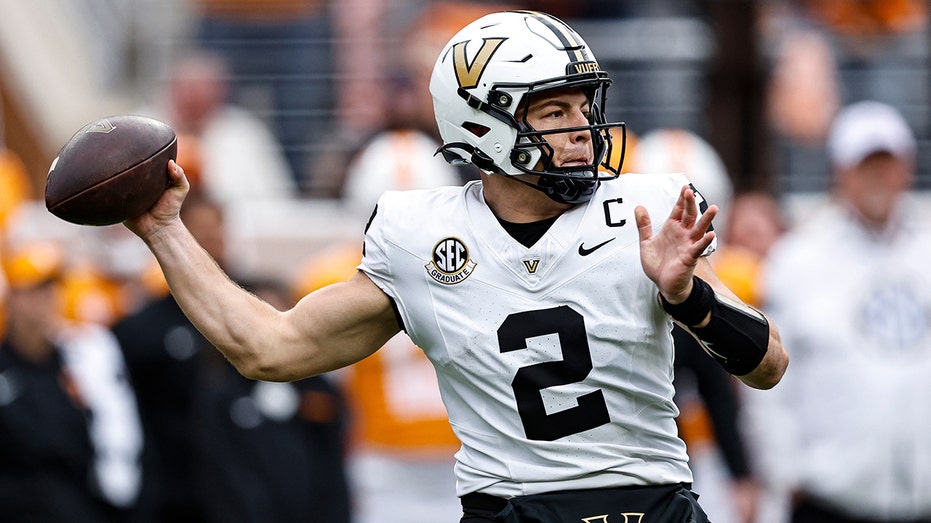
Pavia’s numbers—71.2% completion rate, 3,192 passing yards, 27 passing TDs, 9 rushing TDs, 826 rushing yards—are elite by SEC standards, and Vanderbilt went 10–2, ranking No. 14 nationally. Historically, a quarterback putting up those numbers in the SEC at a school that’s not traditionally a powerhouse would be considered a compelling narrative. That he still lost decisively fuels the sense that the criteria are more opaque and subjective than the mythology around the award suggests.
This is not to argue that Mendoza is undeserving; by all accounts, he had a spectacular season. The point is that when the process is opaque and narrative-driven, players who feel snubbed are more likely to see the outcome as political rather than purely meritocratic. Pavia said on air that “numbers and tape don’t lie,” effectively staking his claim on objective performance in a system that has never been purely objective.
Media Power and the Policing of Respect
Goodbread’s column is also a reminder of how media power operates in college sports. As a Heisman voter, his role is ostensibly to evaluate on-field performance. But in practice, he—and others like him—also shape the moral boundaries of acceptable behavior, publicly shaming players who violate them.
This dual role creates a feedback loop: media members both decide who gets acclaim and police how those denied that acclaim are allowed to react. When a player lashes out, the same media ecosystem that profits from amplifying his brand and personality pivots to framing him as immature or lacking character. It’s a powerful disincentive for any athlete contemplating challenging the system.
There’s a contrast worth noting: when coaches or administrators publicly criticize referees, playoff committees, or even their own conferences, the tone is often framed as “competitive fire” or “standing up for their team.” When players turn their frustration toward the Heisman voters or selection processes, the rhetoric shifts toward “entitlement” and “lack of humility.” That asymmetry reflects lingering views of players as subordinate actors in a system run by adults—despite the fact that, in the NIL era, those players are also independent brands and economic entities.
The University’s Tightrope: Branding, Discipline, and Redemption
Vanderbilt’s response through athletic director Candice Lee is carefully calibrated. She calls Pavia’s actions “unacceptable” and emphasizes that he “knows his actions were unacceptable,” but balances that with language about growth, accountability, and continued support.
That’s not accidental. Universities now have three overlapping priorities in moments like this:
- Protect the institutional brand by affirming that certain standards of conduct matter.
- Signal to future recruits and their families that the school will stand by players and provide space for mistakes.
- Reassure donors, sponsors, and media partners that the school won’t let one player jeopardize relationships or reputational capital.
Lee’s statement hits all three: it distances the university from the outburst, underscores Pavia’s remorse, and wraps the episode in a narrative of learning and growth. In the NIL era, where schools actively lean into player personality and charisma, this kind of “controlled redemption arc” is becoming standard crisis management.
Looking Ahead: Will This Actually Change Anything?
In the short term, Pavia’s comments are unlikely to alter the Heisman’s internal machinery. The column may influence a few voters’ attitudes about him, but he is nearing the end of his college career. The real impact is more subtle:
- Players will take note that directly challenging voters can provoke a public, personal backlash from those voters, not just private disapproval.
- Universities will double down on media training and social media protocols for star athletes heading into award season.
- Fans and analysts may question the propriety of voters openly skewering players they are supposed to evaluate, especially when the criticism veers into personal insult.
Longer-term, as players assert more legal and economic power, the unwritten norms around deference to traditional gatekeepers—media voters, bowl committees, selection panels—are likely to erode. The more openly athletes talk about feeling disrespected or overlooked, the harder it becomes to maintain the mystique that these awards are purely merit-based and above reproach.
That doesn’t mean Pavia’s choice of words was wise; by his own admission, it wasn’t. But it does suggest that incidents like this will become more frequent as the gap widens between how institutions expect athletes to behave and how those athletes see themselves: not as grateful beneficiaries of a system, but as central actors with their own platforms, leverage, and grievances.
The Bottom Line
Pavia’s F-bomb was crude, impulsive, and costly. It was also revealing. It exposed an ongoing power struggle in college football: between players who are increasingly aware of their value and the entrenched structures—awards, media, universities—that still expect deference in exchange for recognition.
In that sense, the real story is not whether Diego Pavia was wrong to vent. It’s why a single emotional misstep by a young star can provoke such a fierce defense of an institution whose own processes are far from transparent. The Heisman will survive this. The more interesting question is whether its voters—and the broader ecosystem they represent—are ready for a future where players speak their minds, even when it makes the gatekeepers uncomfortable.
Topics
Editor's Comments
What’s most striking in this episode is how quickly the conversation shifted from the structural to the personal. Very little public discussion followed about whether the Heisman’s voting process, criteria, or messaging might contribute to players feeling disrespected or overlooked. Instead, nearly all the energy went into judging Diego Pavia’s character based on a single emotional misstep. That imbalance is telling. It reflects a tendency in sports culture to individualize what are, at root, systemic tensions: opaque awards processes, outsized media power, and the lingering paternalism of college athletics. There’s room for a more honest conversation here. If we expect athletes to show humility, do we also expect humility from the institutions and individuals who profit from their labor—especially when those institutions are not always transparent or accountable themselves? Until that question is addressed, moments like Pavia’s outburst will keep being treated as isolated lapses in maturity rather than symptoms of a deeper unease with who really holds power in the modern college game.
Like this article? Share it with your friends!
If you find this article interesting, feel free to share it with your friends!
Thank you for your support! Sharing is the greatest encouragement for us.